
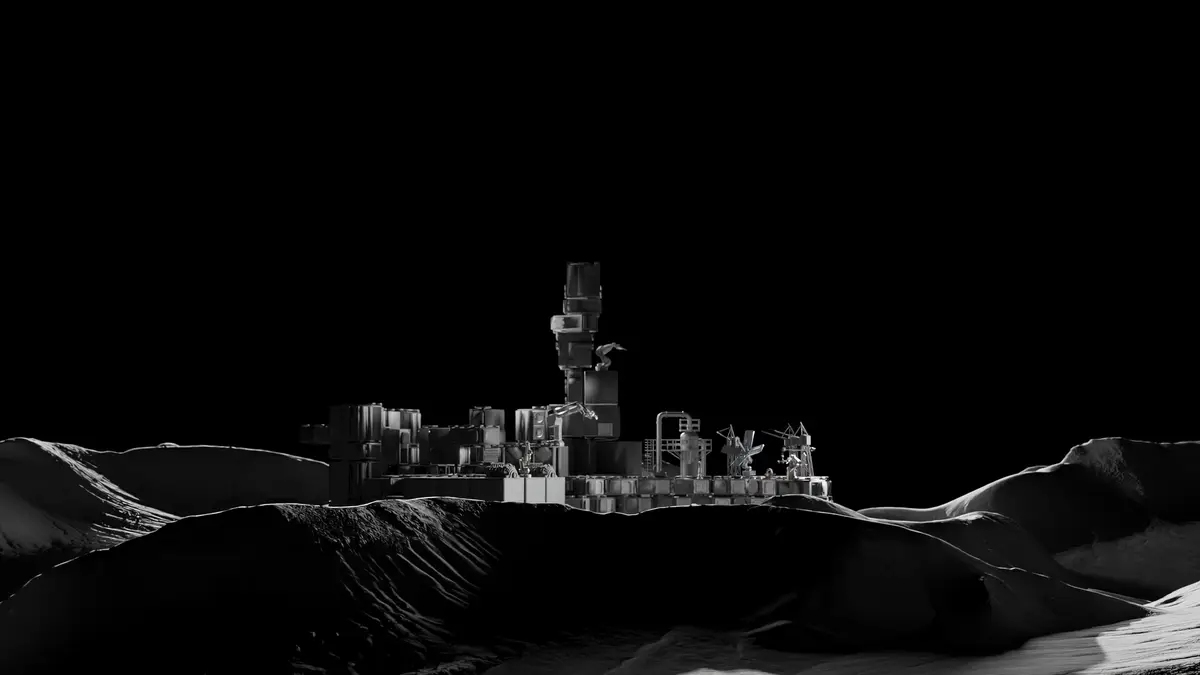
Moon Base 2124
Paper and Questions
Based on the requirements of the Artemis program and considering the development of the third and later generations of Martian migrants, I expect this design to meet the need for habitats adapted to the extreme environments of Mars and the Moon. Mars and the Moon have many extreme environments, such as extreme weather, localized damage to space stations, and meteorite landings, that command centers on Earth are often unable to cope with. Therefore, in an emergency, the program would need ground crews to respond to these special situations. Therefore, I wanted the design to be flexible with unlimited possibilities.
I have chosen to utilize an automated modular design to build the Mars/Moon space complex. This design will be aided by a combination of robotic arms and drones. I chose to install rails on the modules that have pulleys on them to allow different combinations of modules to move. At the same time, I have also installed robotic arms on the tracks, which also have slidable devices on them. All of these can better help the whole Mars base (in the future) and accomplish some simple science tasks. Considering the development of Mars after the third generation of immigrants, I chose an automated construction method based on the logic of Cellular Automaton, where robots assemble different cells into an initial habitat pattern. In the future, these modular units can be continuously replicated based on Cellular Automaton theory and the spatial requirements of the habitat.
In the design, Conway's Game of Life was used as a computer algorithm for combining different modular units. The influence of local radiation and temperature factors, as well as site-specific topography (lunar craters) were also incorporated to optimize the algorithms and achieve the best solution for the building's functionality.
3D printing will be used in the design. We will fabricate the material in-situ based on local conditions (Martian and Lunar rock formations) to save as much as possible on the economic costs associated with transportation. During the testing process of 3D printing, I divided the model into two parts, the head, and the body (excluding the bottom track), considering the cost savings and the reduction of excessive wear and tear associated with the fabrication of the mounts. After minimizing the variety of modules, we had a total of two heads and three bodies. This in turn increased the module possibilities.
In addition to the 3D printed functional blocks, we have designed an experimental module made of seaweed beads. The module is used in public spaces and can act as "glass". Algae beads are a biomaterial made from freshwater algae encapsulated in a hardened sodium chloride solution that effectively releases oxygen. The gelatinous texture of the algae also reflects external radiation, making this the only module in the design that functions as a "window". Given the experimental nature of the module, more special experimental modules like this one will be added to the base in future immigration programs, increasing the likelihood that future Mars colonists will enjoy a more comfortable life.
In the long run, the designed life support system is self-sufficient and helps minimize human dependence on Earth. In the initial stages of the design, engineers connected the robots via lunar orbit to the existing power grid at NASA's Kilo-powered nuclear reactor brought in by the first explorers. Nuclear energy is the initial source of energy. Thereafter, other energy sources will emerge. For example, the site is located at the moon's south pole, where there is virtually no sunset, perfect for solar power. At the same time, the site has enough groundwater, which will play an important role in the self-cycling system. Therefore, I think in terms of ecology, such as raising animals and plants to form a small biosphere that maximizes each of the roles of the Mars/Moon base (producer, consumer, decomposer) in a virtuous cycle. This cycle will become more diverse and complete as humans explore Mars. At the same time, each capsule will have independent life-support systems, such as oxygen supply, ventilation, and constant temperature. Even if one module is damaged, it will not affect the work of the others.
In short, the design is experimental. Based on the flexibility of the module itself, the entire habitat can be expanded indefinitely. It could be a residence, an experimental site, or a city. Or even a country or civilization.
1. What is the concept behind your lunar habitat?
The concept of the design is to build on the developments of the third generation of Mars settlers and beyond to produce a modular building that can be adapted to the extreme environments of Mars and the Moon. In contrast to the Earth, we are familiar with, Mars and the Moon tend to have many extreme environments, such as extreme weather, localized damage to space stations, and meteorite landings. When dangerous situations are detected, command centers on Earth are often unable to respond. Therefore, I want the design to be flexible and adaptable to various environments. At the same time, the design should consider not only generational migration, but also the infinite possibilities of the future. Therefore, the design explores more modular materials and modular combination methods. I want the design to achieve flexibility, experimentation, and become a planetary civilization.
2. How are the life support systems conceived in the design?
The designed life-support system is self-sufficient and will help minimize human dependence on Earth's resources. In the initial phase of the design, engineers will connect the robot to the existing power grid at NASA's Kilo Power nuclear reactor via lunar orbit. In the initial exploration phase, nuclear energy is the basic source of energy. Thereafter, other energy applications will emerge. For example, the location of the first exploration is at the south pole of the moon, where there is virtually no sunset, making it ideal for solar power. The application of solar energy will greatly reduce the need for nuclear energy. At the same time, the location has sufficient groundwater, which will play an important role in the self-cycling system. Therefore, I am thinking in terms of ecology, such as raising animals and plants to form a mini ecosystem that maximizes the various roles of the Mars/Moon base (producer, consumer, decomposer) and creates a virtuous cycle. As humans explore Mars, this cycle will become more diverse and complete. At the same time, each basic unit will have independent life support systems, such as oxygen supply, ventilation, and constant temperature. Even if one unit is damaged, it will not affect the work of other units.
3. What are the structural and deployment concept of the design?
I chose to utilize an automated modular design for the build. assembly of the modules will be assisted by a combination of robotic arms and drones. The structure of these modules will be adapted for 3d printing and assembly. I chose to install rails on the modules with pulleys that will allow different combinations of modules to be moved. At the same time, I have also installed robotic arms on the tracks that have slidable devices on them as well. These can better help the whole Mars base (in the future) with some simple science tasks. the structure of the modules is simple and flexible to adapt to the complex and changing Martian/Moon environment. Various considerations for the development of Mars after the third generation of immigrants, I chose an automated construction method based on the logic of cellular automata, where robots assemble different cells into an initial habitat pattern. In the future, these modular units can be continuously replicated based on cellular automata theory and the spatial requirements of the habitat.
4. How does the design generate and sustain power?
In the initial phase of the design, engineers will connect the robot to the existing power grid at NASA's Kilo Power nuclear reactor via lunar orbit. In the initial exploration phase, nuclear energy is the basic energy source. Thereafter, other energy applications will emerge. For example, the location of the first exploration is at the south pole of the moon, where there is virtually no sunset, making it ideal for solar power. The application of solar energy will greatly reduce the need for nuclear energy. The design will utilize some of the resources on the surface of the Moon/Mars, such as H2, groundwater, wind, bioenergy, etc., to build the entire energy system along with solar and nuclear energy.
5. What technologies for construction did you utilize?
First, 3D printing is used in the design. We will manufacture the material in-situ according to local conditions (Martian and lunar rock formations) to save as much as possible on the economic costs associated with transportation. During the testing process of 3D printing, I divided the model into two parts: the head and the main body (excluding the bottom track), to save costs and reduce excessive wear and tear associated with making the mounts. After minimizing the variety of modules, we had a total of two heads and three bodies. This in turn increased the module possibilities.
Secondly, the design utilizes the technology of automated drone robotics construction. I chose an automated construction method based on the logic of Cellular Automaton, where robots assemble different cells into an initial habitat pattern. In the future, these modular units can be continuously replicated based on Cellular Automaton theory and the spatial requirements of the habitat.
6. How is the expansion of your module planned in the longer run?
I chose an automated construction method based on the logic of cellular automata, in which a robot assembles different units into an initial habitat pattern. The CA system is evolvable, and in the future, these modular units can be continuously replicated based on cellular automata theory, the spatial requirements of the habitat, and the number of immigrants. In the design, Conway's Game of Life was used as a computer algorithm for assembling different modular units. The Game of Life is also a sustainable process, and the flexibility of its theory and modules determines the sustainability of the design.
7. How is the user experience constructed?
Based on the flexibility of the module itself, the entire habitat can be expanded indefinitely. It could be a residence, an experimental site, or a city. Even a country or civilization. The variety of Modules allows the design to provide the user with different functional experiences. Some interesting features will give users the opportunity to explore. For example, a plant greenhouse would allow people to participate in growing and experiencing plants, as well as fitness and theater modules that provide a variety of services to the user.

Popular Articles
Popular articles from the community


Temporary Home for Dogs: A Reversed Zoo Rethinks Animal Shelter Architecture
In Bucharest, a sinuous corridor and freed landscape flip the logic of containment, designing a shelter that works to make itself unnecessary.

Singing Woman: An Opera House That Performs Before the Curtain Rises
Ovidiu Cristian Pavel's conceptual opera house translates Estonia's choral identity into a sculpted waterfront landmark facing the Baltic Sea.
Tsunami Convergenics: Turning Catastrophic Ocean Forces into Underwater Housing Infrastructure
A speculative underwater settlement off the coast of Onagawa, Japan, treats tsunamis and typhoons as energy sources rather than threats.

Opera by the Sea Estonia: Three Shells Dissolving Architecture into Tallinn's Coastline
A winning opera house proposal replaces monumental form with interconnected shells that blur the boundary between building, park and Baltic Sea.

Similar Reads
You might also enjoy these articles

Shakur's House: Exposed Brick as an Interior Organiser in a 168 m² Mashhad Residence
Brick moves indoors in this Mashhad residence, where masonry walls, glass partitions and teal planes sequence a compact home without closing it off.

Day and Night Park: A Time-Based Urban Newsstand in Beijing
A temporary urban newsstand in Beijing blending travel, light, and reading through poetic colors, compact form, and community-focused design.

Modernist Patio Renovation in El Masnou, Barcelona by Oliver Segura Arquitectura + Cebrià Arquitectura
Modernist patio renovation blending tradition and innovation with a movable pool, leveled floors, and Catalan materials in El Masnou.

Alto Residencial Coop: Cooperative Housing Development in Santiago de Compostela by Carbajo Barrios Arquitectos
A linear cooperative housing complex blending white volumes and perforated metal façades, enhancing community living, natural light, privacy, and urban integration.

Explore Moon Colony Competitions
Discover active competitions in this discipline


Challenge to reimagine the Iron Throne

Photograph architecture without architects

Illustrate the lost glory of Angkor Wat - Render Challenge

Design challenge to reuse E-waste
Comments (0)
Please login or sign up to add comments
No comments yet. Be the first to comment!