
MP House in Cabreúva by Taguá Arquitetura: A Sustainable Brutalist Retreat
MP House blends sustainable materials, brutalist design, and indoor-outdoor living, creating a low-maintenance, energy-efficient contemporary weekend retreat.

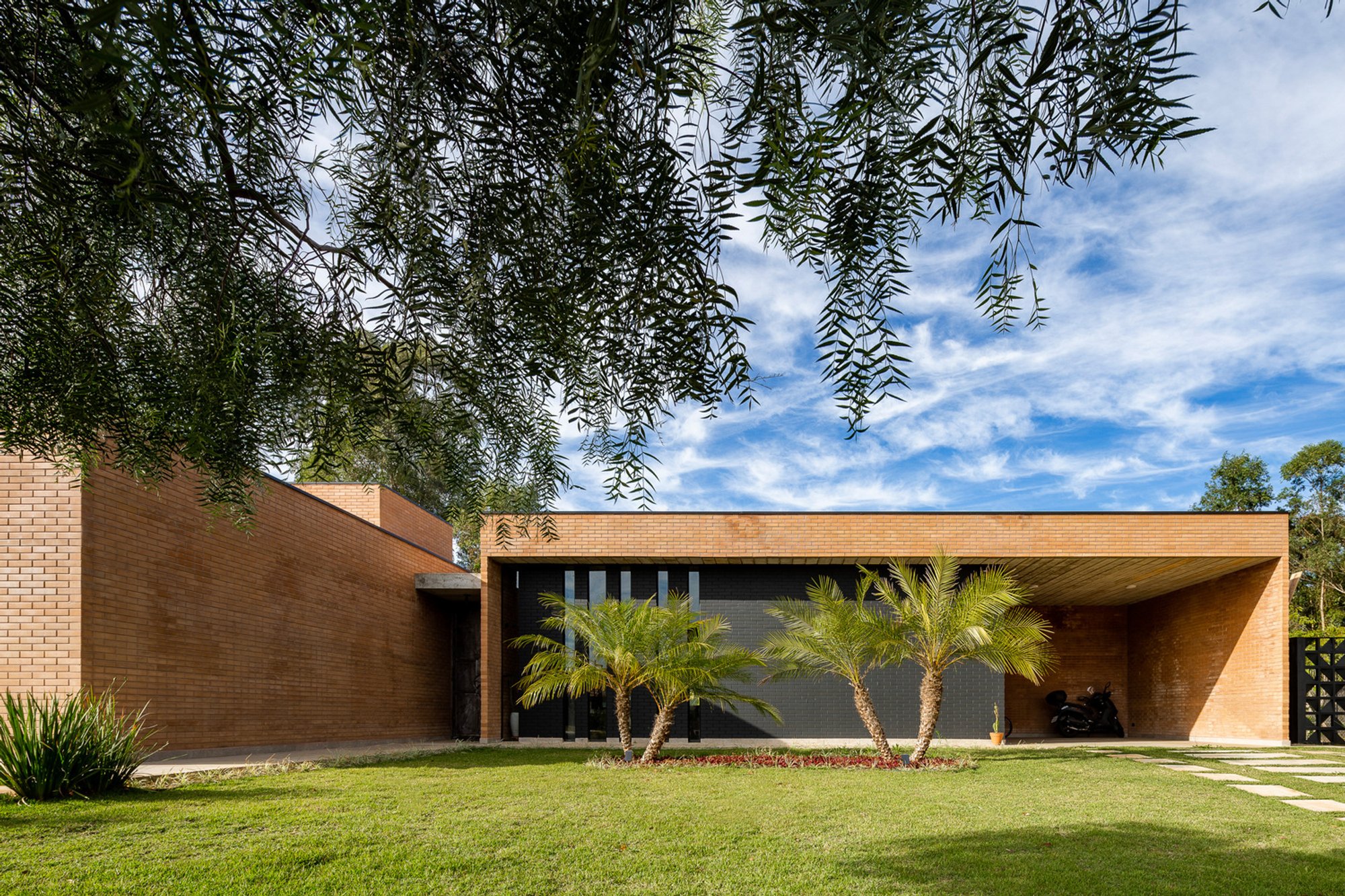
Located in a residential condominium in Cabreúva, in the interior of São Paulo, MP House by Taguá Arquitetura is a 350 m² contemporary residence that merges sustainability with a bold brutalist and industrial aesthetic. Designed as a low-maintenance weekend home, the project explores raw materiality, ecological construction techniques, and strong spatial integration.
A Concept Rooted in Sustainability and Raw Expression
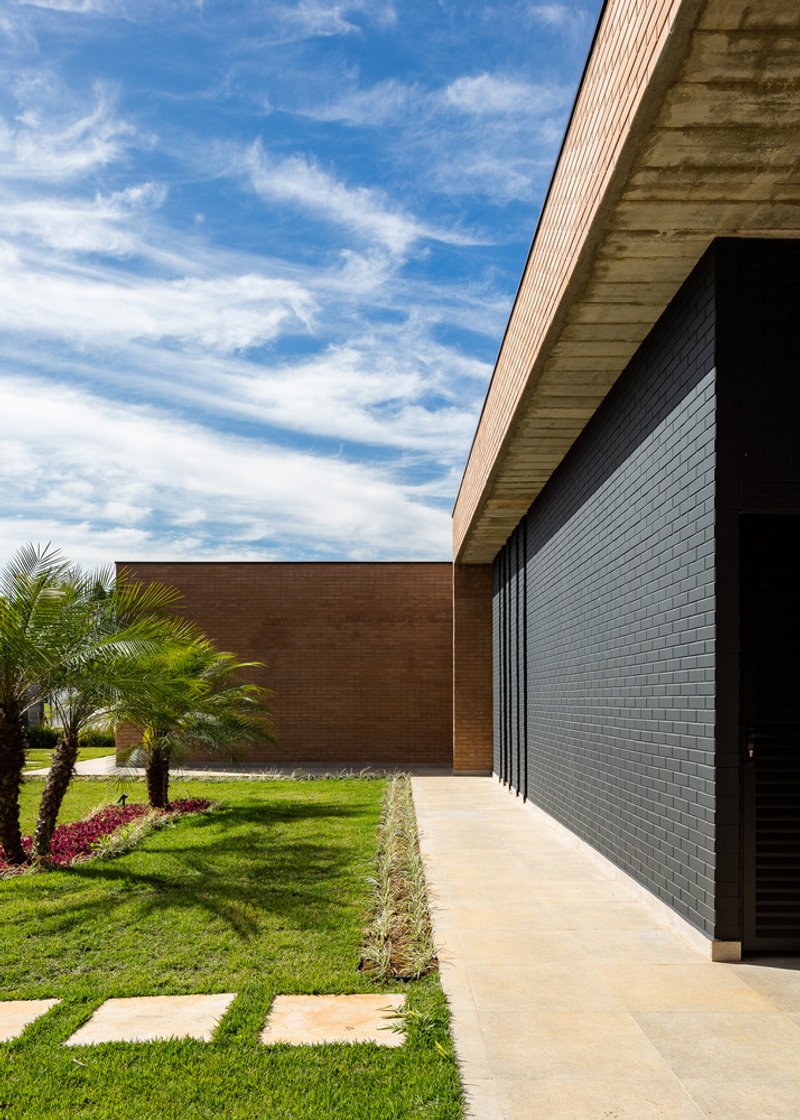
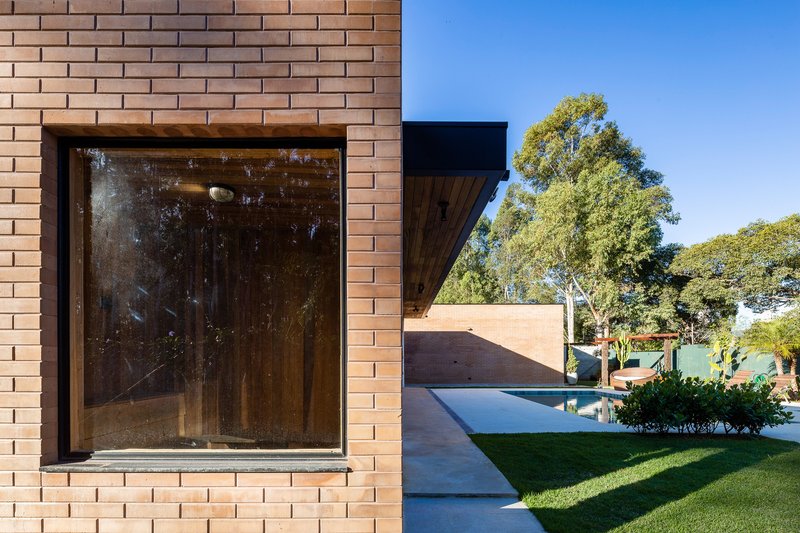
The design is driven by a clear intention: to create an environmentally responsible home using honest, exposed materials. Soil-cement ecological bricks form both the structural system and the primary visual identity of the house. This choice reflects a commitment to reducing environmental impact while embracing a natural, unrefined architectural language.
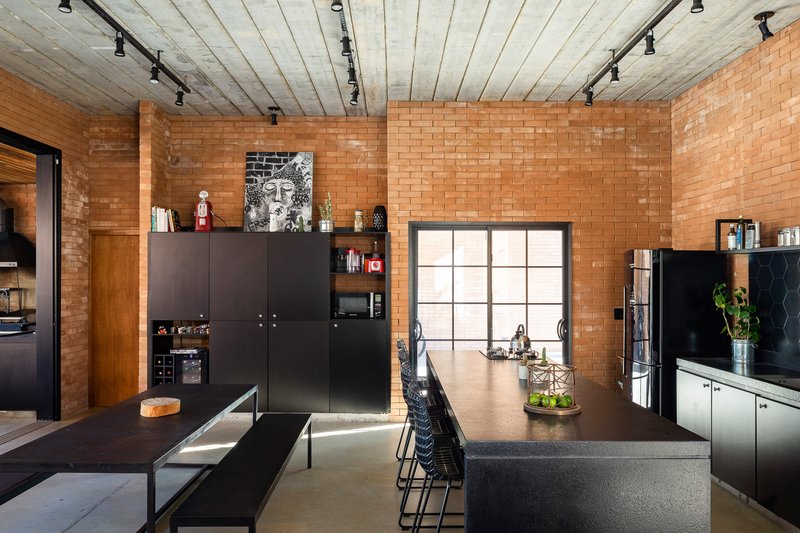
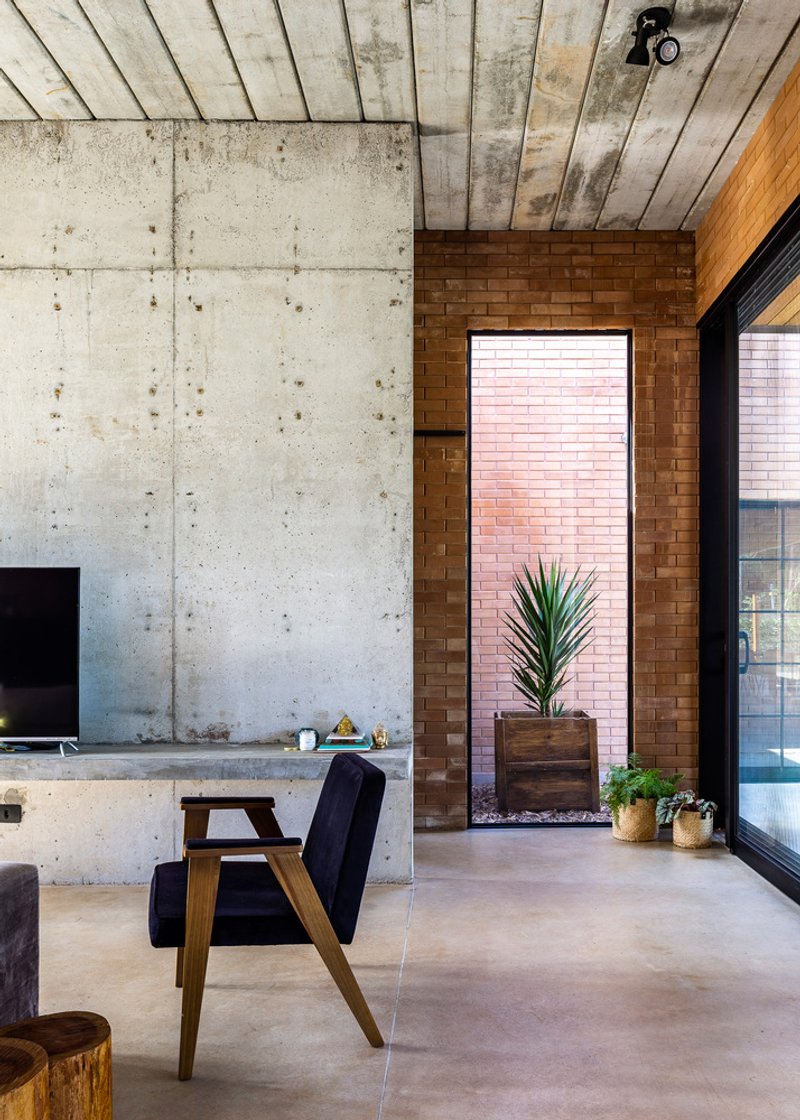
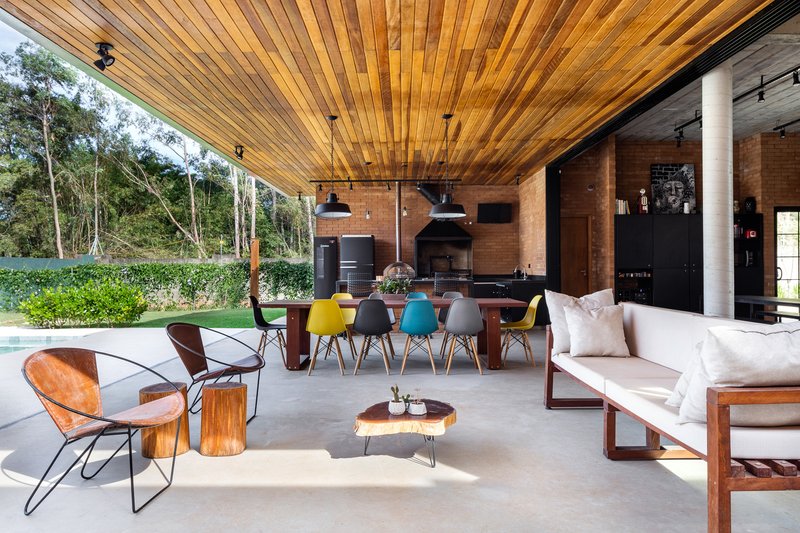
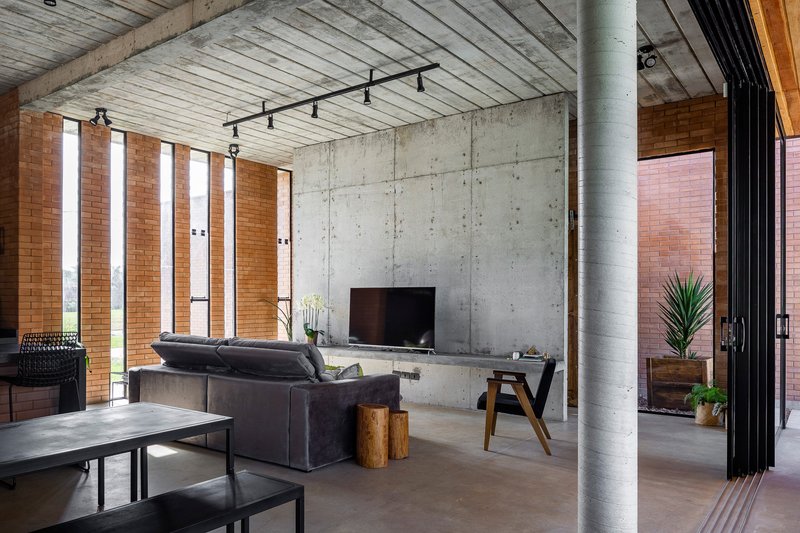
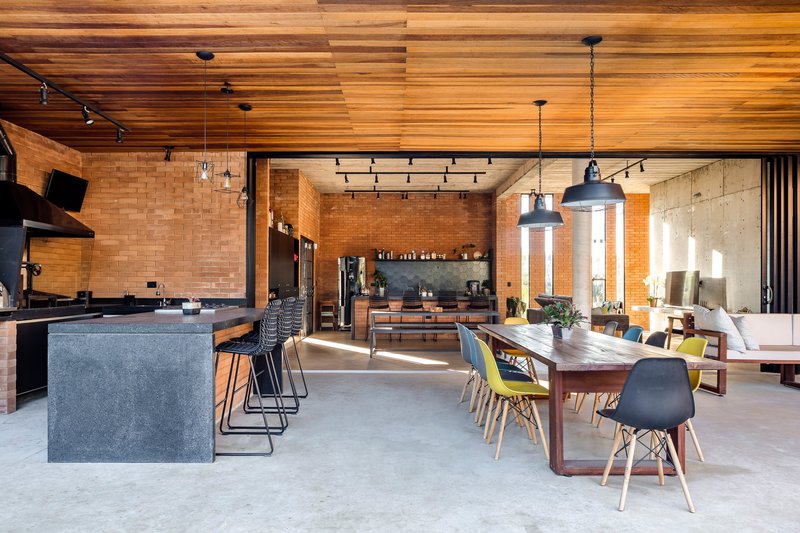
Complementing the brickwork, exposed concrete, steel, and wood are used throughout the project. Concrete appears in floors, slabs, and structural walls, while steel defines elements such as the gourmet terrace roof. Wood softens the composition, particularly in ceiling linings, creating a balanced contrast between industrial and warm textures.
Spatial Organization: Two Volumes, One Cohesive Design
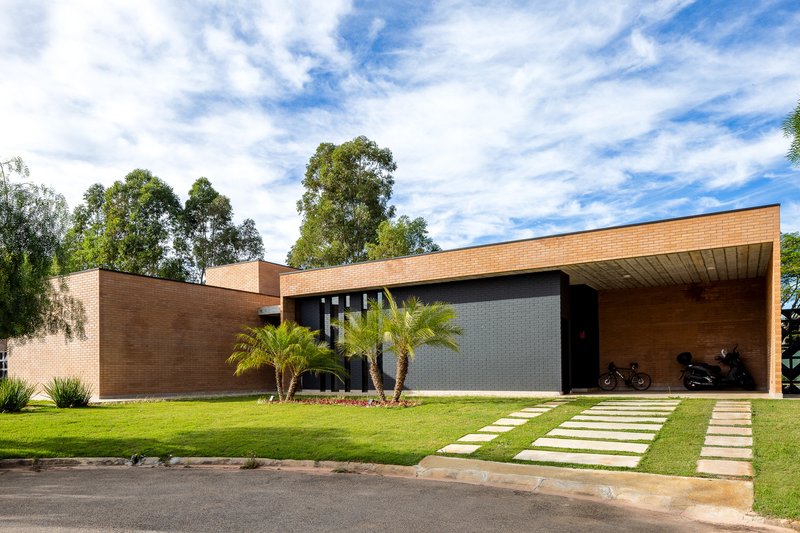
The residence is organized into two distinct prismatic volumes connected by a central access element:
- The longitudinal volume accommodates the private wing, including five suites
- The transversal volume contains social areas, leisure spaces, garage, and services
This configuration responds directly to the site, which is located in a cul-de-sac with a curved frontage. The central connecting volume acts as a distribution hub, organizing circulation and reinforcing spatial clarity.
Minimal Finishes and the “Less is More” Approach
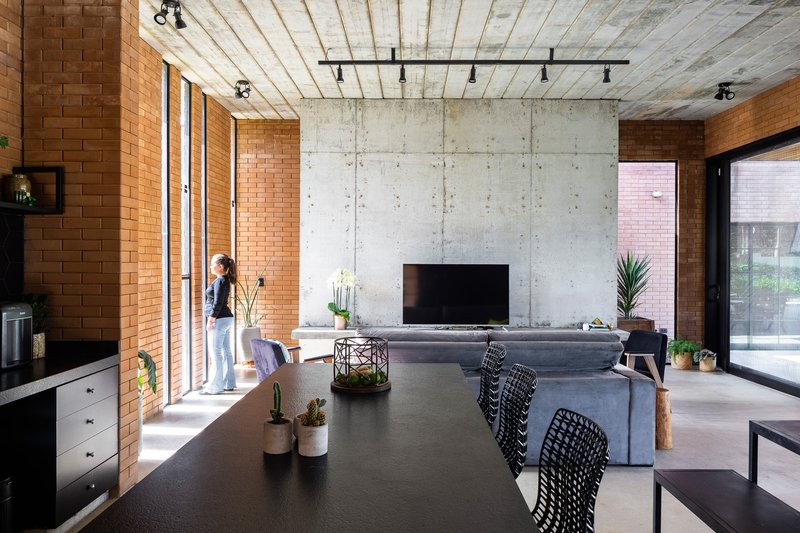
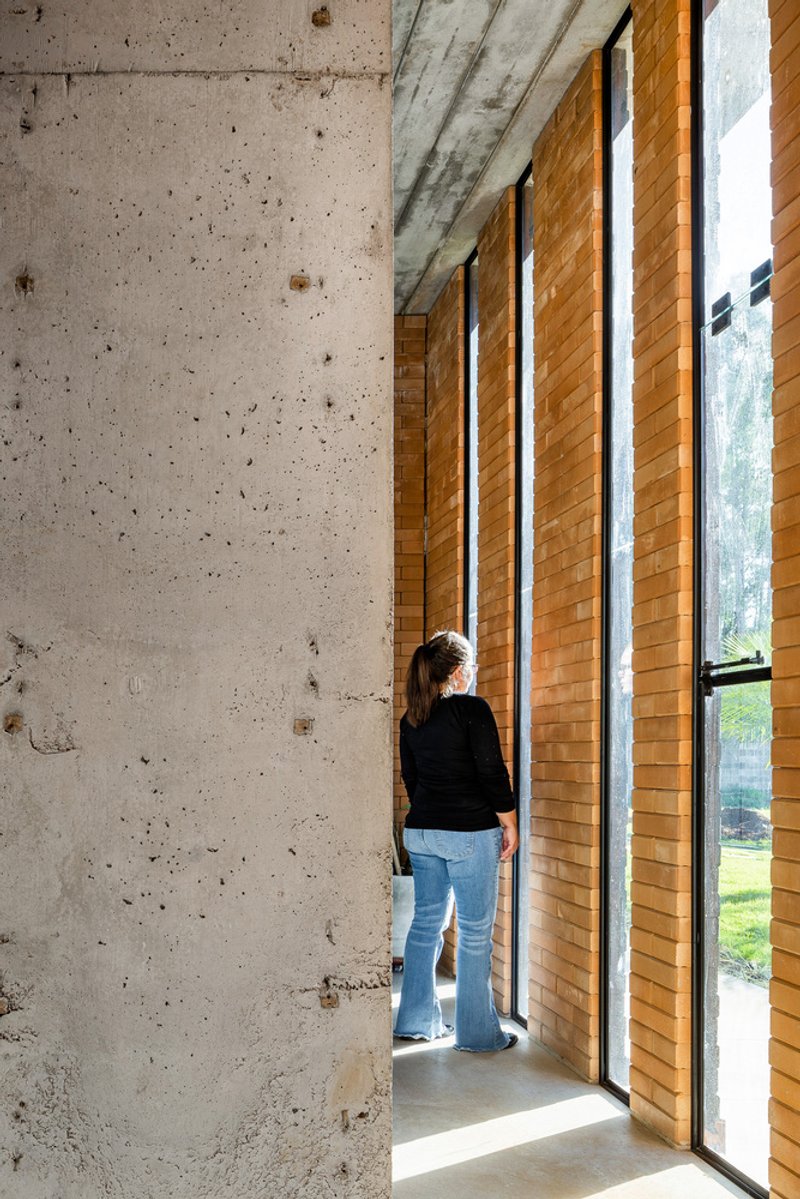
A key aspect of the project is the deliberate reduction of finishing materials. Plastering, painting, and excessive coatings were eliminated, allowing materials to remain in their natural state. Finishes are only applied where necessary, such as in kitchens and bathrooms.
This approach not only reinforces the aesthetic of raw architecture but also aligns with the ecological concept by reducing material consumption, construction waste, and long-term maintenance.
Indoor-Outdoor Integration and Social Living
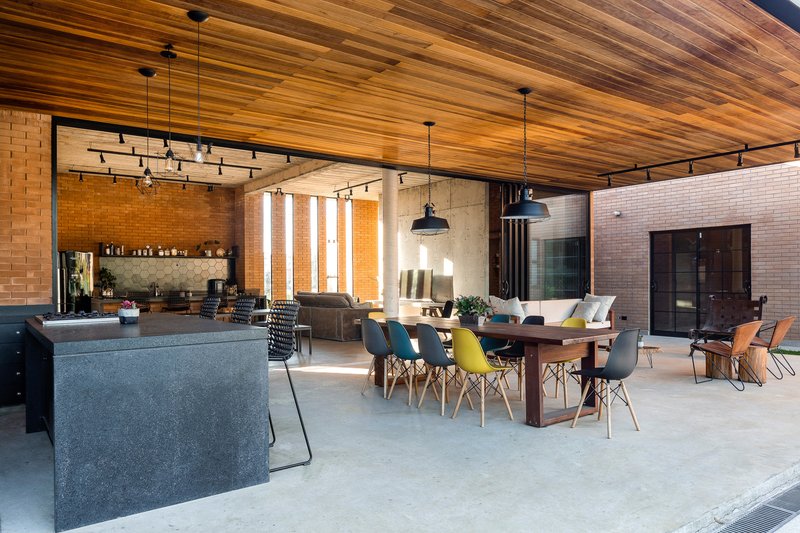
The social areas are designed to maximize openness and interaction. A large glass panel connects the living room to the gourmet veranda, allowing uninterrupted views of the pool and garden.
When fully opened, the spaces merge into a continuous environment that includes the living room, kitchen, dining area, and terrace, creating a generous and flexible gathering space ideal for weekend use.
A standout feature within the living area is a blind exposed concrete gable wall, which functions both as a structural element and as integrated furniture for the television.
Facade Design: Privacy, Light, and Identity
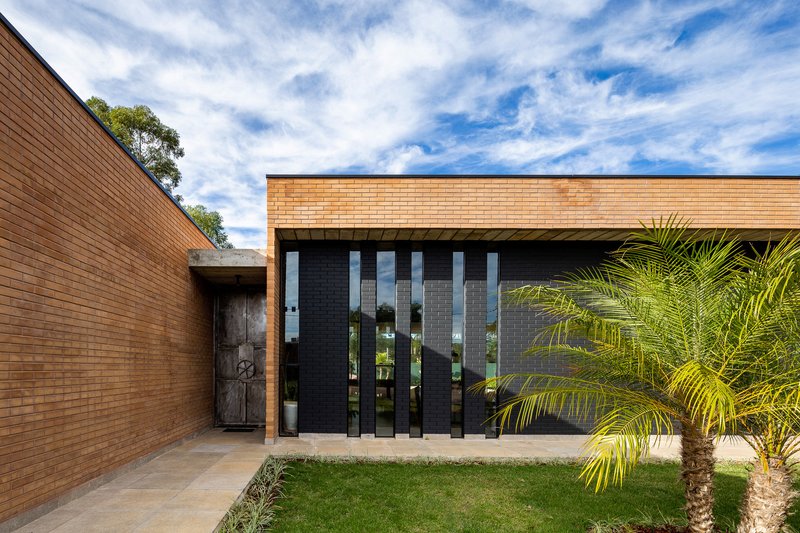
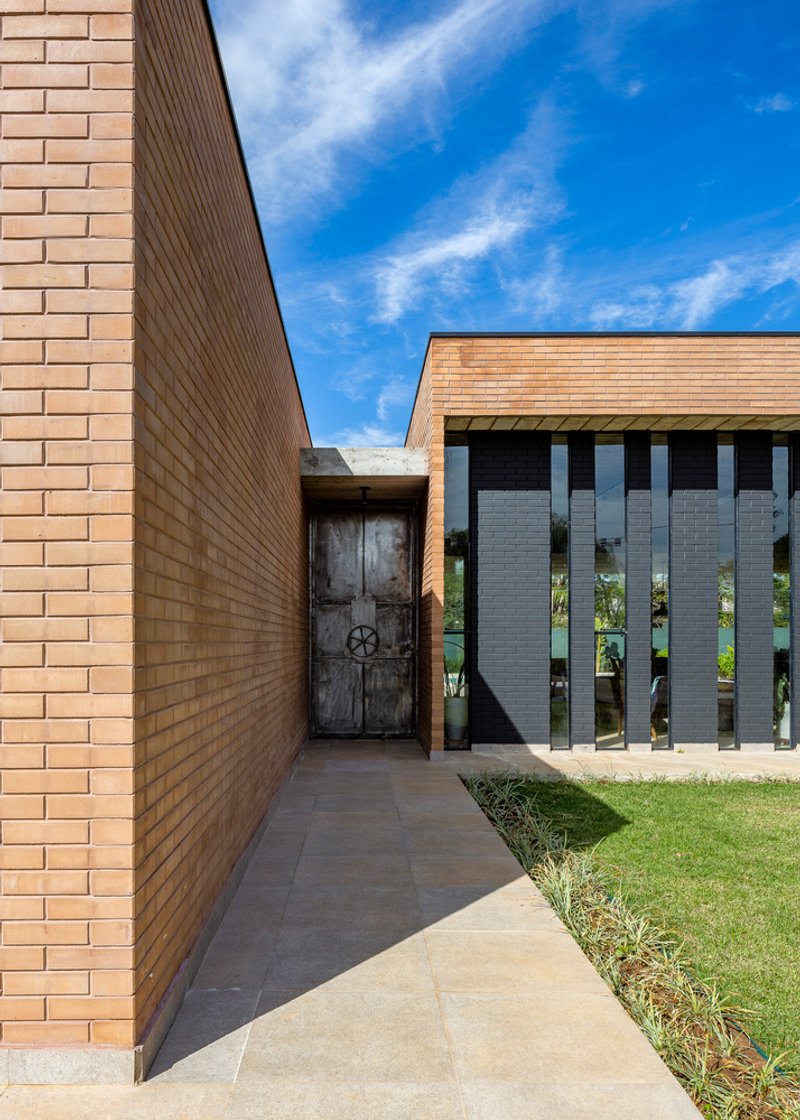
The facade is defined by vertical floor-to-ceiling openings that carefully control sunlight while maintaining privacy. These narrow apertures filter natural light, producing dynamic shadow patterns throughout the day.
The use of dark-painted brick adds depth and reinforces the industrial character requested by the clients. A raw steel entrance door further emphasizes this identity, introducing a bold and personalized architectural statement.
Environmental Performance and Construction Efficiency
Sustainability is embedded in both design and construction. Soil-cement bricks offer significant advantages:
- No kiln firing required, reducing carbon emissions
- High thermal and acoustic performance
- Natural ventilation through internal perforations
These properties help maintain interior temperatures up to 5°C cooler than the external environment.
Additional sustainable strategies include:
- A rainwater cistern for garden and outdoor use
- Photovoltaic panels for renewable energy generation
- Prefabricated components that minimize waste
Remarkably, only five dumpsters of construction waste were generated during the 16-month build, reducing material waste by approximately 40%.
A Contemporary Home with Reduced Impact
MP House demonstrates how contemporary architecture can align with environmental responsibility without compromising design quality. By combining prefabrication, raw materials, and passive performance strategies, the project achieves a balance between modern living and ecological awareness.
Ultimately, the house stands as a model for sustainable residential design: one that prioritizes durability, efficiency, and a deep respect for natural resources while delivering a powerful architectural identity.
All photographs are works of
Leonardo Giantomasi



Popular Articles
Popular articles from the community


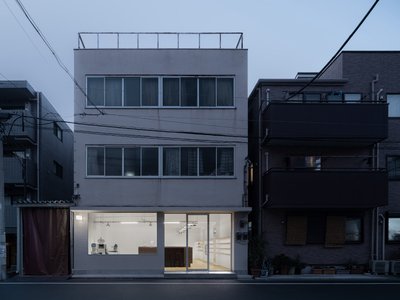
Atelier Macri Concept Store Interior Design by CASE-REAL
Atelier Macri store features a "ko" counter, walnut wood details, cork displays, blending retail, gallery, and seamless customer experiences.
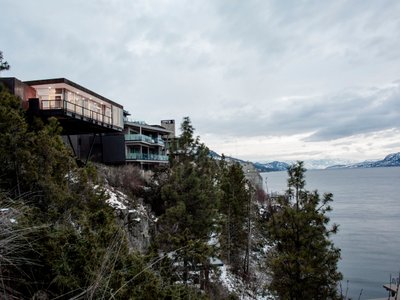
Alton Cliff House: A Harmonious Retreat by f2a Architecture in Lake Country, Canada
Alton Cliff House blends corten steel, prefabrication, and sustainable design, creating a luxurious, energy-efficient retreat perched on Canadian cliffs.

Free Architecture Competitions You Can Enter Right Now
No entry fees, real prizes. Here are the best free architecture competitions open for submissions in 2026.

Similar Reads
You might also enjoy these articles
Free Architecture Competitions You Can Enter Right Now
No entry fees, real prizes. Here are the best free architecture competitions open for submissions in 2026.
Top 15 Architecture Competitions to Enter in 2026
From student-friendly idea competitions to prestigious international awards, here are the best architecture competitions open for entries in 2026. Updated regularly.

DIY & Engineering in Computational Design : Enter the BeeGraphy Design Awards
Showcase Your Creativity with Computational Design and Open Source Projects
Innovative Design Solutions: Award-Winning Projects from Recent Architecture Competitions
Exploring award-winning architectural projects shaping the future of design, sustainability, and community.

Explore Architecture Competitions
Discover active competitions in this discipline




The International Standard for Design Portfolios


The Global Benchmark for Architecture Dissertation Awards


The Global Benchmark for Graduation Excellence


Challenge to reimagine the Iron Throne
Comments (0)
Please login or sign up to add comments
No comments yet. Be the first to comment!