
Nanhai Guicheng Jingui High School by Atelier cnS: A Sustainable Educational Campus Shaping Urban Learning in Foshan
A climate-responsive high school campus in Foshan blending classical order, spatial diversity, and sustainable design to inspire interactive, modern learning environments.


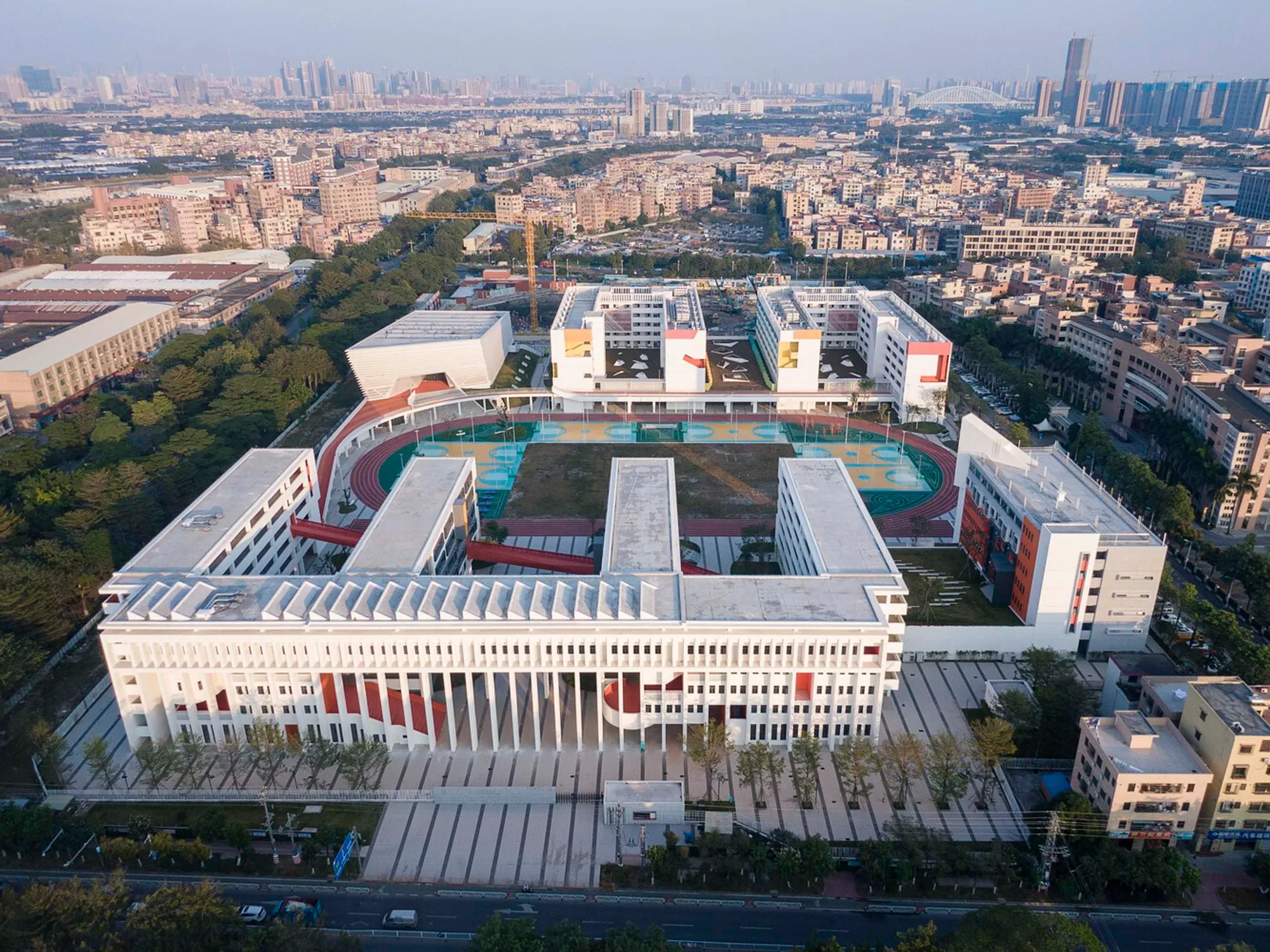
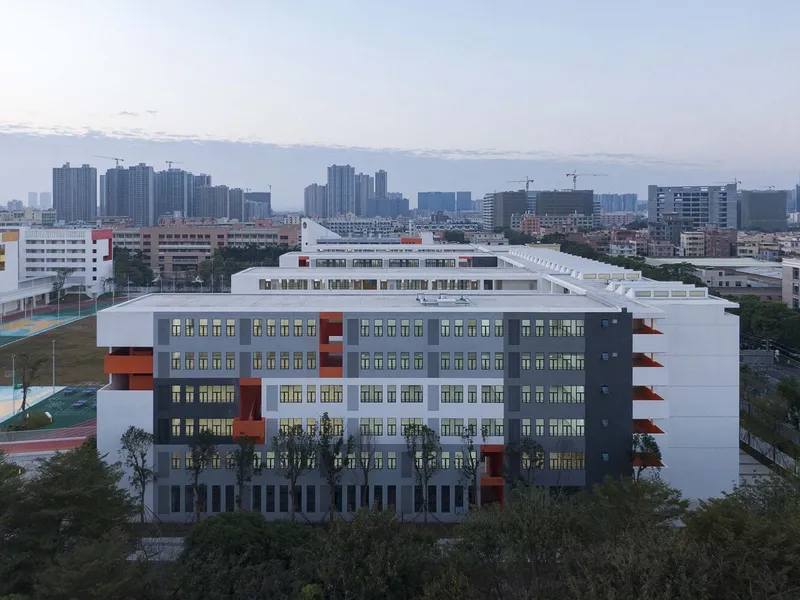
Located in Foshan, the Nanhai Guicheng Jingui High School designed by Atelier cnSemerges as a key educational infrastructure responding to rapid urbanization. Completed in 2022, this expansive 83,485-square-meter campus reflects the city's ambition to enhance public facilities and attract a growing population.
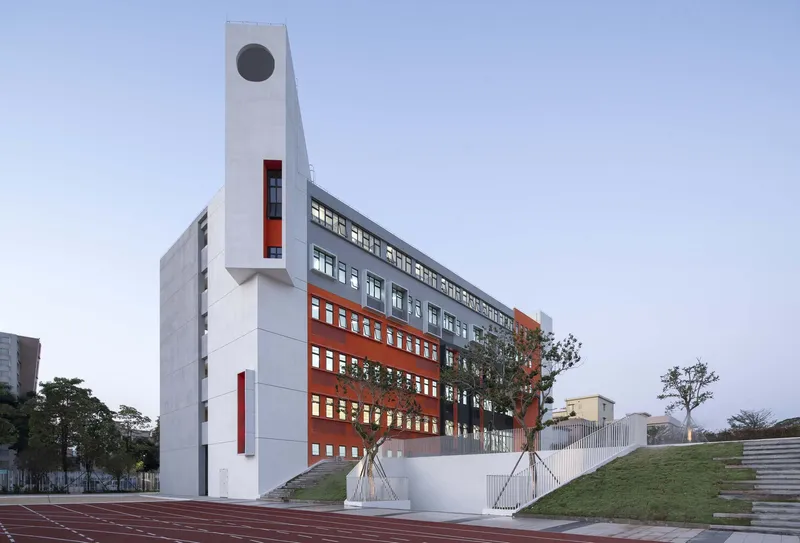
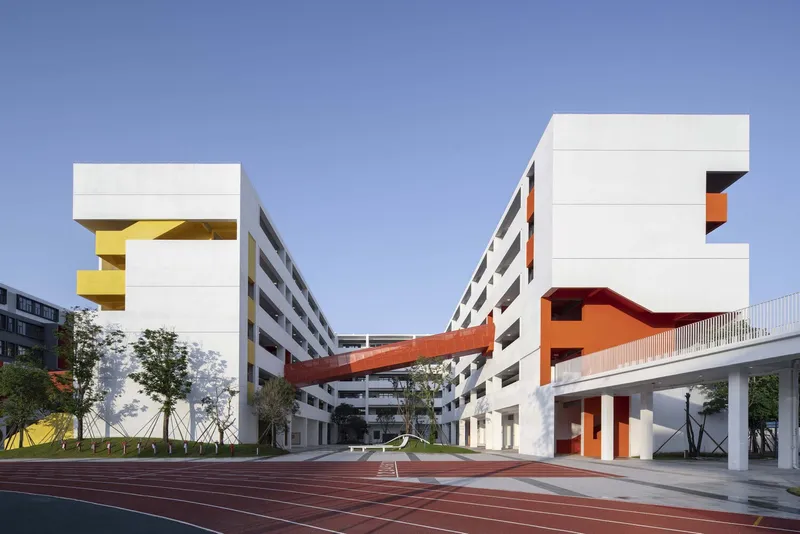
Strategically positioned near major roads leading to Yingyue Lake, the project integrates seamlessly into the urban fabric while establishing a strong civic presence. Designed to accommodate around 3,000 students and faculty, the campus balances density with spatial clarity, offering a holistic environment for education, interaction, and exploration.
Architectural Concept: Order, Monumentality, and Spatial Diversity
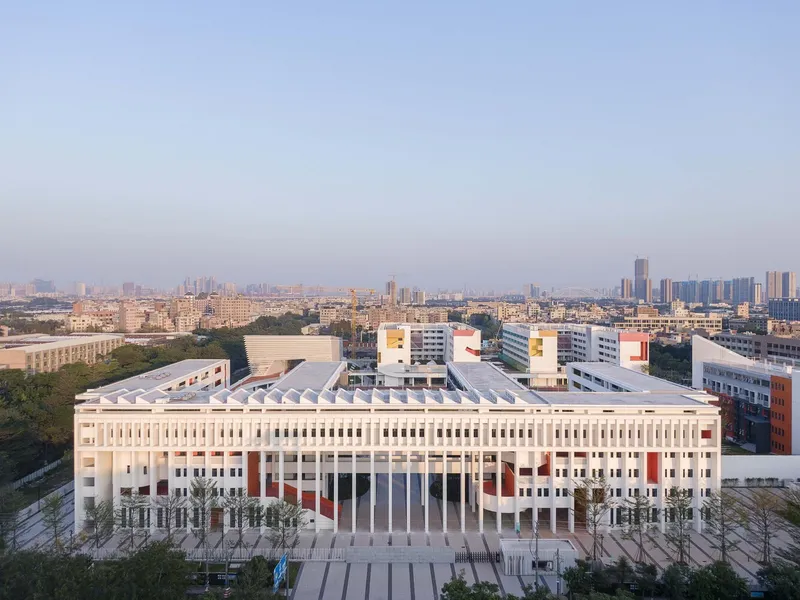
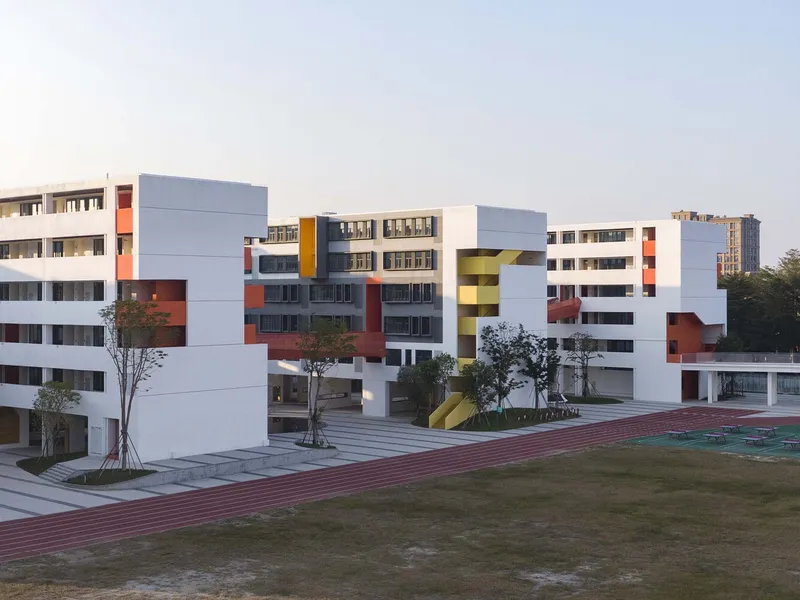
The architectural language of the campus is defined by a compelling dialogue between order and diversity. Inspired by classical architecture, the design introduces a temple-like composition with continuous colonnades and strong axial organization. This creates a sense of monumentality and discipline, reinforcing the importance of education within the urban context.
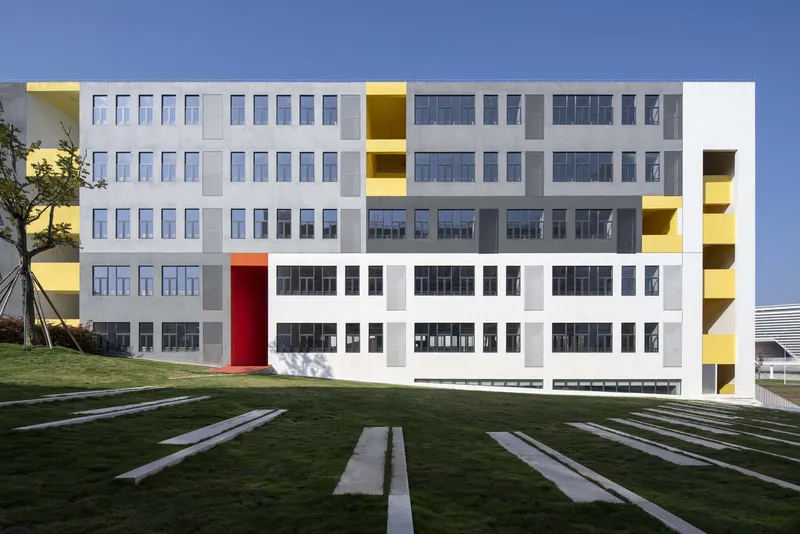
However, beyond this formal exterior lies a contrasting world of dynamic spatial experiences. Open courtyards, layered platforms, and fluid public zones introduce diversity and curiosity. The interplay between structured facades and playful interior landscapes encourages exploration, making the campus both visually engaging and intellectually stimulating.
Designing for Students: Openness, Exploration, and Inspiration
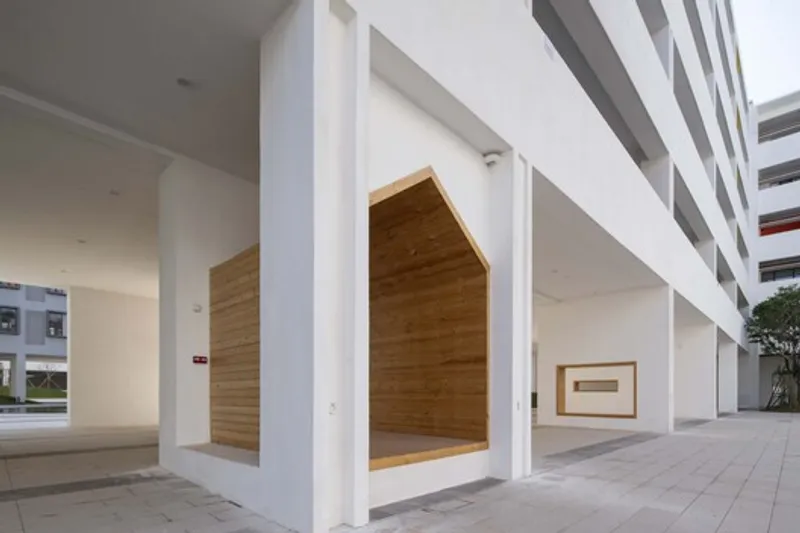
Recognizing the campus as a formative environment for young minds, the architects crafted spaces that promote movement, creativity, and discovery. The elevated ground floor allows uninterrupted landscape flow, creating continuous open spaces where students can walk, run, and interact freely.
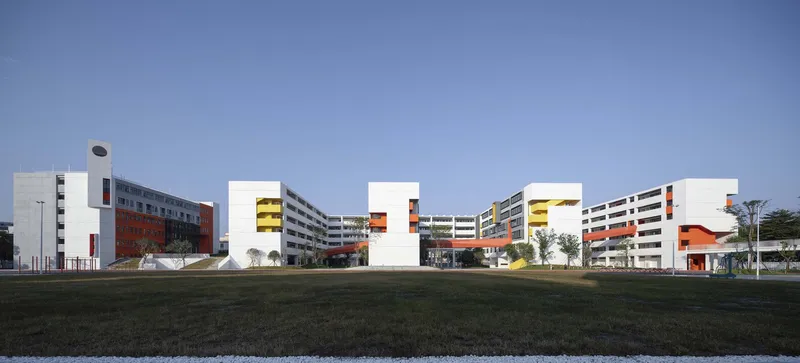
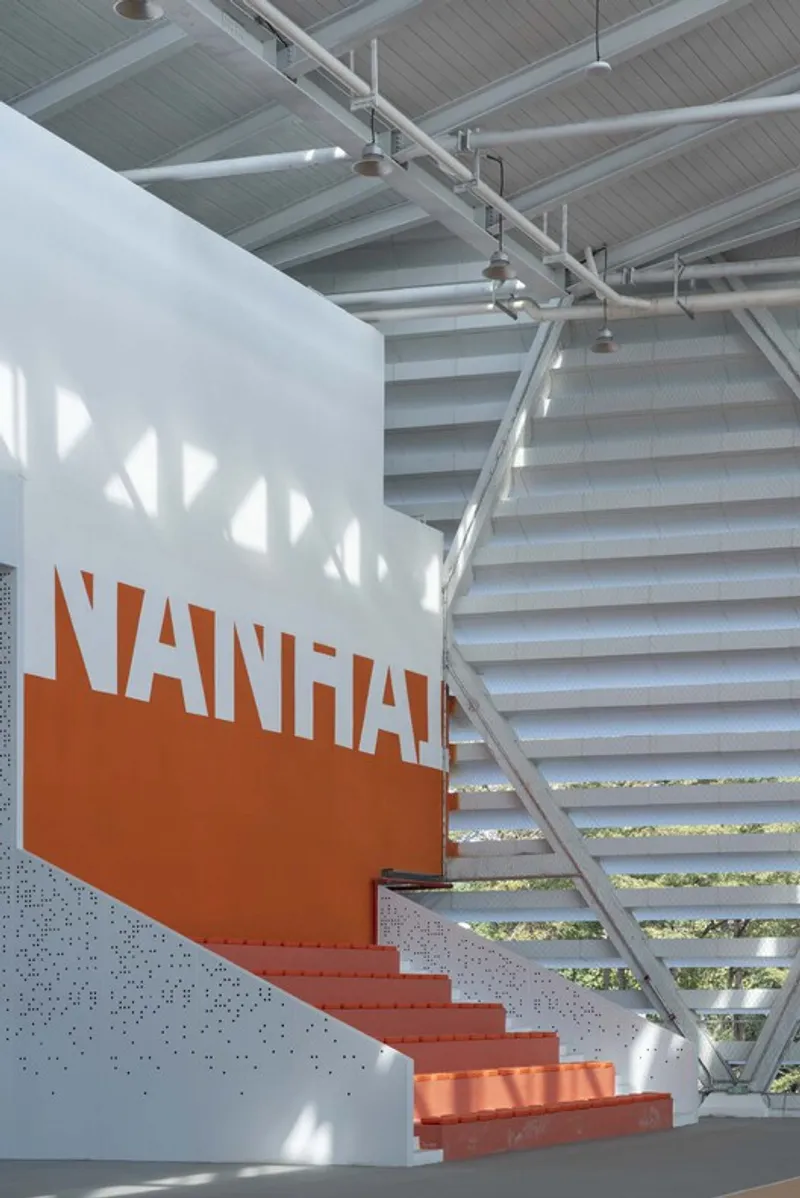
The design introduces a sense of mystery through contrasting scales and forms: large halls juxtaposed with intimate platforms, open courtyards paired with enclosed voids, and a vibrant palette of white and warm orange tones. These elements collectively foster imagination and encourage students to engage with their surroundings in unexpected ways.
At the same time, the campus maintains a clear spatial logic. Circulation routes are carefully planned, with sky bridges providing efficient connectivity across buildings. Visual connections between spaces enhance orientation, ensuring that despite its complexity, the campus remains intuitive and user-friendly.
Climate-Responsive Design and Energy Efficiency
Given Foshan’s hot and humid climate, the project incorporates advanced passive design strategies to ensure thermal comfort and sustainability. The elevated ground level enhances cross ventilation, allowing air to flow naturally throughout the campus.
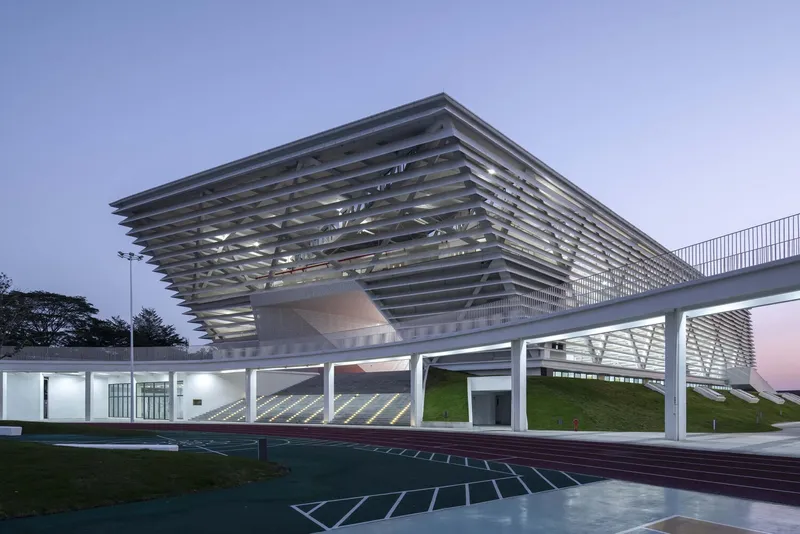
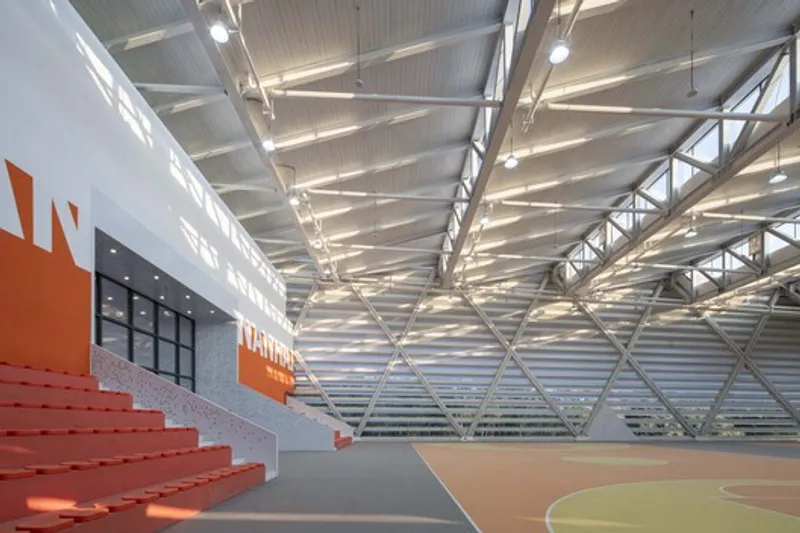
Large-span buildings such as gymnasiums and auditoriums utilize high-level exhaust systems and airflow-guiding panels to improve ventilation efficiency. These elements not only reduce reliance on mechanical cooling but also enhance indoor comfort during extreme weather conditions.
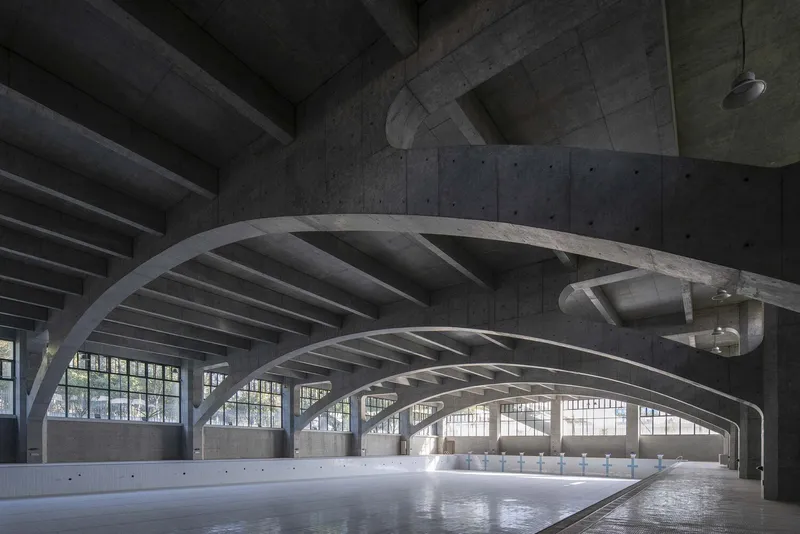
Skylights are strategically introduced in deep-plan spaces like the swimming center and cafeteria, maximizing natural daylight and minimizing artificial lighting use. Additionally, landscape strategies: including decentralized green spaces, water features, and roof gardens, help regulate microclimate conditions and soften the campus edges.
Structural Expression and Material Simplicity
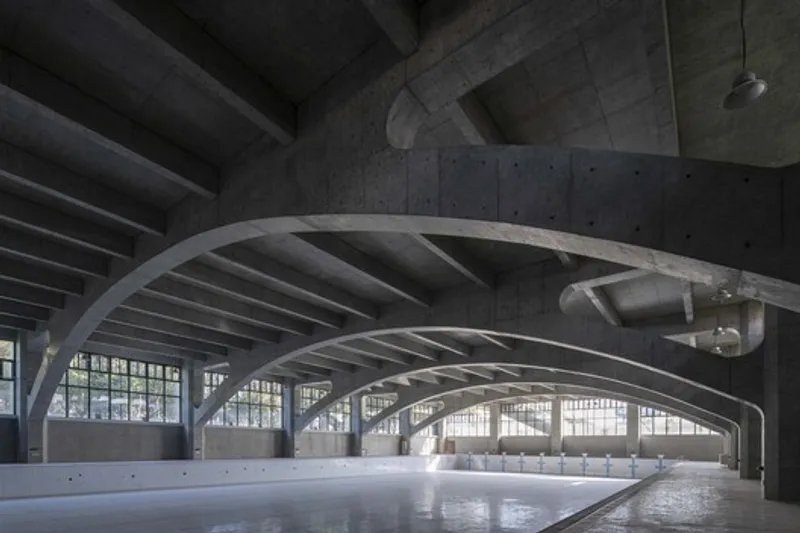
A defining feature of the project is its commitment to structural clarity. Rather than relying on decorative elements, the architecture celebrates exposed structural systems. Concrete arches in the swimming center and rhythmic X-shaped columns in the gymnasium highlight the inherent beauty of construction.
This approach not only enhances aesthetic authenticity but also reinforces durability and long-term efficiency. The result is a campus that embodies both strength and elegance through its pure structural expression.
A Forward-Thinking Model for Educational Architecture
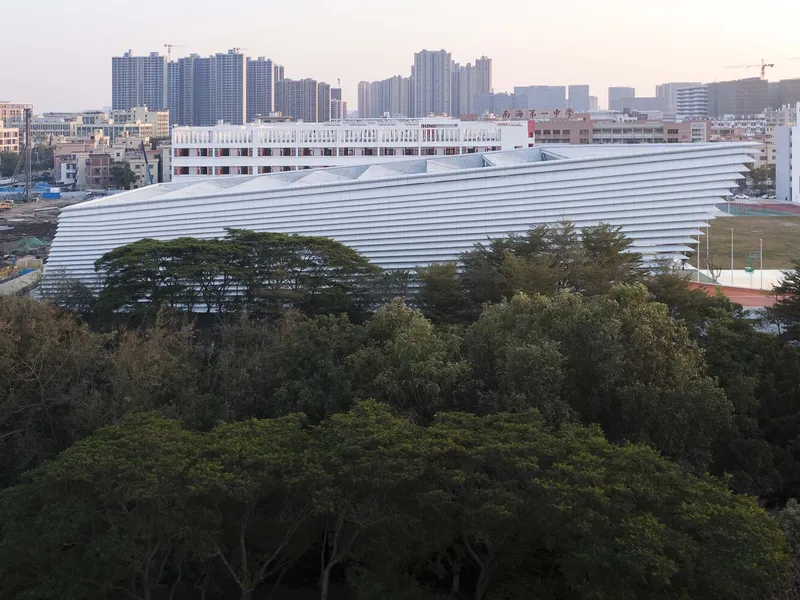
Nanhai Guicheng Jingui High School stands as a benchmark for contemporary educational architecture in rapidly developing urban environments. By combining classical order with spatial innovation, and integrating sustainable design strategies with user-centric planning, the project creates a vibrant and future-ready learning ecosystem.
It demonstrates how architecture can shape educational experiences, foster creativity, and respond effectively to environmental and urban challenges.
All photographs are works of
Siming Wu




Popular Articles
Popular articles from the community


The Earth Pod: 3D Printed Homes for Resilient Refugee Communities
The Earth Pod reimagines refugee housing through 3D printed homes made from clay, combining resilience, self-sufficiency, and rapid shelter.

The Ocean Hive: Sustainable Architecture for a Self-Sufficient Civilization at Sea
The Ocean Hive imagines sustainable architecture at sea, where modular habitats, algae, wave power and ocean waste sustain a growing colony.

Conexión: Biophilic Design Reimagines High-Rise Living in Hong Kong
Conexión reimagines high-rise living in Hong Kong through biophilic design, green facades, shared spaces, daylight, water and nature within.

Co-Life: Senior Housing Design That Reconnects Older Adults With the City
Co-Life reimagines senior housing design through healing gardens, shared streets, workshops, and a sustainable community across generations.


Similar Reads
You might also enjoy these articles


FAMM Arquitectura Organizes Ten Villas Around Courtyards and Jungle in Nosara, Costa Rica
El Molino pairs two elongated volumes with deep overhangs and timber louvers to build a compact coastal community five minutes from the beach.

Oscar Niemeyer's Ibirapuera Park Pavilions Define São Paulo's Cultural Identity in Concrete and Curve
A constellation of modernist volumes set within São Paulo's most important urban park, conceived for the city's 400th anniversary in 1954.
How Henri Picq's 1889 Paris Pavilion Traveled 11,000 Kilometers to Become Santiago's Artequín Museum
A prefabricated iron and glass pavilion built for the Paris Universal Exposition found a second life as a children's art museum in Chile.

Sanjay Puri Architects Wraps a Jaipur Office Tower in Capsule-Shaped Green Buffers
A nine-level climate-responsive workplace near Jaipur Airport uses stacked planter terraces and aluminium screens to fight 40°C heat.


Explore Architecture Competitions
Discover active competitions in this discipline



Challenge to design public laboratory


Challenge to reimagine the Iron Throne


Photograph architecture without architects


Illustrate the lost glory of Angkor Wat - Render Challenge
Comments (0)
Please login or sign up to add comments
No comments yet. Be the first to comment!