
National Skyscraper Day 2022 - 20 Concepts of sustainable skyscraper designs
From bionic towers that purify the air to water-purifying skyscrapers, there are so many ways that architects and engineers are making a difference.


The future of architecture appears to be more sustainable, efficient, and naturalistic, with a big focus on environmental friendliness. We're seeing taller buildings equipped with things like rainwater harvesting and solar panels and a move towards using more natural materials like bamboo in construction.
If you're still not convinced that the future of architecture is going to be based on eco-friendly innovation and sustainability, then you need to check out these sustainable skyscrapers concepts on National Skyscraper Day.
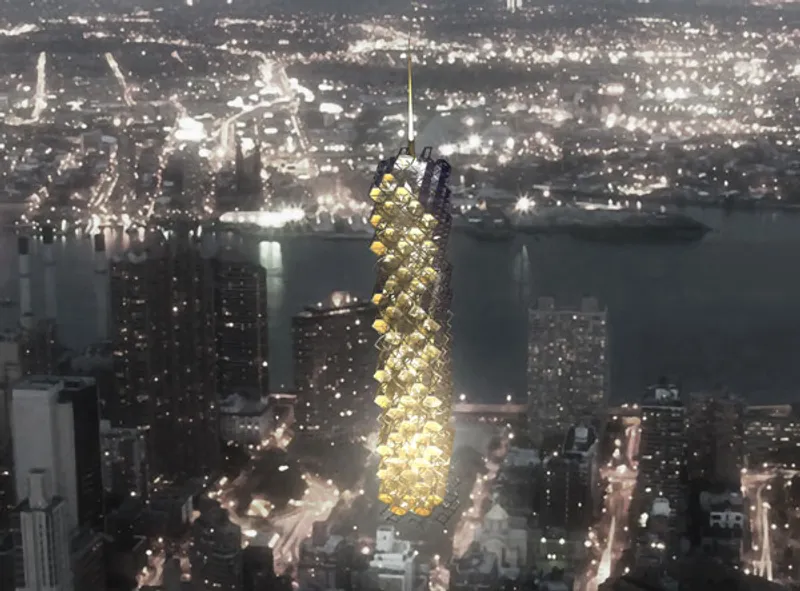
A Solar and Wind Powered Skyscraper in NYC - Diamond Tower
The Diamond Tower is a skyscraper proposal for New York City designed by Mexican architect Luis Durazo. The complex geometry of the building is inspired by the chemical structure of a diamond, with an exoskeleton acting as a steel lattice where habitable cells or units can be arranged. The 300-meter-high tower allows daylight to enter every unit through the ingenious placement of openings according to solar studies. Twenty percent of the steel lattice will remain unoccupied and will be used as vertical recreational areas for the city. New Yorkers will have the chance to enjoy plenty of amenities at the plinth, including a museum, art galleries, and more. The tower will also feature various green technologies, such as wind turbines on the top levels and solar panels on the entire façade. [20]
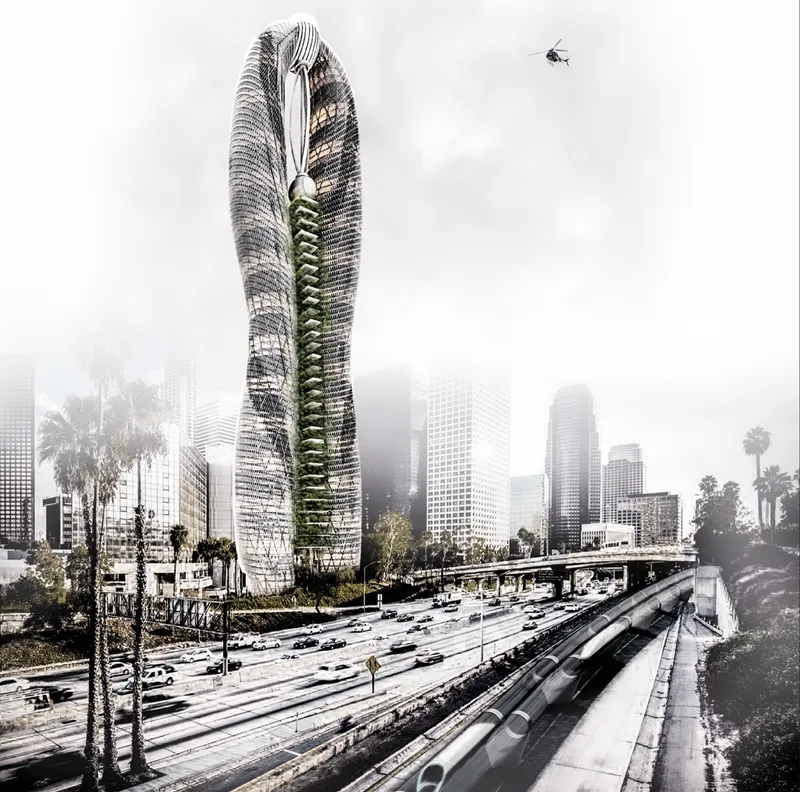
Bionics Integration Sustainable building - BISTOWER
The BIS TOWER was created with the intention of making use of abandoned and unattractive spaces that are often left behind by roadways. The Tower consists of two organic-looking towers that are linked by hanging gardens, a wind turbine, and a helicopter landing strip. The combination of these elements makes the BIS TOWER a unique and innovative structure. [19]
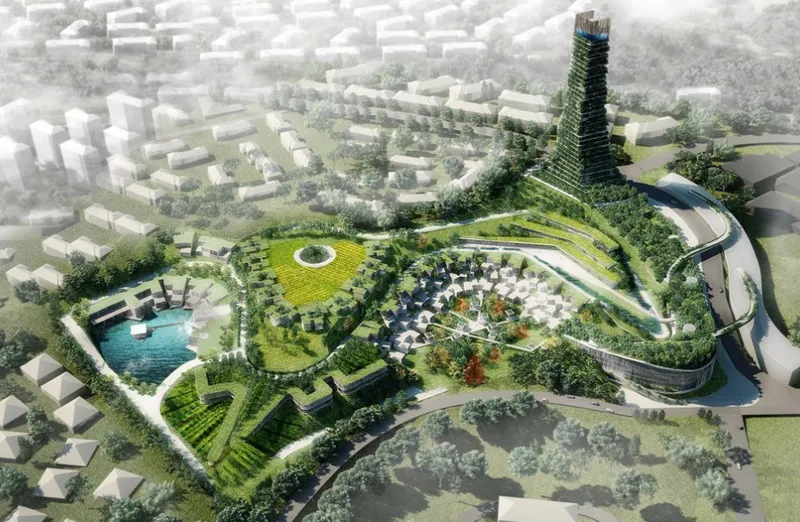
Growing forest on a Skyscraper - Chongqinq Hortitecture
The project is situated in a verdant area which is one of the few remaining natural areas that is yet to be developed. With the current rate of urbanization, this undeveloped land is in dire need of a transformation solution that takes eco-design into consideration. The idea of "Seeding hortitecture" focuses on the entire lifecycle of seeds - from start to finish - by using sustainable construction methods to showcase the transformation of a seed into a mature plant.
This process consists of 8 landscape elements that, connecting to each other, make up a public landscape and develop the green concept from idea to practice, promoting an effective, inherited, and sustainable communication between landscape and architecture. The 8 elements represent separately 8 different circular systems and landscape features, namely: caves, villas, lakes, fields, forests, cliffs, towers, and rivers. The “Seeding hortitecture” springs out of nature and this design hopes that architecture can adapt to the terrain just like plants adapt to the environment. The sowing of ecological organic seeds also represents the adaptation to the complex environment and the changeable future space. By investing in organic seeds, we are investing in our future - one that is sustainable, eco-friendly, and ever-changing. [18]

Low-Income Skyscraper designed to make slum life safer
Italian architects Diego D’Agostino and Enrica Papa proposed a skyscraper for low-income inhabitants in developing nations. The building consists of a prefabricated steel frame assembled in stages according to population growth. The housing units are designed using recyclable materials including plastic and cardboard collected at local recycling plants. The main idea is to create highly customizable blocks that could expand according to the number of residents. The tower also includes green terraces for vertical farms and recreational areas. An interesting aspect of the proposal is its temporality; the building could be dismantled and transported to new areas according to population needs and economic fluctuations. [16]

Rise of a green skyscraper in Beijing - THE VEIL
The veil skyscraper design is located in central Beijing and is a stand-out sight in the area due to its unique eco-sustainable design. The tower uses innovative techniques for renewable energy production, making it not only aesthetically pleasing but also environmentally conscious. In this way, formal design is combined with a forward-thinking technological system. [15]
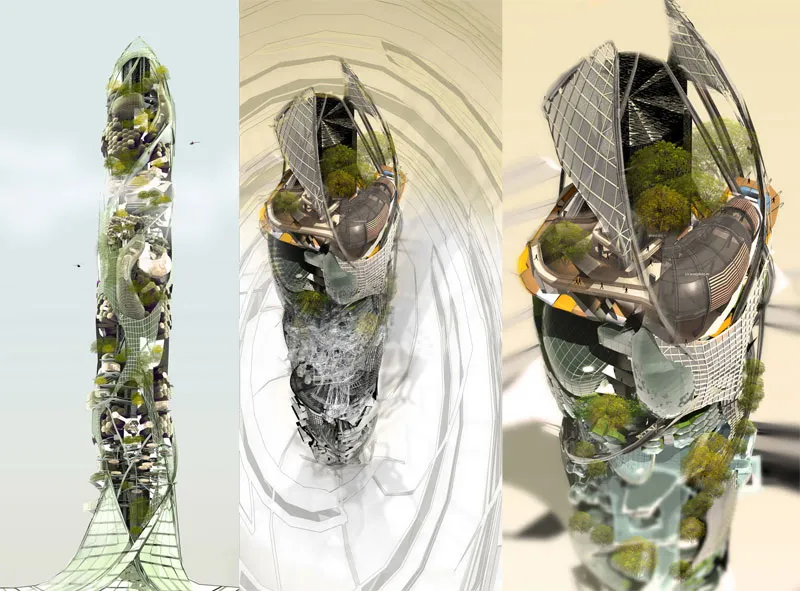
A solar-powered skyscraper that cools the environment
This project, designed by Kenneth Loh and Michelle Lim, investigates a new urban prototype of solar-powered towers. The entire façade is covered with a thin membrane of solar cells and a water collector system. The main idea is to develop a green building with different types of programs. The building core is a hollowed cylinder that moves hot air from the surface and creates micro-climates for gardens, farm fields, and recreational areas. Residential units for low, medium and high density are attached to a continuous ramp or street. Along the entire structure, there will be ‘pockets’ of different sizes and materials for cultural and educational areas. The building is connected to an underground cistern with a power plant. Rainwater is collected, filtered, stored, and used to produce sufficient energy for the entire community. A series of these towers will cool the environment and solve the housing problems of some urban settlements worldwide. [14]

Proposed Guosen securities tower in Shenzhen, China by Italian architects Massimiliano and Doriana Fuksas
The project by Studio Fuksas is born from the intention to create a new concept of vertical public space for the tower. A three-dimensional void will be arranged along the facades giving a dynamic image to the building and creating different public scenarios for the offices.
The design of the void shape explores the relation between the podium and the vertical section of the tower with diagonal spaces and fluxes that create vertical tension at the full height of the tower.
The building's public spaces, lobbies, and sky gardens are all interconnected and suspended in the three-dimensional atrium. This creates a continuous flow of light, activity, and images. The building will be open to the city along the great façade atrium, becoming a part of the CBD's skyline. The glass volume of the Guosen tower will be a pure and unobstructed response to the cityscape. The internal network of public spaces is where all the complexity happens. These spaces are strategically placed in the facades to take advantage of views and visibility according to the urban context. [13]

A tower powered completely by wind - Gullwing twin wind towers
The Gullwing Twin Wind Towers are two of the most ambitious skyscraper designs you will see this year. These towers, designed by ARXX Studio, will run entirely off of wind power generated by turbines placed on the towers.
If a skyscraper made and powered entirely by its own wind turbines isn't ambitious, I don't know what is. The Gullwing Twin Wind Towers are planned for Dubai, a country that has served as the breeding ground for incredible skyscraper concepts. [12]

The Urban Forest by Mad Architects in Chongqing, China
When it's complete, the Urban Forest by MAD Architects may look like a mountain in the middle of the city, but it will function as a 70-floor commercial and residential skyscraper in Chongqing, China.
The best part about climbing a mountain is the breathtaking views from the top. Luckily, MAD Architects didn't forget about this when designing the Urban Forest. The skyscraper will have floor-to-ceiling windows and expansive balconies with lush gardens to make the most of the city views. [11]
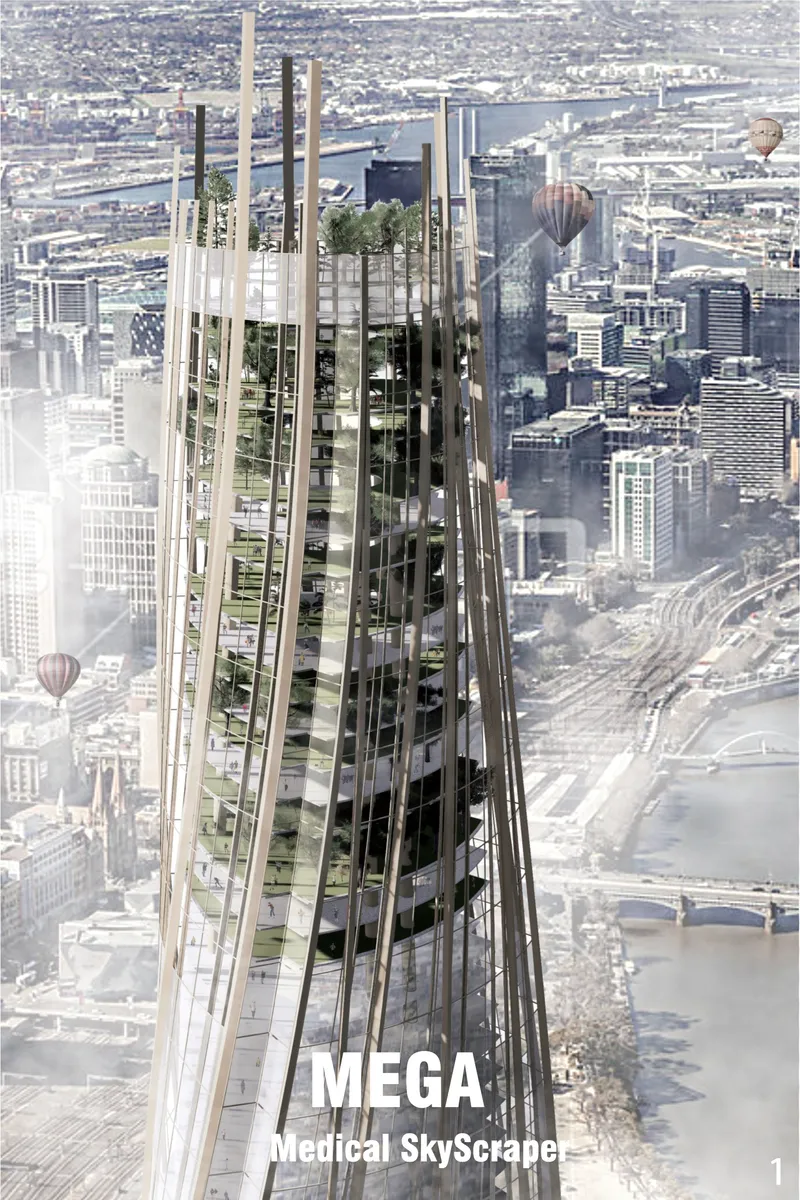
Mega Medical Skyscraper
Not only do skyscrapers add beauty and grandeur to our cities, but they can also play an important role in fighting disease. By providing a safe haven for people to live and work in, skyscrapers can help protect us from harmful bacteria and viruses that can cause illness. Additionally, the height of skyscrapers can help to disperse pollutants away from our breathing zone, making the air we breathe cleaner and healthier. [10]
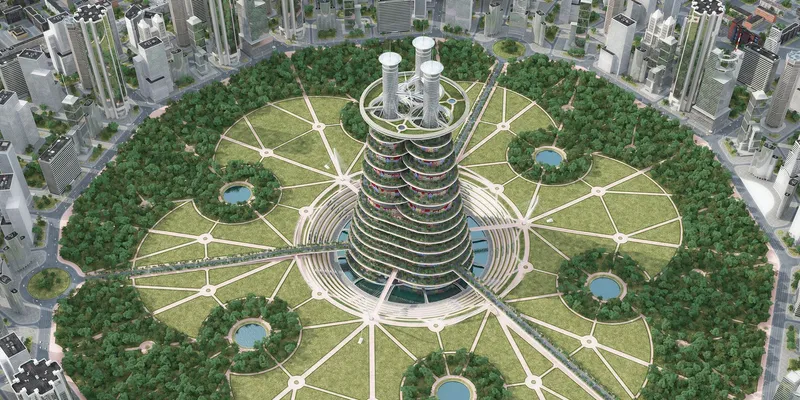
A sustainable Cityscraper
The priority of the architectural design is to analyze options for developing urban infrastructure within city centers in both horizontal and vertical directions. To this end, we have designed structures that are not only buildings but also municipal viaducts. [17]

Memory: City Monument
This is a conceptual residential design based on Lilong (existing traditional buildings in Shanghai). Lilong, as a traditional architectural form, it gradually disappeared due to demolition in recent years. Based on the site itself and the inhabitants’ needs for "memory", we proposed a monument that can preserve the original architectural form and the memory. [9]

Crisis within Architecture - UNOAR - Organ transplant clinic in Beirut
UNOAR is designed to be a mobile learning institution and international task force. In partnership with existing UN agencies and programs, UNOAR strives to improve failed high-rise developments by fusing the inherent material and spatial resources of vacant buildings with local needs and demands. [8]
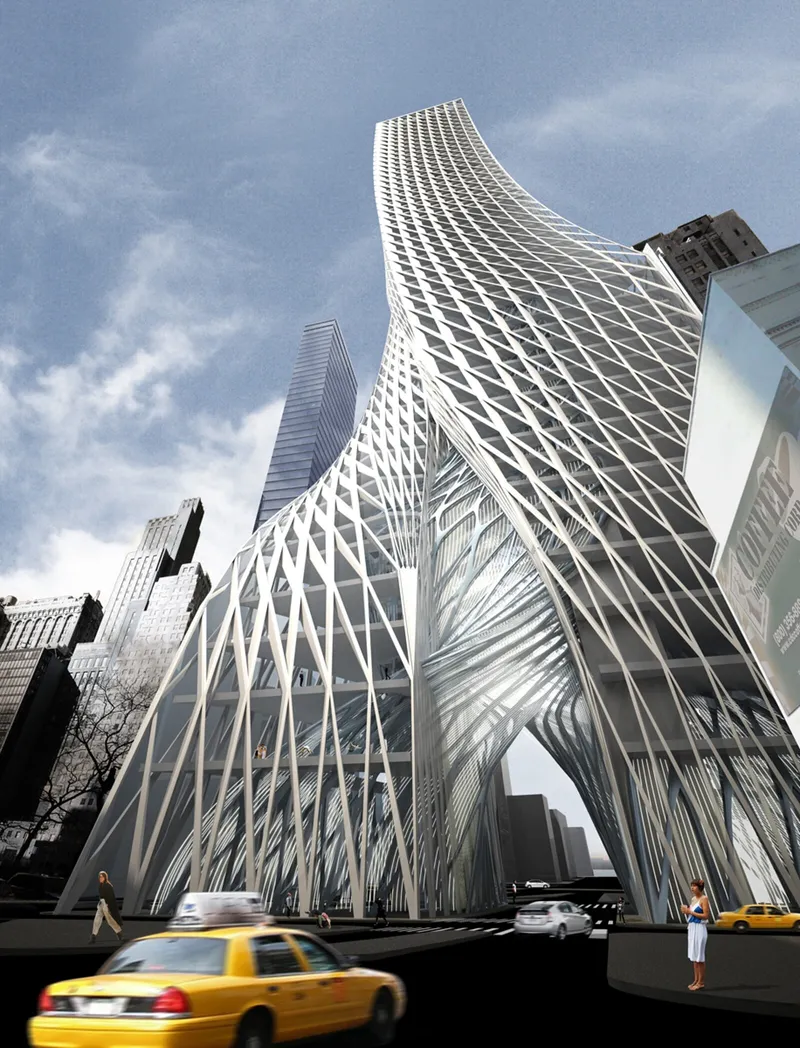
Edgards street tower with bio-filtration
The design for Edgar Street Towers responds to the immediate site context while establishing a strong relationship with the larger urban form of Manhattan. The design is inspired by earlier visionary projects for Manhattan that proposed new hybrids of architecture, infrastructure, and public space.
The towers’ design seeks to reinstate Edgar Street as an east-west public way, reconnecting Greenwich and Washington streets. The space of this passageway through the building twists upwards, rising through the body of the towers, pinching at the mid-level to allow for larger floorplates, and culminating at a rooftop sky lobby and civic space. This space at the towers’ crown is aligned with the primary Manhattan street grid to the north, directly on the axis with 5th Avenue. [7]
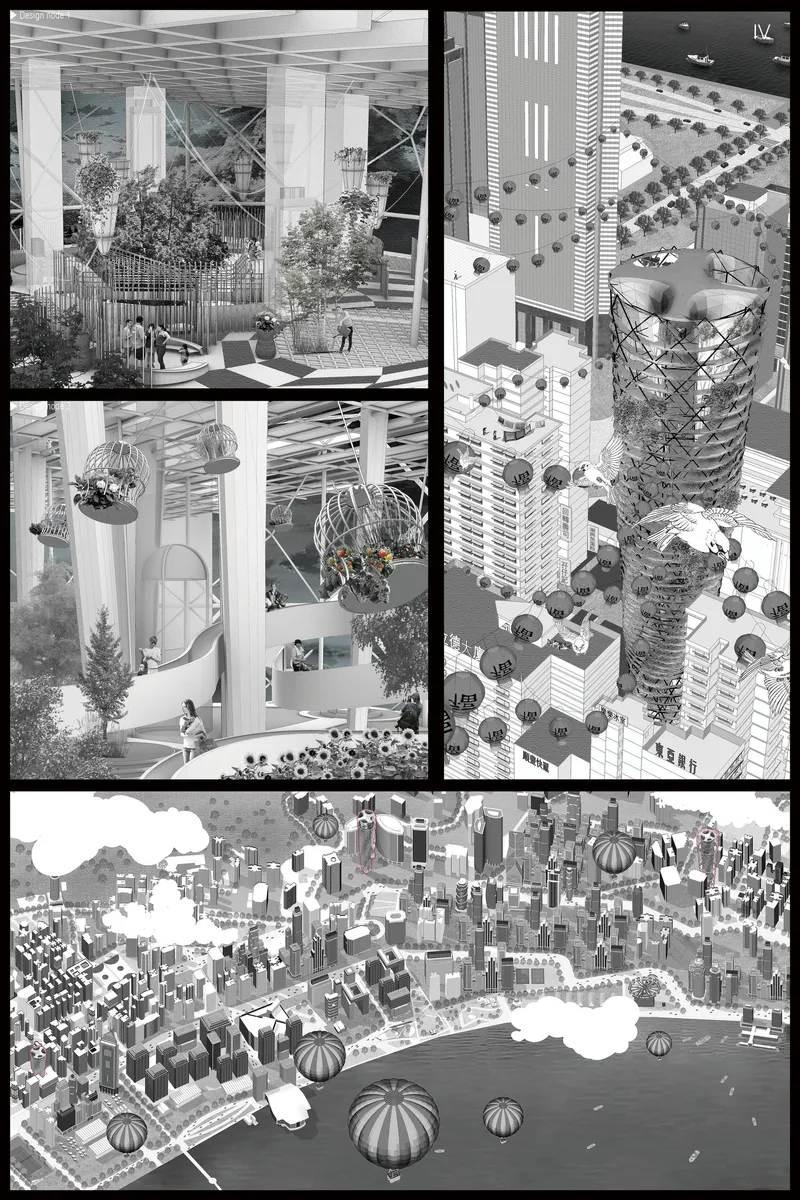
Urban Filter - A skyscraper in Hong Kong
Hong Kong is a bustling city in Asia, symbolized by its skyscrapers and large population. With the rapid development of the economy, the city is also faced with a serious problem: the city is short of water despite heavy rainfall. To collect more rainfall and take advantage of the collected rainfall, the 'urban filter' is made. [6]
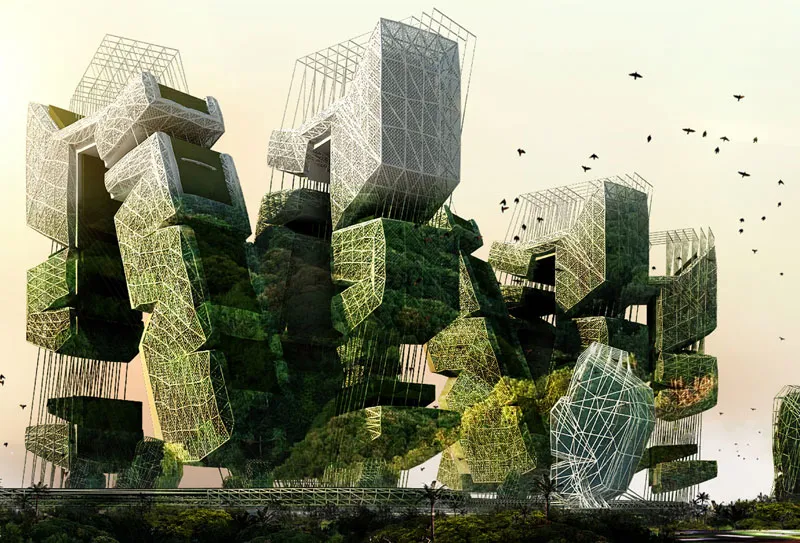
Water Purification Skyscraper in Jakarta
Jakarta, Indonesia was designed around thirteen rivers that served as both transportation and agricultural resources. The Ciliwung River, being the largest of the thirteen, has been facing severe pollution issues in recent decades due to the hundreds of slums established along its banks housing thousands of people in impoverished conditions.
The Ciliwung Recovery Program (CRP) is a project that aims to collect the garbage of the riverbank and purify its water through an ingenious system of mega-filters that operate in three different phases. The first one separates the different types of garbage and utilizes the organic one to fertilize its soil. The second phase purifies the water by removing dangerous chemicals and adding important minerals to it. The clean water is then fed to the river and to the nearby agricultural fields through a system of capillary tubes. Finally in the third phase all the recyclable waste is processed.
One of the most important aspects of this proposal is the elimination of the slums along the river. The majority of the people will live and work at the CRP which could be understood as a new city within Jakarta. The CRP project will be a 100 percent sustainable building that will produce energy through wind, solar, and hydroelectric systems. [5]

Magnet - Magnetic City
Magnet, a network of hybrid skyscrapers built up with magnetic levitation, rises in this Magnetic City. They form systems of clean energy supply and urban green space. They link the regions in the city, accommodate the functions of working space, commercial center, as well as the home for future transportation; attract people to gather here on a daily basis. [4]
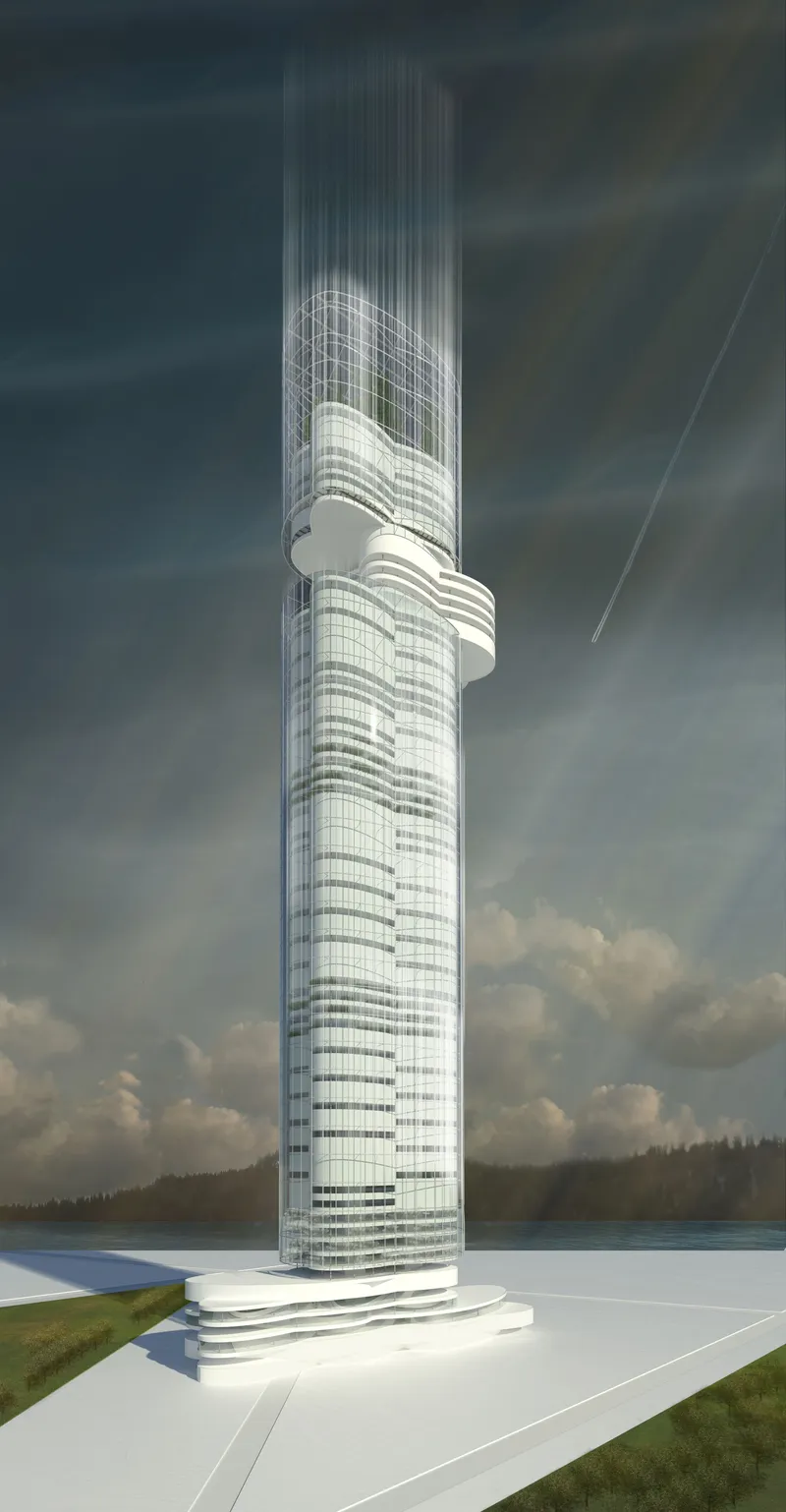
Adaptable climate shaping of architectural forms
Climate conditions can play a big role in modern architecture, and this research has shown that they can be used to create harmonious buildings that are in accordance with natural laws. The design presented in this research could serve as a basis for future skyscraper design, and it has confirmed that such buildings can be made to work with the climate, rather than against it.[3]
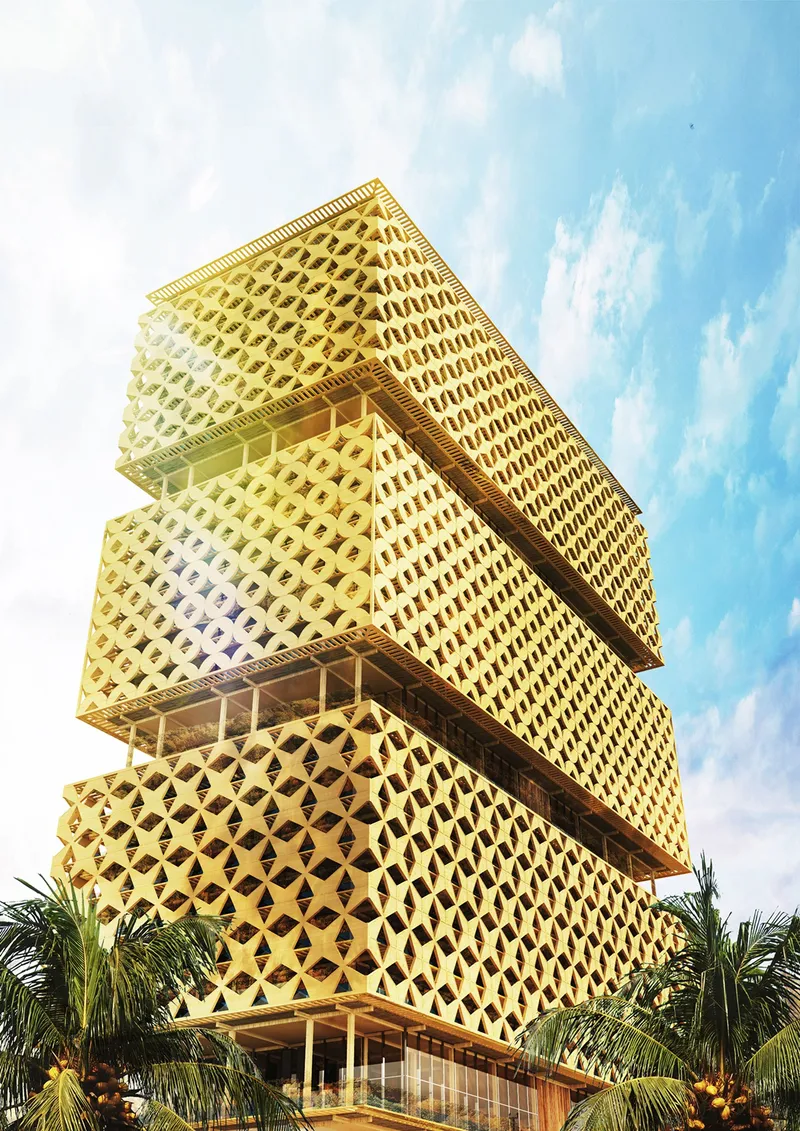
Lagos wooden tower
Lagos's Wooden Tower is a proposed residential tall timber building in Lagos, Nigeria. The structure is a wooden skeleton with Laminated Veneer Lumber that was revealed as a winner of the inaugural WAFX Prize (Cultural Identity) at the World Architecture Festival 2017.[2]

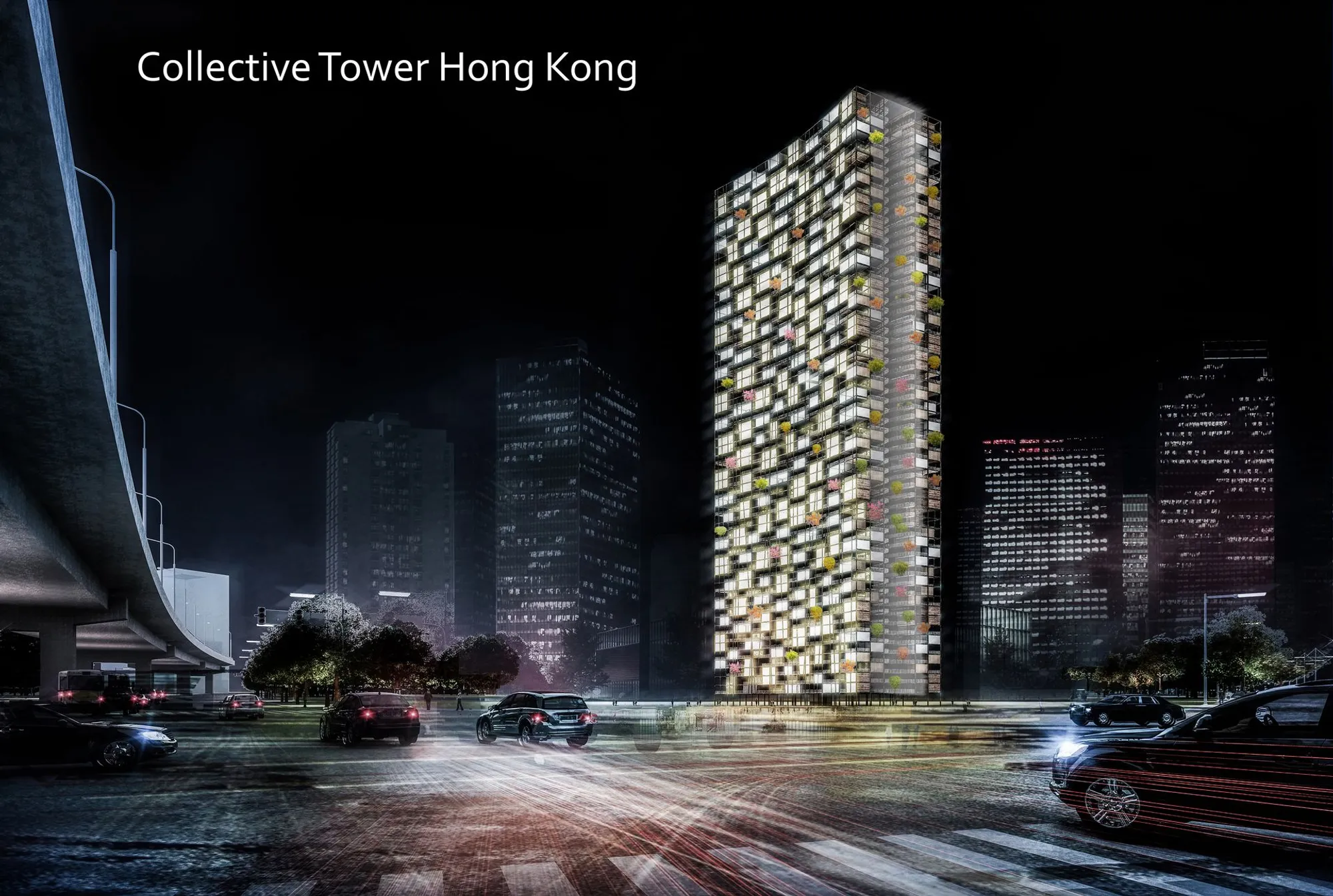
Collective Tower Hong Kong
The proposal is a future strategy for Hong Kong. It aims to make the quality of life better for the people. It cooperates on several floors different kinds of green spaces and urban farming. It is a hybrid lively system of collective living where there is also freedom of living. The dwellings can easily be extended or decreased in this open building system. [1]
We hope you enjoyed our article about sustainable skyscraper designs! These buildings are making a difference in the world by using sustainable design elements and materials. We are always excited when one of our posts is able to provide useful information on a topic like this! You may share your designs and concepts on UNI and help others to find innovative design ideas on UNI.
References (20)




Popular Articles
Popular articles from the community


Riyadh For All: Intergenerational Urban Design for Active Aging in Rabat
Riyadh For All reimagines urban design in Rabat with intergenerational co-living, adaptive courtyards, and Moroccan cultural exchange today.

The Earth Pod: 3D Printed Homes for Resilient Refugee Communities
The Earth Pod reimagines refugee housing through 3D printed homes made from clay, combining resilience, self-sufficiency, and rapid shelter.

The Musturak Paradise: Senior Living Architecture for a Connected Future in Temara, Morocco
The Musturak Paradise reimagines senior living architecture in Temara via private homes, social spaces, culture, community, and shared care.

The Ocean Hive: Sustainable Architecture for a Self-Sufficient Civilization at Sea
The Ocean Hive imagines sustainable architecture at sea, where modular habitats, algae, wave power and ocean waste sustain a growing colony.


Similar Reads
You might also enjoy these articles
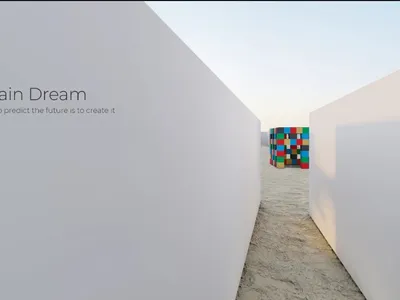
The Main Dream: Modular Architecture for Play, Learning, and Community
A modular playground turns recycled plastic into adaptable spaces where refugee children can play, build, learn, and reconnect.

Play-Hive: Modular Architecture Creates a Learning and Play Landscape in Kutupalong
Play-Hive turns modular bamboo architecture into a resilient learning and play landscape for children in Kutupalong refugee camp, Bangladesh
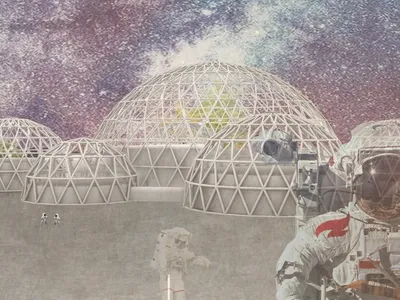
LUNA BASE: Space Architecture for a Self-Sustaining Lunar Habitat
LUNA BASE imagines space architecture as a self-sustaining lunar community where geodesic domes unite living, work, nature, and exploration.

Play: Fragments of Their World
Familiar architecture becomes modular playground design, creating safe spaces where displaced children can learn, connect, imagine and play.


Explore Skyscraper Competitions
Discover active competitions in this discipline



Challenge to reimagine the Iron Throne


Photograph architecture without architects


Illustrate the lost glory of Angkor Wat - Render Challenge


Design challenge to reuse E-waste
Comments (0)
Please login or sign up to add comments
No comments yet. Be the first to comment!