

Necropolis: Rethinking the Urban Cemetery as Layered Public Architecture
A shortlisted memorial design stacks ossuaries, columbaria, and ceremony halls into a single civic building for the living and the dead.


Cemeteries are among the few building types that modern architecture has largely abandoned to convention. They sprawl at the periphery, consuming land without offering much back to the city around them. Necropolis takes a different position: it compresses the full program of a memorial complex into a single, dense architectural volume that sits within the urban fabric rather than retreating from it. The result is a building that functions simultaneously as ossuary, columbarium, funeral parlor, ceremony hall, and public garden, all organized around a central courtyard that pulls light into its deepest levels.
Designed by Margaux Croixmarie, Necropolis was shortlisted in the Circle of Life competition. The project challenges the horizontal sprawl of traditional burial grounds by stacking memorial functions vertically and weaving public program through abandoned or underused spaces. Croixmarie's approach treats the cemetery not as a site to be separated from daily life but as a civic institution that can anchor a neighborhood.
A Courtyard Building Embedded in the Urban Block

From above, Necropolis reads as a square volume organized around a central courtyard, flanked by residential blocks and parking infrastructure. The ground site strategy is deliberate: the building occupies its plot with the same logic as the surrounding housing, matching the grain of the neighborhood rather than breaking it. Parking, graves, and public spaces are arranged to maximize land use efficiency while maintaining clear circulation paths. The courtyard acts as the hinge between the world of the living and the spaces of remembrance below, pulling visitors inward through a sequence of thresholds rather than a single grand entrance.
Vertical Section: Stacking Ritual Below the Skyline


The section drawing reveals the full ambition of the project. A tower element rises above grade while an arched hall and underground levels carve out space beneath the courtyard. The remembrance garden sits at the upper level, open to the sky, while the ossuary and columbarium occupy the subterranean floors. Funeral parlors and ceremony halls are distributed across intermediate levels, each given its own spatial character. The layering is both practical and symbolic: visitors descend toward burial spaces in a literal journey downward, a move that reinforces the emotional gravity of the program.
At ground level, the reception area shows a material palette of marble counters and timber pews, lending warmth to what could easily become a cold institutional space. Figures hold flowers as they wait, a detail that grounds the rendering in the actual rituals of mourning. The space reads as both civic lobby and chapel antechamber, flexible enough to accommodate different cultural traditions of memorialization.
Corridors of Memory: The Columbarium as Architecture

One of the most compelling spaces in the project is the columbarium corridor. Gridded niches line both sides of the passage, transforming the functional requirement of storing cremated remains into an architectural experience. The rhythm of the grid gives the corridor a quiet intensity; each niche is a unit of individual memory, but together they form a collective wall that speaks to the scale of communal loss. Figures walk through the space at a measured pace, and the proportions are generous enough that the passage never feels claustrophobic. Light filters in from above, reinforcing the vertical connection to the courtyard and the sky.
A Monumental Face Turned Toward the City

The exterior elevation presents a white cubic volume punctuated by a single circular opening, a gesture that is at once bold and restrained. A ramped approach leads visitors upward toward the entrance, framed by stylized trees that soften the geometry without undermining it. The building's public face signals its purpose without relying on overt funerary symbolism: no crosses, no angels, no Gothic arches. Instead, the circular void functions as an eye or a portal, suggesting passage between states of being. It is the kind of elevation that could anchor a public square, which is precisely the point.
Why This Project Matters
Urban land is finite, and the traditional model of the sprawling cemetery is increasingly untenable in dense cities. Necropolis offers a credible alternative by treating memorial space as a building type that can be compact, multi-level, and integrated with public life. The combination of advanced ossuary and columbarium systems with ceremony halls and gathering spaces suggests a future where honoring the dead does not require retreating from the living.
What distinguishes Croixmarie's work is the refusal to separate function from emotion. Every spatial decision, from the descending section to the gridded columbarium walls to the singular circular opening on the facade, carries both a programmatic logic and a symbolic weight. The project does not merely solve a problem of burial density; it proposes that the architecture of death can be, and perhaps must be, a form of civic architecture for the communities it serves.
View the Full Project
About the Designers
Designer: Margaux Croixmarie
Enter a Design Competition on uni.xyz
uni.xyz runs architecture and design competitions year-round that reward proposals with spatial conviction and real site intelligence.
Project credits: Necropolis by Margaux Croixmarie Circle of Life (uni.xyz).


Popular Articles
Popular articles from the community

Faces of the Soviet Avant-Garde: Turning Moscow's Street Names into an Open-Air Museum
A network of sculptural installations across a Moscow residential district transforms forgotten architect names into spatial encounters with cultural memor
Manzana Morphosis: Stretching Barcelona's Grid into a Living Landscape for 2050
A radical reworking of the Eixample manzana turns density into a tool for generous public space, vertical ecology, and environmental performance.
Opera on the Sea: Driftwood Logic Shapes a Timber Opera House on Estonia's Coast
Trevor Orgill's opera house translates the entangled drift of floating timber into a civic building where wood, water, and music converge.
Temporary Home for Dogs: A Reversed Zoo Rethinks Animal Shelter Architecture
In Bucharest, a sinuous corridor and freed landscape flip the logic of containment, designing a shelter that works to make itself unnecessary.

Similar Reads
You might also enjoy these articles

Pixel Gardens: One Repeated Module Stacked Into a Terraced Social Housing Tower for Famagusta
Salem Bader's shortlisted housing tower builds a vertical neighbourhood from one repeated module, offsetting units to carve terraces, light and air.
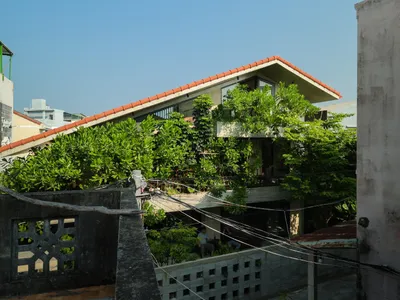
Bao Huynh Watercolor Atelier: A Serene Art Retreat in Hội An
Bao Huynh Watercolor Atelier in Hội An blends multifunctional art spaces, sustainable design, local materials, and family-friendly living in a serene environment.
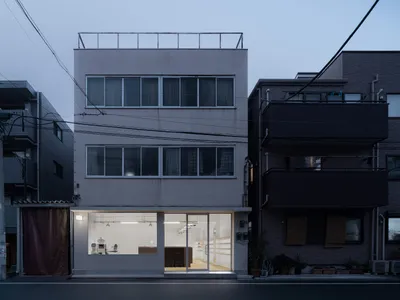
Atelier Macri Concept Store Interior Design by CASE-REAL
Atelier Macri store features a "ko" counter, walnut wood details, cork displays, blending retail, gallery, and seamless customer experiences.
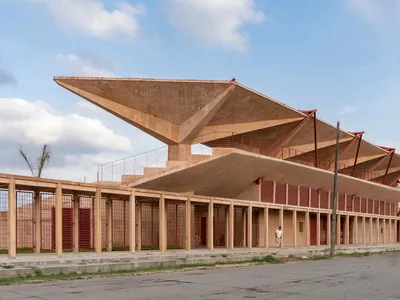
Manuel Vargas Izquierdo Stadium and High-Performance Sports Center: Architectural Excellence in Jalpa de Méndez
The Manuel Vargas Izquierdo Stadium blends sustainable design, inclusive sports facilities, and cultural-inspired architecture, revitalizing Jalpa de Méndez’s public spaces.

Explore Memorial Design Competitions
Discover active competitions in this discipline

Challenge to reimagine the Iron Throne

Photograph architecture without architects

Illustrate the lost glory of Angkor Wat - Render Challenge

Design challenge to reuse E-waste
Comments (0)
Please login or sign up to add comments
No comments yet. Be the first to comment!