
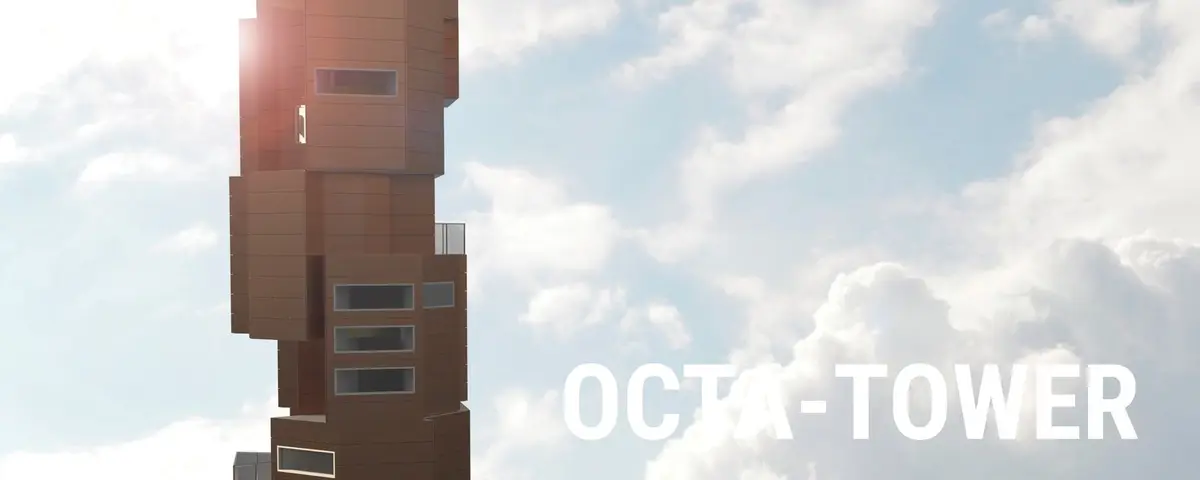
Octa-Tower: Modular Housing Designed to Never Expire
A shortlisted plug-in housing system uses stackable hexagonal modules and steel wedge connections to keep Seattle neighborhoods growing.


Buildings expire. Not through catastrophe, but through quiet obsolescence: a floor plan that no longer fits its occupants, a material palette that ages past repair, a zoning context that shifts around a structure frozen in time. Octa-Tower confronts that inevitability head-on, proposing a housing system built from prefabricated hexagonal modules that can be rearranged, replaced, or expanded over decades. The ambition is not a single building but a framework for perpetual transformation, one where architecture grows with its community rather than waiting to be demolished.
Designed by Ellen Donnelly, Josh Weinand, Charlotte Wortmann, Emma Young, and Weston Hanisch, the project was shortlisted in the Plugin Housing Challenge 2020. The team studied urban housing conditions across Seattle, Minneapolis, and Pittsburgh before selecting a 10,000 square foot south-facing lot in a low-rise Seattle neighborhood as the testing ground for their modular system. Seattle's disproportionately high percentage of single-family zoning gave the proposal a clear target: converting outdated residential zones into compact, multi-family housing without tearing the neighborhood apart.
A Corner Lot Primed for Densification
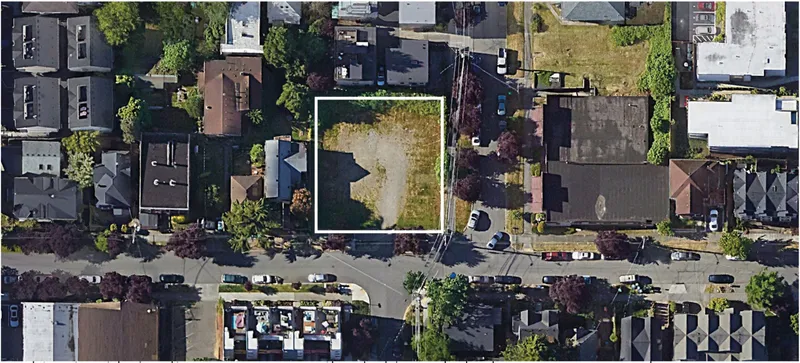
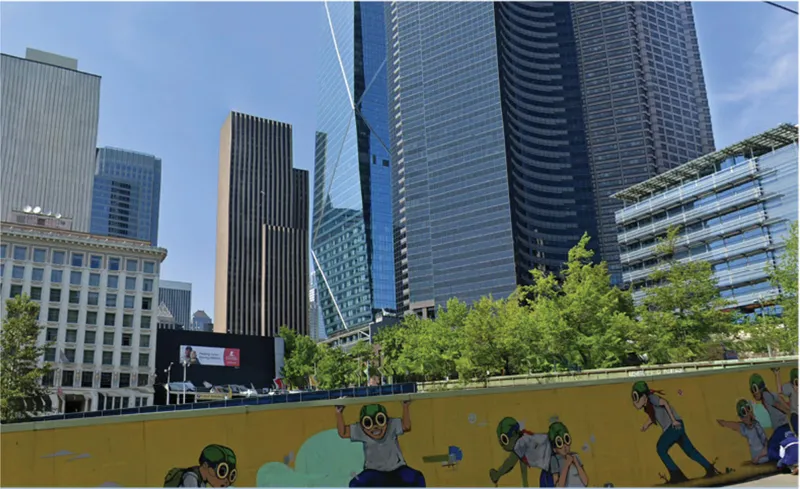
The aerial view of Site 4 reveals a vacant corner lot surrounded by the low-slung texture of single-family homes, parked cars, and narrow sidewalks. It is precisely the kind of underused parcel that dominates Seattle's residential zones. The team analyzed four potential sites before settling on this one, drawn by its south-facing orientation, its relationship to existing streets, and its capacity to absorb vertical expansion without overwhelming the surrounding fabric. The adjacent image of a construction hoarding, painted with human figures against a backdrop of high-rise towers, captures the tension between neighborhood scale and urban ambition that runs through the entire project.
Eight Principles, Three Module Sizes, One System
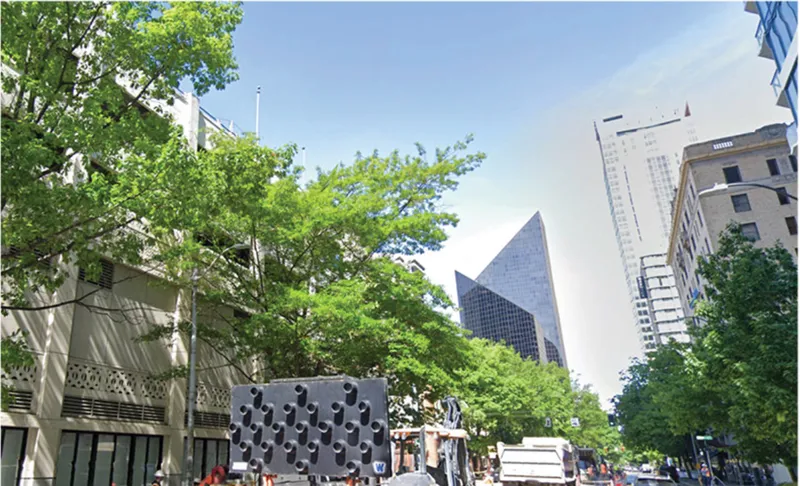
Octa-Tower is organized around eight architectural principles: evolution, transition, assembly, originality, people, function, materials, and color. These are not abstract slogans. Each one translates into a concrete design decision. Evolution means stackable hexagonal units that grow vertically. Transition means wedge-shaped connector pieces that mediate between modules. Assembly means prefabrication and plug-in construction that minimizes on-site disruption. Three distinct module sizes, small, medium, and large, generate spatial diversity within a standardized structural logic.
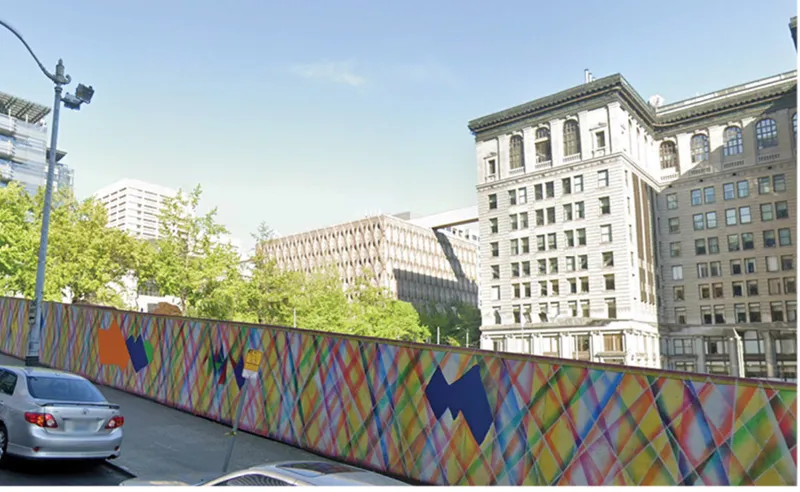
The perforated screen wall visible in the street-level photograph suggests the kind of material performance the team envisions for their exterior cladding. Sustainable panels, durable metals, and thermal glazing work together to provide acoustic and thermal isolation. Steel-to-steel wedge connections hold the modules in structural alignment, allowing units to be rotated for privacy or exposure. Inside, compact bathrooms, kitchenettes, fold-out beds, and convertible surfaces make the most of every square foot.
Layered Facades and Incremental Growth
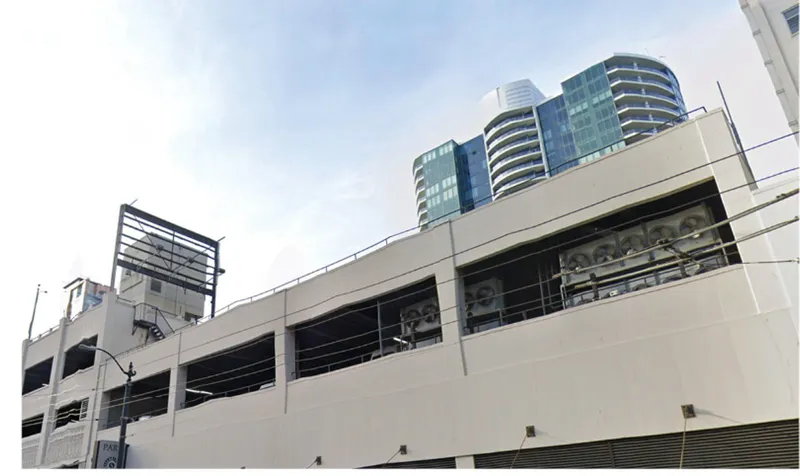
The horizontal ribbon windows of a parking structure and the curved residential tower rising behind it offer a useful analog for Octa-Tower's ambitions: a system where repetitive structural bays accommodate wildly different programs. The team drew inspiration from projects like the Frank Gehry Residence, with its experimental layering of additions onto an existing structure, and the "Foreclosed: Housing the American Dream" exhibition, which challenged suburban housing conventions. Octa-Tower takes those precedents and systematizes them, turning ad hoc renovation into a repeatable, pre-engineered process. Each component arrives on-site ready to connect, minimizing construction time and environmental disruption.
Before and After: A Neighborhood Transformed
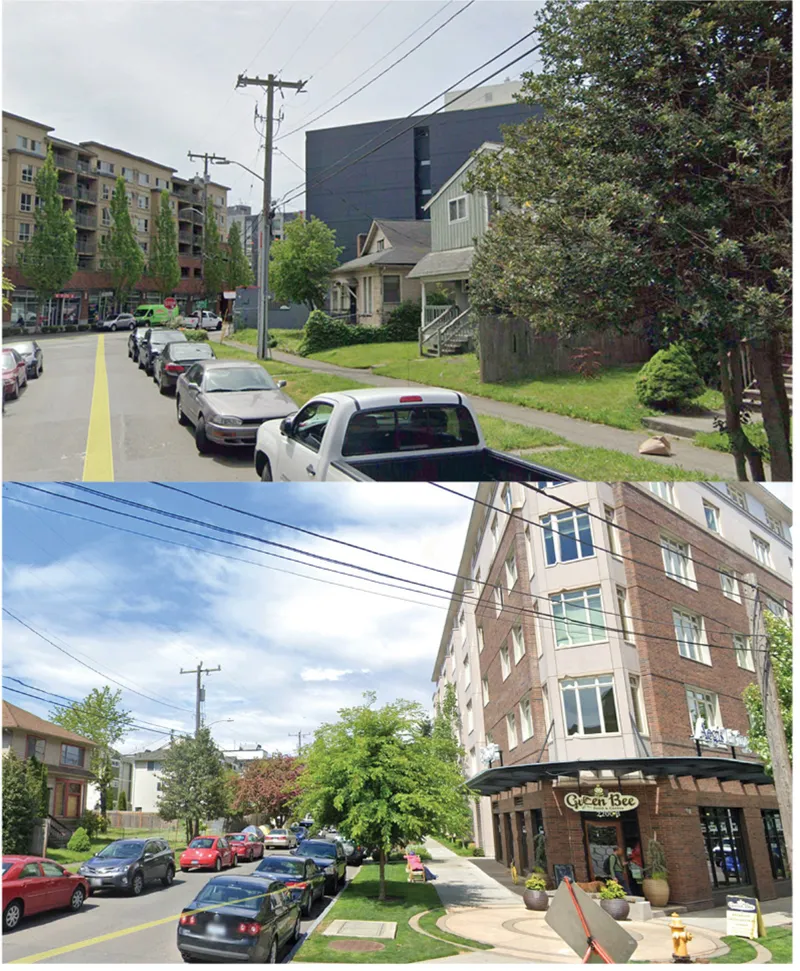
The before-and-after comparison is the project's most direct statement. A typical Seattle residential street, quiet and horizontal, gains a new midrise building at the corner. The insertion does not obliterate the neighborhood; it densifies it. The existing houses remain, the tree canopy holds, and the new volume steps up from the street edge rather than dropping a tower onto the block. This is exactly the kind of incremental densification that Seattle's single-family zones need, and Octa-Tower's modular logic makes it possible to do it without committing to a final form. The building can grow floor by floor as demand or funding allows, each new module plugging into the steel framework below.
Why This Project Matters
Modular housing proposals are common on competition circuits, but Octa-Tower distinguishes itself through the specificity of its urban argument. The team did not design a module in isolation and then search for a place to put it. They studied three cities, identified a systemic zoning problem in Seattle, selected a site that exemplifies it, and then developed a structural system capable of addressing it incrementally. That sequence, from urban analysis to tectonic detail, gives the project a coherence that many modular concepts lack.
The deeper insight here is temporal. Most housing projects are designed for a single moment: the day they are completed. Octa-Tower is designed for every moment after that. Its steel wedge connections, its three module sizes, and its color-coded interior identities all serve a building that expects to change. In a city where housing affordability and density are actively contested at the neighborhood level, a system that can start small and grow without demolition is not just clever engineering. It is a political proposition, offering residents and municipalities a way to densify without the all-or-nothing gamble of conventional development.
View the Full Project
About the Designers
Designers: Ellen Donnelly, Josh Weinand, Charlotte Wortmann, Emma Young, Weston Hanisch
Enter a Design Competition on uni.xyz
uni.xyz runs architecture and design competitions year-round that reward proposals with spatial conviction and real site intelligence.
Project credits: OCTA-TOWER by Ellen Donnelly, Josh Weinand, Charlotte Wortmann, Emma Young, Weston Hanisch Plugin Housing Challenge 2020 (uni.xyz).


Popular Articles
Popular articles from the community


Play: Fragments of Their World
Familiar architecture becomes modular playground design, creating safe spaces where displaced children can learn, connect, imagine and play.

The Musturak Paradise: Senior Living Architecture for a Connected Future in Temara, Morocco
The Musturak Paradise reimagines senior living architecture in Temara via private homes, social spaces, culture, community, and shared care.

Hill & Cross Opera: Sculptural Opera House Architecture Shaped by Tallinn’s Landscape and Identity
Hill & Cross Opera reimagines opera house architecture in Tallinn through its sculptural hill, civic plaza, glass wave and a luminous cross.

Conexión: Biophilic Design Reimagines High-Rise Living in Hong Kong
Conexión reimagines high-rise living in Hong Kong through biophilic design, green facades, shared spaces, daylight, water and nature within.

Similar Reads
You might also enjoy these articles

Day and Night Park: A Time-Based Urban Newsstand in Beijing
A temporary urban newsstand in Beijing blending travel, light, and reading through poetic colors, compact form, and community-focused design.

Modernist Patio Renovation in El Masnou, Barcelona by Oliver Segura Arquitectura + Cebrià Arquitectura
Modernist patio renovation blending tradition and innovation with a movable pool, leveled floors, and Catalan materials in El Masnou.

Alto Residencial Coop: Cooperative Housing Development in Santiago de Compostela by Carbajo Barrios Arquitectos
A linear cooperative housing complex blending white volumes and perforated metal façades, enhancing community living, natural light, privacy, and urban integration.
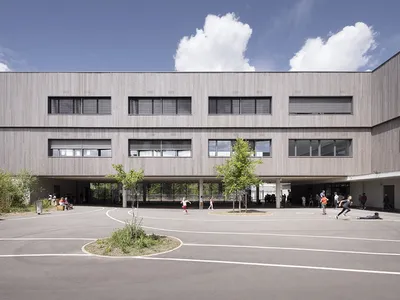
Vil Genis School by BPA ARCHITECTURE – Massy, France
Vil Genis School in Massy, France, features sustainable design, south-facing classrooms, community integration, accessible spaces, and modern educational architecture.

Explore Modular Housing Competitions
Discover active competitions in this discipline

Challenge to design luxury tourism on rails

VR headsets Storefront design competition

Designing a staircase for a client
Comments (0)
Please login or sign up to add comments
No comments yet. Be the first to comment!