
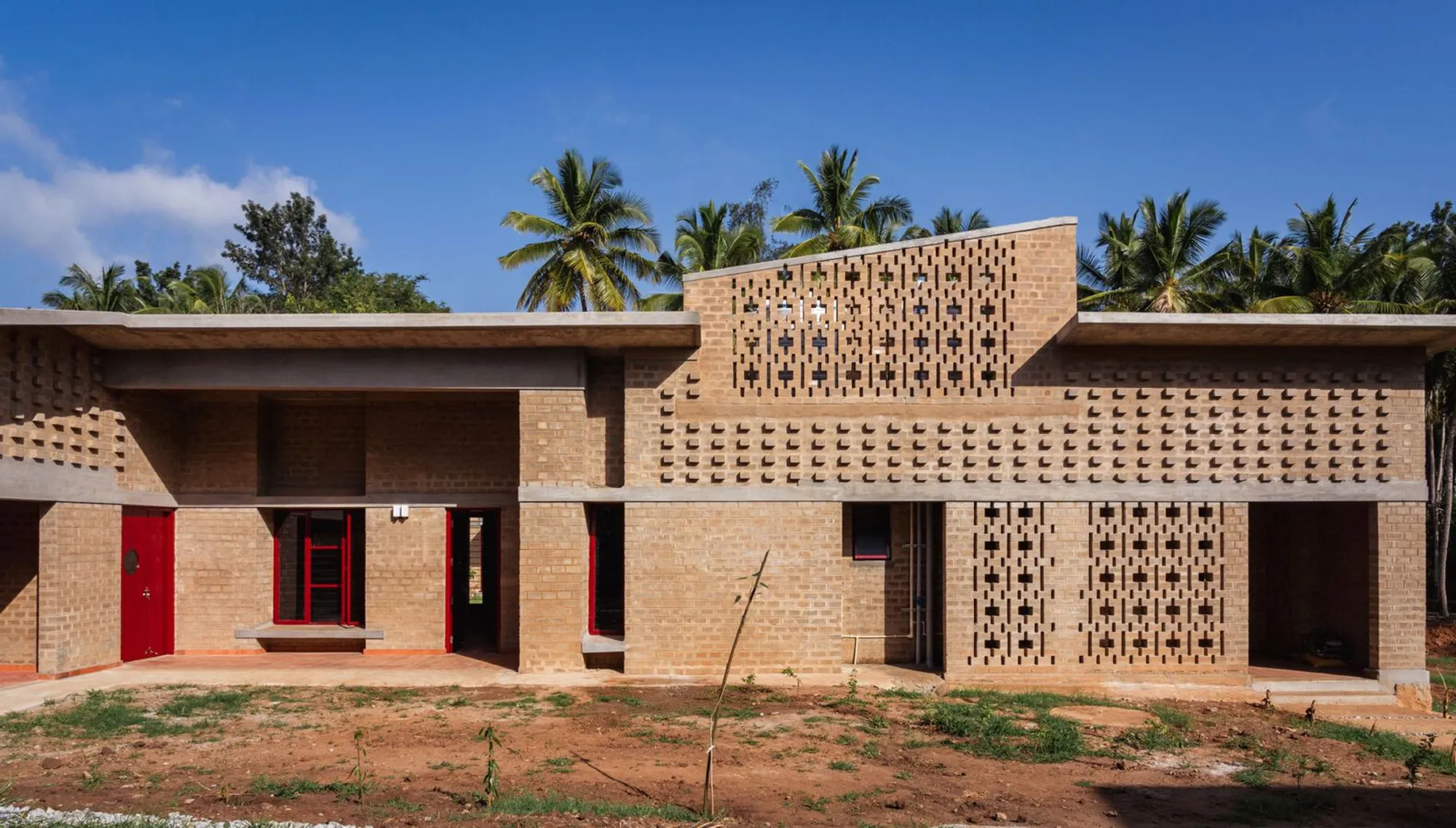
Organic Research and Training Centre by Sejpal and Raje Architects: Sustainable Tibetan Farming Hub in Bylakuppe
The Organic Research and Training Centre in Bylakuppe uses sustainable mud-brick architecture, courtyards, and rainwater harvesting for organic farming education.


Located in Bylakuppe, Karnataka, the Organic Research & Training Centre (ORTC) is a pioneering institution dedicated to promoting sustainable agriculture and organic farming practices within the Tibetan community. Designed by Sejpal & Raje Architects in 2021, this 670 m² facility was completed in 2023 and serves as a critical hub for research, training, and community engagement. Bylakuppe is the second-largest Tibetan settlement in India, home to numerous monasteries, temples, and universities, making ORTC a vital educational and cultural landmark.


A Gateway to Sustainable Agriculture
The ORTC campus reflects the ethos of organic farming, indigenous knowledge, and climate-responsive design. S&RA’s innovative architectural approach combines functionality with sustainability, creating spaces for research, development, administration, and training. The building is designed as a welcoming gateway to the campus, inspiring both staff and visitors with its thoughtful integration of environment, heritage, and modern design.
Climate-Responsive Design & Courtyard Planning
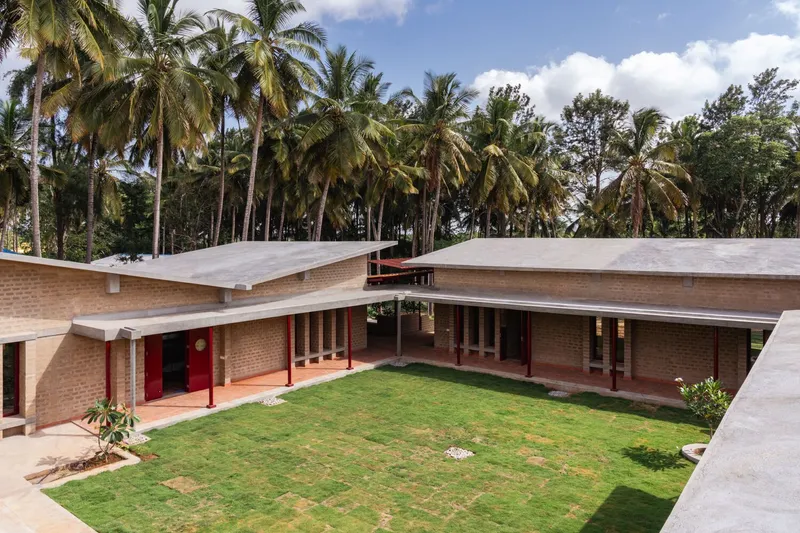
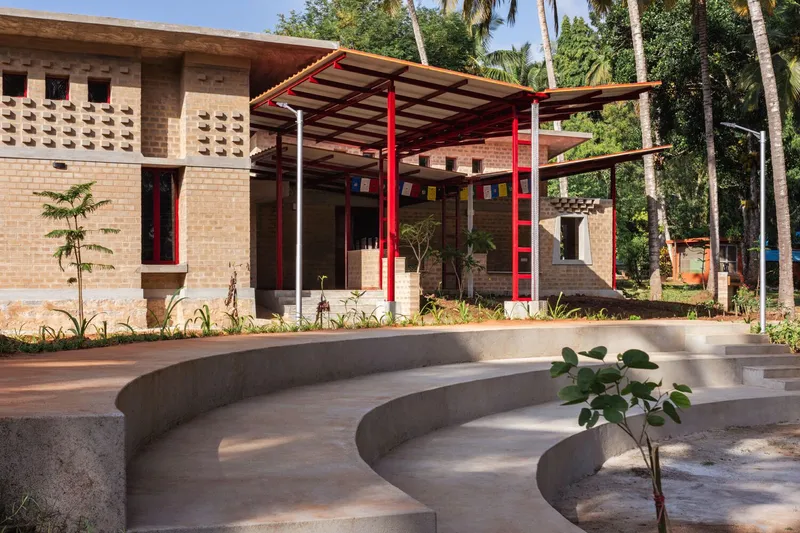
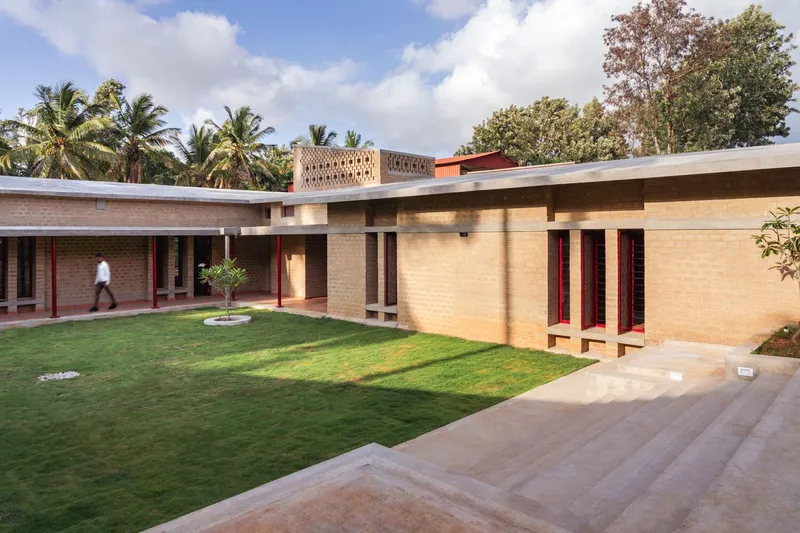
The Centre is organized around a lush internal courtyard, which functions as a natural ventilation system while providing serene green spaces for reflection and collaboration. Verandahs surround the courtyard, encouraging airflow and promoting a sense of community. Adjacent to the main road, an amphitheater set among coconut groves accommodates large events and serves as a gathering space for the broader Tibetan community. Both courtyard and amphitheater allow for communal activities, even when other parts of the building are closed.

Eco-Friendly Materials & Thermal Comfort
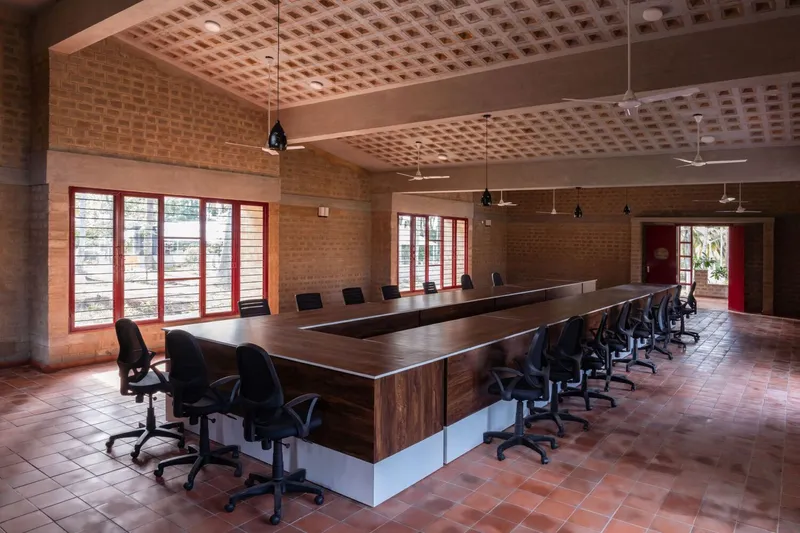
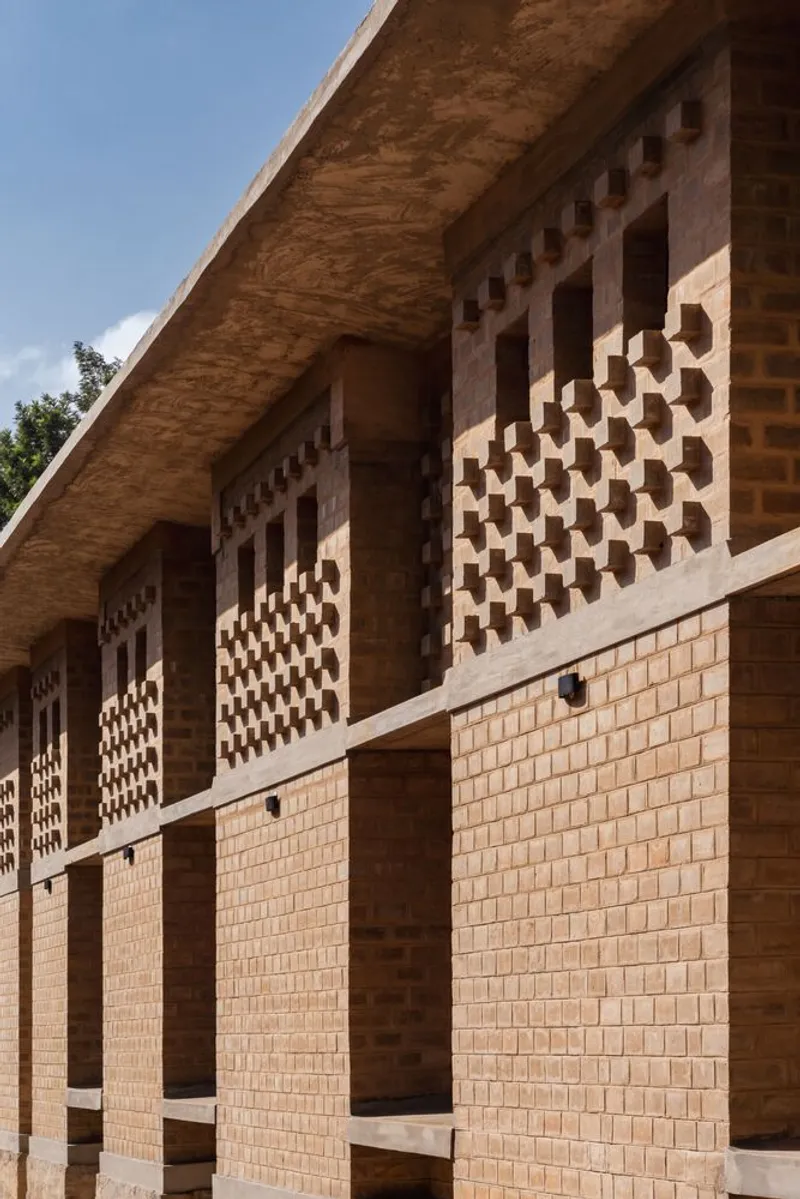
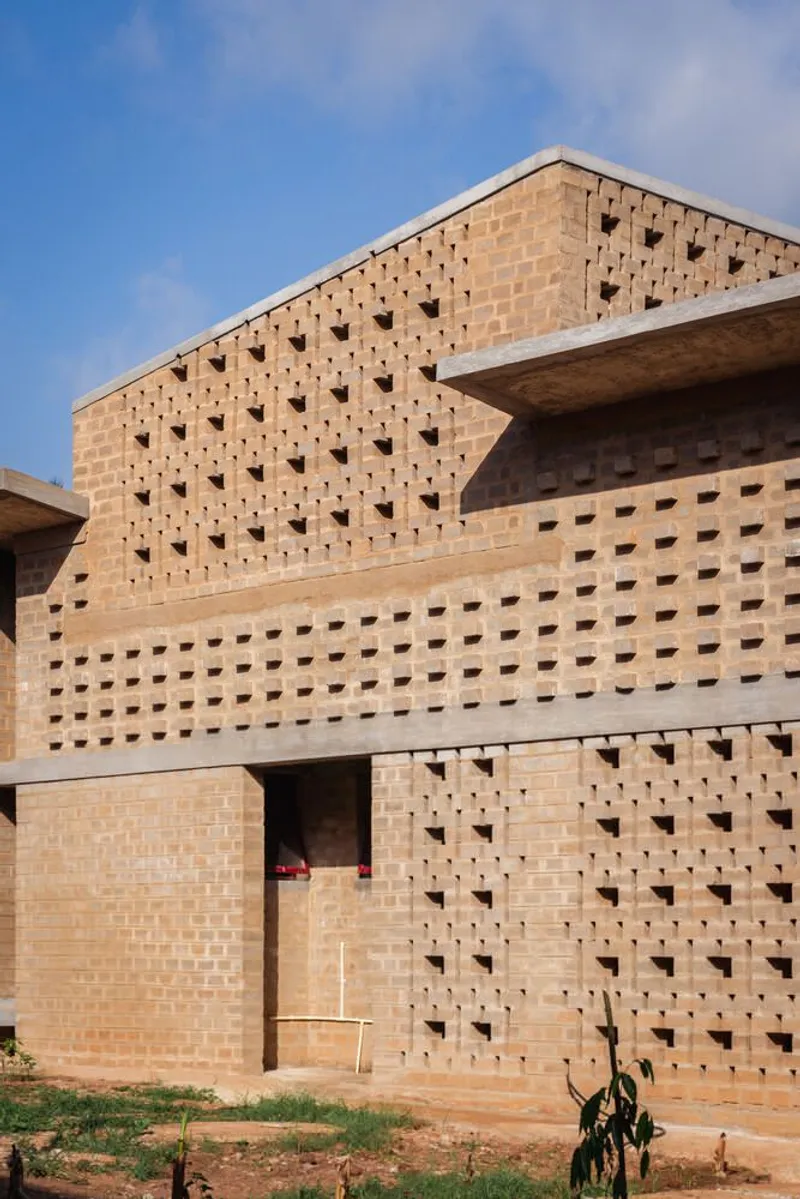
Central to the project’s sustainable design is the use of locally crafted mud bricks, forming the building’s core structure. These sun-dried, mud-stabilized bricks reduce the environmental footprint by minimizing cement and steel usage. Their porous nature enhances natural ventilation, while the stepped brick facades create dynamic patterns of light and shade. This approach not only provides thermal insulation but also introduces tactile textures that enrich the visual experience of the architecture.
Rainwater Management & Green Roofs
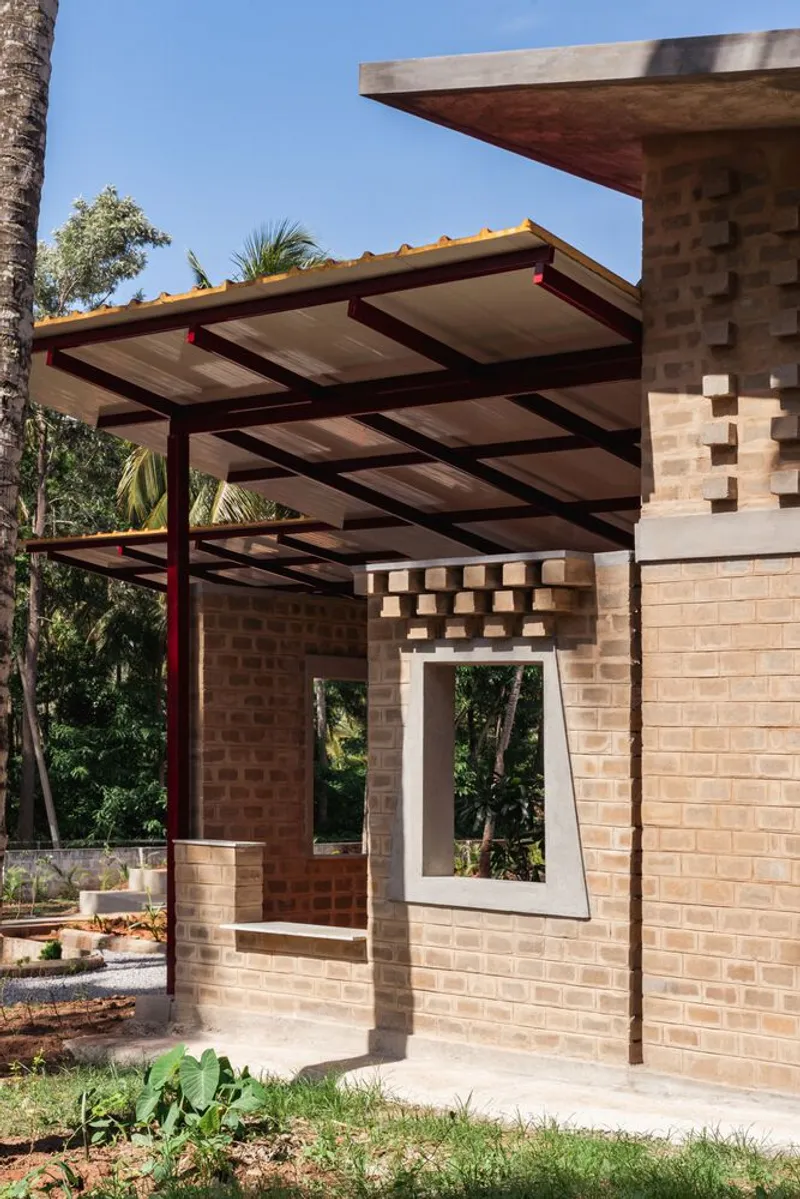
The Centre’s sloping roofs, supported on slender beams, manage the region’s heavy rainfall efficiently. Rainwater is guided through chain columns onto the surrounding lawns and planting beds, nurturing vegetation and supporting local biodiversity. This system reflects the architects’ commitment to eco-conscious water management while reinforcing the Centre’s green, regenerative identity.
A Hub for Community, Learning & Heritage
Beyond architecture, ORTC is a vibrant center for heritage seed conservation, sustainable livestock management, and organic farming education. The facility teaches younger generations about traditional Tibetan agricultural practices and their relevance in contemporary contexts. By blending modern architectural techniques with indigenous wisdom, ORTC fosters a holistic learning environment for trainees, researchers, and the local community.
Sejpal & Raje Architects, in collaboration with SAPA Architects, invite visitors to experience this sustainable green architecture, witness the Centre’s innovative programs, and engage with the dedicated local community members who make ORTC a thriving hub of knowledge and culture.


All photographs are works of
Santosh Kardak




Popular Articles
Popular articles from the community


The Ocean Hive: Sustainable Architecture for a Self-Sufficient Civilization at Sea
The Ocean Hive imagines sustainable architecture at sea, where modular habitats, algae, wave power and ocean waste sustain a growing colony.

The Earth Pod: 3D Printed Homes for Resilient Refugee Communities
The Earth Pod reimagines refugee housing through 3D printed homes made from clay, combining resilience, self-sufficiency, and rapid shelter.

Co-Life: Senior Housing Design That Reconnects Older Adults With the City
Co-Life reimagines senior housing design through healing gardens, shared streets, workshops, and a sustainable community across generations.

Conexión: Biophilic Design Reimagines High-Rise Living in Hong Kong
Conexión reimagines high-rise living in Hong Kong through biophilic design, green facades, shared spaces, daylight, water and nature within.

Similar Reads
You might also enjoy these articles

FAMM Arquitectura Organizes Ten Villas Around Courtyards and Jungle in Nosara, Costa Rica
El Molino pairs two elongated volumes with deep overhangs and timber louvers to build a compact coastal community five minutes from the beach.
Oscar Niemeyer's Ibirapuera Park Pavilions Define São Paulo's Cultural Identity in Concrete and Curve
A constellation of modernist volumes set within São Paulo's most important urban park, conceived for the city's 400th anniversary in 1954.
How Henri Picq's 1889 Paris Pavilion Traveled 11,000 Kilometers to Become Santiago's Artequín Museum
A prefabricated iron and glass pavilion built for the Paris Universal Exposition found a second life as a children's art museum in Chile.
Sanjay Puri Architects Wraps a Jaipur Office Tower in Capsule-Shaped Green Buffers
A nine-level climate-responsive workplace near Jaipur Airport uses stacked planter terraces and aluminium screens to fight 40°C heat.


Explore Sustainable Design Competitions
Discover active competitions in this discipline



Challenge to reimagine the Iron Throne


Photograph architecture without architects


Illustrate the lost glory of Angkor Wat - Render Challenge


Design challenge to reuse E-waste
Comments (0)
Please login or sign up to add comments
No comments yet. Be the first to comment!