
Parametric Design in Small Spaces: A Case Study of Cœur Tagesbar
The article explores how parametric design transforms small spaces, using Cœur Tagesbar as a case study in innovation.


Parametric Design in Architecture
Parametric design has revolutionized modern architecture, enabling designers to solve complex spatial challenges through computational algorithms. This approach is particularly impactful for small spaces, where maximizing functionality and aesthetic appeal requires innovation.
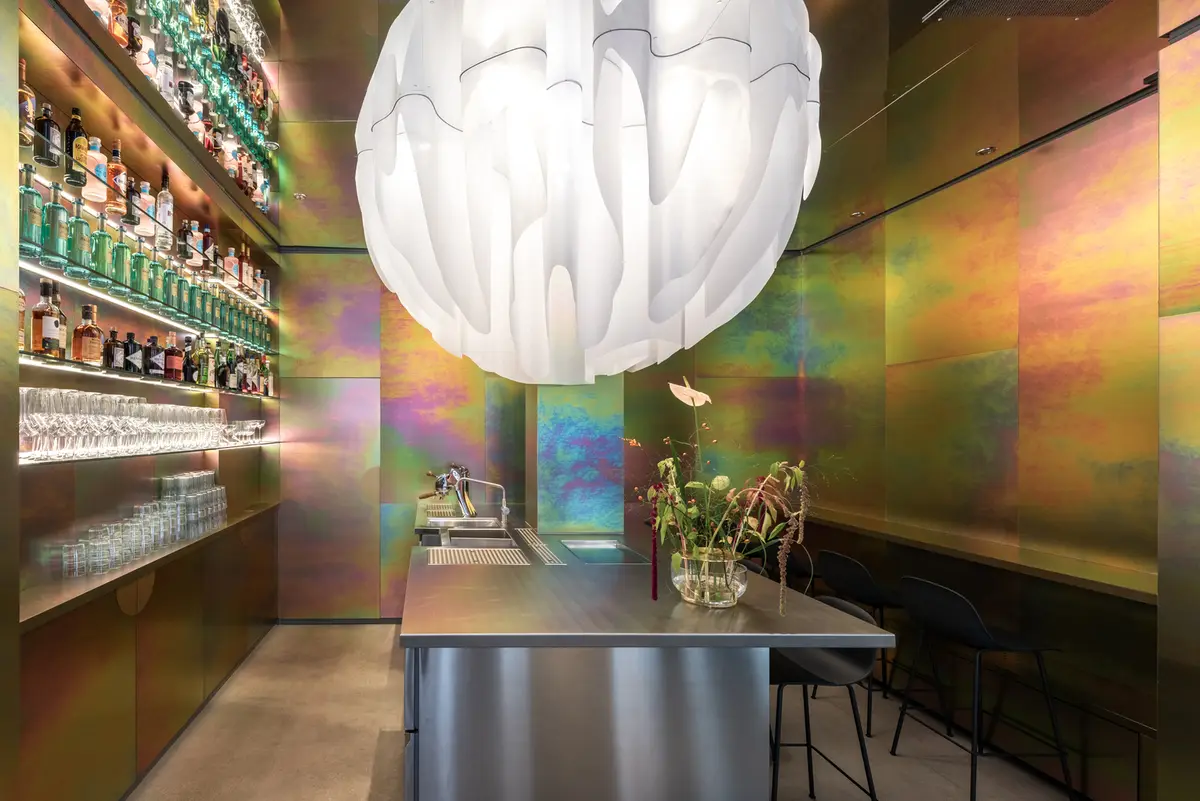
The Cœur Tagesbar in Munich, Germany, designed by Martino Hutz Architecture, stands as a prime example of parametric design's potential. By employing differential growth patterns and innovative materials, this 62 m² bistro transforms spatial limitations into a vibrant and functional masterpiece.

Differential Growth in Design
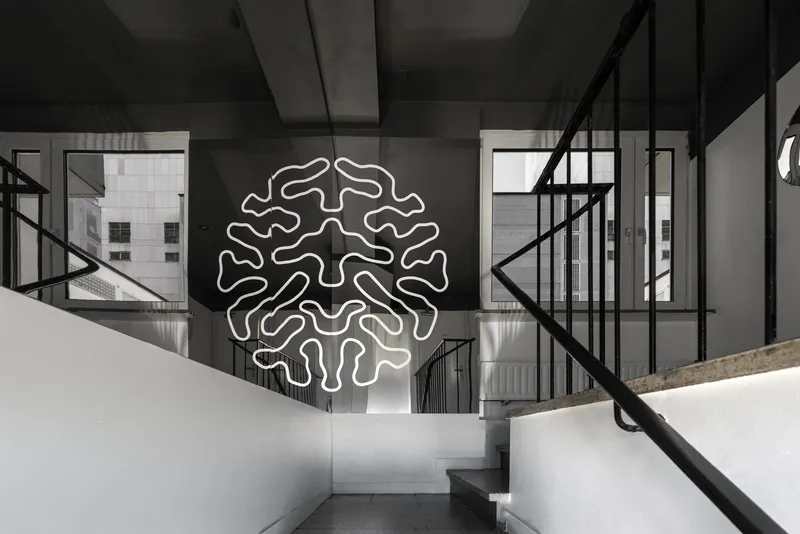
At the heart of the Cœur Tagesbar's design lies the principle of differential growth, a biological phenomenon mimicking natural processes. This concept uses mathematical algorithms to create organic patterns that maximize space efficiency and aesthetic harmony.
How Differential Growth Works:
- Algorithmic Simulation: Parametric software generates growth patterns based on natural evolution, resulting in seemingly random yet highly organized designs.
- Applications in Architecture: The growth algorithm shaped not only the light installation centerpiece but also influenced smaller artifacts and wall cladding.
Designing Small Spaces with Parametric Solutions
Small spaces present unique challenges, from limited square footage to restricted natural light. The Cœur Tagesbar showcases how parametric design can overcome these hurdles through:
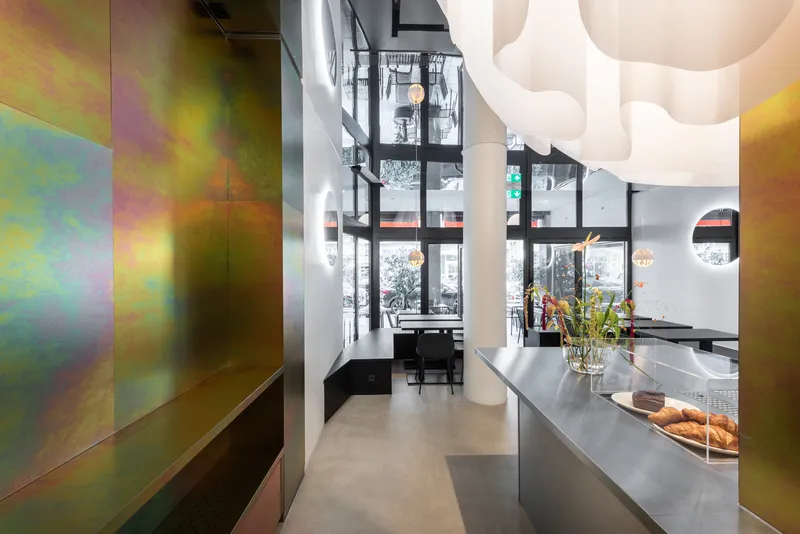
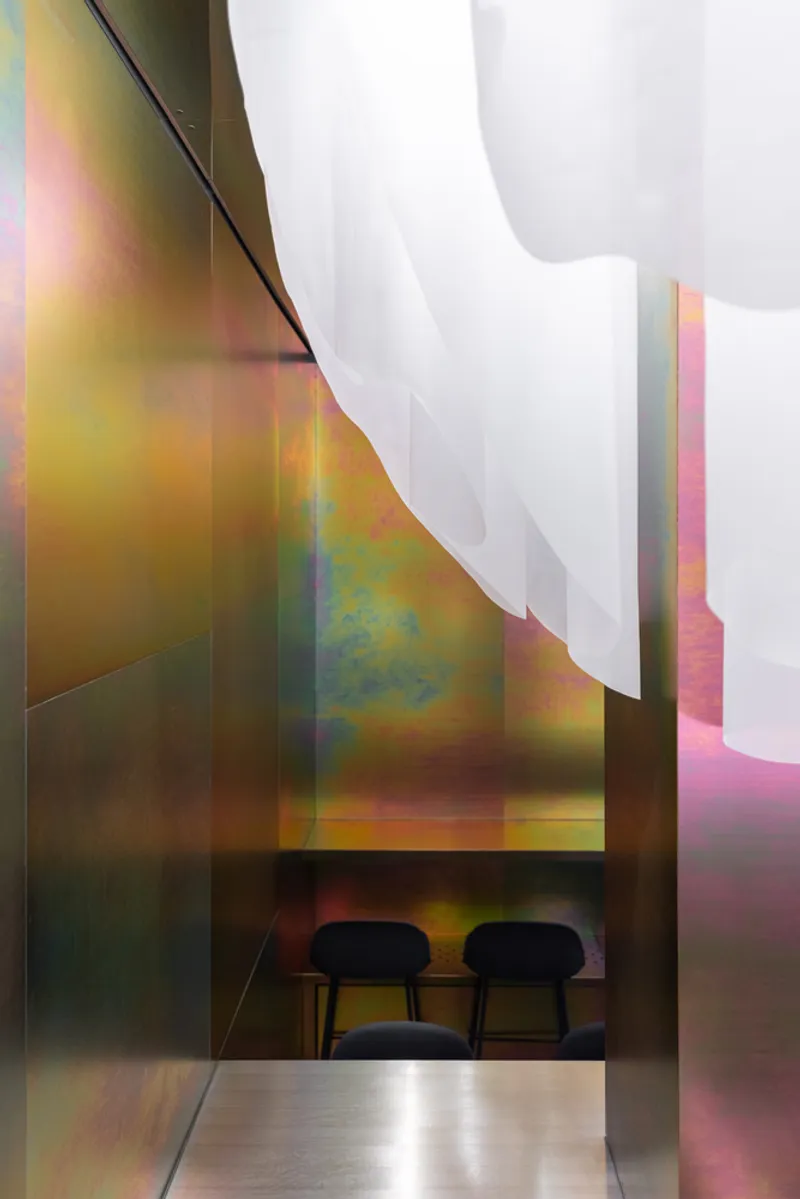
- Material InnovationChromated Steel Panels: Custom steel panels with gradient hues create vibrant, non-monochromatic surfaces. These reflective elements visually expand the space.Stainless Steel Counter: Reflective and sleek, it doubles as a functional and aesthetic centerpiece.
- Chromated Steel Panels: Custom steel panels with gradient hues create vibrant, non-monochromatic surfaces. These reflective elements visually expand the space.
- Stainless Steel Counter: Reflective and sleek, it doubles as a functional and aesthetic centerpiece.
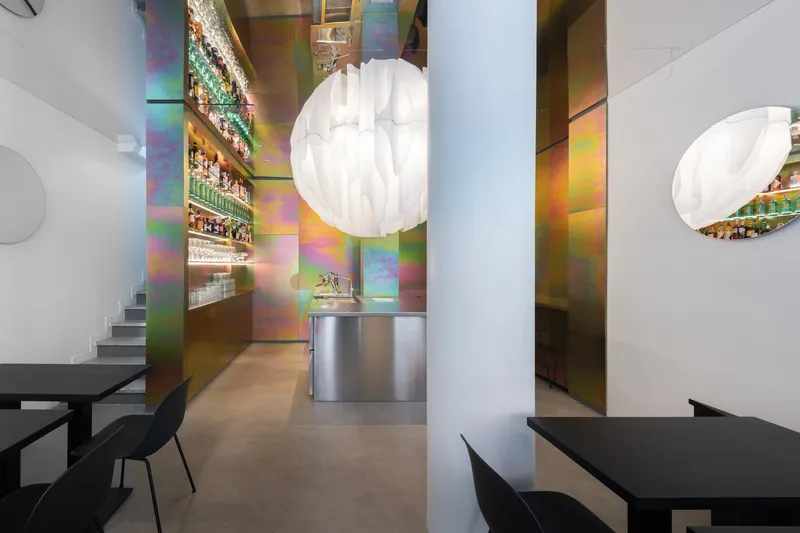
- Spatial ZoningDivided into three zones—terrace, dining area, and open bar—the layout optimizes flow and functionality.A "room within a room" concept enhances ambiance in areas lacking natural light, using vivid colors and lighting.
- Divided into three zones—terrace, dining area, and open bar—the layout optimizes flow and functionality.
- A "room within a room" concept enhances ambiance in areas lacking natural light, using vivid colors and lighting.
- Lighting DesignA 28-meter-long fabric light installation mimics a spherical shape, creating the illusion of double-height space.Integrated lighting provides adaptable moods, transitioning seamlessly from daytime vibrancy to nighttime intimacy.
- A 28-meter-long fabric light installation mimics a spherical shape, creating the illusion of double-height space.
- Integrated lighting provides adaptable moods, transitioning seamlessly from daytime vibrancy to nighttime intimacy.

Maximizing Visual Perception
Parametric design excels in altering perception, particularly in compact spaces. Cœur Tagesbar employs strategies such as:
- Mirrored Surfaces: Strategic placement expands visual depth, creating a dynamic interplay of reflections and counter-reflections.
- Custom Fixtures: 3D-printed pendant lights continue the theme of differential growth, blending form and function.
The Role of Technology in Parametric Design
Advanced computational tools play a vital role in projects like Cœur Tagesbar. From simulating differential growth patterns to fabricating custom elements, technology ensures precision and creativity.
Key Technologies Used:
- Parametric Software: Generates organic forms and optimizes material use.
- 3D Printing: Allows for the creation of bespoke fixtures aligned with the project’s design language.


Why Parametric Design Suits Small Spaces
The adaptability of parametric design makes it an ideal choice for small spaces. By combining mathematical precision with aesthetic innovation, architects can:
- Maximize usable space.
- Enhance functionality without compromising beauty.
- Create distinctive designs that resonate with users.
Cœur Tagesbar: A Blueprint for Future Designs
The Cœur Tagesbar sets a benchmark for using parametric design in small spaces. By blending organic forms, reflective materials, and innovative lighting, it transforms limitations into opportunities.

As urban spaces become increasingly constrained, parametric design offers architects a powerful tool to innovate within small footprints. The Cœur Tagesbar demonstrates how this approach can redefine compact interiors, creating functional and visually stunning environments.


Popular Articles
Popular articles from the community


ETEH Reworks the Shared Spaces of São Domingos School in Brazil Around Timber, Color and Hanging Plants
At São Domingos School in Brazil, 436 m² of hall, refectory and library are recast with timber joinery, a yellow and blue code and trailing greenery.

LT2A and OPEN Architectes Thread a Brick and Glass High School Through a Wooded Belgian Campus
In Braine-l'Alleud, a 3,000 m² wing for Collège Cardinal Mercier pairs pale brick with a glazed colonnade, deferring to a small chapel and a dense wood.

graciastudio Turns a Viewless Tijuana Lot Inward Around a Courtyard of Concrete, Timber and Trees
In Tijuana, Jorge Gracia's GA2 House stacks a timber-clad private floor over exposed concrete and replaces a missing view with a planted interior patio.

Juan García Correa, John González and Claudia Rueda Sink a Circular Amphitheater into a Manizales Engineering Building
On the La Nubia campus in Manizales, Colombia, the S1 Building folds labs and offices into a hillside of ramped lawns that double as a campus route.

Similar Reads
You might also enjoy these articles


Hodi-Mandai Geram
Project Function: Preservation and revitalization of the Intangible heritage and socio-spatial identity of the Hodi by Housing, Cultural Memory Center, Sacred Grove, landscape, local tourism economy


Olio Towers: A Mid-Rise for Performers That Fuses Housing, Rehearsal, and Stage
Located blocks from Houston's Theater District, this modular tower stacks living units around a central performance atrium.

Oasis: Modular Green Housing Carved into Dhaka's Urban Fabric
A shortlisted Plugin Housing entry reclaims unauthorized settlements in Dhaka with stepped concrete volumes, green roofs, and ventilation-driven design.

Black Hole: A Floating Megastructure for the Post-Physical Era
Emiliano Mazzarotto envisions a spherical, self-scaling arena where e-sports, digital hotels, and holographic stadiums replace traditional public space.

Explore Architecture Competitions
Discover active competitions in this discipline

Challenge to reimagine the Iron Throne

Photograph architecture without architects

Illustrate the lost glory of Angkor Wat - Render Challenge

Design challenge to reuse E-waste
Comments (0)
Please login or sign up to add comments
No comments yet. Be the first to comment!