
Pedrantil House Helder da Rocha Arquitectos – Hillside Volumes Revealing the Western View in Croca, Portugal
Pedrantil House in Croca, Portugal layers simple hilltop volumes to reveal westward views, low-impact construction, and luminous living at sunset.


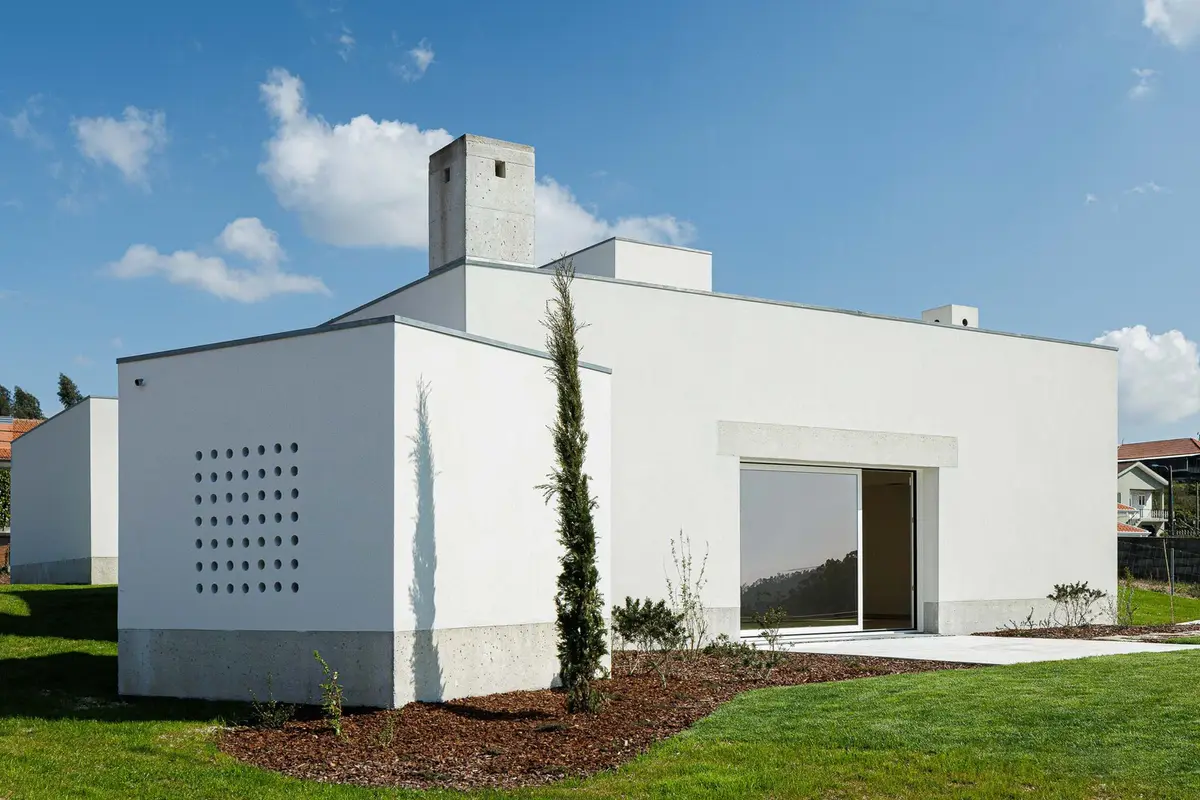
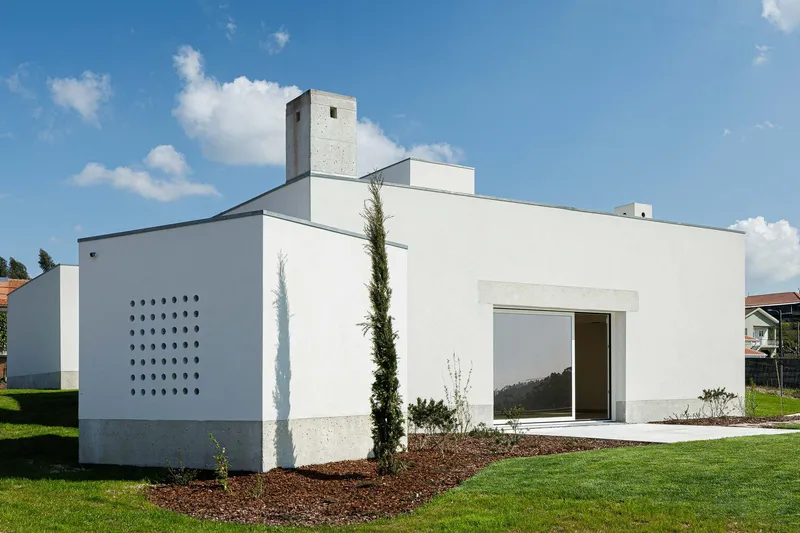
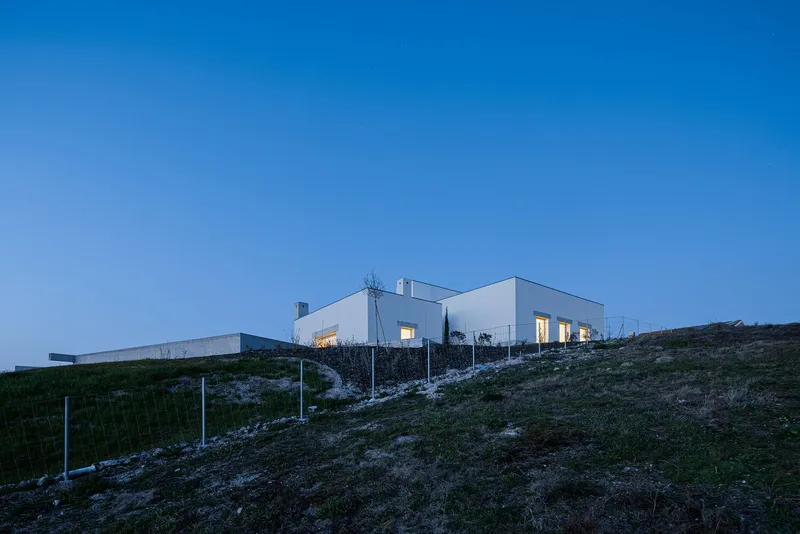
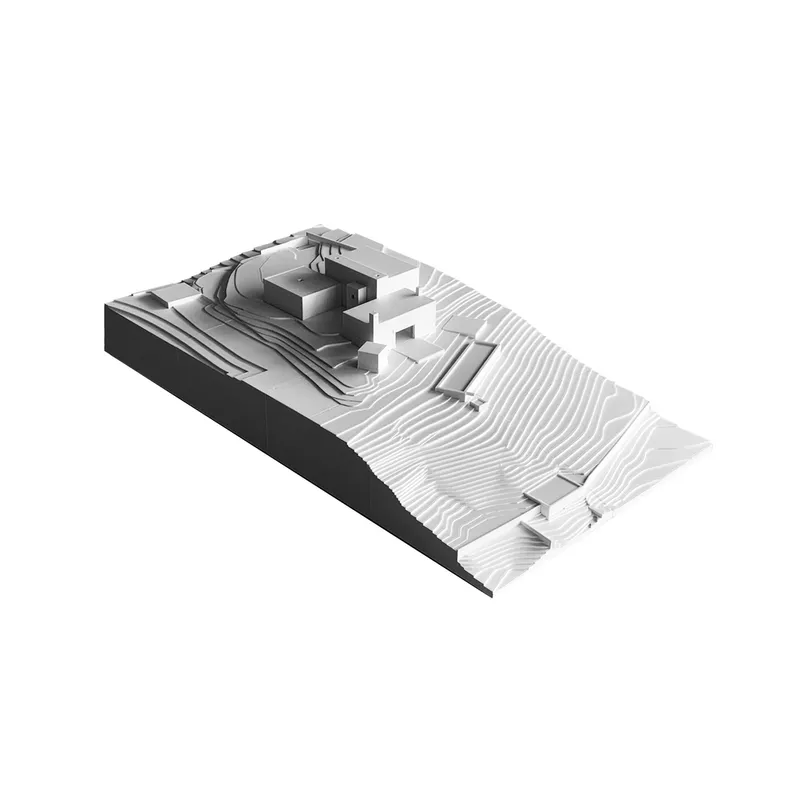
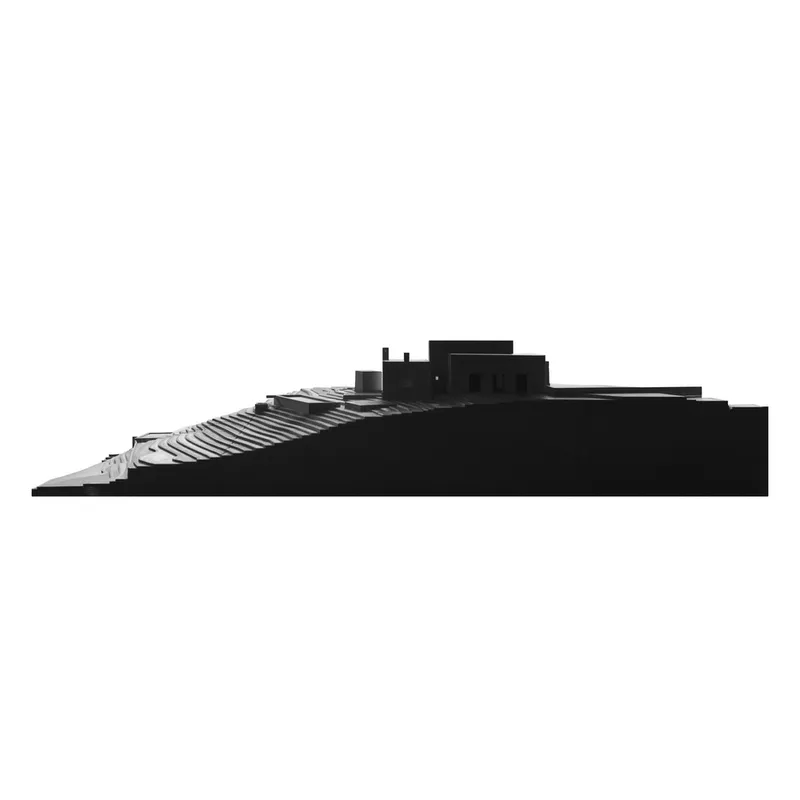
Pedrantil House Helder da Rocha Arquitectos is a 204 m² hillside residence completed in 2025 in Croca, Portugal. Designed around economy, topographic restraint, and the poetics of arrival, the project transforms a sloped, view-blocked plot into a sequence of gradually unfolding spaces that culminate in a single expansive window to the west. Rather than impose a heavy cut through the hill, the architects composed a family of modestly scaled volumes that perch, step, and register elevation changes with minimal earthwork.
First Encounter with the Site
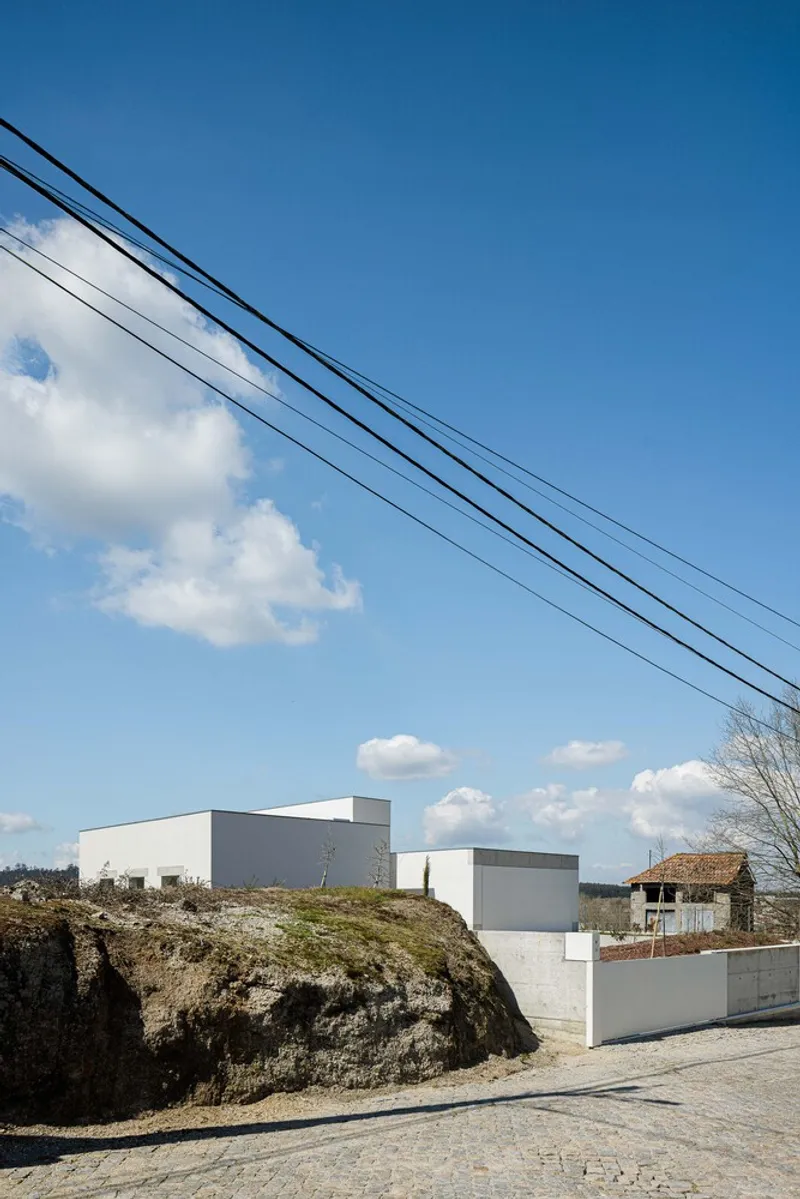
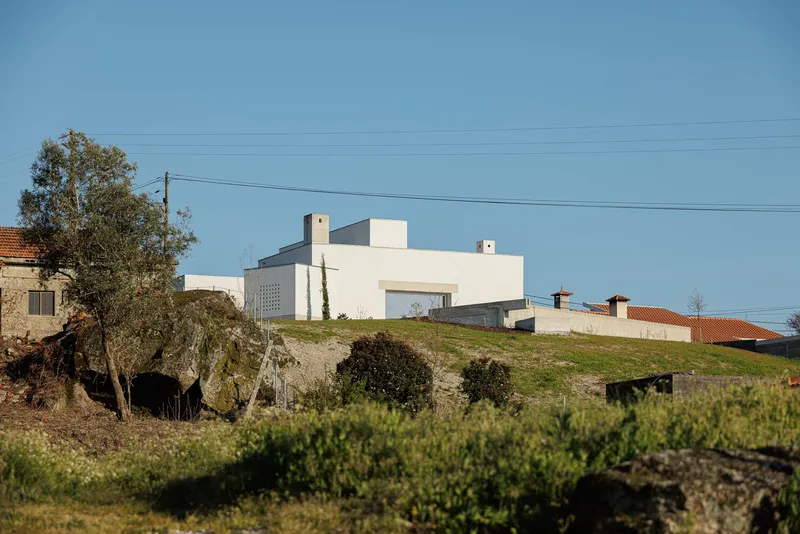
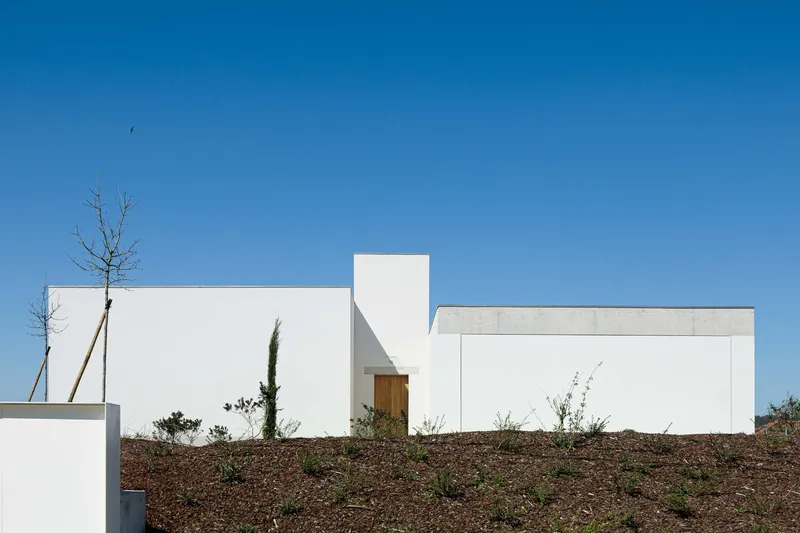
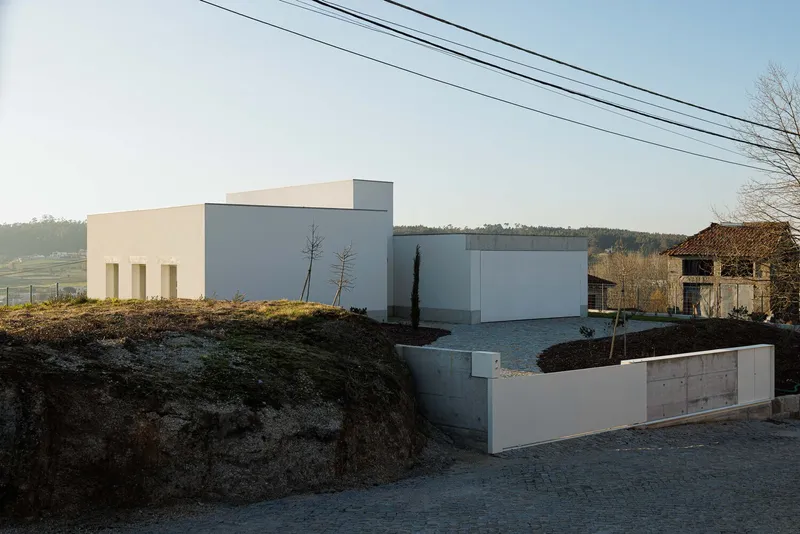
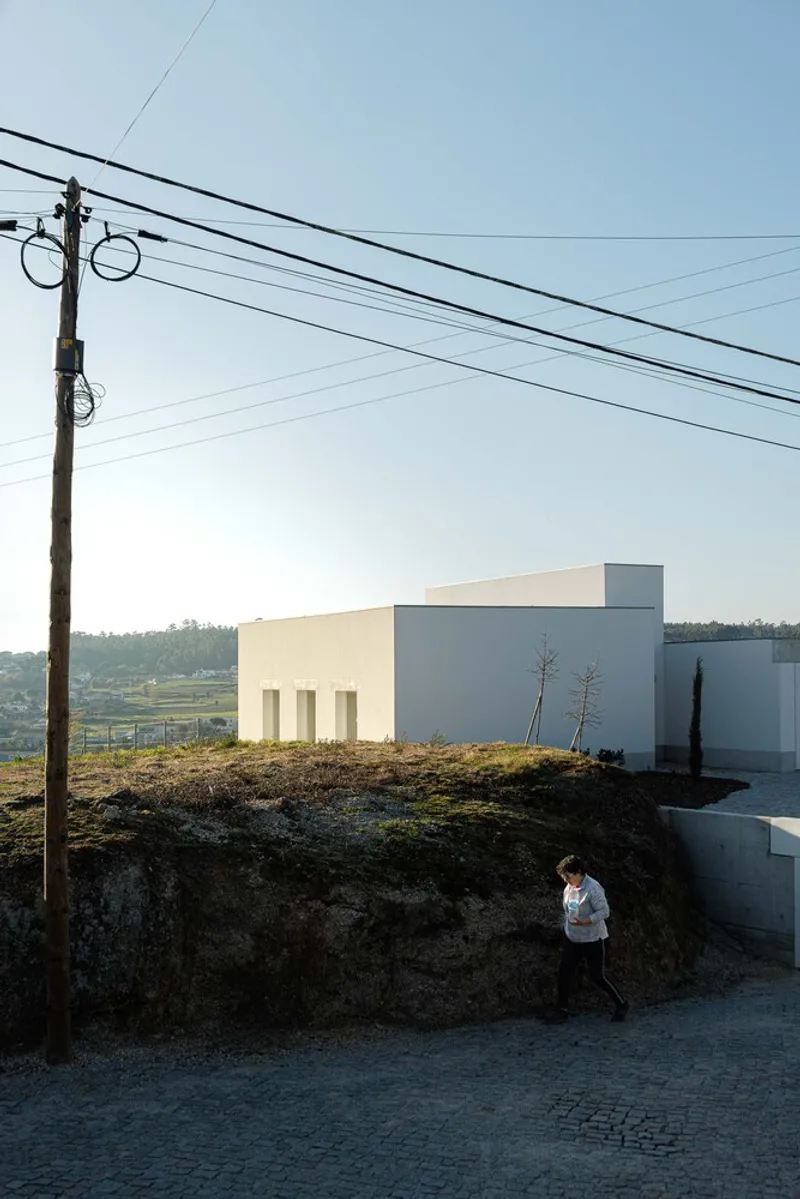
Approaching from Rua de São João, the plot initially read as a blind rise; a low hill at the entrance blocked all sightlines beyond. Only by climbing a rough path two or three meters up did the team discover sweeping western views. The early impulse was to carve a dramatic entry trench through the hill to frame that landscape from the street. Preliminary cost studies with engineers and the builder showed that such excavation, retaining structures, and reinforced concrete would exceed budget targets.
Design Pivot: From Excavation to Settled Volumes
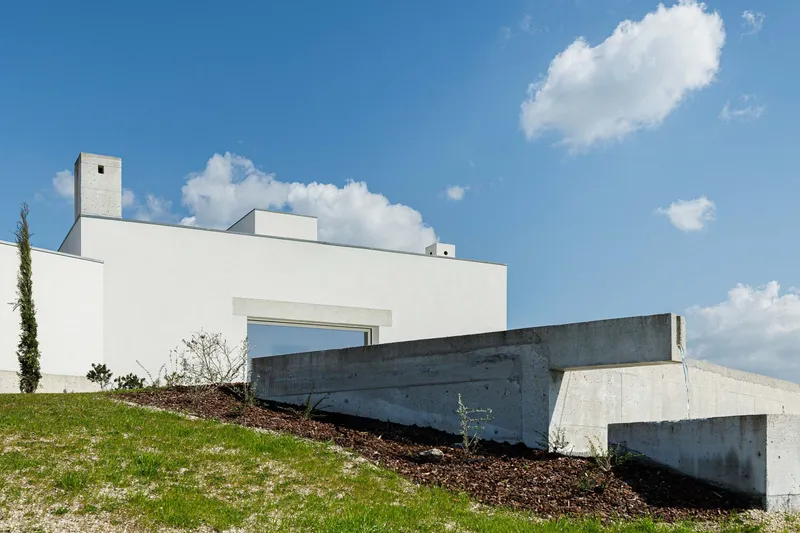
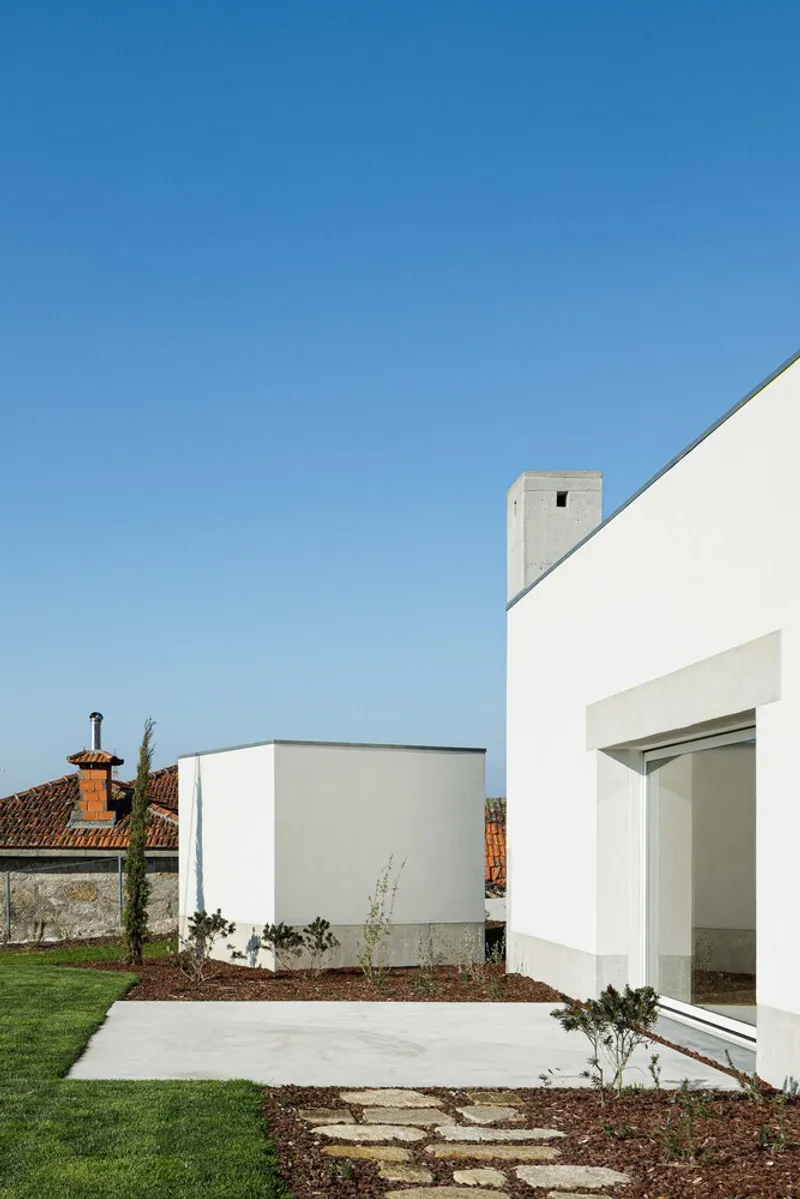
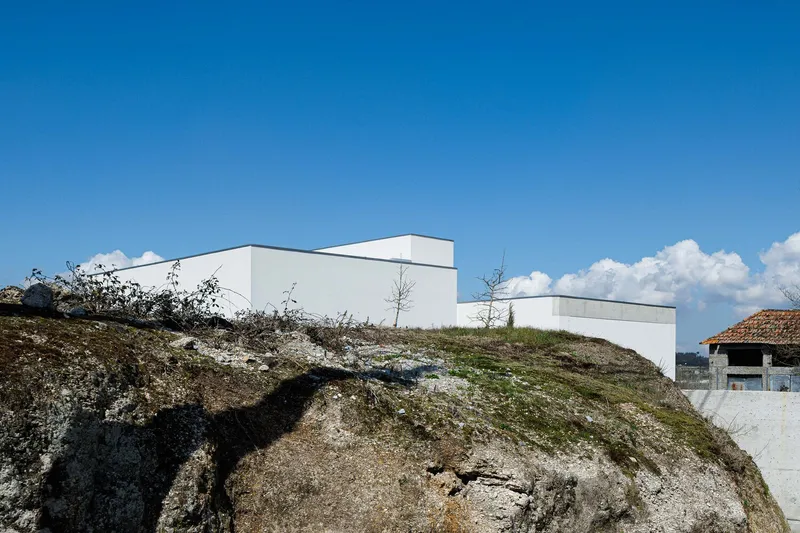
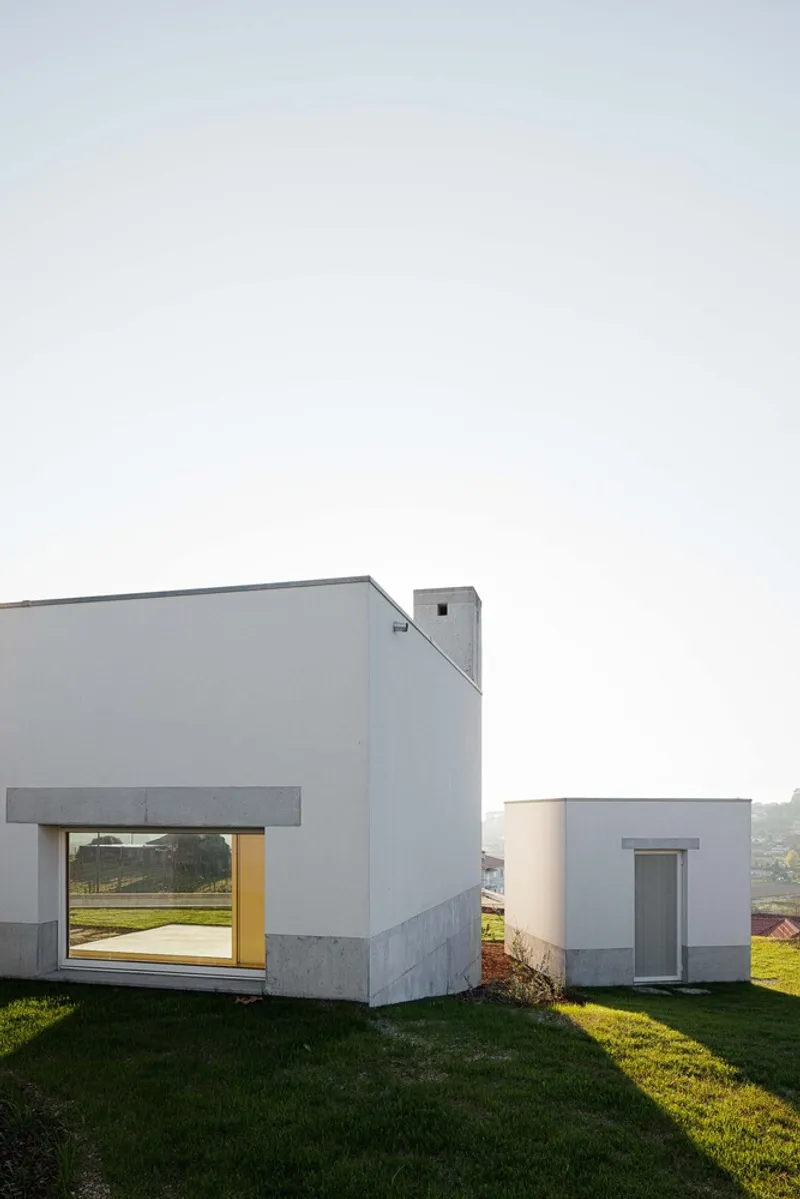
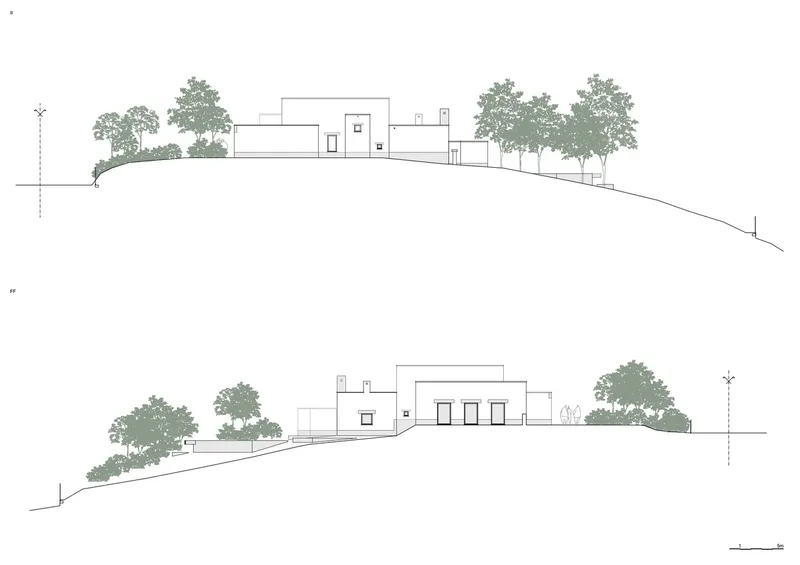
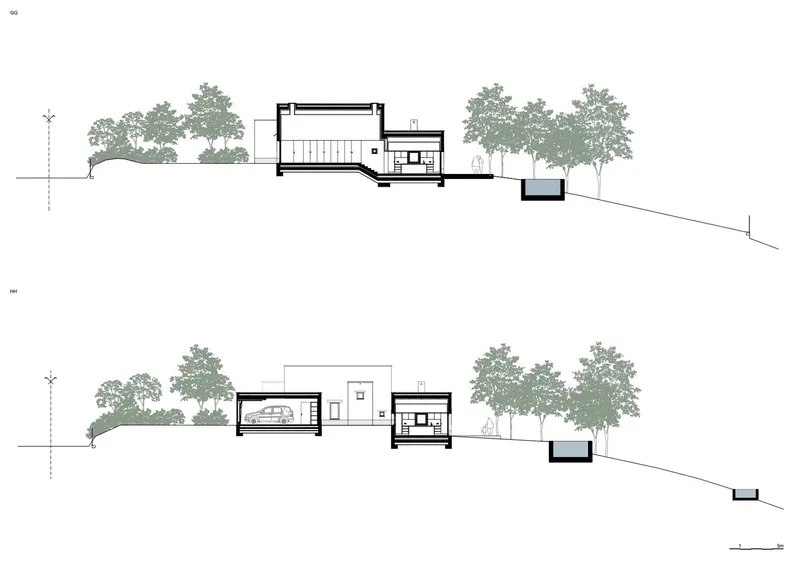
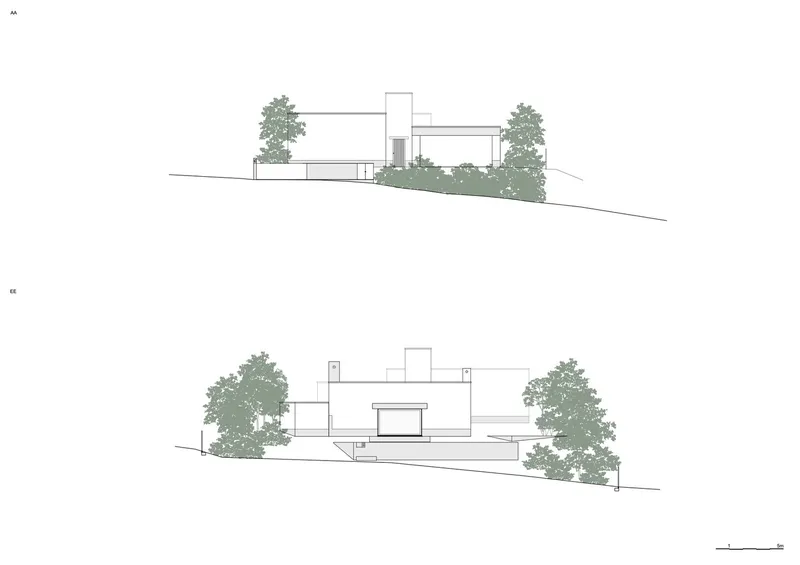
Cost discipline redirected the project. Instead of removing earth, the design set a series of pure, compact volumes across the existing terrain, each tuned in height and placement to sit lightly on the slope. By avoiding large cuts, fills, and retaining walls, construction remained economical while preserving the site’s natural form. The hillside became a datum that organizes domestic program through level shifts rather than graded plates.
Topographic Adaptation and Interior Dynamism
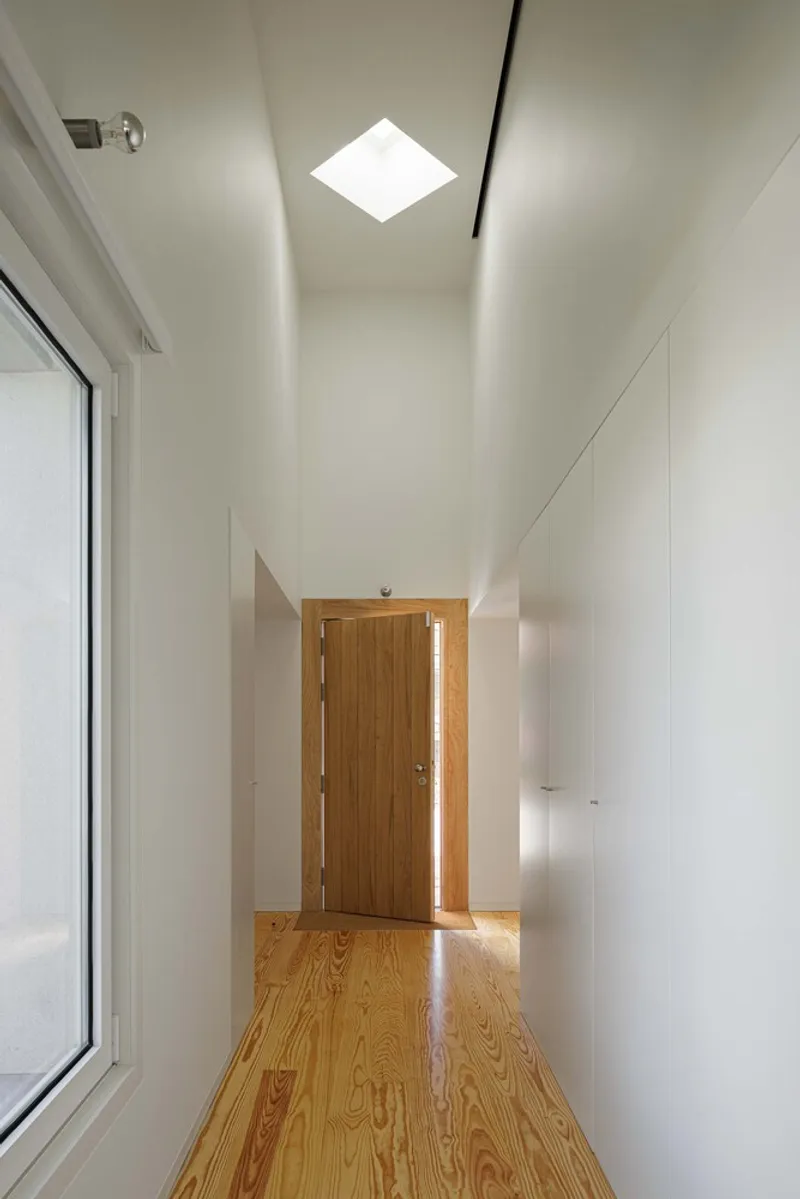
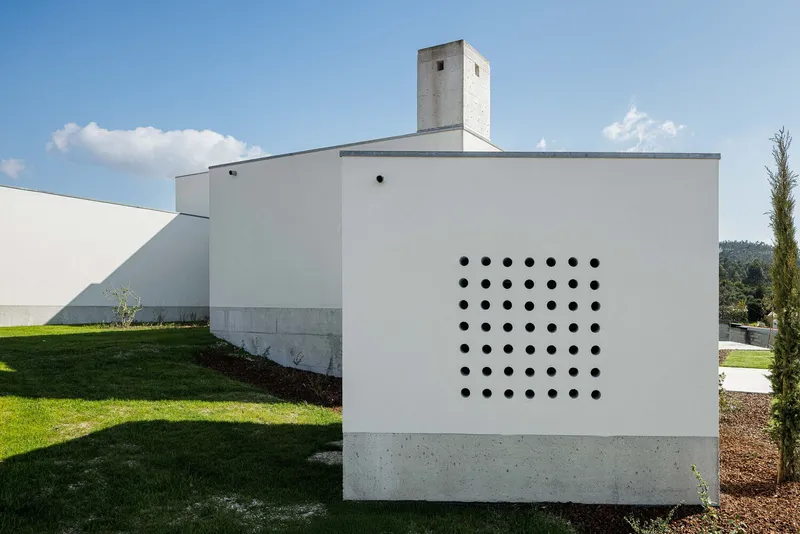
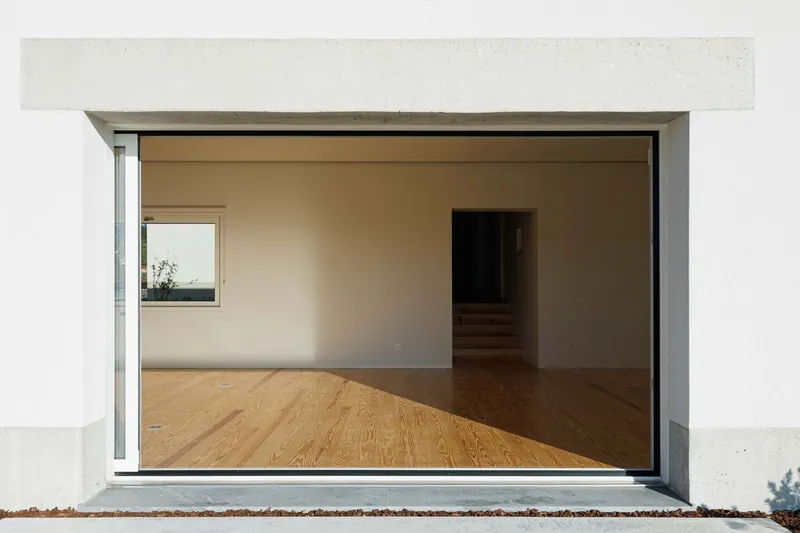
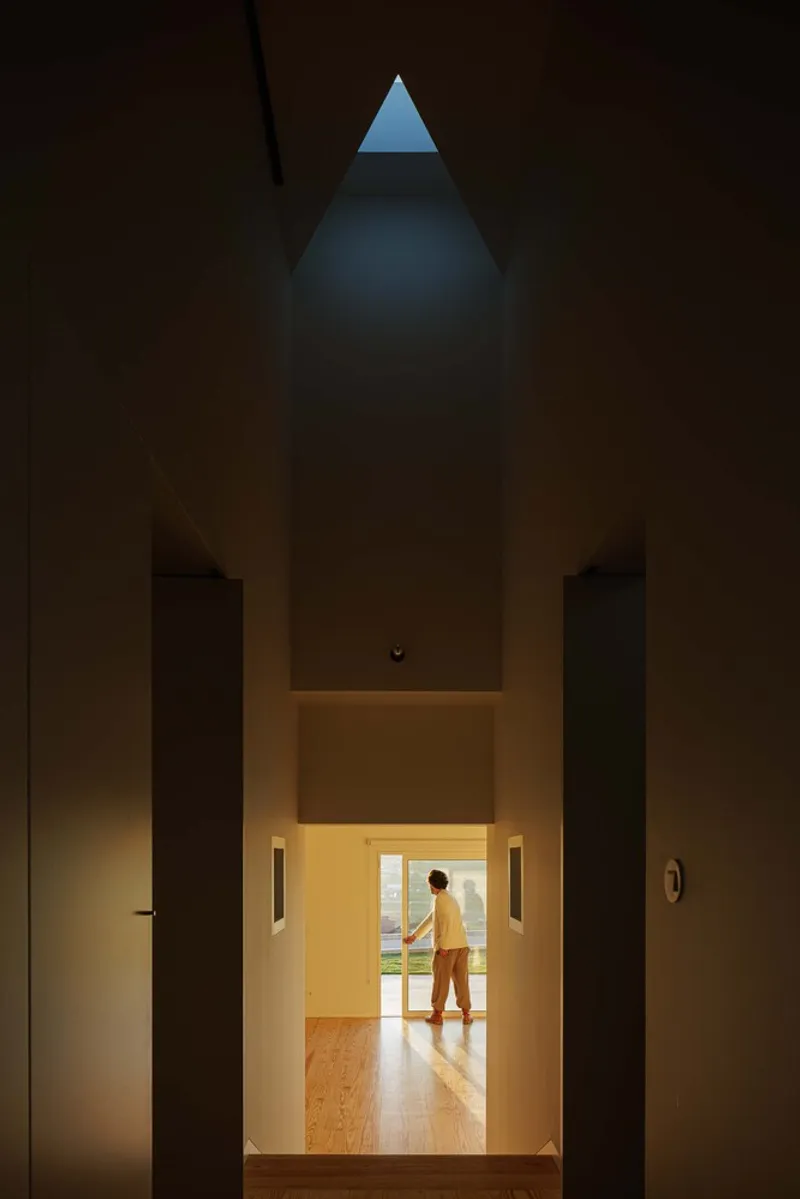
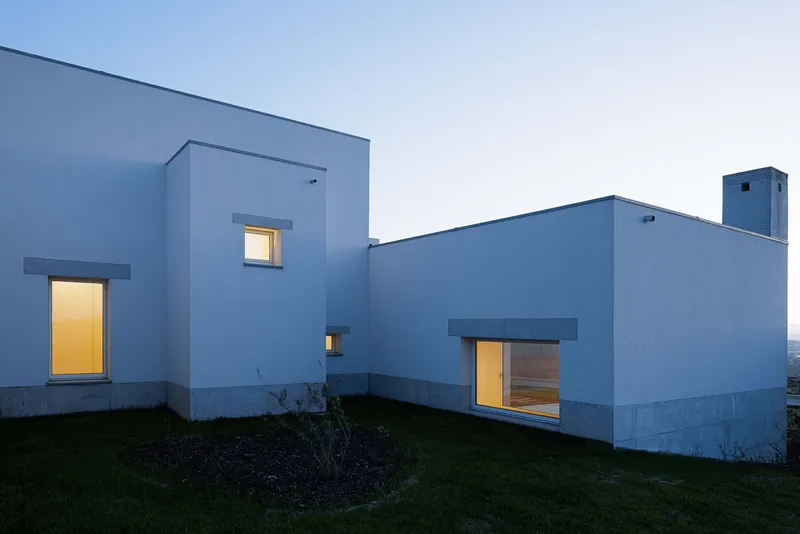
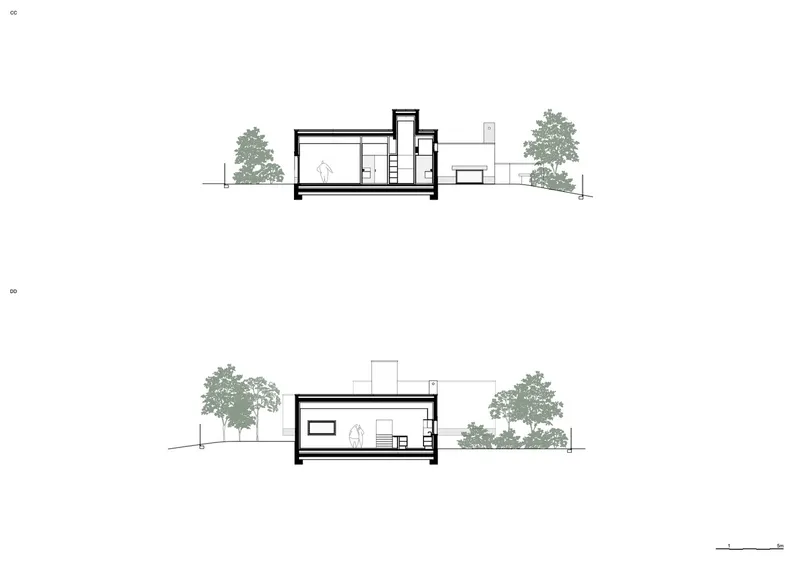
Because the volumes follow terrain rather than forcing flat continuity, interior floor levels step, rise, and drop in response to micro-elevations. These calibrated height changes generate spatial variety within a relatively small footprint, creating views across and between boxes, diagonal ceiling lines, and subtle thresholds that distinguish public, semi-private, and private zones without resorting to heavy partitions.
Material Strategy: Cappotto Skins and Concrete Anchors
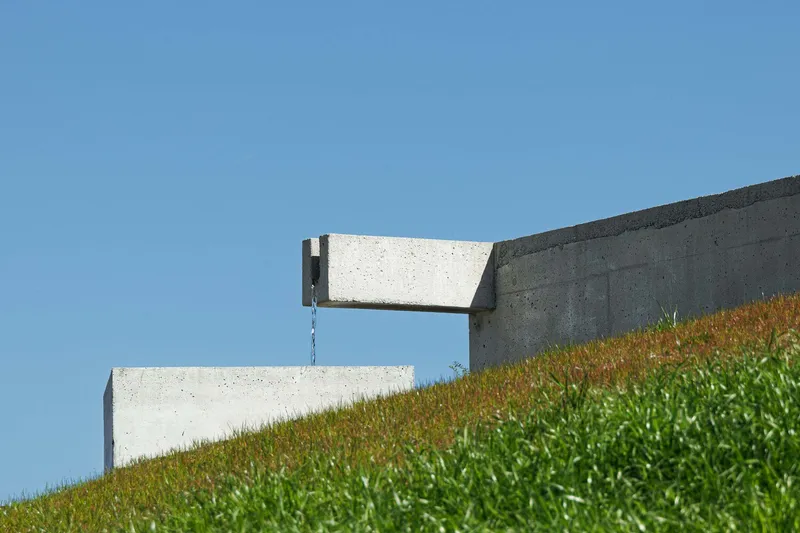
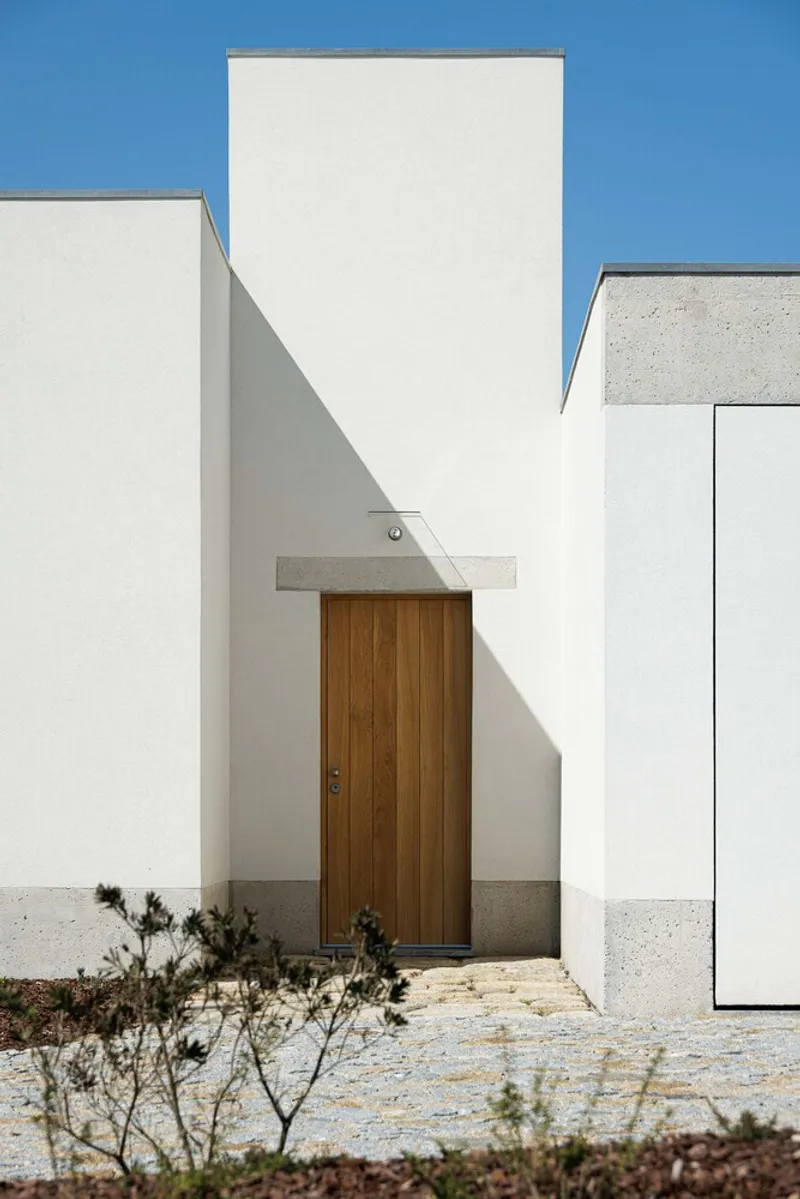
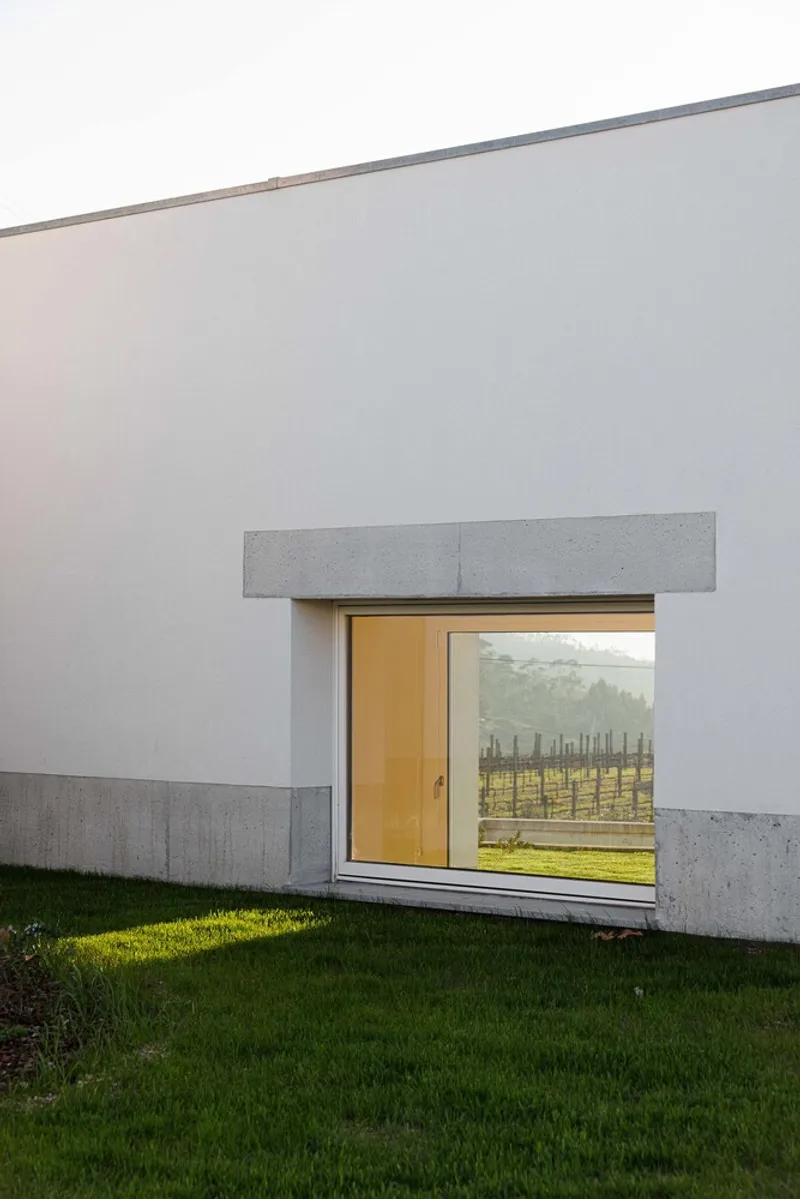
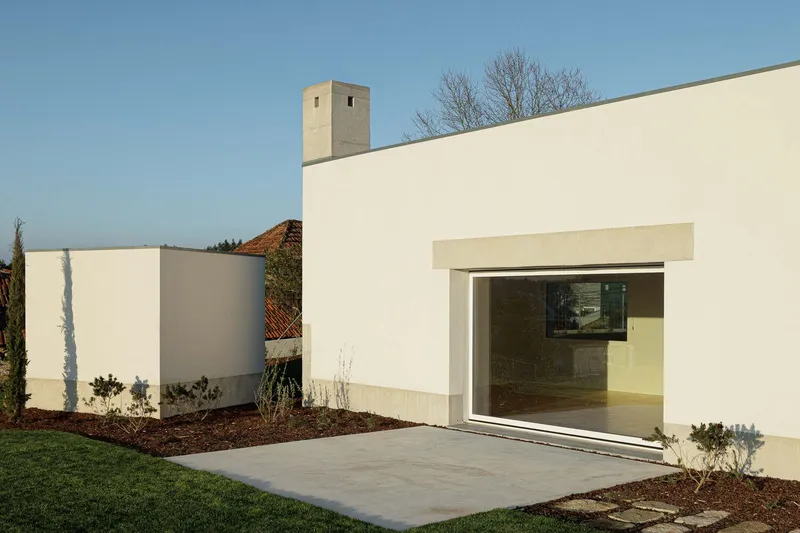
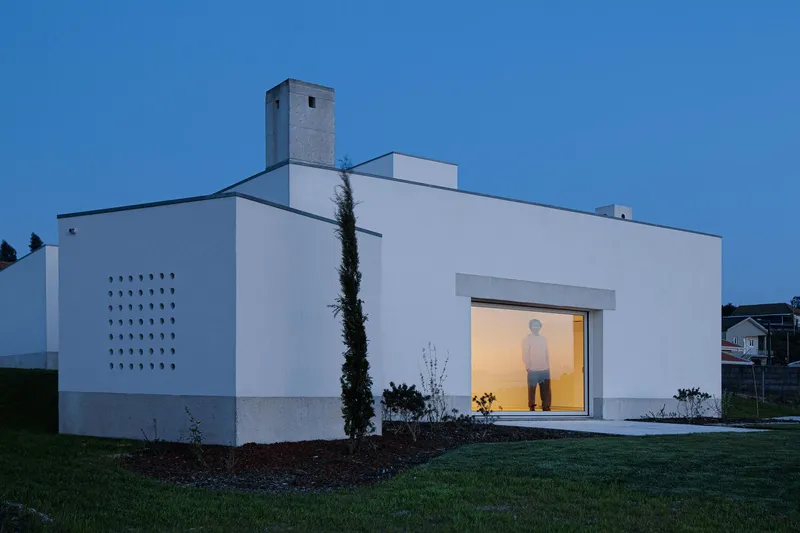
Exterior masses are finished in cappotto insulation-render systems for thermal performance and cost efficiency. Bases, reveals, and door and window surrounds are cast or clad in exposed concrete, visually seating each volume into the hill while providing durable edges at grade transitions. The material contrast between soft rendered planes and crisp concrete frames sharpens shadow lines and reinforces the episodic composition of discrete boxes in landscape.
The Choreographed Approach and Delayed Reveal
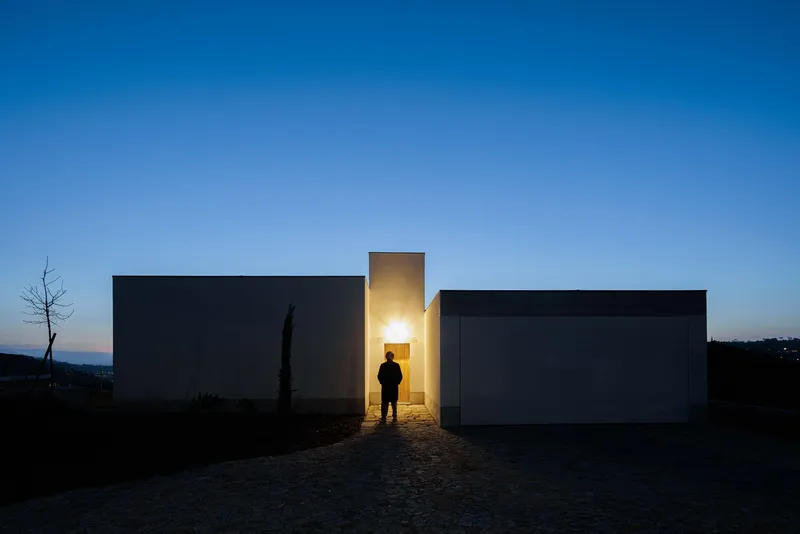
A defining experiential idea remained from the abandoned excavation scheme: the surprise of the western panorama should not be immediate. Landscape elements near the entry intentionally limit sightlines, guiding movement between offset volumes that open only incrementally. Glimpses accumulate—narrow slots, angled courtyard exposures, reflected sky—until the route arrives at the living space where a single, generously scaled west-facing window releases the full view in one expansive gesture.
Light, Orientation, and the Sweet Fall of Day
The project is oriented to capture the long western light that softens across the landscape each evening. Interior finishes amplify this moment; pale surfaces accept warm late-day color while concrete edges register lengthening shadows. The living room glazing is proportioned to frame horizon, slope, and sky, turning sunset into a daily interior event.
Landscape as Spatial Partner
Instead of heavy earthworks, on-site grading is minimal and selective planting furthers the narrative of progressive disclosure. Low foreground vegetation close to the entry occludes depth, medium-height plantings guide the path between volumes, and cleared sightlines align with the living room opening. Topography and planting together script the transition from enclosure to exposure.
Program Organization Across Scattered Boxes
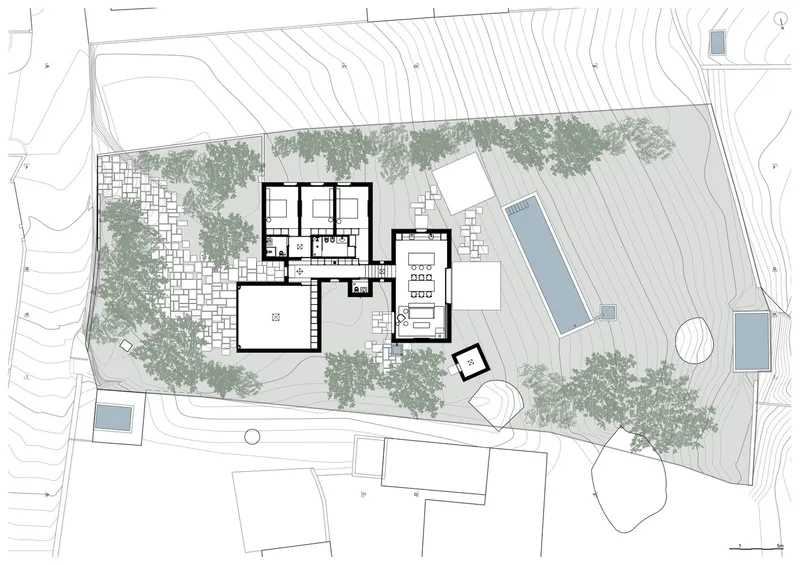
Domestic functions distribute across the stepped ensemble: service areas nest in lower volumes, sleeping spaces rise where privacy and quiet benefit from elevation, and shared living occupies the key western outlook. Short interior links and glazed connectors maintain continuity while allowing each box to read volumetrically from the exterior.
Building Economies and Construction Logic
Abandoning large excavation drastically reduced concrete quantities, retaining engineering, and export of spoil. The repetitive volumetric strategy simplified formwork and allowed phased construction. Standardized cappotto assemblies improved envelope performance within budget. Select components from BRUMA, JNF, and Roca complete services and fittings without compromising the project’s restrained material palette.
Living with the Hill
Pedrantil House Helder da Rocha Arquitectos accepts the hill as host rather than obstacle. By placing, stepping, and framing instead of cutting and filling, the design preserves site memory, curates discovery, and directs daily life toward the changing western sky. The result is an economical, topography-led home whose quiet exterior composition gives way to an interior climax of light, distance, and evening color.
In Croca, Portugal, Pedrantil House Helder da Rocha Arquitectos shows how disciplined cost management and sensitive terrain reading can yield architecture rich in experience. Scattered insulated volumes, concrete anchors, and a choreographed approach culminate in one large western aperture that gathers landscape and light at day’s end. Minimal intervention, maximum reveal.


Popular Articles
Popular articles from the community


Conexión: Biophilic Design Reimagines High-Rise Living in Hong Kong
Conexión reimagines high-rise living in Hong Kong through biophilic design, green facades, shared spaces, daylight, water and nature within.

Play: Fragments of Their World
Familiar architecture becomes modular playground design, creating safe spaces where displaced children can learn, connect, imagine and play.

Co-life: Sustainable Architecture for Age-Friendly Community Living
Co-life reimagines sustainable architecture for seniors through courtyards, rammed earth, shared gardens, and spaces designed for belonging.

ALGAL REALM: A Bio-Integrated Lunar Habitat Design for Life Beyond Earth
ALGAL REALM reimagines lunar habitat design with algae-powered life support, 3D-printed regolith, and vertical living for a lunar future.

Similar Reads
You might also enjoy these articles


FAMM Arquitectura Organizes Ten Villas Around Courtyards and Jungle in Nosara, Costa Rica
El Molino pairs two elongated volumes with deep overhangs and timber louvers to build a compact coastal community five minutes from the beach.

Oscar Niemeyer's Ibirapuera Park Pavilions Define São Paulo's Cultural Identity in Concrete and Curve
A constellation of modernist volumes set within São Paulo's most important urban park, conceived for the city's 400th anniversary in 1954.

Sanjay Puri Architects Wraps a Jaipur Office Tower in Capsule-Shaped Green Buffers
A nine-level climate-responsive workplace near Jaipur Airport uses stacked planter terraces and aluminium screens to fight 40°C heat.
RHO Converts a Berlin Spree-Side Industrial Courtyard into Enkime's 1,000 m² Agency Headquarters
A social media agency's new home in Charlottenburg trades glossy branding for concrete waffle ceilings, glazed tile, and sheer curtains.

Explore Architecture Competitions
Discover active competitions in this discipline

Challenge to reimagine the Iron Throne

Photograph architecture without architects

Illustrate the lost glory of Angkor Wat - Render Challenge

Design challenge to reuse E-waste
Comments (0)
Please login or sign up to add comments
No comments yet. Be the first to comment!