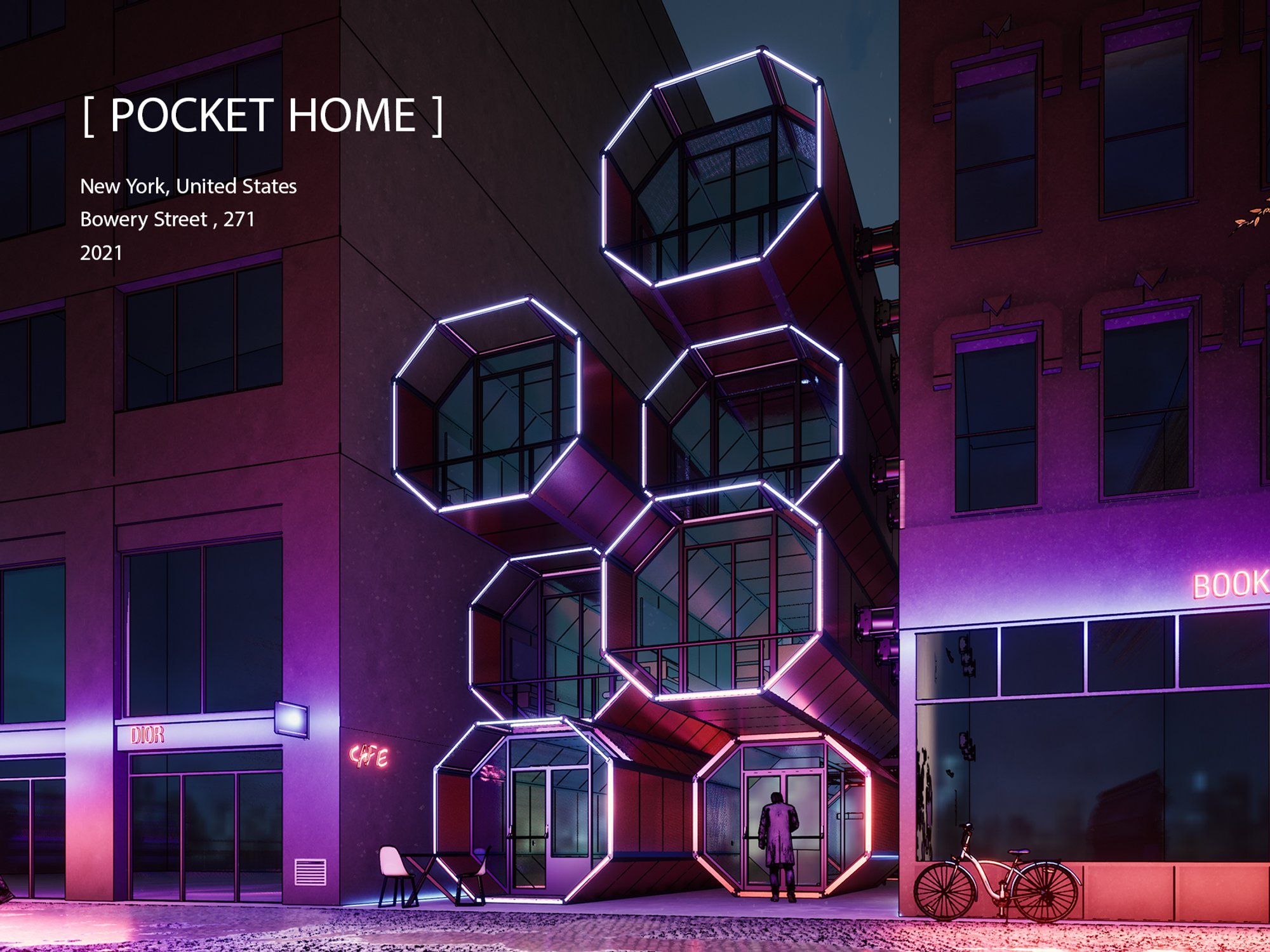
Pocket Home
“In search of lost spaces” Architectural activism against non-places


Home is a concept before it goes to be a shelter for humans. This concept makes borders and defines the metaphysical presence of humans with their environment. This concept from ancient times has motivated human beings to find livable spaces and forced them to change their environment. These motivations were not only vital for their survival but also introduced them to a new concept they might not have known before. This concept was space ownership and the possibility of borderline.
In this competition, the issue for our team was to redefine these boundaries and understand how urban life has shifted these borders over time and formed new concepts. In fact, the subject of the competition for us was more than just creating 12 temporary units in a limited area. What we thought in the design process, or other words "rethought" was "Architecture" itself. Rethink about this notion that architecture can be indefinite and a possible event. It means that it can manipulate the environment in a limited time-space context, affect and be affected, change and accept change, and finally end up through this cycle again in another place and time. If an example can illustrate this process, it is the example of theater. A show of events, spaces, possibilities, and stories that run on the stage and will be over. What remains is no longer a sense of physical presence, but it is a section of moments that remains in the memory of the city and society.
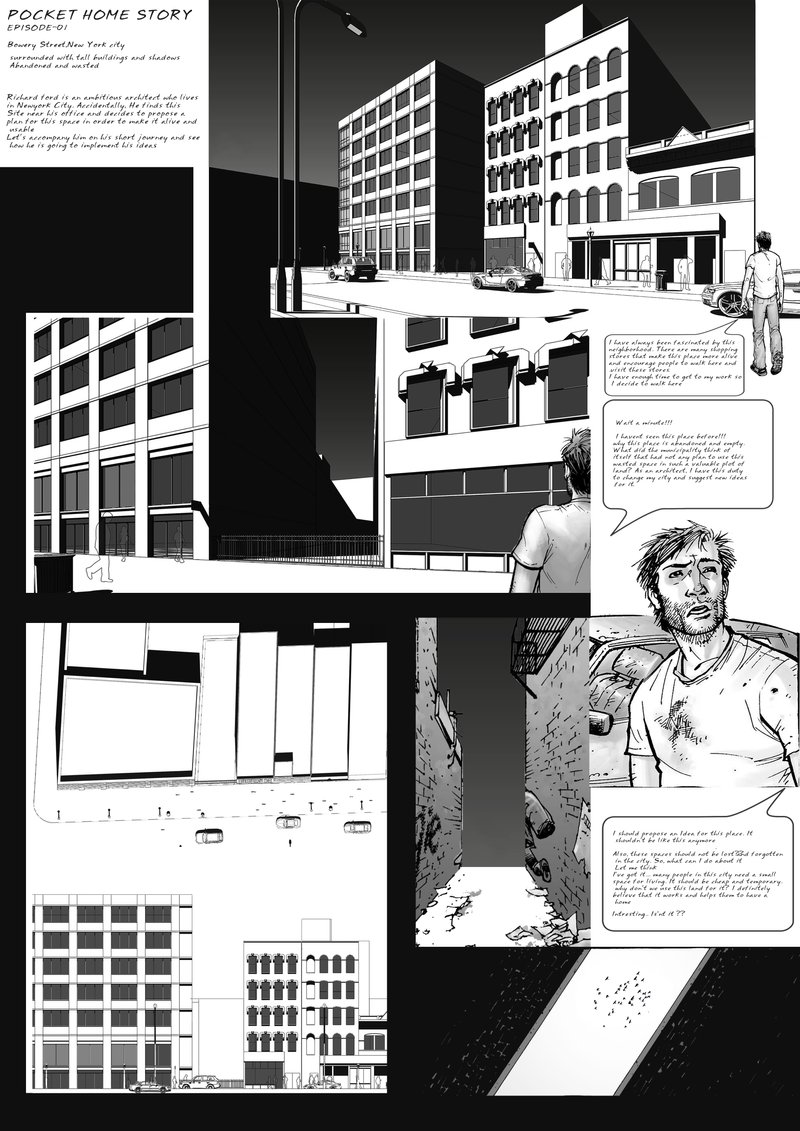
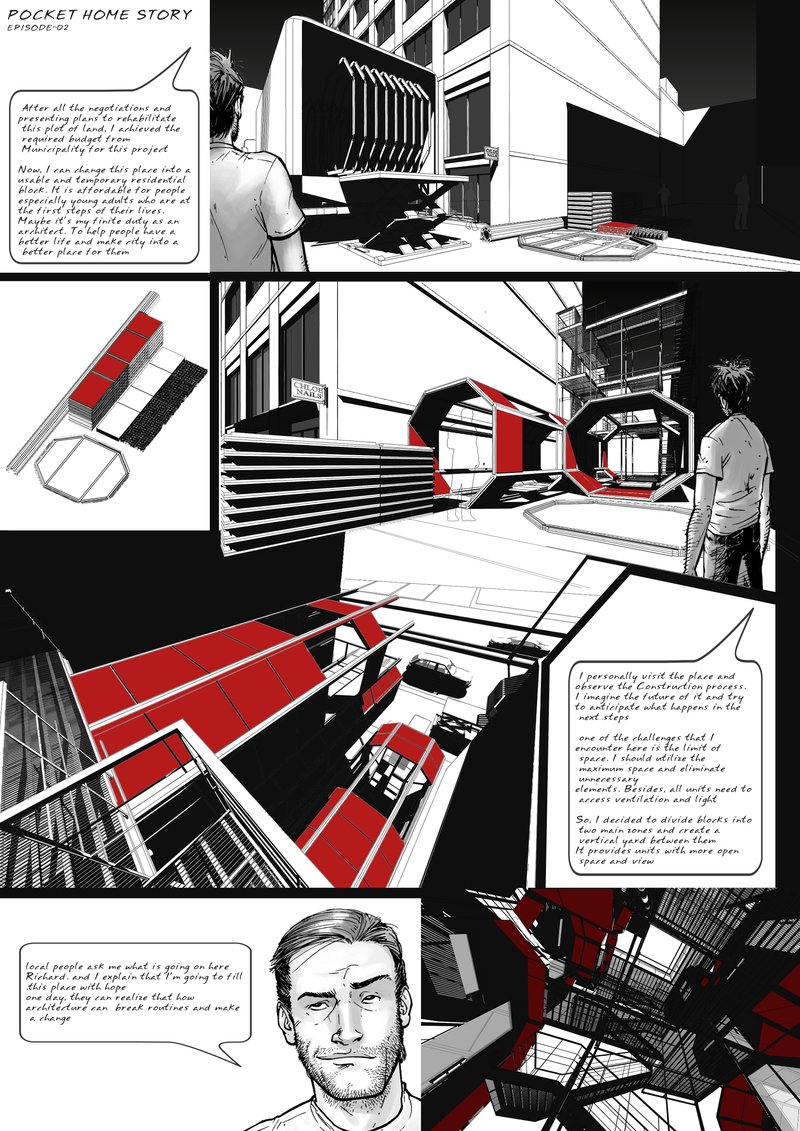
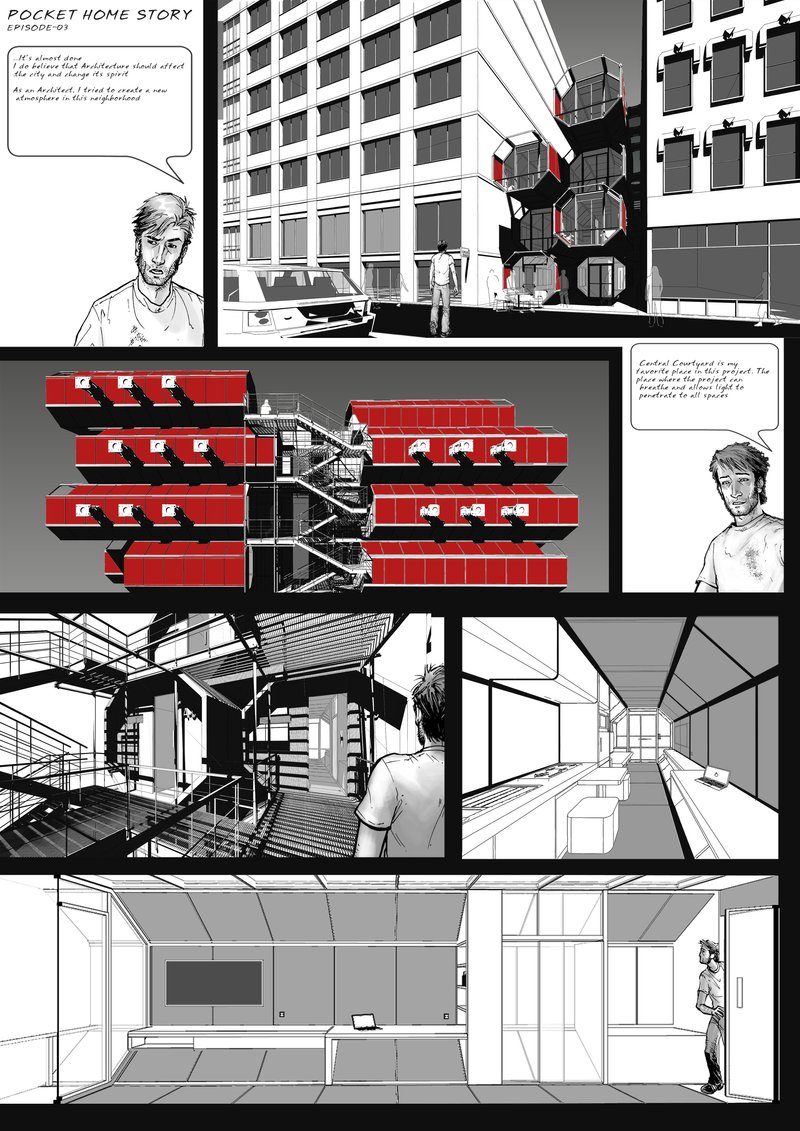
The design process began with these fundamental questions:
1- How can architecture provide temporary living in a limited area and dense space?
2- What is the architectural relationship of this project with the city and the city with it?
3- How are the concept of neighborhood and residential interaction created in such a project?
4- How could open and semi-open spaces be distributed in the dense and high-rise projects?
With this approach in considering the basic issues at the beginning of the design process, we tried to produce various alternatives in terms of mass placement on the site and define various mass and space placement organizations. This process began in brainstorming sessions with data analysis and study of collected information. At this stage, we have analyzed each spatial layout organization to answer the basic questions explained at the beginning of the design.
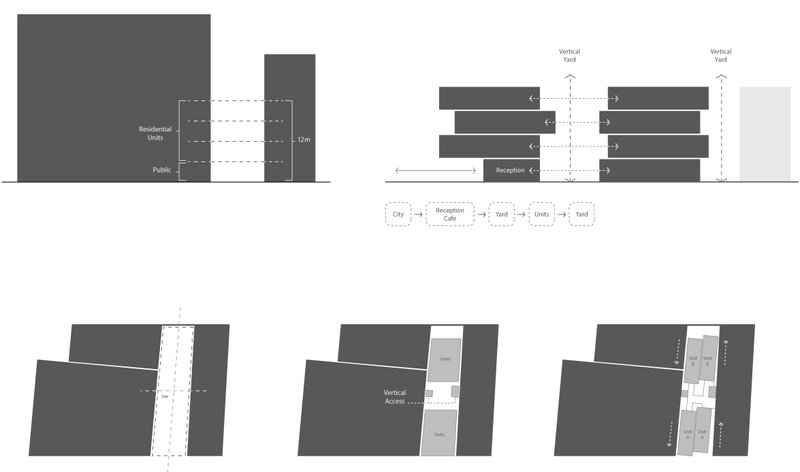
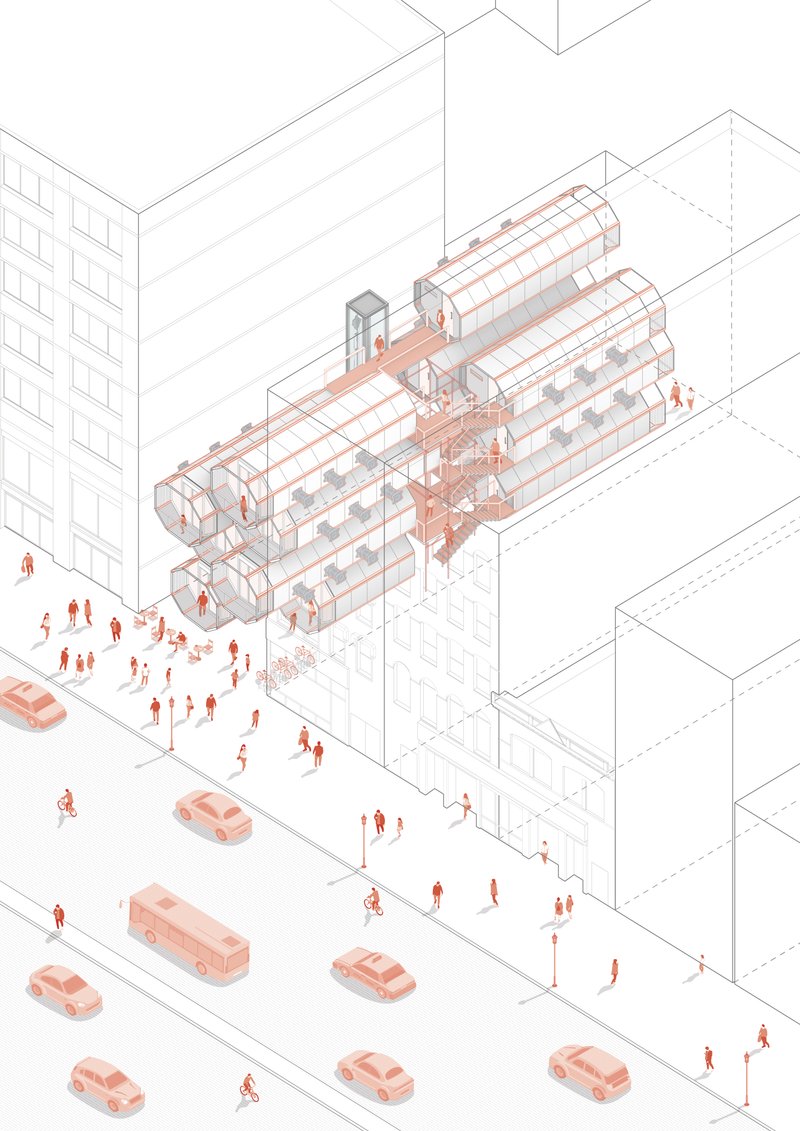
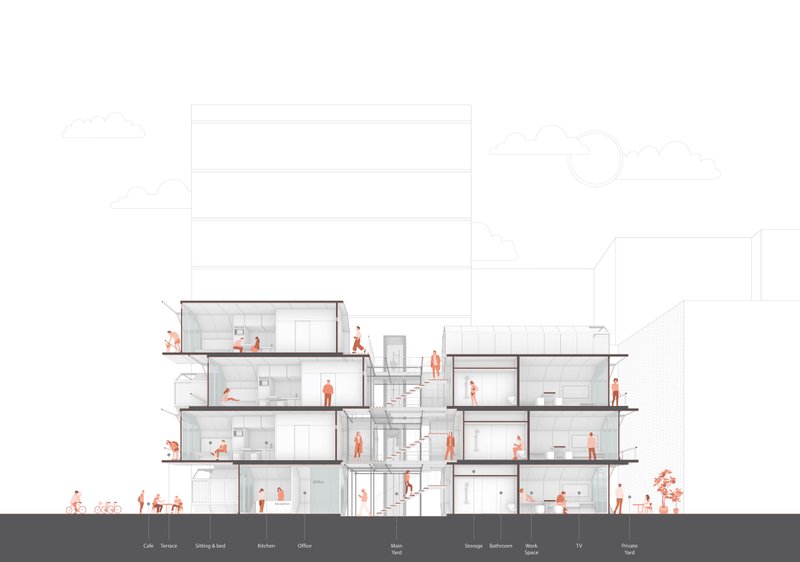
In the proposed alternative, temporary units are placed in two main zones with a large open space between them as the main yard. This vertical courtyard provides adequate ventilation and lighting for the units as well as a single access zone with minimal corridors and common spaces.
Due to this system of mass-space arrangement, we produced various spatial modules to work in it. This function, in addition to meeting the basic needs for the living of two persons, should be in a spatial and functional relationship with other components of the system. Besides, modules must be designed in terms of prefabricated construction and temporality.
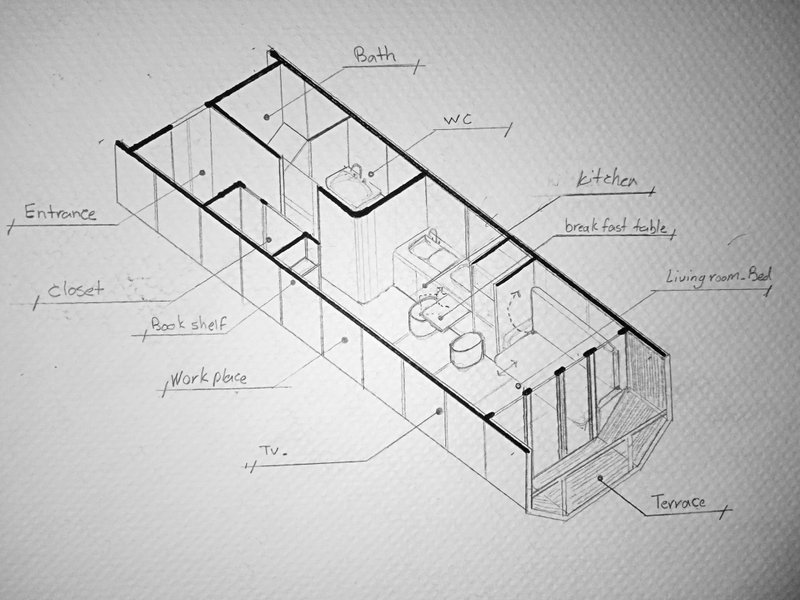
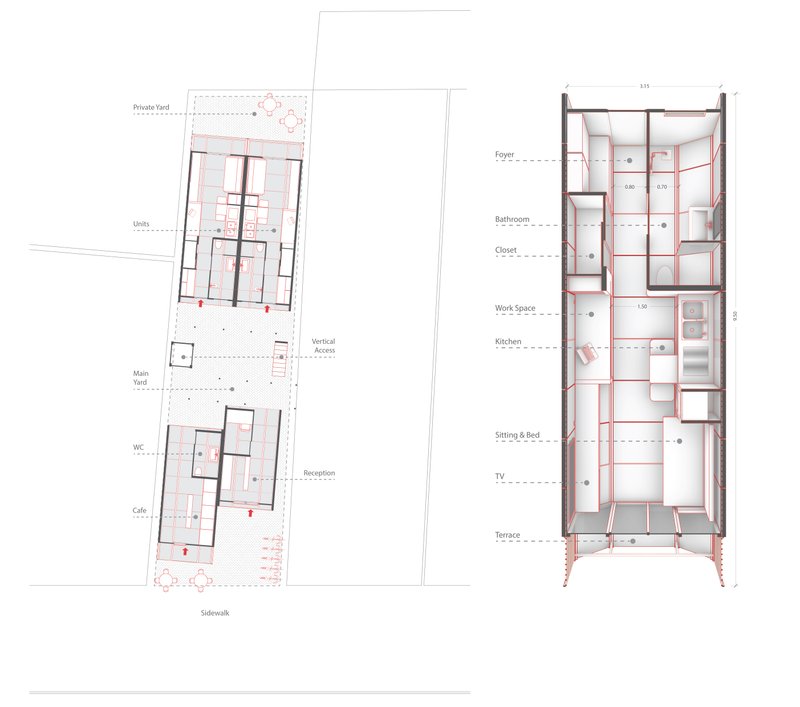
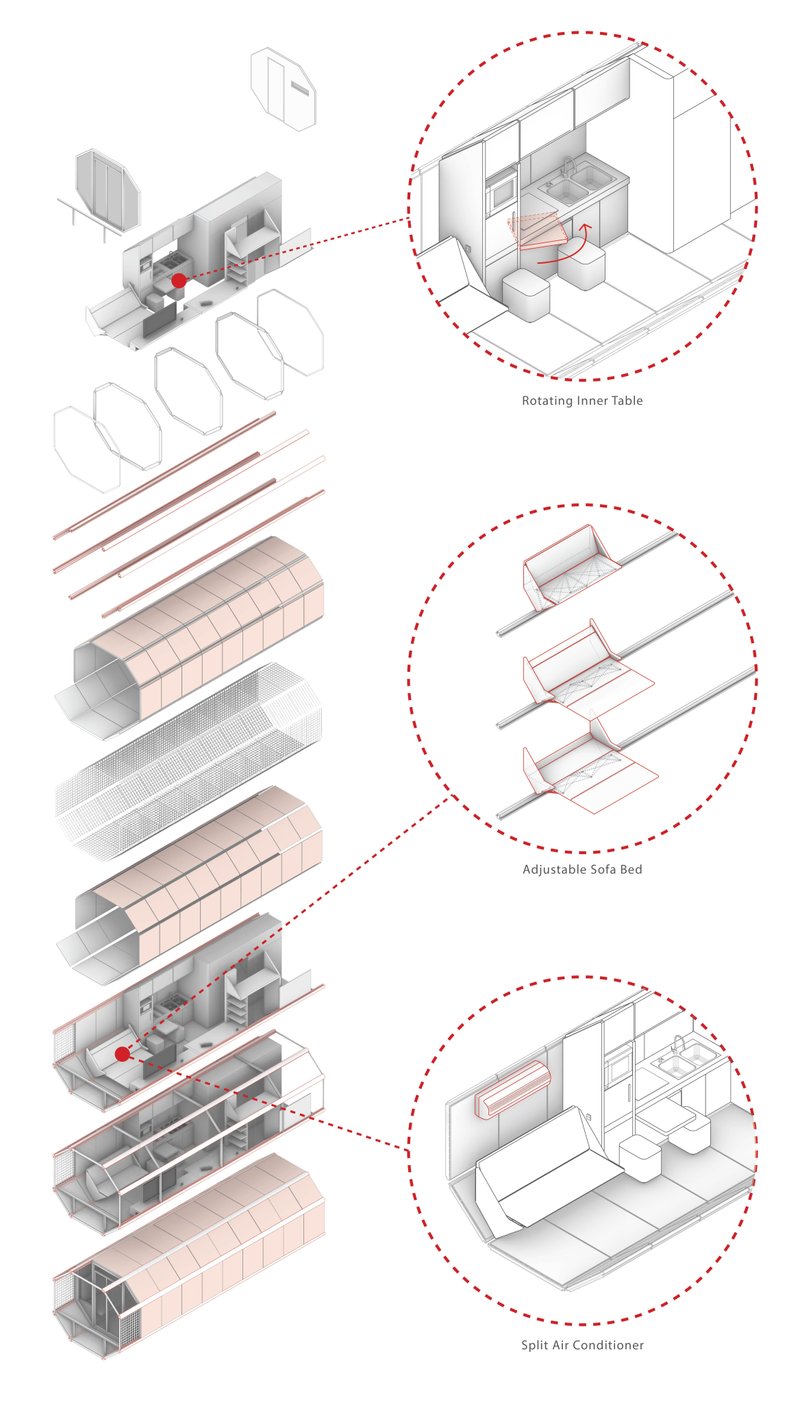
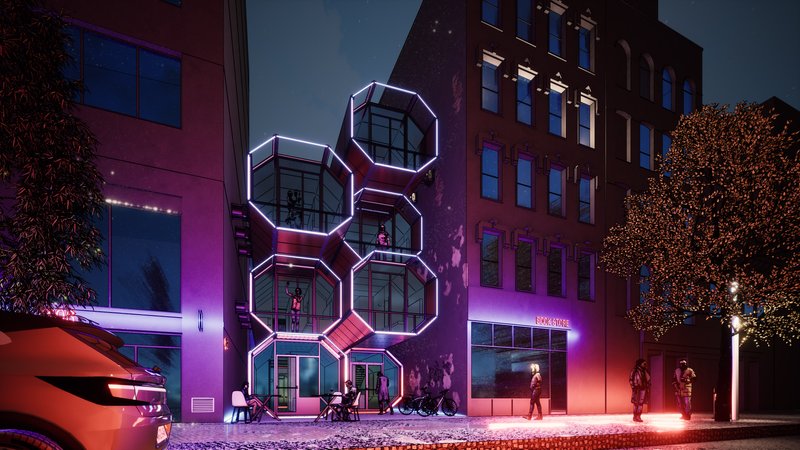
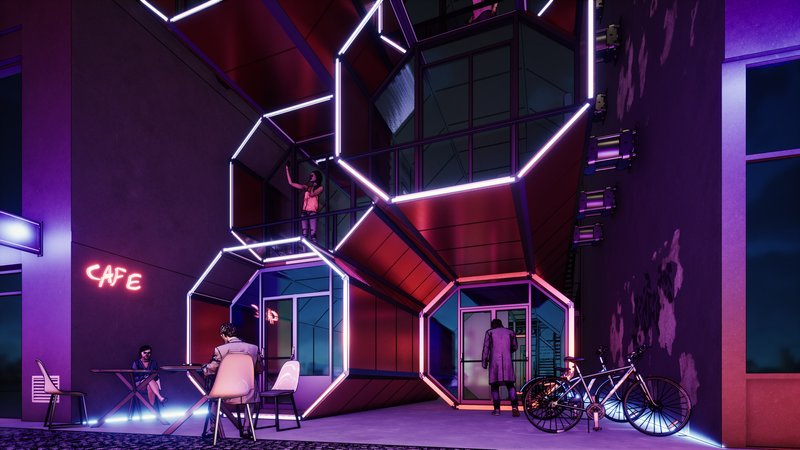
By evaluating the options, we chose the irregular octagonal geometry that can be extended in length. This module provides the possibility to place two units next to each other, which could work in the designed system of mass and space. In designing the details and interiors, we prioritized the maximum use of the limited space of the house. In this unit, there are work and study space, toilet and bathroom, closet, kitchen, living, and sleeping spaces. There is also a terrace for each unit, which provides them with single access to the open space.
Architecture and the city:
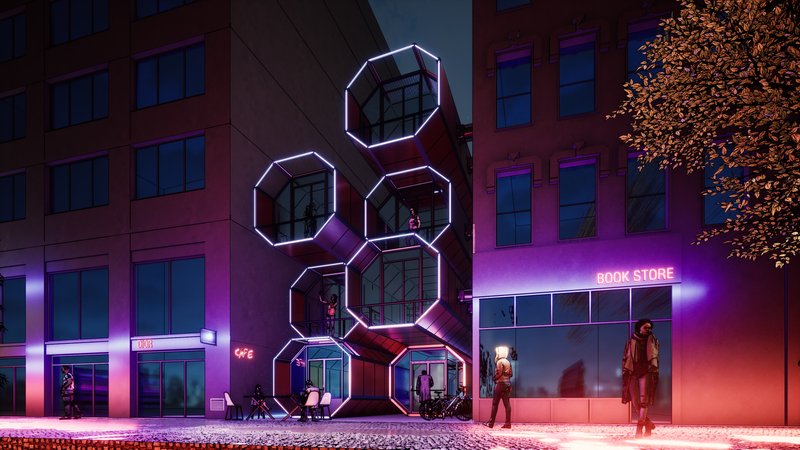
In this project, we tried to make the abandoned and left spaces active in such a way which project faces the city in connection with it. This connection is strengthened with the gaps and semi-open spaces in the project and able users to interact with the urban life. In addition, the public spaces of the project on the ground floor, such as the cafe, reception, and bicycle parking spaces, are directly connected to the sidewalk. These spaces connect the project to the urban environment and enhance this two-way relationship.
Neighborhood:
If we consider this project as a small human community, where people live together at the same time and place, this community needs interaction and communication for its bio-social. In this project, the central courtyard and its common spaces such as lobbies and corridors, allow people to be in direct communication with each other. If there are no open spaces in the spatial organization, neighborhood connections will be lost. Therefore, dividing the units into two volumetric masses and placing the main neighborhood yard in the middle, can strengthen this relationship and provide more social interaction in the project.
Future development plan:
The components of each modular unit are technically easily disassembled and reassembled. Accordingly, the project can change over time with this possibility and provide new space facilities. Also, the main components of all units can be loaded in one container and easily transferred to another location. The system of stairs and temporary structures (scaffolding) can be easily dismantled in the shortest amount of time. Therefore, the project can change over time without constant intervention.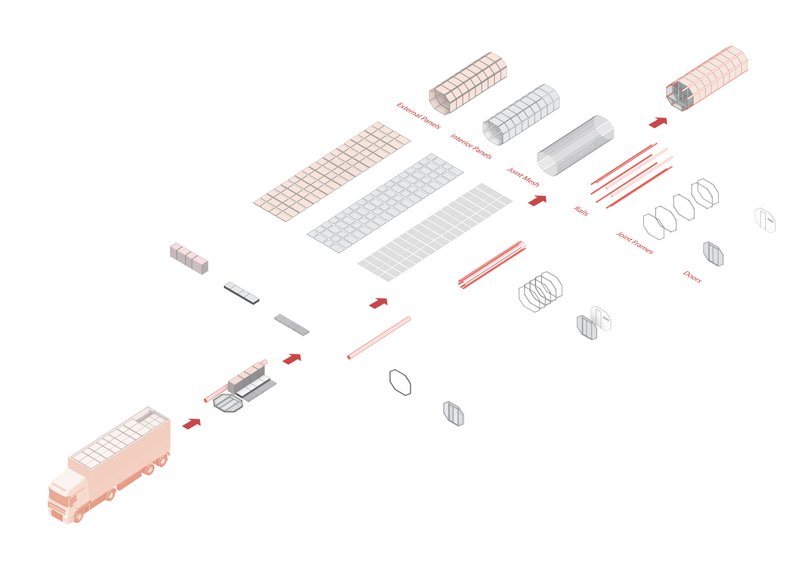
Hope you enjoy our design process
2021