
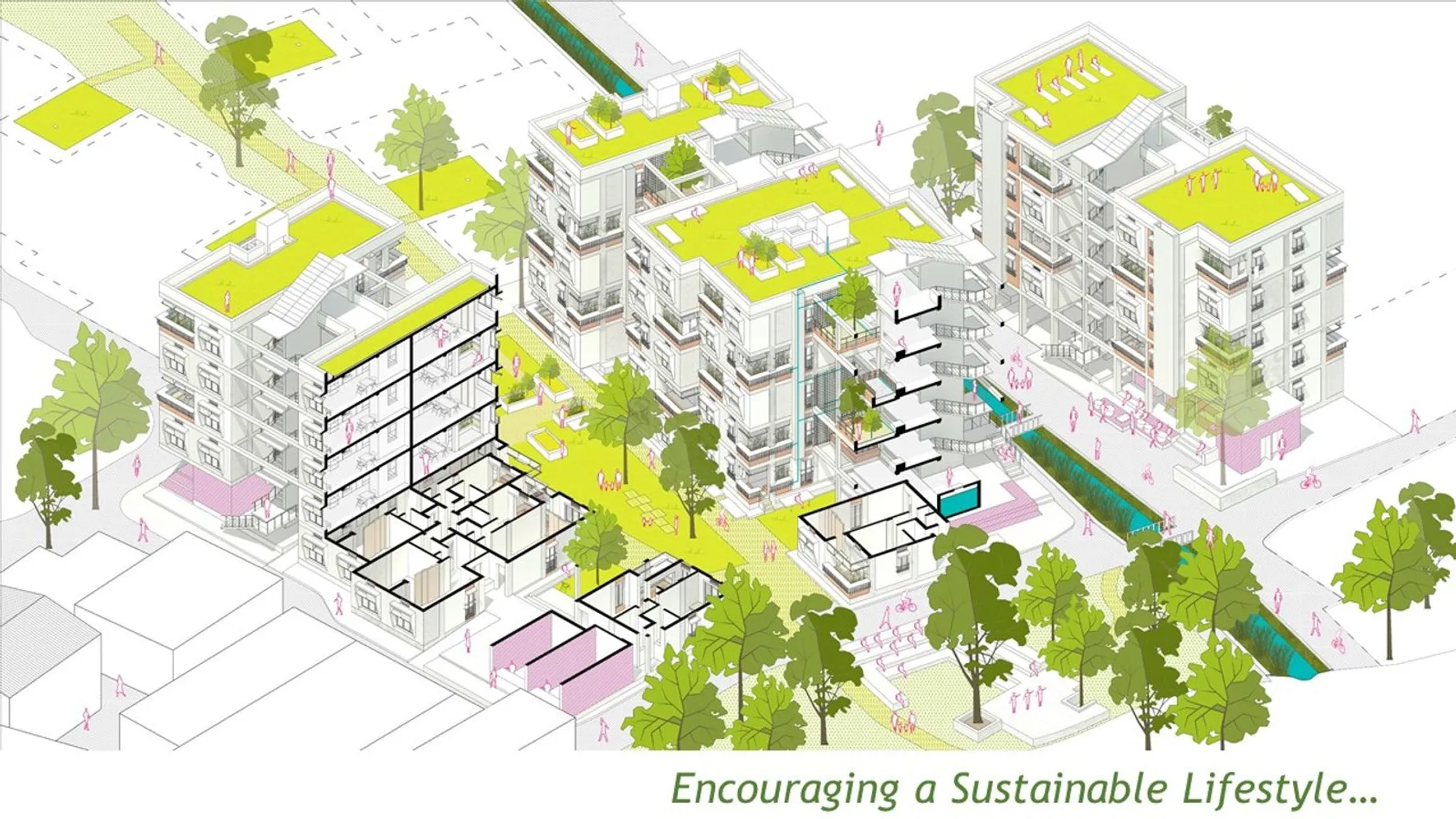
Productive Organism: Sustainable Living Habitat in Urban Peripheries
Reimagining urban peripheries through sustainable urbanism, where ecology, housing, and infrastructure evolve together as a living system.


Urban expansion has become one of the defining conditions of contemporary cities, particularly in rapidly growing metropolitan regions such as Mumbai. The edges of cities: often referred to as urban peripheries: are where ecological systems, informal settlements, and speculative development collide. Productive Organism: Sustainable Living Habitat in Urban Peripheries is a thesis project by Amod Nargund that critically examines this condition and proposes a new model of sustainable urbanism rooted in ecological intelligence, contextual development, and regenerative planning strategies.
Rather than viewing development and ecology as opposing forces, the project positions development itself as a tool to restore and strengthen the relationship between the city and its natural systems. Through layered planning, landscape-led urbanism, and adaptive housing typologies, the proposal envisions an urban habitat that functions as an integrated ecosystem.
Nature and the City: Conflict, Disintegration, and Opportunity
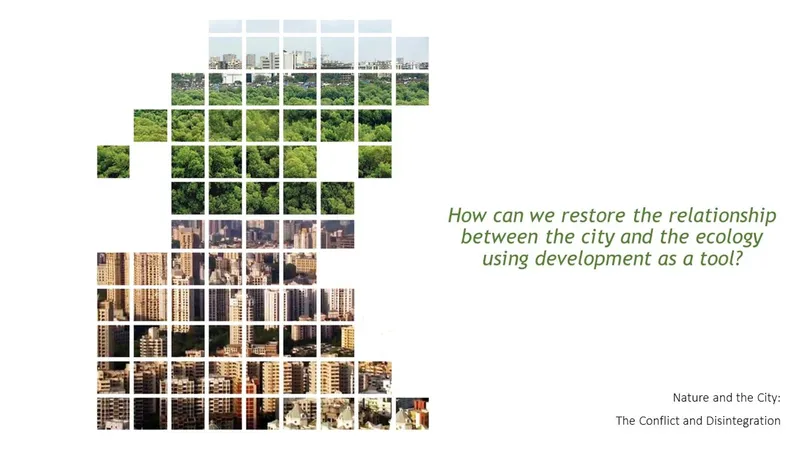
Historically, urban growth has often resulted in the fragmentation of natural landscapes. Forests, wetlands, creeks, and agricultural lands are frequently treated as vacant or expendable territories, especially at the city’s fringes. The project begins by acknowledging this conflict, illustrated through mappings that show the disintegration of ecological systems under unchecked urbanization.
The thesis asks a fundamental question central to sustainable urbanism: How can we restore the relationship between the city and ecology using development as a tool rather than a threat? This inquiry reframes urban growth as an opportunity for ecological repair instead of environmental degradation.
Evolution of City Ecology and Sustainable Urbanism
A comprehensive timeline of planning ideologies situates the project within the broader discourse of ecological urbanism. From early ideas such as Ebenezer Howard’s Garden City and Patrick Geddes’ regional planning, to landscape urbanism, bio-climatic design, and contemporary sustainable urbanism, the research traces how cities have progressively engaged with ecological thinking.
This historical grounding informs the project’s methodological framework, emphasizing that sustainable urbanism is not a fixed model but an evolving practice that integrates planning ideas, policies, and urban form.
From Fragmentation to Regeneration: A Design Framework
The project adopts a four-stage transformation model that moves from degenerative, resource-intensive urban systems toward regenerative design thinking:
- Applied Green Technologies – superficial ecological interventions with limited systemic impact.
- Integrated Design – alignment of tools, methods, and processes across disciplines.
- Repair and Reconciliation – restoring relationships between nature and society.
- Co-evolution of Humans and Nature – a regenerative synthesis where urban systems actively enhance ecological health.
This framework underpins the spatial and architectural strategies of the proposal, ensuring that sustainability is embedded at every scale, from regional planning to building design.
Site Context: Marve, Malvani, Mumbai
Located in the western periphery of Mumbai, the Marve, Malvani region serves as the site of investigation and intervention. Characterized by mangroves, creeks, wetlands, and informal settlements, the area represents a highly sensitive ecological zone under intense development pressure.
Satellite imagery and comparative mappings reveal how existing development plans prioritize affordable housing and urban expansion without fully acknowledging the ecological richness and lived realities of the site. This disconnect highlights the urgency for a sustainable urbanism approach that responds to both environmental and social contexts.
Layered Planning Through Ecological Intelligence
Drawing inspiration from Ian McHarg’s layered mapping methodology, the proposed land-use plan is developed through the superimposition of ecological layers such as vegetation, hydrology, topography, and existing settlements. Instead of imposing rigid zoning, the plan allows ecological systems to guide urban form.
Natural vegetation networks, stormwater corridors, retention ponds, and green buffers become structuring elements of the masterplan. Built development is carefully inserted where ecological resilience can be maintained, creating a balanced relationship between density and environmental capacity.
Design Guidelines for a Sustainable Habitat
A comprehensive set of urban and architectural guidelines translates sustainable urbanism principles into tangible design strategies. These include:
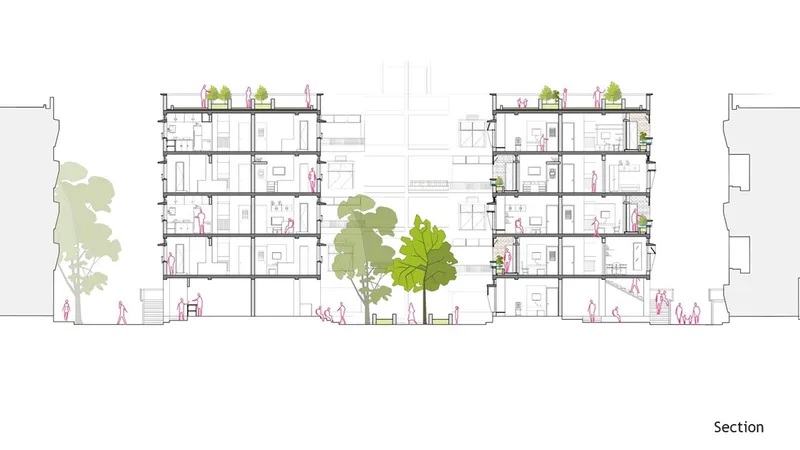
- Contextual building heights to maintain human scale
- Adequate distances between buildings for light and ventilation
- Pedestrian-oriented circulation networks
- Distributed open spaces integrated with ecological corridors
- Porous ground edges that encourage social interaction
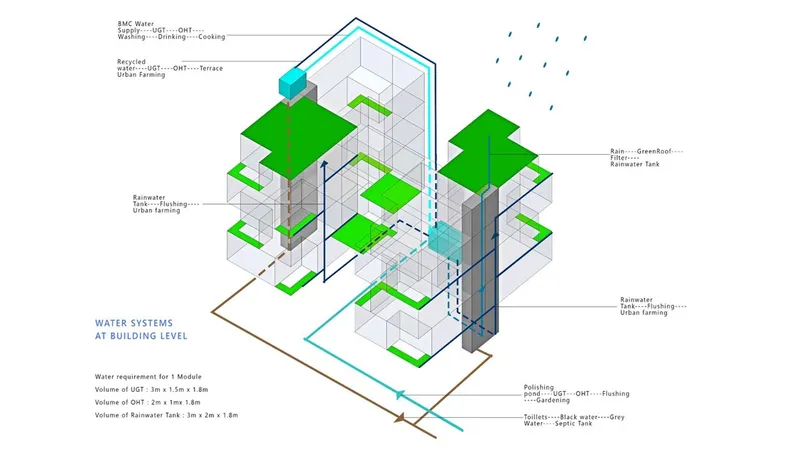
- Green roofs, urban drainage systems, and on-site water management
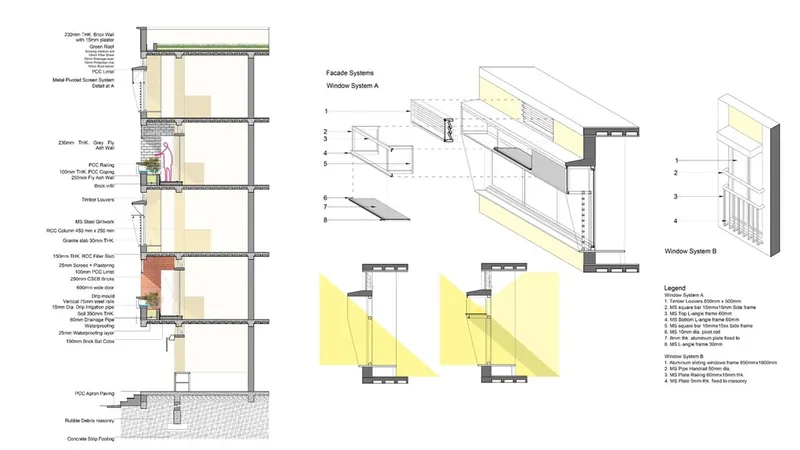
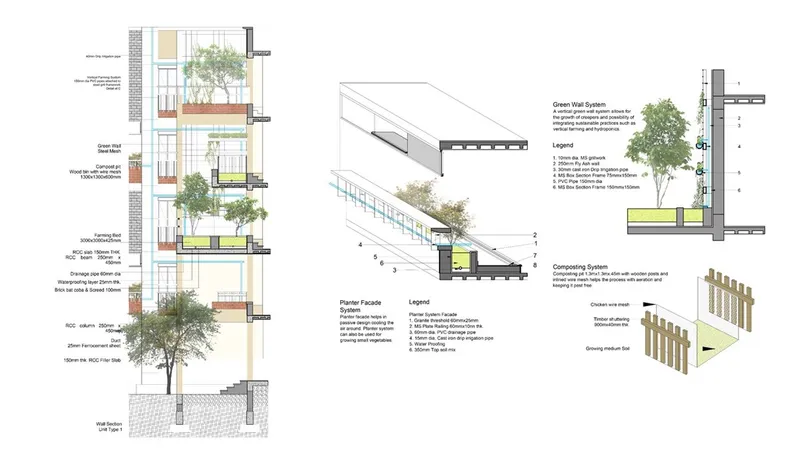
- Facade screens and vegetation for thermal comfort
- Waste recycling, composting, and community-based sustainability systems
Developed through case studies and informed by Christopher Alexander’s Pattern Language, these guidelines ensure that sustainability is experiential, not merely technical.
Housing Typologies for Density with Dignity
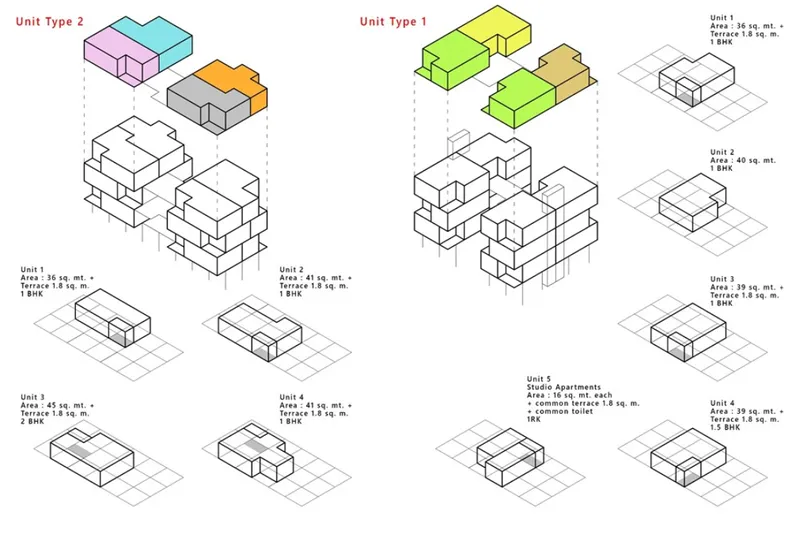
The housing strategy explores multiple typologies designed to achieve efficiency, flexibility, and higher density while maintaining a low-rise urban form. Single-loaded corridors, double-loaded corridors, modular units, and internal courtyards are tested to optimize daylight, ventilation, and social interaction.
Comparative analyses demonstrate how different configurations perform in terms of density, ground coverage, and environmental quality. The result is a housing ecosystem that supports diverse lifestyles while remaining deeply connected to landscape systems.
Masterplan: The City as a Living Organism
The final masterplan synthesizes ecological networks, housing clusters, public spaces, and productive landscapes into a cohesive urban fabric. Green corridors connect wetlands to forests, water systems are integrated into everyday public spaces, and residential clusters are interwoven with community amenities and urban agriculture.
This vision of sustainable urbanism treats the city not as a static object, but as a productive organism: a living system where human habitation and natural processes co-exist, adapt, and evolve together.
Productive Organism: Sustainable Living Habitat in Urban Peripheries presents a compelling model for future urban development in ecologically sensitive contexts. By aligning architecture, landscape, and planning through the lens of sustainable urbanism, the project demonstrates how cities can grow responsibly while enhancing ecological resilience and social well-being.
The thesis by Amod Nargund offers a timely and relevant framework for rethinking urban peripheries, not as leftover spaces, but as critical territories for building a more sustainable, regenerative urban future.



Popular Articles
Popular articles from the community


The Ocean Hive: Sustainable Architecture for a Self-Sufficient Civilization at Sea
The Ocean Hive imagines sustainable architecture at sea, where modular habitats, algae, wave power and ocean waste sustain a growing colony.

Conexión: Biophilic Design Reimagines High-Rise Living in Hong Kong
Conexión reimagines high-rise living in Hong Kong through biophilic design, green facades, shared spaces, daylight, water and nature within.

Hill & Cross Opera: Sculptural Opera House Architecture Shaped by Tallinn’s Landscape and Identity
Hill & Cross Opera reimagines opera house architecture in Tallinn through its sculptural hill, civic plaza, glass wave and a luminous cross.

Co-Life: Senior Housing Design That Reconnects Older Adults With the City
Co-Life reimagines senior housing design through healing gardens, shared streets, workshops, and a sustainable community across generations.
Similar Reads
You might also enjoy these articles

Maya Harvest: A Cacao Resort Village Rooted in Mayan Tradition and Local Craft
Situated within a Tabasco cacao plantation, this shortlisted resort proposal merges vernacular materials with hands-on cultural immersion.
Harmonia: A River-Shaped Community That Grows Over Decades in Boa Vista
Curved pathways and modular grid structures along the Branco River create a phased settlement designed to evolve from 2030 to 2050.
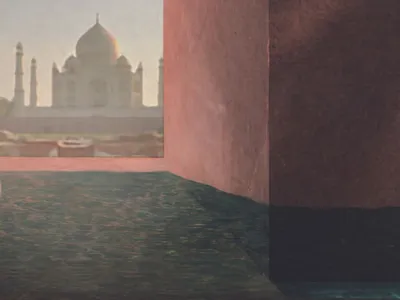
The Architecture of Bathing: A Mughal Hammam Reimagined Across the Yamuna
Charlotte May's honorable mention entry for The Black Taj reinterprets Agra's bathing rituals through red sandstone, water, and framed views of the Taj Mah
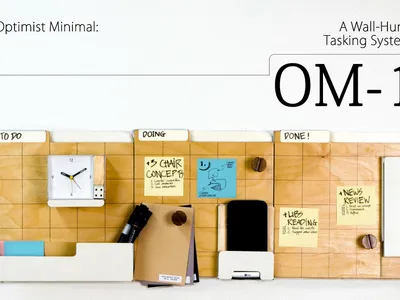
Om-1: A Wall-Hung System That Moves Your Workspace Off the Desk
Modular plywood boards, magnetic pegs, and utility elements migrate clutter from the horizontal surface to the vertical plane.
Comments (0)
Please login or sign up to add comments
No comments yet. Be the first to comment!