

Queen’s Business School by TODD Architects: A Sustainable Landmark in Educational Architecture
Queen’s Business School by TODD Architects integrates sustainability, modern learning spaces, and heritage preservation, achieving BREEAM Excellent with geothermal energy solutions.


A New Chapter in Academic Excellence
The Queen’s Business School, designed by TODD Architects, stands as a state-of-the-art academic facility within Queen’s University Belfast. Nestled within the historic Riddel Hall campus, this innovative project seamlessly integrates sustainable architecture with a modern learning environment, fostering a dynamic space for students and educators alike.
Context and Architectural Vision
Driven by the rapid expansion of Queen’s University’s postgraduate community, the new Business School was conceived as more than just a teaching facility. The design bridges the gap between education and professional development, incorporating flexible study areas, collaborative spaces, and cutting-edge lecture theatres.
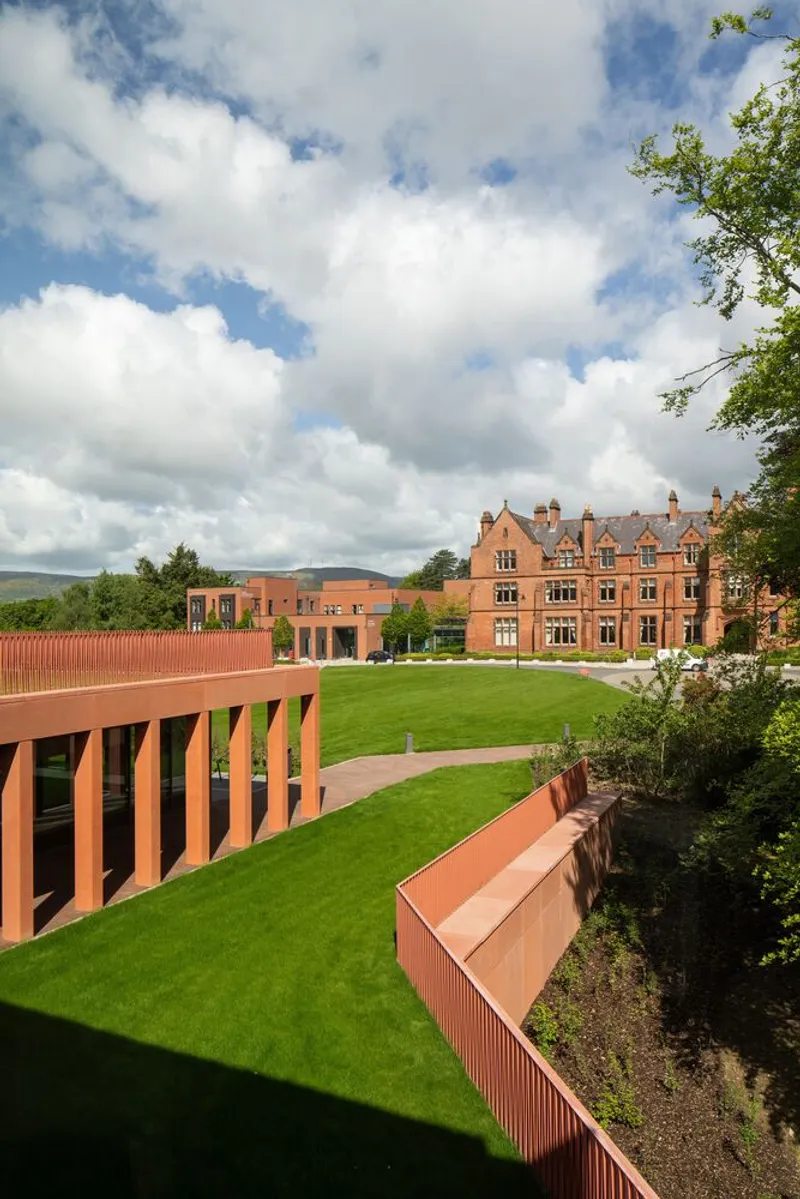
The project’s urban design strategy ensures harmony with its surroundings, respecting the Grade II-listed Riddel Hall and the mature woodland that frames the campus. The building footprint was carefully fragmented to minimize tree removal, preserving the site's natural character while enhancing sustainability and green infrastructure.

Sustainable and Ecological Design
The Queen’s Business School exemplifies a low-carbon approach, achieving BREEAM Excellent certification through key sustainable design measures:
- Geothermal Heating System: A deep 125m borehole system extracts heat from the sandstone substrate, reducing carbon emissions by over 60% compared to traditional gas boiler systems.
- Green Roofs & Drainage Solutions: The integration of green roofs supports stormwater management, improves thermal insulation, and enhances biodiversity within the campus.
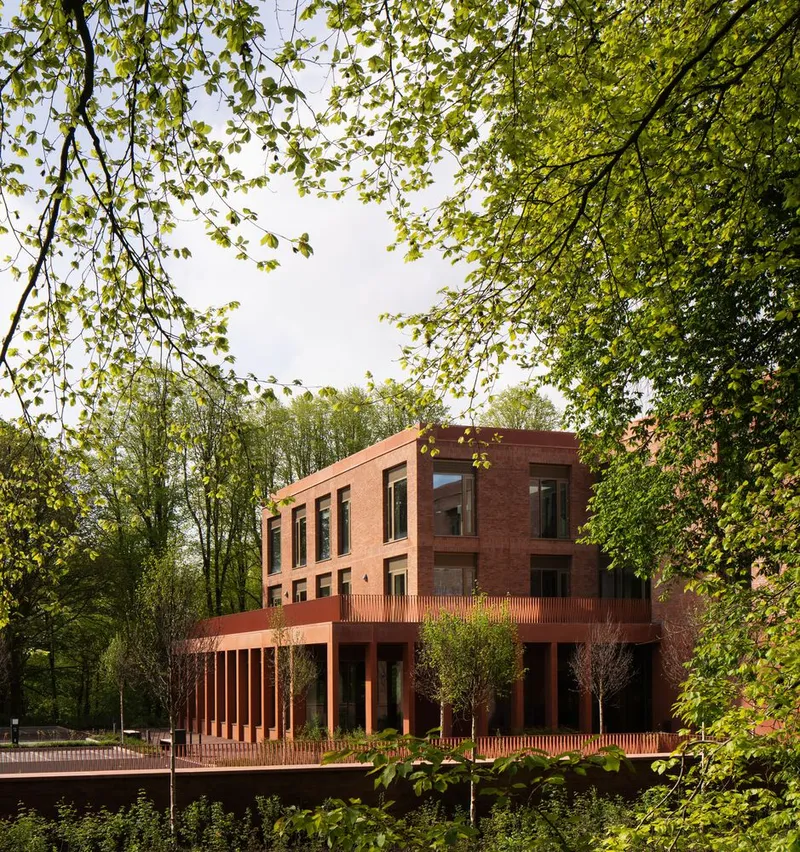
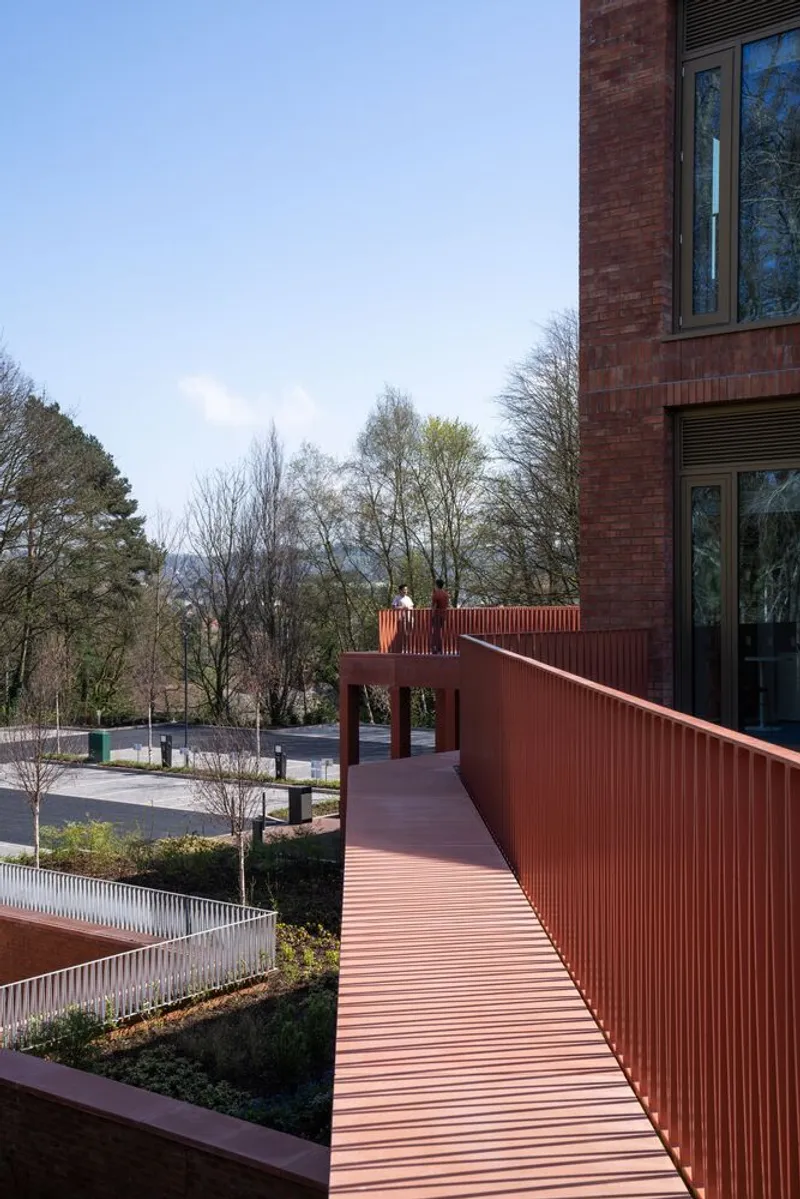
- Energy-Efficient Materials: The use of red clay brick, bronze-framed aluminum, floor-to-ceiling glazed panels, and exposed concrete soffits ensures passive heating and cooling, reducing operational energy demands.

Spatial Organization and Design Features
The architectural layout prioritizes user experience, ensuring seamless circulation through interconnected learning and social spaces:
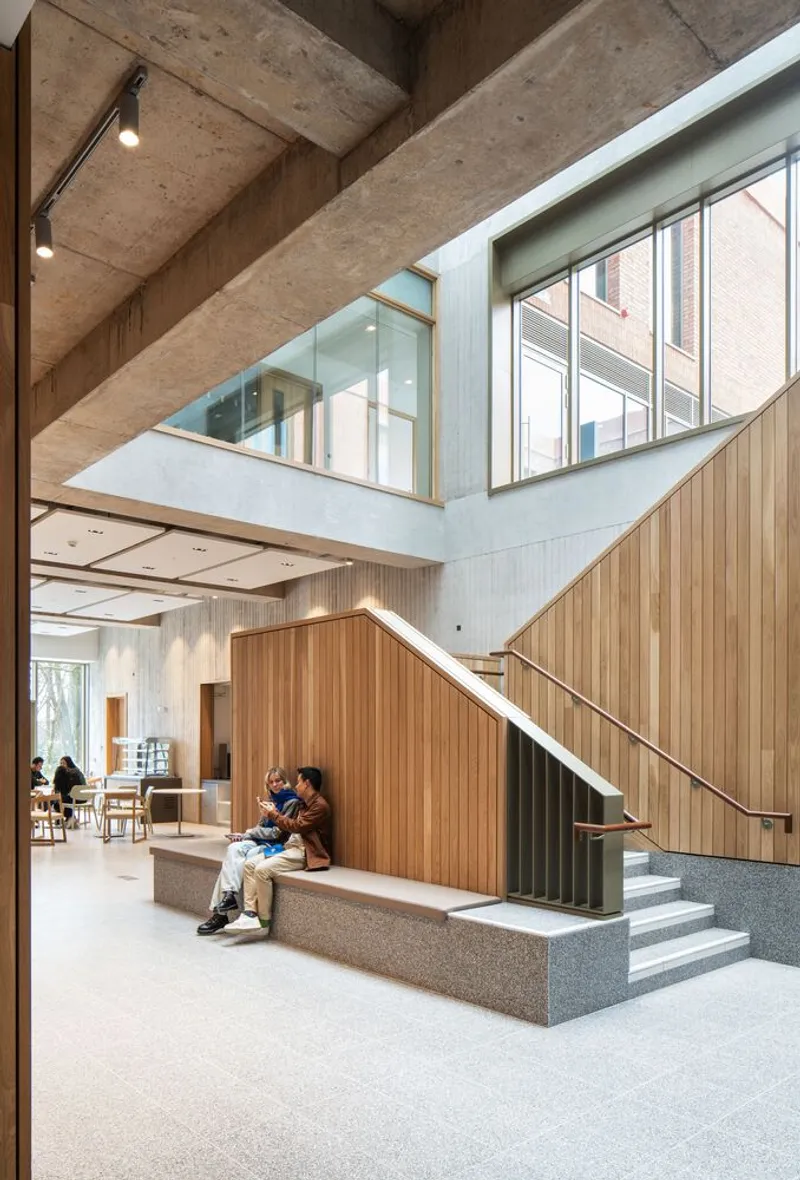
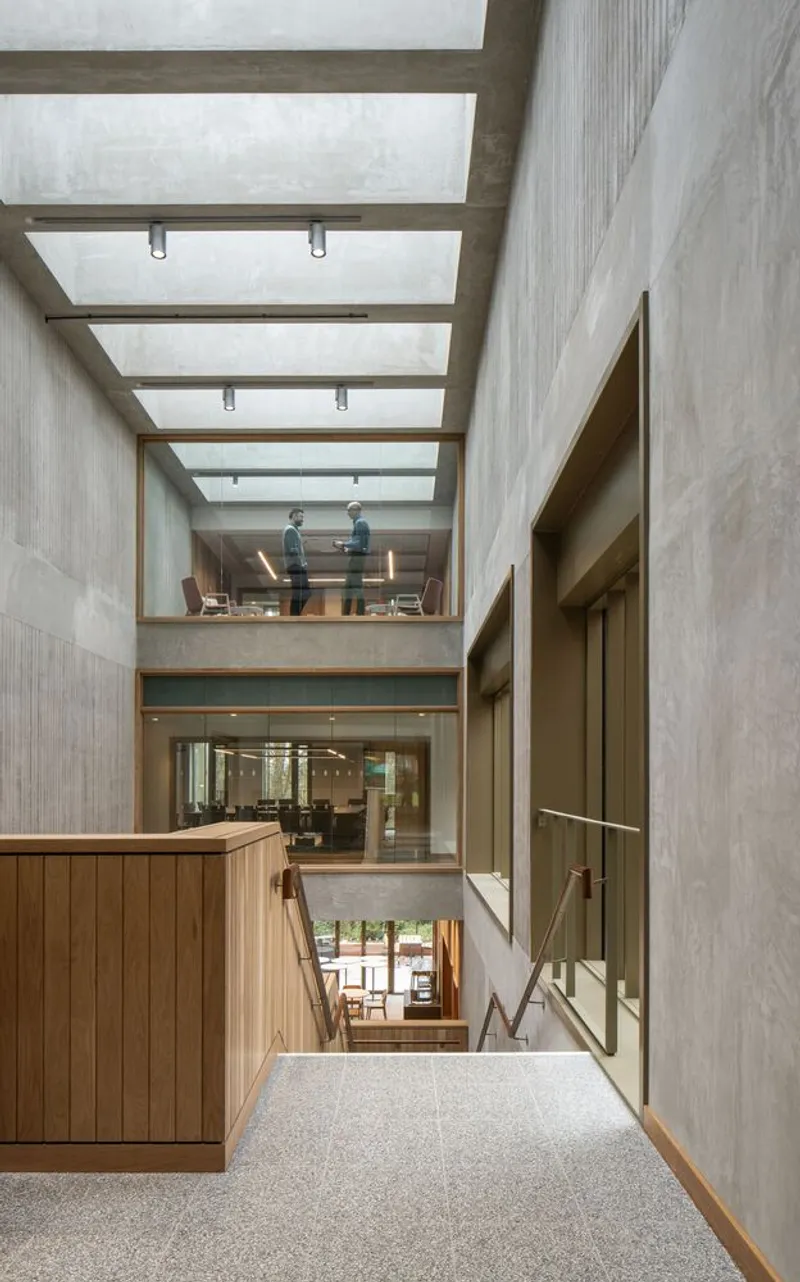
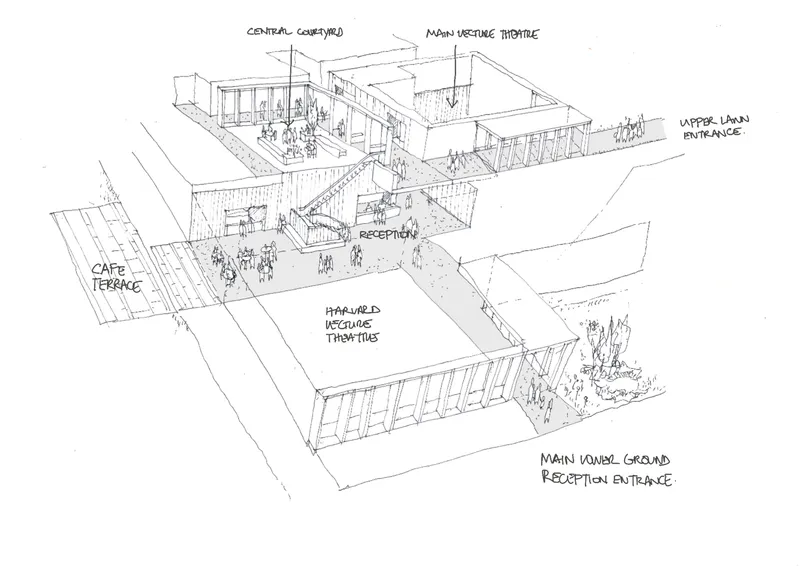
- A triple-height atrium serves as the central organizing element, drawing in natural light and enhancing spatial fluidity.
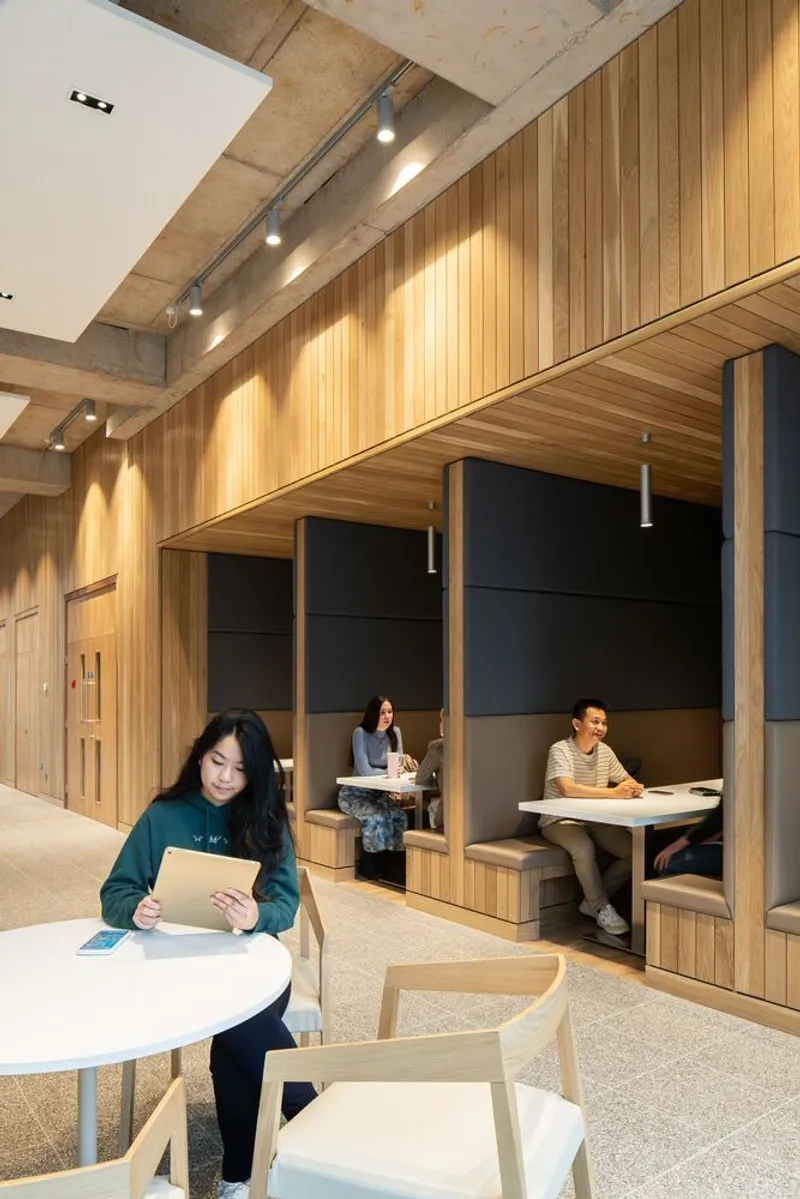
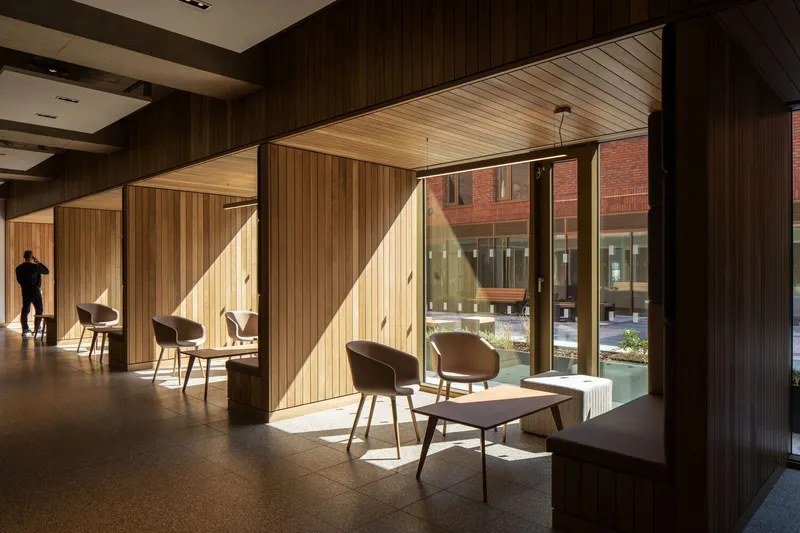
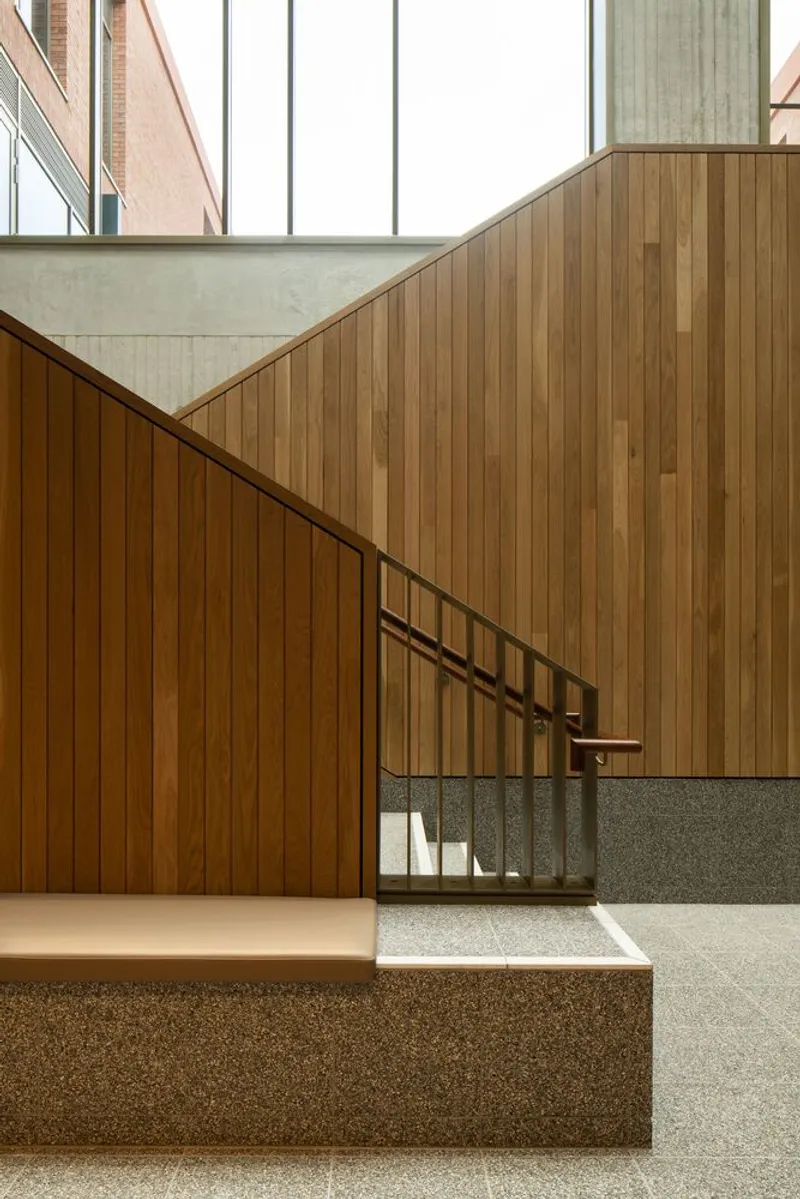
- A feature staircase links the reception to upper study levels, with informal seating booths overlooking the landscaped courtyard.
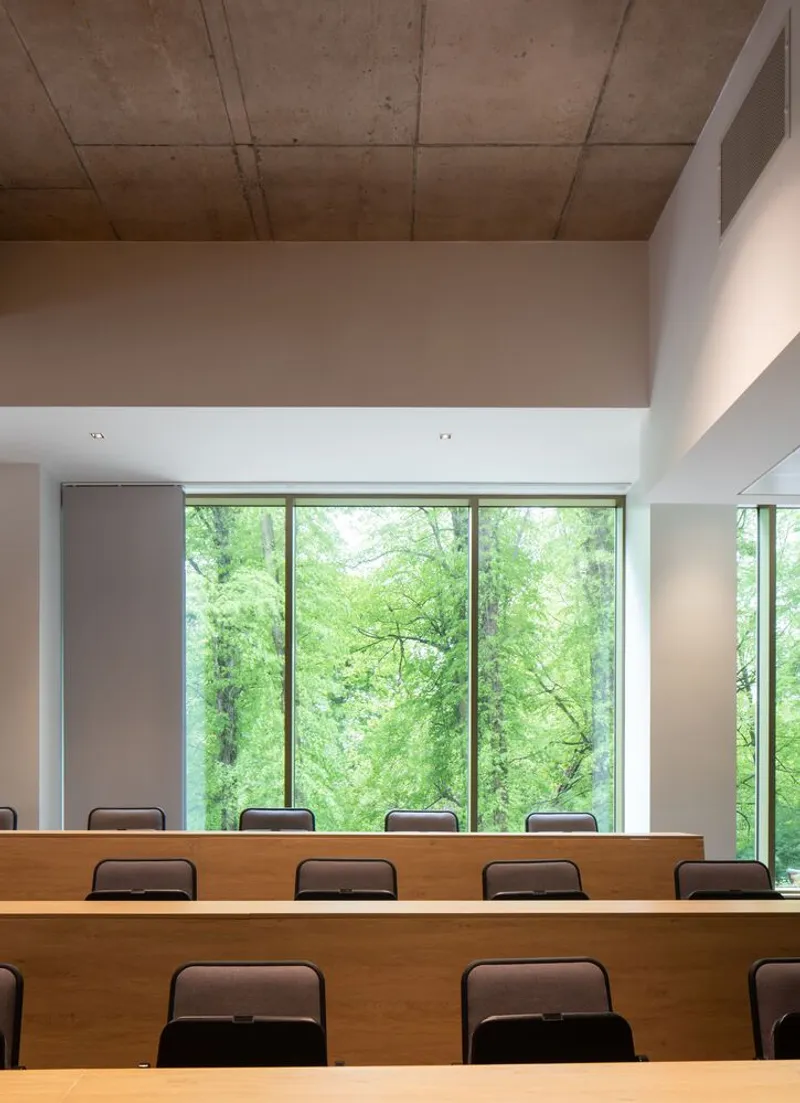
- The lower ground floor houses lecture theatres, embedded into the landscape to minimize visual impact and maintain a human-scale design.
Material Palette and Aesthetic Appeal
The material selection reflects a refined yet robust aesthetic, balancing contemporary architecture with traditional craftsmanship:
- Red cast stone colonnades mark the entrance zones, providing a monumental yet inviting entry experience.
- Timber wall panels, terrazzo flooring, and board-marked concrete walls create a warm, textural contrast, reinforcing a sense of academic prestige.
- Expansive glazing enhances natural ventilation and daylighting, reducing reliance on artificial lighting while connecting interior spaces with the surrounding landscape.
The Future of Academic Architecture
The Queen’s Business School sets a new standard for sustainable academic buildings, proving that innovative architecture can balance functionality, environmental responsibility, and heritage conservation. This landmark project is a testament to TODD Architects' expertise in crafting spaces that inspire learning while addressing the evolving needs of modern education.
All Photographs are works of Donal McCann




Popular Articles
Popular articles from the community


Hill & Cross Opera: Sculptural Opera House Architecture Shaped by Tallinn’s Landscape and Identity
Hill & Cross Opera reimagines opera house architecture in Tallinn through its sculptural hill, civic plaza, glass wave and a luminous cross.

The Musturak Paradise: Senior Living Architecture for a Connected Future in Temara, Morocco
The Musturak Paradise reimagines senior living architecture in Temara via private homes, social spaces, culture, community, and shared care.

Co-life: Sustainable Architecture for Age-Friendly Community Living
Co-life reimagines sustainable architecture for seniors through courtyards, rammed earth, shared gardens, and spaces designed for belonging.

Riyadh For All: Intergenerational Urban Design for Active Aging in Rabat
Riyadh For All reimagines urban design in Rabat with intergenerational co-living, adaptive courtyards, and Moroccan cultural exchange today.


Similar Reads
You might also enjoy these articles


Hodi-Mandai Geram
Project Function: Preservation and revitalization of the Intangible heritage and socio-spatial identity of the Hodi by Housing, Cultural Memory Center, Sacred Grove, landscape, local tourism economy


Olio Towers: A Mid-Rise for Performers That Fuses Housing, Rehearsal, and Stage
Located blocks from Houston's Theater District, this modular tower stacks living units around a central performance atrium.

Oasis: Modular Green Housing Carved into Dhaka's Urban Fabric
A shortlisted Plugin Housing entry reclaims unauthorized settlements in Dhaka with stepped concrete volumes, green roofs, and ventilation-driven design.

Black Hole: A Floating Megastructure for the Post-Physical Era
Emiliano Mazzarotto envisions a spherical, self-scaling arena where e-sports, digital hotels, and holographic stadiums replace traditional public space.


Explore Educational Building Competitions
Discover active competitions in this discipline



Challenge to design public laboratory


Challenge to reimagine the Iron Throne


Photograph architecture without architects


Illustrate the lost glory of Angkor Wat - Render Challenge
Comments (0)
Please login or sign up to add comments
No comments yet. Be the first to comment!