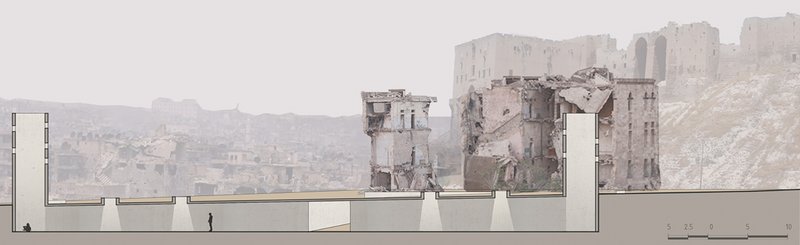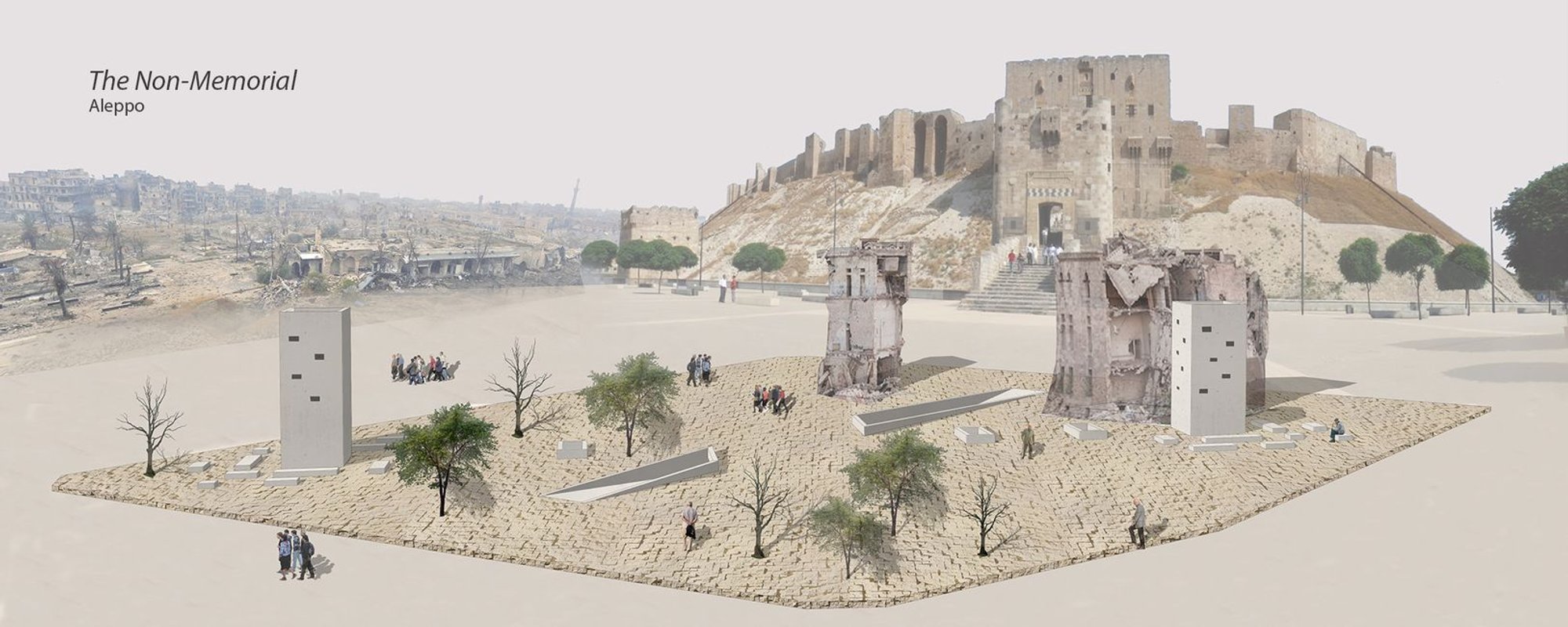
The Non-Memorial: Aleppo
Rebuilding Memories Through Architecture: Transforming Trauma into Unity and Hope.


Conceptual Paradox Reminders are deliberately designed to draw humanity back from the edge of oblivion; otherwise, the memory of an event is prone to forgetfulness. On the other hand, the body that experienced war traumas cannot live with this memory for eternity, as there is an urge to forget traumas. Therefore, memory embedded into physical space loses its meaning, purpose, and utility through time and space. Examples proving this hypothesis are explored through the alteration in people's perception towards memorials, including the Holocaust Memorial in Berlin and the Spomeniks in former Yugoslavia. The need for the Non-Memory is to rediscover the true notion of spaces of memory.
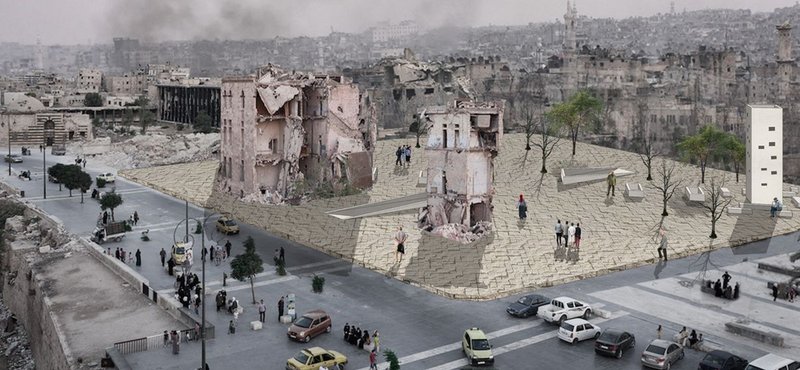
The Non-Memory Manifesto
- Avoid designating spaces for memory as they lose their meaning through time.
- Aim for social reconciliation and reassure political neutrality.
- Provide space for people’s interpretation and perception of public space; allow their voices to be heard.
- Transform memory into a sublayer to the main function, considering future utility.
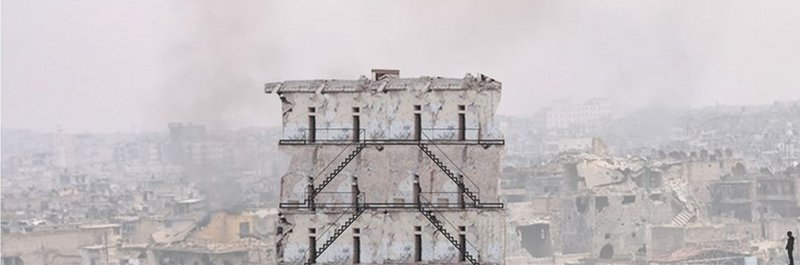
Urban Morphosis
- The Mound (7-1912): A time when Aleppo’s urban form focused on centralized strength.
- The Grand Serial (1928-2014): Reflects transitional growth and political aspirations.
- Ruins (2014-now): A testament to resilience amidst devastation.
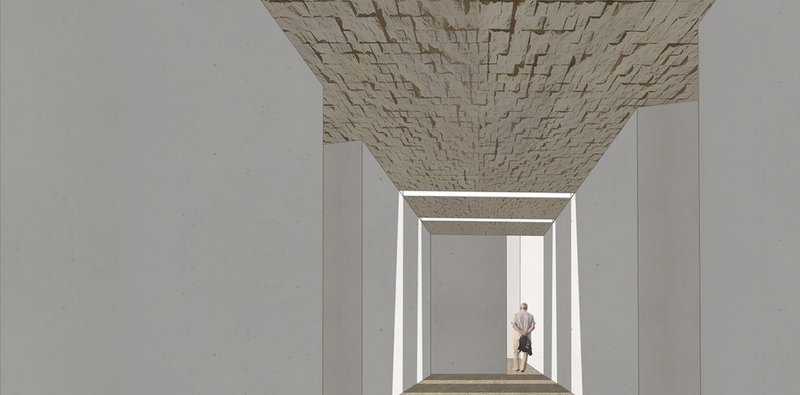
Architectural Elements
- Prewar Situation: Symbolic structures, like the Grand Serial, represented Aleppo’s identity before war.
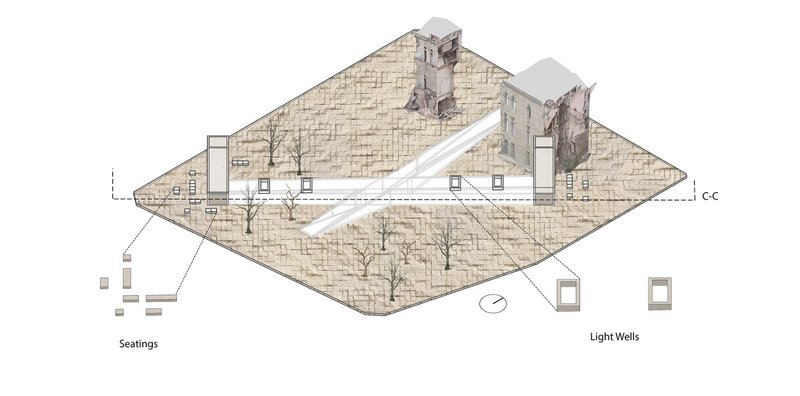
- The Scar: Post-war remnants re-used to create spaces of remembrance while embracing hope.
- The Tunnel: An underground connection to facilitate anonymity and storytelling.
- The Storytelling Towers: Narratives preserved in physical and digital spaces to amplify voices of the people.
- The Public Space: Reintegration of public spaces for collective unity and expressions of joy and grief.
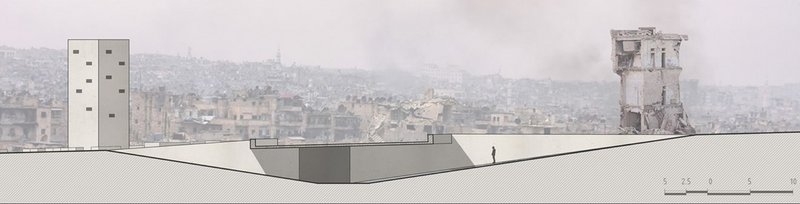
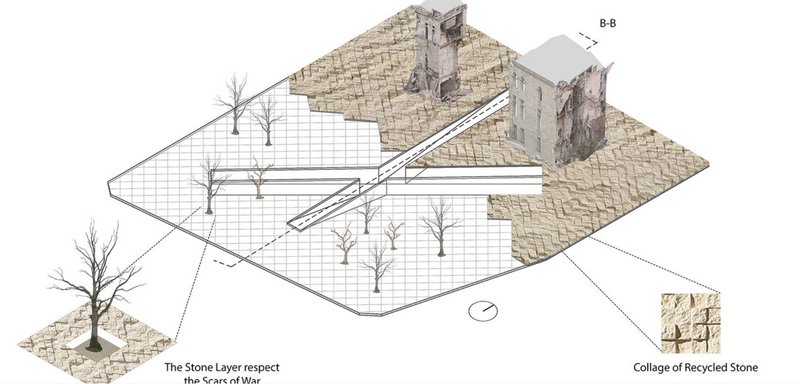
Phased Development
- Phase 1: Embracing the ScarPreserving war remnants while incorporating green regeneration.Architectural additions to harmonize past and future.
- Phase 2: Forging UnityRespecting war’s scars through recycled materials and thoughtful designs.
- Phase 3: Storytelling TowersDynamic spaces to share untold stories, bridging past and present.
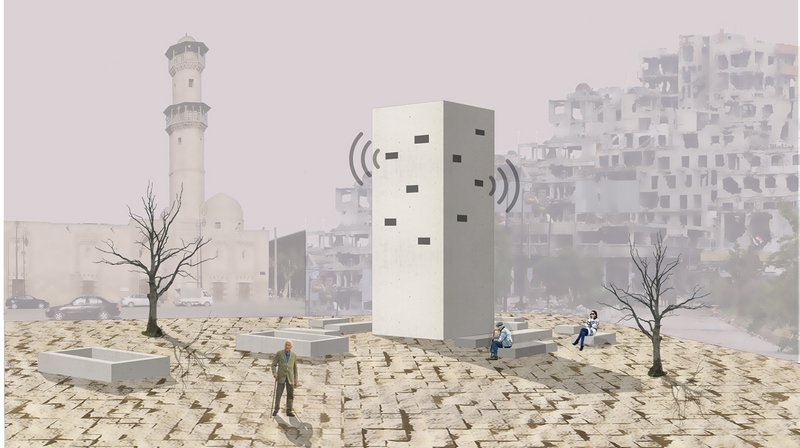
About the Project
This visionary project by Mohamed El-Kurdi, recipient of an Honorable Mention in the "Memory" category, challenges conventional perceptions of architecture. It strives to transcend traumatic memory and transform spaces into platforms for social reconciliation, storytelling, and hope.