
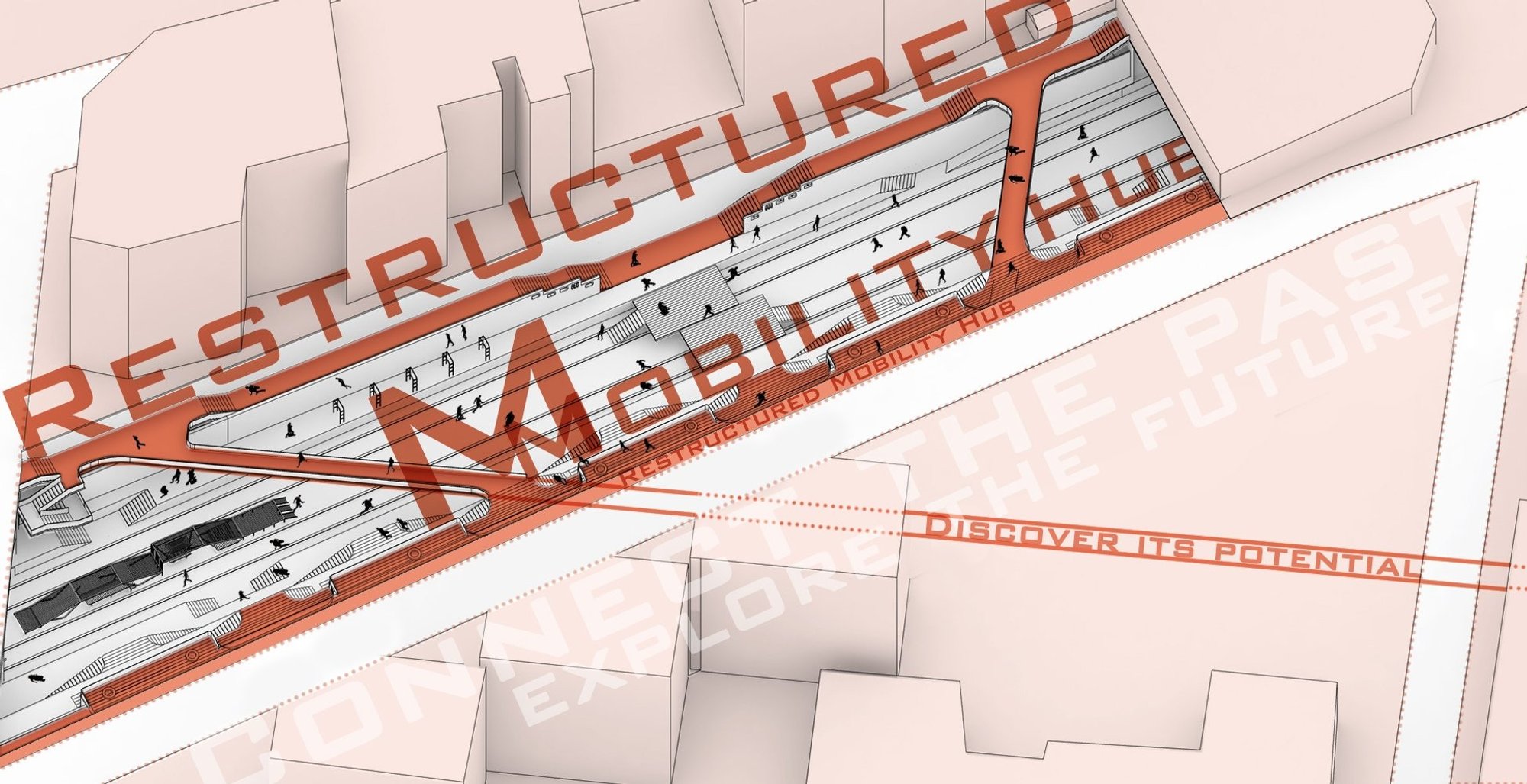
Restructured Mobility Hub: Adaptive Urban Design Revitalizing Public Infrastructure
An adaptive urban design strategy transforms forgotten infrastructure into a dynamic mobility hub fostering interaction, flexibility, and urban continuity.

In contemporary architecture discourse, adaptive urban design has emerged as a critical approach to reactivating neglected infrastructure and redefining public space. The project Restructured Mobility Hub by Mengyang Wu, shortlisted in the Salut Paris competition, embodies this paradigm by transforming an underutilized linear transport corridor into a vibrant, flexible, and socially responsive urban system.
Once a bustling traffic artery, the site gradually lost its relevance, becoming a silent remnant of urban history. Rather than erasing this past, the proposal seeks to reinterpret and reanimate it. The project does not treat the site as an empty void but as a latent framework capable of hosting new forms of interaction, movement, and cultural exchange.
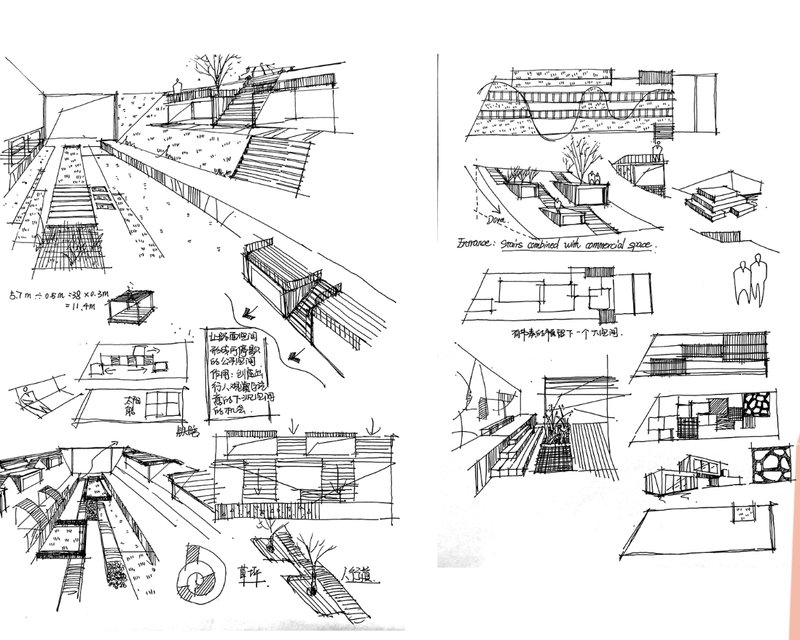
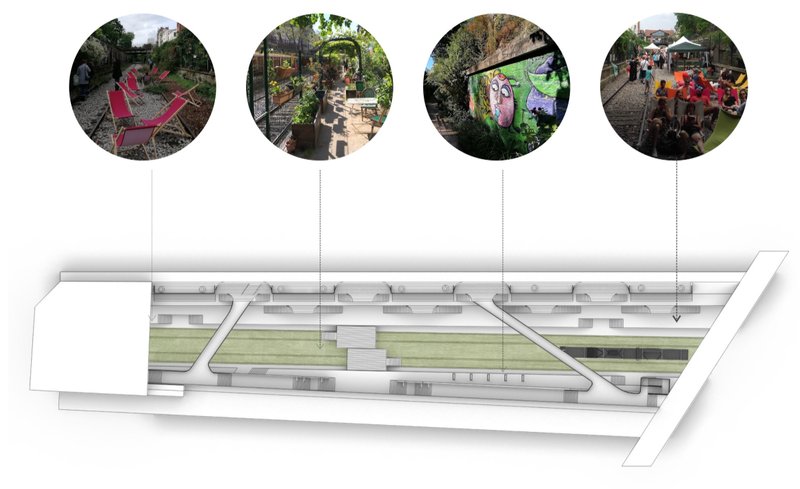
Concept: Reclaiming the Urban Void through Adaptive Urban Design
At its core, the project leverages adaptive urban design to reconnect fragmented urban systems. By abstracting the historical significance of the site and restructuring its spatial logic, the design introduces a multi-layered platform that encourages participation and interaction.
The intervention redefines the notion of a mobility hub. Instead of serving purely as a transit corridor, it becomes a hybrid public infrastructure that accommodates leisure, commerce, culture, and everyday urban life. The aim is to transform passive circulation into active engagement.
This approach recognizes that contemporary urban spaces must be dynamic and inclusive. The design facilitates different degrees of participation, allowing users to engage with the space in varied and evolving ways.
Spatial Strategy: Breaking Linearity with Modular Systems
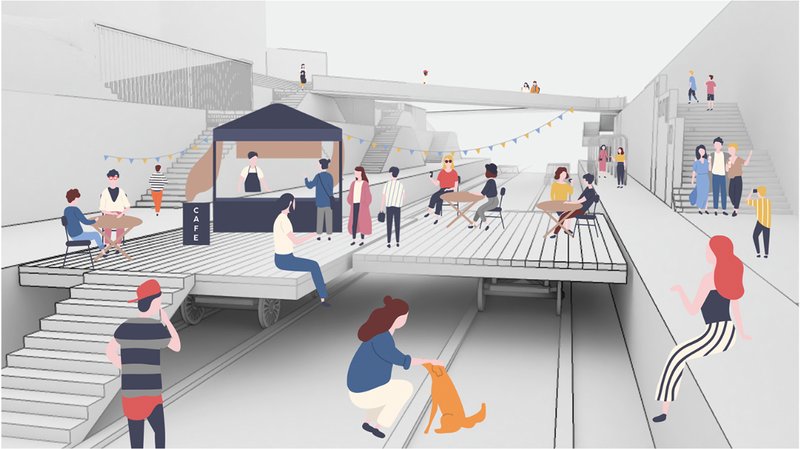
One of the primary challenges of the site is its inherent linearity. The design responds by introducing a series of modular platforms and articulated levels that disrupt the monotony of the linear axis.
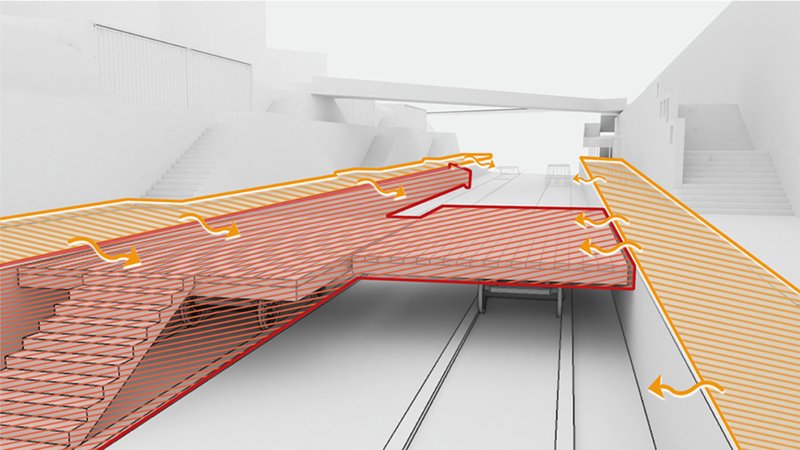
These interventions operate as flexible units that can be rearranged, expanded, or adapted over time. Through variations in height, orientation, and connectivity, the platforms create a rhythm within the space, enabling diverse spatial experiences.
The modular strategy allows the project to remain open-ended. Rather than prescribing fixed functions, it provides a framework that can accommodate evolving urban needs. This adaptability is central to the project's long-term relevance.
Programmatic Layering: A Hybrid Public Infrastructure
The Restructured Mobility Hub integrates multiple programs within a unified spatial system. Key elements include:
- Sliding platforms that can be repositioned to host temporary activities such as markets, performances, or exhibitions
- Linear entertainment devices that activate movement corridors
- Public seating and leisure zones embedded within the infrastructure
- Cultural and social interaction nodes that encourage community engagement
This layered programming transforms the site into a continuously evolving environment. The space is no longer defined by a single function but by its capacity to support multiple simultaneous uses.
Movement and Connectivity: Reinforcing Urban Continuity
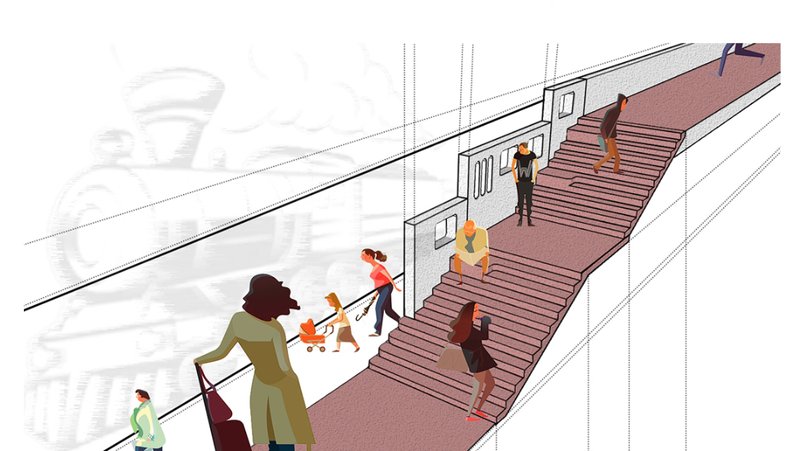
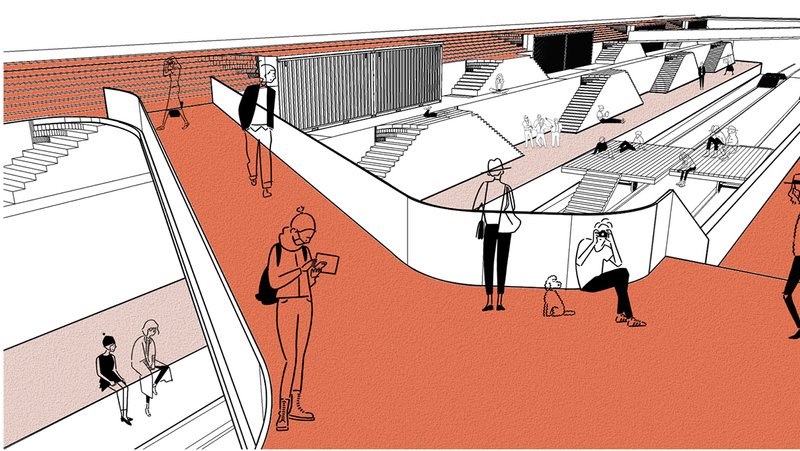
Movement plays a central role in the design. The project introduces a network of pedestrian pathways, bridges, and ramps that connect different levels and zones.
The pedestrian bridge, in particular, acts as a symbolic and functional connector between past and present. It extends beyond mere circulation, offering elevated viewpoints and creating new visual relationships with the surrounding urban fabric.
By enhancing accessibility and permeability, the design integrates the site back into the city's broader circulation system, reinforcing urban continuity.
Human-Centric Design: Experience, Interaction, and Inclusivity
The project prioritizes human experience by creating spaces that are both accessible and engaging. Variations in platform height and spatial configuration provide diverse visual and physical experiences.
Users can find their own place within the system, whether as tourists, residents, or casual visitors. The design encourages exploration, interaction, and spontaneous activity.
Importantly, the space is designed to accommodate different rhythms of use throughout the day and across seasons. This temporal flexibility enhances its usability and relevance.
Economic and Environmental Strategy: Flexible and Scalable Systems
The modular nature of the design contributes to its cost-effectiveness and sustainability. By avoiding permanent and rigid structures, the project allows for incremental development and adaptation.
The ability to reconfigure or relocate units reduces the need for extensive construction and enables efficient use of resources. This approach aligns with contemporary sustainable design principles, emphasizing adaptability and long-term viability.
Light, Memory, and Atmosphere
The project incorporates elements of light and shadow to evoke the site's historical identity. Inspired by the movement of trains, the design uses shifting light patterns to create a dynamic spatial experience.
These atmospheric qualities reinforce the connection between past and present, transforming the site into a space of memory as well as activity.
Juror Feedback: Critical Perspectives
The project received mixed feedback from the jury, highlighting both its strengths and areas for improvement.
Rachel Luchetti noted that the design outcome lacks clarity and cohesion, suggesting that the conceptual ambition is not fully resolved in its spatial execution.
Fuensanta Nieto appreciated the intent to connect the project to the city but emphasized that the relationship between these connections and the central space requires further development.
These critiques underscore the complexity of translating adaptive urban strategies into coherent spatial systems. They also point to opportunities for refining the project's integration and articulation.
The Restructured Mobility Hub represents a compelling exploration of adaptive urban design as a tool for revitalizing public infrastructure. By transforming a neglected transport corridor into a flexible, interactive, and inclusive urban environment, the project challenges conventional notions of mobility and public space.
While certain aspects of the design require further refinement, its conceptual framework offers valuable insights into the future of urban regeneration. The project demonstrates how architecture can bridge history and innovation, creating spaces that are both meaningful and adaptable.
In an era where cities must continuously evolve, such approaches are not only relevant but essential.




Popular Articles
Popular articles from the community

The Faith: Modular Architecture for Play, Learning, and Hope in Kutupalong Refugee Camp
A modular playground architecture project in Bangladesh where play, learning, safety, and hope rebuild childhood inside a refugee camp anew.

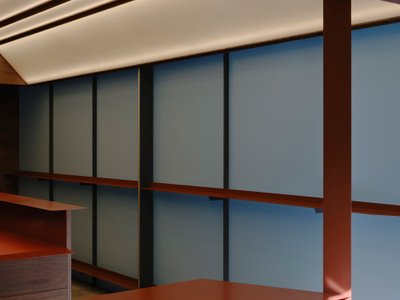
Kerry Kounnapis Packs 800 Daily Coffees into a 43-Square-Metre Melbourne Laneway Bar
Palace Coffee channels Pellegrini's and European standing bars through oxide-red steel and spotted gum timber in a Ridgway Place sliver.
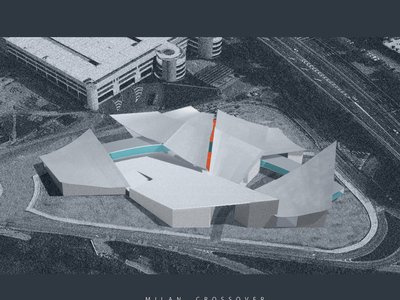
Milan Crossover: Sustainable Architecture for a New Fashion Culture in Milan
Milan Crossover transforms fashion culture through sustainable architecture, linking material libraries, remake studios, and public runways.
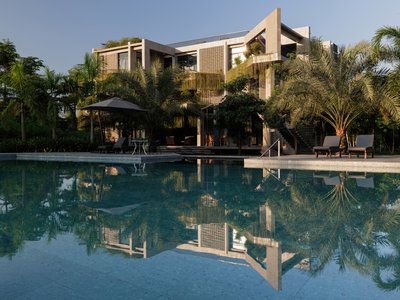
Reincarnation Weaves a Three-Story Retreat into the Green Landscape of Rural Bangladesh
Ara Manor in Narsingdi dissolves the line between domestic architecture and its lush surroundings through screens, courtyards, and planted rooftops.


Similar Reads
You might also enjoy these articles
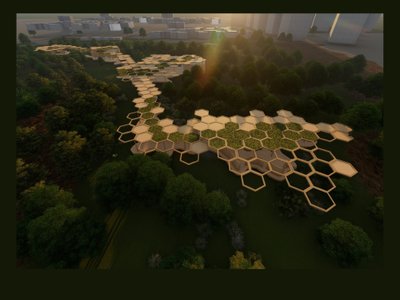
Eco Chapel: A Green Architecture Pavilion Designed in Symbiosis with the Forest
Eco Chapel uses green architecture to weave prayer, learning and reuse into a forest pavilion shaped by modular hexagonal canopies for life.
Kaffeebühnen: Coffee Shop Architecture Designed as a Civic Stage Between Vienna’s City and Park
Kaffeebühnen turns coffee shop architecture into a civic stage, linking Vienna’s park edge, urban life, warm timber yards, and coffee craft.
Healing Façade: Sustainable Architecture for Reforestation, Community, and Sacred Ecology in Ethiopia
Healing Façade reimagines sustainable architecture as a living wall that restores soil, catches water and renews Ethiopia's forest churches.


Urban Forest: A Vertical Ecosystem for 5,000 Workers in Singapore's Changi Business Park
Radially stacked pods and layered green decks turn a 7-acre plot into 47 acres of ecological workspace projected for 2040.





Comments (0)
Please login or sign up to add comments
No comments yet. Be the first to comment!