
Rome Unveils Master Plan for World's Largest Urban Solar Farm at Expo 2030
Energy-Sharing Concept to be Implemented in Groundbreaking Sustainable Development Project


Design and innovation office CRA-Carlo Ratti Associati, in partnership with architect Italo Rota and urbanist Richard Burdett, is presenting the master plan for Rome's bid to host the 2030 World Expo. The plan centres around the use of renewable energy as the foundation for a 21st-century urban commons, with every country participating by contributing to a solar farm that would provide power for the exhibition site and decarbonize neighbouring areas. All pavilions in Rome - including the renovated "Vele" complex by Santiago Calatrava - are created to be fully reusable, transforming the area into an innovation district after the event concludes.
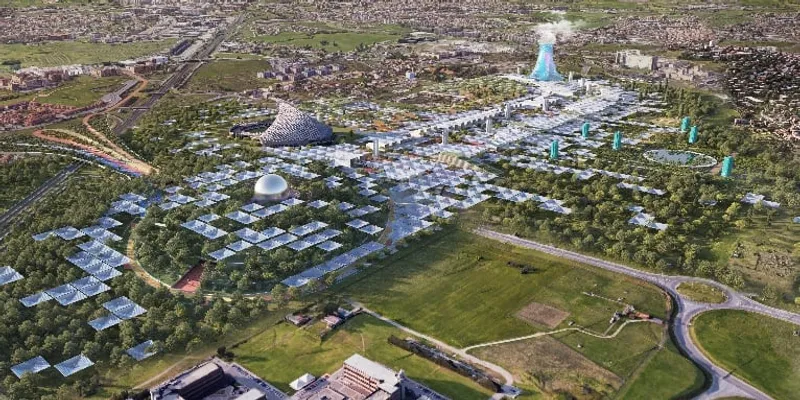
The Rome Expo 2030 will be held in the Tor Vergata area of Rome, which is home to the University of Rome Tor Vergata and a densely populated residential district. In recent years, the neighbourhood has seen neglect, but the Expo's master plan aims to revitalize the area through sustainable development. After the event, the pavilions will be repurposed to create a new innovation district in Rome.
The master plan was developed in partnership with various organizations, such as ARUP for sustainability and infrastructure, LAND for landscape design, and Systematic for mobility strategy. The plan's vision for the Expo Solar Park aims not only to revitalize the neighbourhood but also to decarbonize it. The solar farm, which covers 150,000 square meters and has a production capacity of 36 megawatt-peak, will be the largest urban, publicly accessible solar farm in the world. It will feature hundreds of unique "energy trees" that open and close their panels throughout the day to generate energy while also providing shade for visitors. From above, the infrastructure will create a mosaic-like appearance on the Expo site. The complex energy grid will also be complemented by the "Eco-system 0.0" pavilion, the tallest building of the Expo, which will provide cooling through evaporation.

“Expo 2030 Roma aims to break new ground for World Fairs and other large-scale events,” says Carlo Ratti, founding partner of CRA and director of the MIT Senseable City Lab. “Our master plan experiments with collective city-making processes, new energy-sharing strategies, and inclusive urban transformations that go well beyond the temporal and spatial confines of the event.”
“We conceived this project like a feasible utopia – one that aims to be a catalyst for new projects and ideas. The main driver behind this goal is to let natural ecosystems and technological inventions work in sync, just like human and natural energy would make each other more intense,” architect Italo Rota says. “This new approach to temporary events could become the foundation of a new model for urban development.”

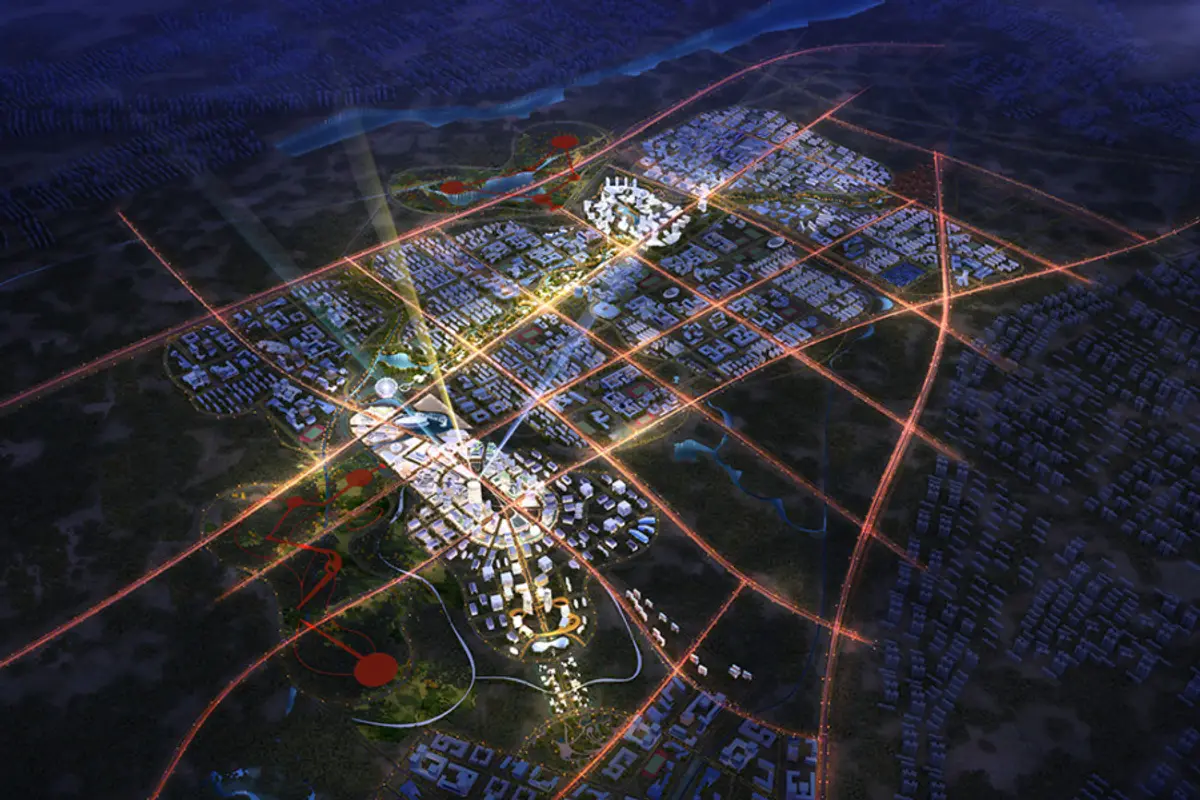
The master plan for Expo 2030 Roma is divided into three main areas: the City, the Boulevard, and the Park. The layout is designed to create a gradual transition from urban to natural as one move from west to east, emphasizing the importance of harmony between the artificial and natural worlds in combating climate change. The City in the west serves as the Expo Village and will become an extension of the University of Tor Vergata's campus after the event. The Boulevard, the central pedestrian axis, is a pathway through all of the national pavilions. The Park in the east is covered with lush vegetation and features thematic buildings, such as the "Pale Blue Dot" pavilion dedicated to educating the public about the natural world.
Expo 2030 Roma's commitment to revitalizing the surrounding neighbourhood is highlighted by the repurposing of a massive sports complex, known as "Le Vele," which has been abandoned for 15 years. Designed by Spanish architect Santiago Calatrava, the structure will become one of the flagship pavilions of Expo 2030 Roma, hosting public events and showcasing the transformation of Tor Vergata. The main entrance of the exhibition site serves as the primary access point, with new transportation and mobility connections, including a long green corridor linking Expo 2030 Roma to the adjacent archaeological sites on the Appian Way and other historical buildings and monuments in Rome.

The architecture firm CRA has a wealth of experience designing and constructing at World Expos, having designed the Future Food District for Expo 2015 Milano and releasing the master plan for the MIND-Milan Innovation District on the former Expo site, which is currently being developed by Lendlease. Additionally, the firm collaborated with Italo Rota, Matteo Gatto, and F&M Ingegneria to build the national Pavilion of Italy at Expo 2020 Dubai, using recycled and reusable materials such as plastic, orange peels, and coffee grounds to create fully circular buildings. The Italian Pavilion was highly popular, attracting 1.6 million visitors, and won multiple awards including Exhibitor Magazine's Expo Award 2022.
Under the leadership of Committee President Giampiero Massolo, Expo 2030 Roma is being planned with the theme "People and Territories, Together: Urban Regeneration, Inclusion and Innovation." The city of Rome submitted its proposal to the Bureau of International des Expositions (BIE) on September 7th, 2022. The host city will be chosen through a vote by the 170 BIE member states, which is set to take place in November 2023.
Press release and images courtesy of CRA-Carlo Ratti Association

Popular Articles
Popular articles from the community


longwave studio Reorganizes a 112 m² Tainan Apartment Around the Daily Routines of a Family and Two Cats
In Tainan, Taiwan, birch plywood, rust-red furniture and a freestanding plaster wall link arrival, storage, work and family life in one apartment.

Architekt Andreas Gruber Scatters 23 Dark Timber Chalets Across a South Tyrolean Forest Edge
In Molini di Tures, Amonti Chalets breaks a resort into a hamlet of gabled timber houses, with parking, storage and services pushed into the slope.

LT2A and OPEN Architectes Thread a Brick and Glass High School Through a Wooded Belgian Campus
In Braine-l'Alleud, a 3,000 m² wing for Collège Cardinal Mercier pairs pale brick with a glazed colonnade, deferring to a small chapel and a dense wood.

U.GA Architects Wraps an Oval Rooftop Pool in Curved Board-Formed Concrete on Busan's Jeollidan-gil
In Busan's Jeonpo-dong, a 454 m² mixed-use block stacks a neighborhood facility, guest rooms and an oval rooftop pool inside spiraling concrete walls.

Similar Reads
You might also enjoy these articles


Vereda Arquitetos Renovates a 40-Square-Meter Apartment Inside Niemeyer's Copan Building
A compact unit in São Paulo's most iconic residential tower gets a material overhaul that pairs exposed concrete with bold blue Formica.

Shakur's House: Exposed Brick as an Interior Organiser in a 168 m² Mashhad Residence
Brick moves indoors in this Mashhad residence, where masonry walls, glass partitions and teal planes sequence a compact home without closing it off.

Day and Night Park: A Time-Based Urban Newsstand in Beijing
A temporary urban newsstand in Beijing blending travel, light, and reading through poetic colors, compact form, and community-focused design.

Modernist Patio Renovation in El Masnou, Barcelona by Oliver Segura Arquitectura + Cebrià Arquitectura
Modernist patio renovation blending tradition and innovation with a movable pool, leveled floors, and Catalan materials in El Masnou.

Explore Solar Fabric Competitions
Discover active competitions in this discipline


Challenge to reimagine the Iron Throne

Photograph architecture without architects

Illustrate the lost glory of Angkor Wat - Render Challenge

Design challenge to reuse E-waste
Comments (0)
Please login or sign up to add comments
No comments yet. Be the first to comment!