

Shuangxiang Rural Revitalization Laboratory: Adaptive Reuse as a Catalyst for Contemporary Rural Life
Adaptive reuse of a rural warehouse creates greenhouse-linked workspaces, community hubs, and panoramic rooftops supporting sustainable agriculture and village revitalization.


Located in Shuangxiang Village, northwest of Jinze Town in Qingpu District, Shanghai, the Shuangxiang Rural Revitalization Laboratory is a thoughtful example of how architectural renewal can actively support rural revitalization. Designed by Atelier Archmixing, the project transforms an abandoned agricultural machinery warehouse into a multifunctional rural workspace and community exchange hub, aligning spatial innovation with ecological and cultural continuity.
Context: Jiangnan Water Towns and Rural Transformation
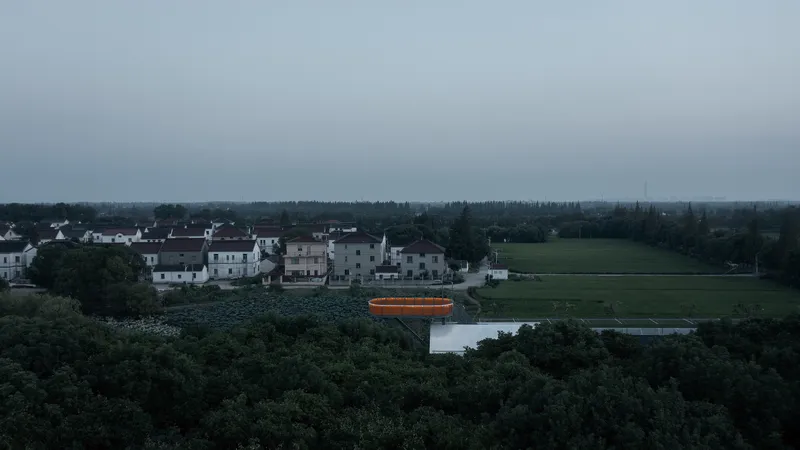
Shuangxiang Village sits within the rich landscape of the Jiangnan water town region, surrounded by lotus ponds, paddy fields, ecological forests, and historic settlements such as Zhouzhuang and Jinze. In 2023, the village was selected as a Shanghai Metropolitan Area Rural Revitalization Demonstration Site, positioning it as a testing ground for sustainable agricultural development, cultural inheritance, and rural innovation across the Yangtze River Delta.
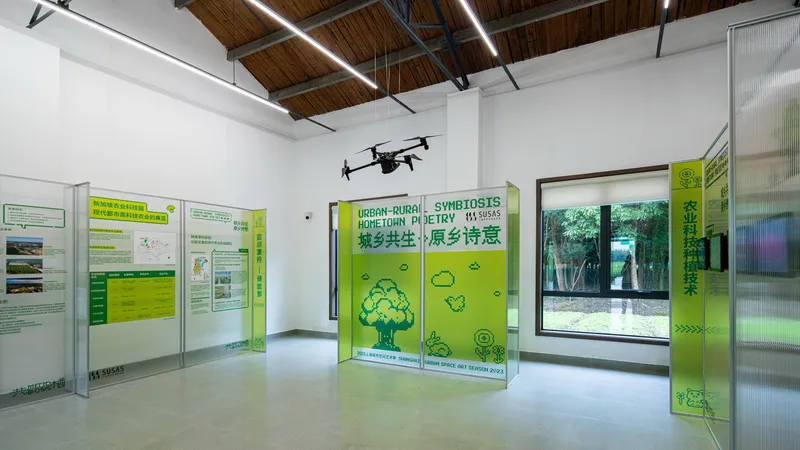
Against this backdrop, the laboratory is envisioned not only as an architectural intervention, but as a platform for modern urban agriculture research, community collaboration, and rural knowledge exchange.
Adaptive Reuse of an Agricultural Warehouse
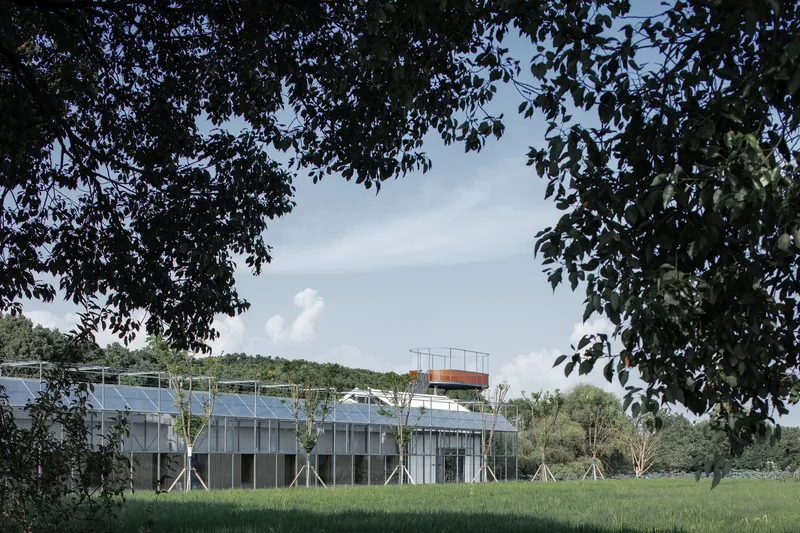
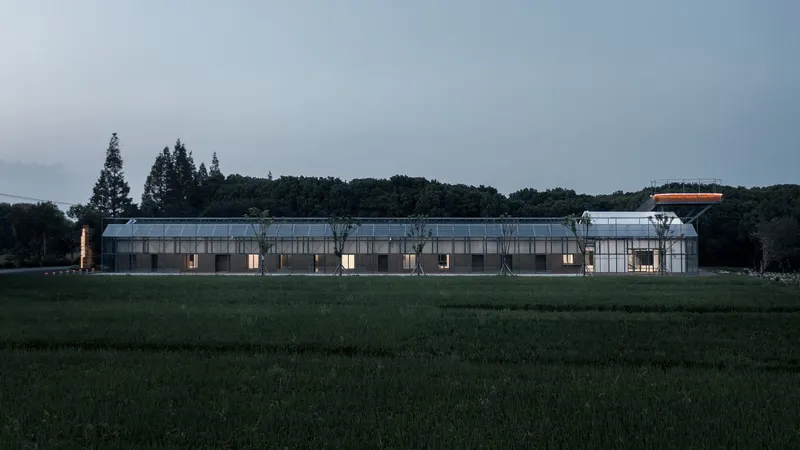
The project is based on a 60-meter-long, 9-meter-wide agricultural machinery workshop divided into three structurally independent segments. Rather than pursuing heavy reconstruction, the architects adopted a light renovation strategy, preserving the original structure while reprogramming it for new uses.
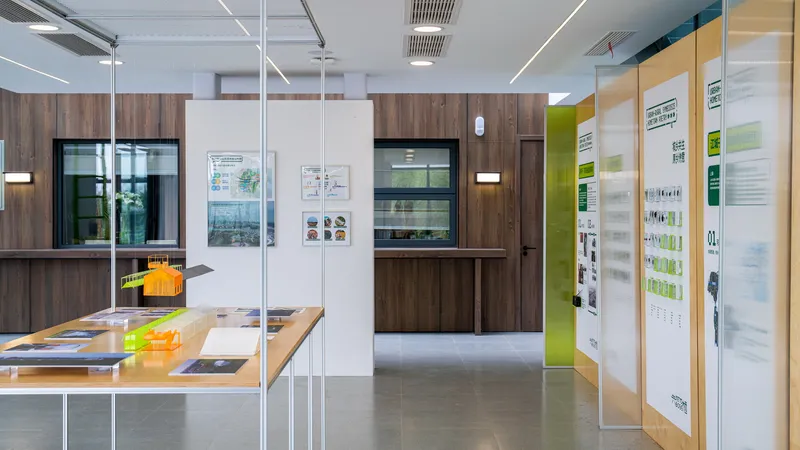
Internal lightweight partitions reorganize the interior into flexible workspaces, community service areas, and rooms for professional workshops, exhibitions, and temporary events. This approach minimizes construction waste, reduces costs, and respects the embodied energy of the existing building, key principles in sustainable rural architecture.
Greenhouse Corridor as Spatial Connector
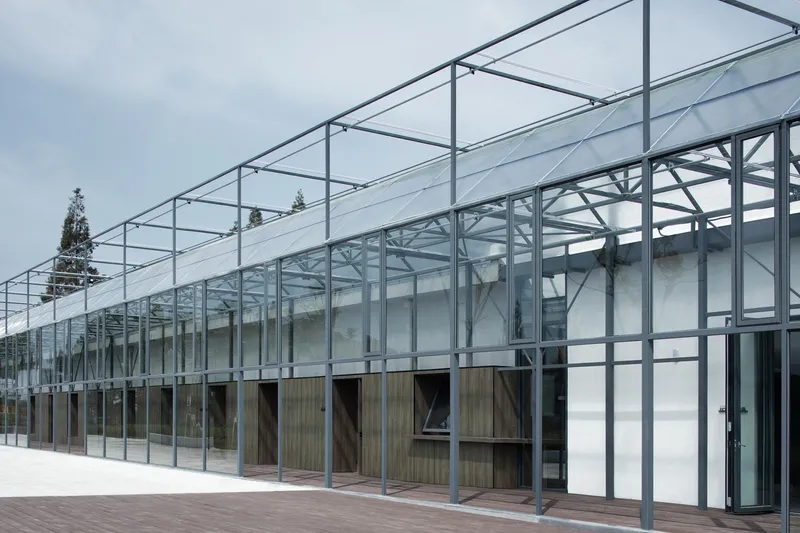
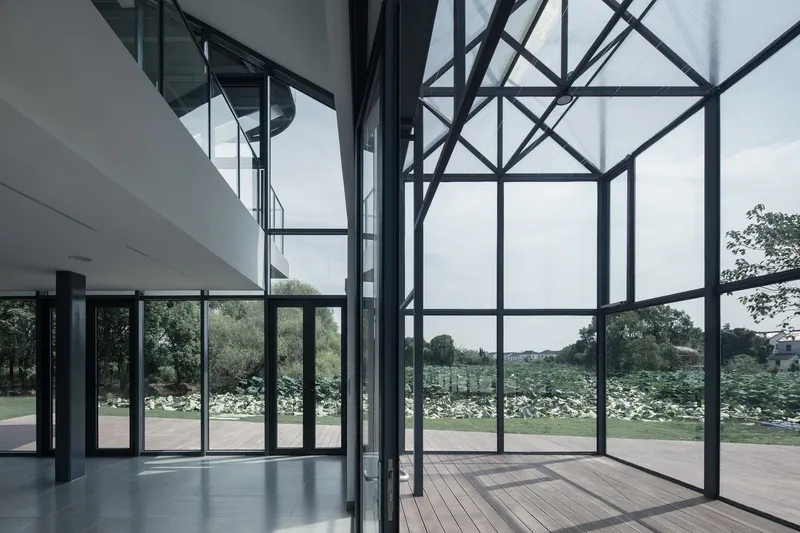
A defining design move is the introduction of a 3.7-meter-wide circulation corridor along the southern side of the building. Constructed using agricultural greenhouse techniques, this lightweight, transparent structure physically and visually connects the previously isolated segments of the warehouse.
The corridor serves multiple roles:
- A circulation spine linking diverse programs
- A viewing gallery facing farmland and lotus ponds
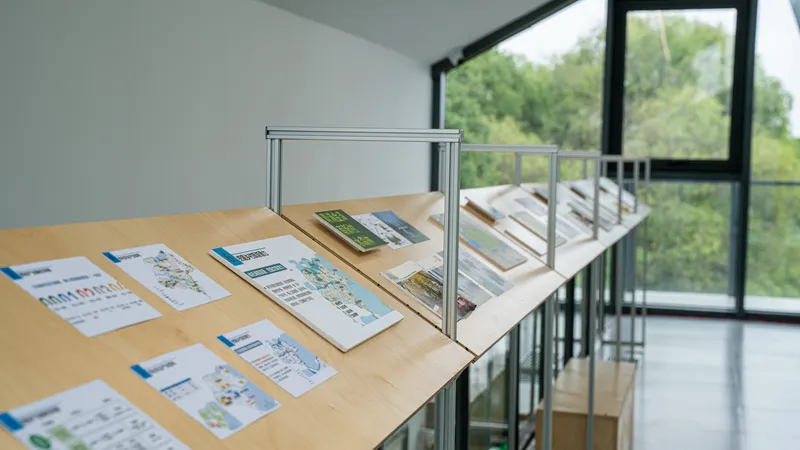
- An exhibition and display space
- An informal social zone for rest and outdoor coffee seating
By merging agricultural construction logic with architectural programming, the corridor becomes both infrastructure and experience, reinforcing the project’s rural identity.
New Volume and Rooftop Observation Deck
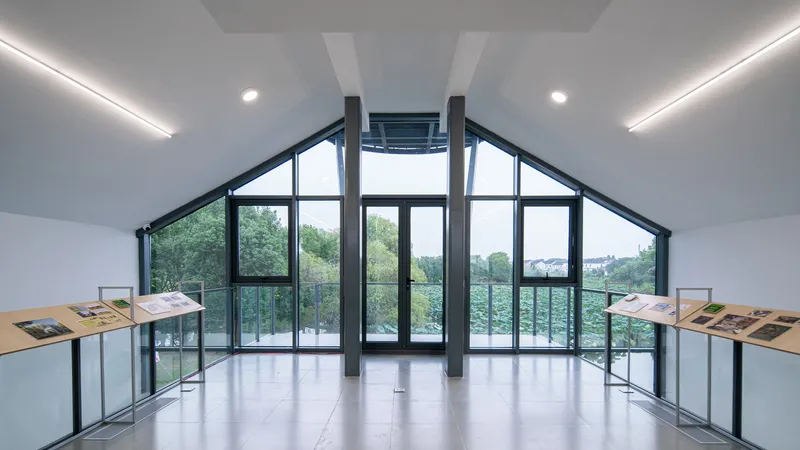
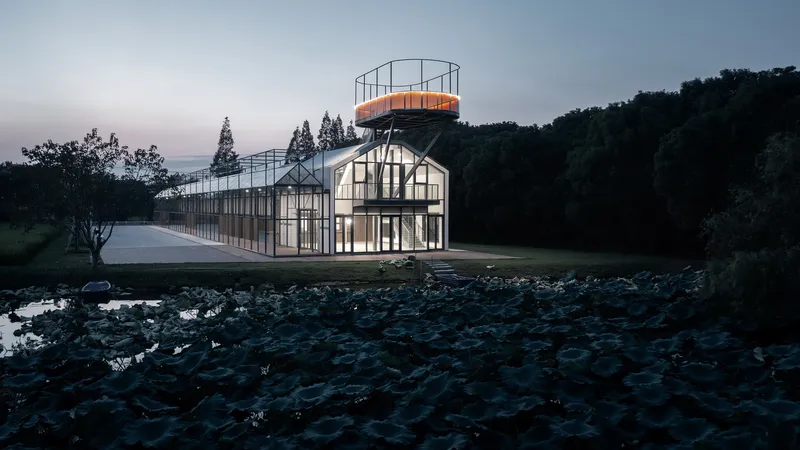
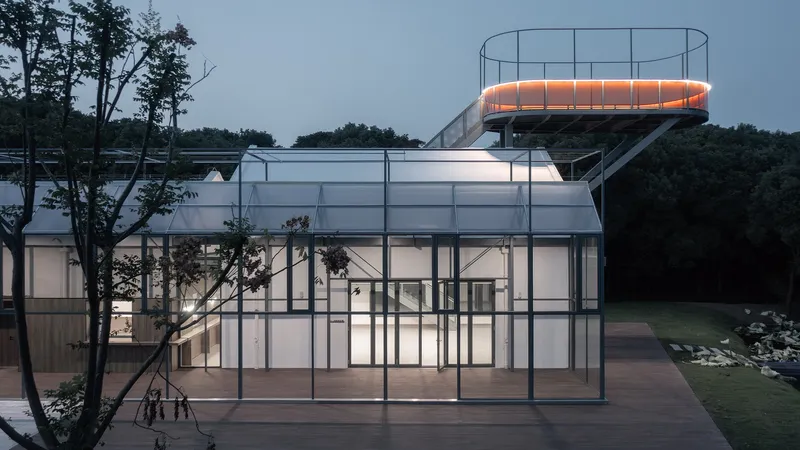
On the western side, a dismantled temporary steel structure was replaced with a new two-story, structurally independent volume. Echoing the sloped roof geometry of the original workshop, the addition is wrapped in a double-sloped concrete shell with a fully glazed gable facing the lotus pond.
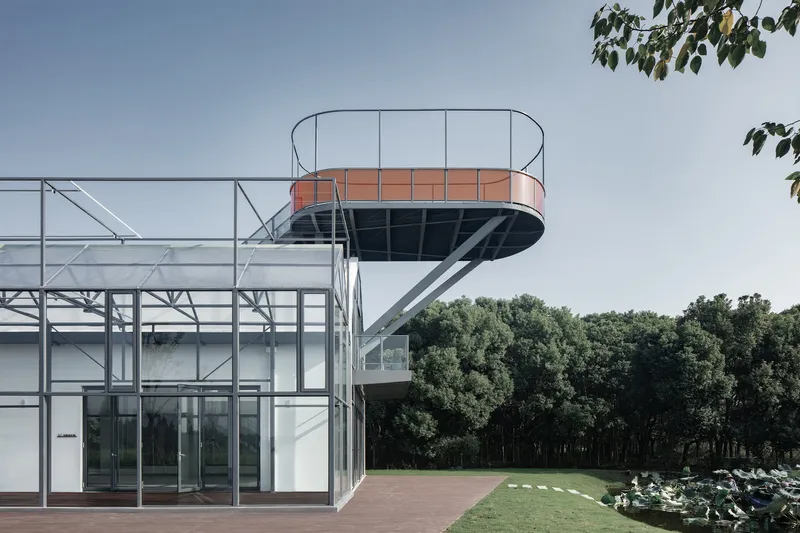
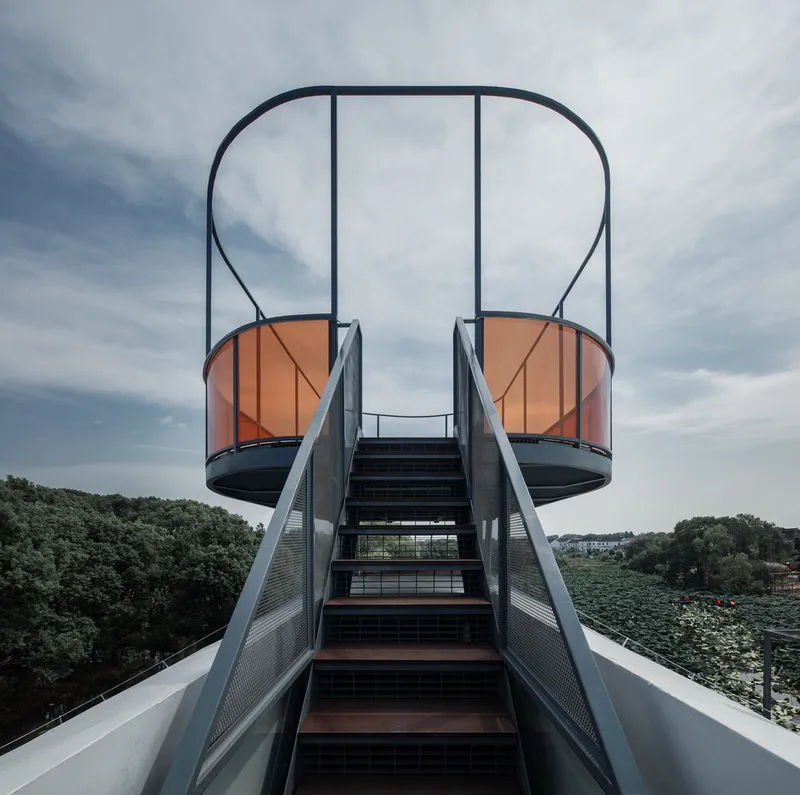
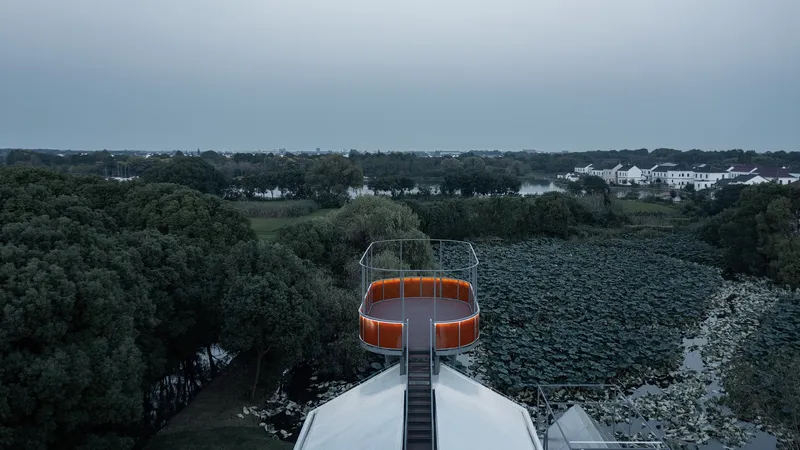
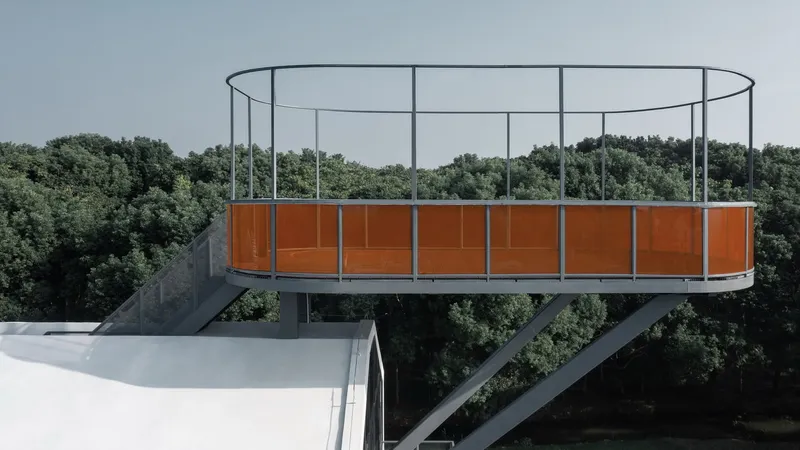
A narrow 1.5-meter gap between the old and new buildings introduces daylight and houses a glass-enclosed transitional space leading to a tea service area. Internally, a light steel staircase ascends to the upper floor and continues upward, penetrating the roof to reach a 12-meter-high suspended rooftop platform.
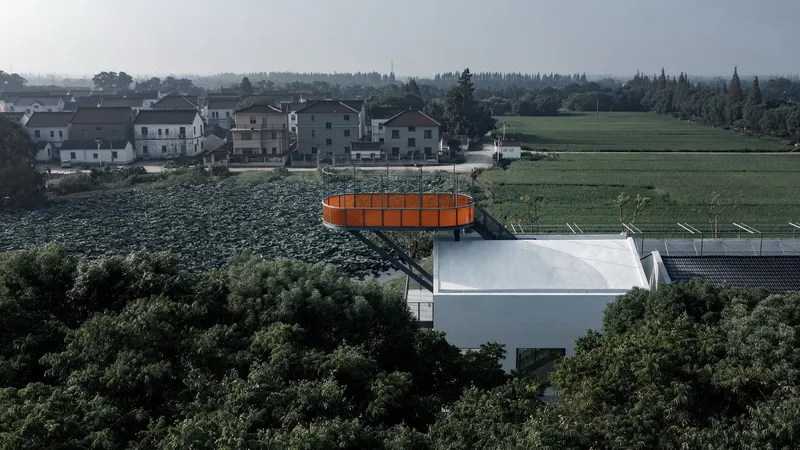
From this elevated vantage point, visitors enjoy panoramic views of rice fields, waterways, village bridges, and surrounding forests. The rooftop’s bright orange laminated glass railing has become a visual landmark, clearly visible from the village entrance and symbolizing the site’s renewed vitality.
Architecture Supporting Rural Revitalization
Through adaptive reuse, environmental reorganization, and programmatic flexibility, the Shuangxiang Rural Revitalization Laboratory offers:
- Daily services for villagers
- Workspaces for planners, designers, and researchers
- Venues for academic exchange and ecological experimentation
- Community spaces fostering interaction between locals and visitors
The project demonstrates how low-cost, low-impact architectural strategies can generate high social and cultural value, positioning architecture as an active participant in rural regeneration rather than a standalone object.
Project Facts
- Project: Shuangxiang Rural Revitalization Laboratory
- Architects: Atelier Archmixing
- Location: Qingpu District, Shanghai, China
- Area: 1,045 m²
- Year: 2023
- Program: Adaptive reuse, rural workspace, community hub
- Photography: Zhi Xia, Pingnan Chen
All photograps are works of
Zhi Xia, Pingnan Chen


Popular Articles
Popular articles from the community


Architekt Andreas Gruber Scatters 23 Dark Timber Chalets Across a South Tyrolean Forest Edge
In Molini di Tures, Amonti Chalets breaks a resort into a hamlet of gabled timber houses, with parking, storage and services pushed into the slope.

LT2A and OPEN Architectes Thread a Brick and Glass High School Through a Wooded Belgian Campus
In Braine-l'Alleud, a 3,000 m² wing for Collège Cardinal Mercier pairs pale brick with a glazed colonnade, deferring to a small chapel and a dense wood.

Jaramillo Van Sluys Arquitectura and Urbanismo Turn a Demolished Registry Lot in Quito into an Orchard Plaza
In Quito's Centro Histórico, a 2,800 m² plaza exposes the San Agustín convent wall and redraws its lost Augustinian orchard in volcanic stone.

Cube Design Draws an Ecological Corridor Between Two Shenzhen Hills with the Nankai Building
Beside Shenzhen's container docks, the Nankai Building pairs stacked balconies with a climbing green screen to connect two hillsides across its height.

Similar Reads
You might also enjoy these articles

Gil Mello Arquitetura Tilts a Single Roof Toward the Waterfalls on a Plateau Above Aiuruoca, Brazil
In Aiuruoca, Minas Gerais, a 200 m² house of local labor and reclaimed poles pairs a low valley veranda with a tall mountain one.

U.GA Architects Wraps an Oval Rooftop Pool in Curved Board-Formed Concrete on Busan's Jeollidan-gil
In Busan's Jeonpo-dong, a 454 m² mixed-use block stacks a neighborhood facility, guest rooms and an oval rooftop pool inside spiraling concrete walls.

Felipe Hess Arquitetos Turns a Blind Stone Wall to the Street and Opens a Brazilian House onto a Courtyard and Canal
A canal-front house in Brazil hides behind painted stone and planting, then opens to an olive-tree courtyard, a reed-ceilinged porch and a curving pool.

David Macias Steps a Doorless Stone and Plaster House Down a Tropical Colombian Hillside
In the humid hills of Colombia, Threshold House replaces the front door with an open void and terraces its 850 m² down the slope instead of fighting it.

Explore Sustainable Design Competitions
Discover active competitions in this discipline

Challenge to reimagine the Iron Throne

Photograph architecture without architects

Illustrate the lost glory of Angkor Wat - Render Challenge

Design challenge to reuse E-waste
Comments (0)
Please login or sign up to add comments
No comments yet. Be the first to comment!