
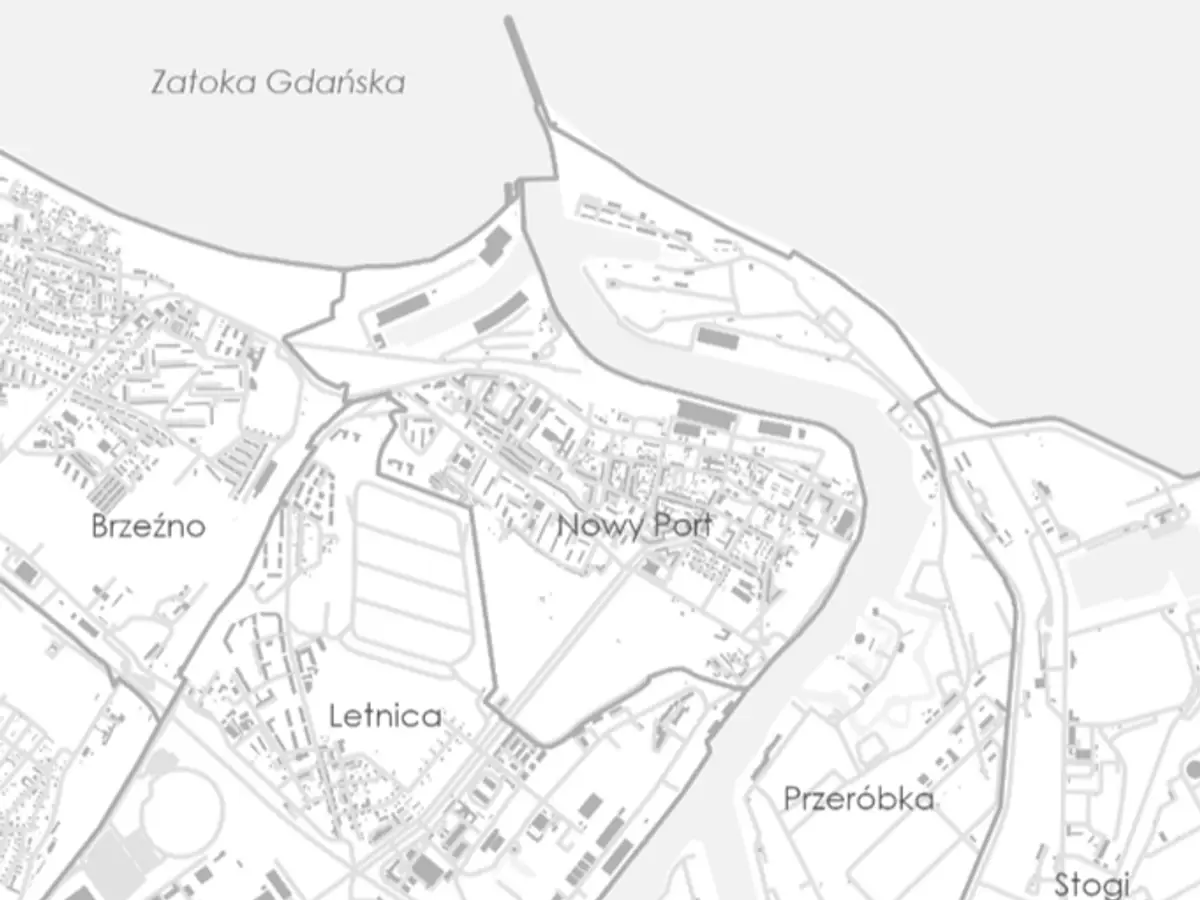
Survey Summary: Maritime Cultural Center in Nowy Port
The survey aimed to identify the needs and expectations of Gdańsk residents regarding the Nowy Port district and the Maritime Cultural Center located there. The results are intended to serve as a basis for reflecting on the district’s future development directions and for adjusting the Center’s activities to the real needs of the local community.

Survey Methodology
The survey was conducted via Google Forms and shared on Facebook groups for Gdańsk Nowy Port, Brzeźno, and Letnica. It ran from 18 Oct to 18 Nov 2025, targeted Gdańsk residents, and was anonymous and voluntary. The questionnaire included 19 questions divided into four sections: general information (demographics), questions about the Nowy Port district, questions about the Maritime Cultural Center, and optional open-ended questions. It consisted mainly of closed-ended single and multiple-choice questions. 80 respondents participated, all completing both sections, and 73% answered open questions.
Part I: General Information
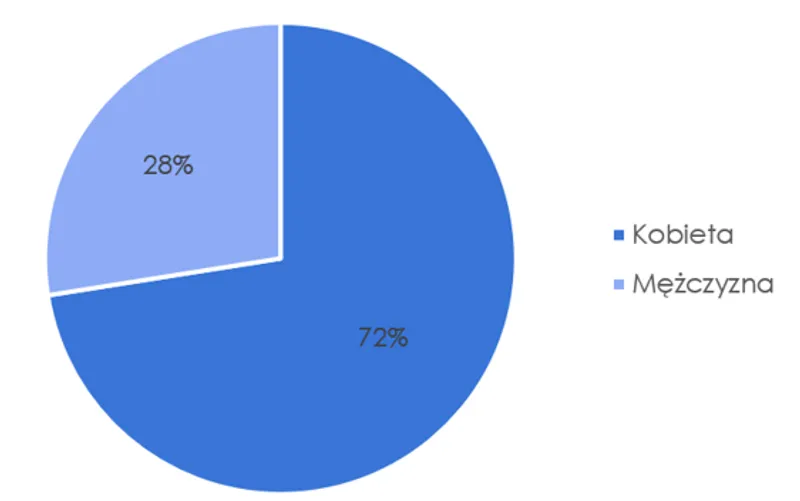
Question 1. Gender of respondents
In the surveyed group, women accounted for 72% and men for 28% of all respondents (Fig. 1).
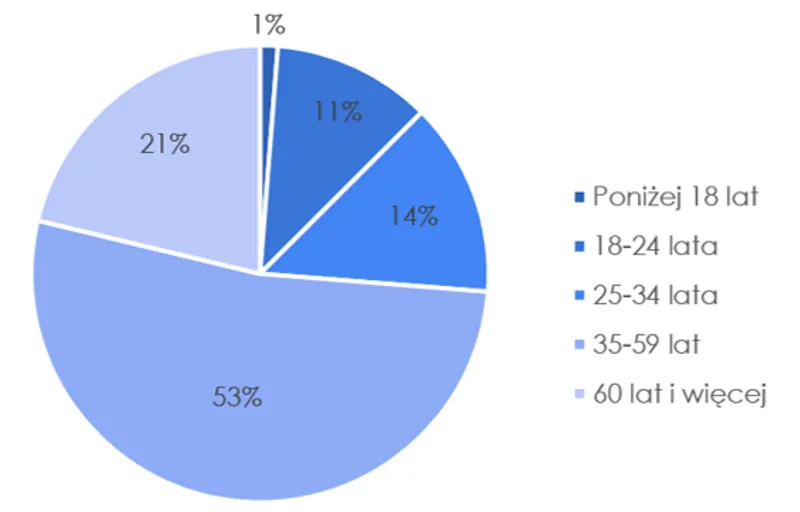
Question 2. Age of respondents
More than half of the respondents were aged 35–59. The second largest group consisted of people aged 60 and over (21%) (Fig. 2).
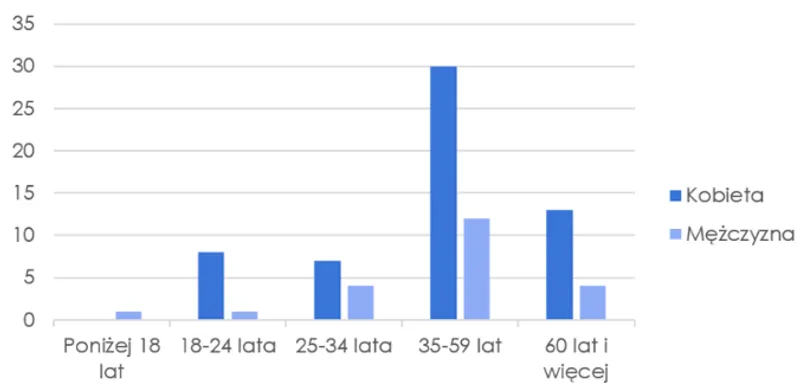
In the surveyed group, women were aged 18–24 (14%), 25–34 (12%), 35–59 (52%), and 60+ (22%), while men were aged under 18 (4%), 18–24 (4%), 25–34 (18%), 35–59 (56%), and 60+ (18%) (Fig. 3).
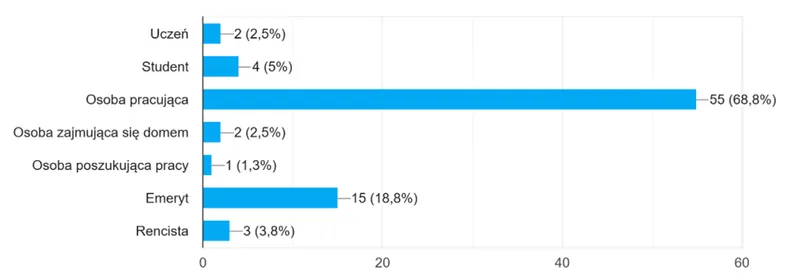
Question 3. Employment status of respondents
Multiple answers were allowed. The most frequently indicated category was employed (68.8%), followed by retired persons (18.8%) (Fig. 4).
Question 4. In which district of Gdańsk do you currently live?
Most respondents were residents of Nowy Port (74%).
| District of Gdańsk | Number of respondents | Percentage |
|---|---|---|
| Nowy Port | 59 | 74% |
| Letnica | 4 | 5% |
| Przymorze Wielkie | 3 | 4% |
| Oliwa | 2 | 3% |
| Ujeścisko-Łostowice | 2 | 3% |
| Zaspa Rozstaje | 2 | 3% |
| Orunia Górna–Gdańsk Południe | 1 | 1% |
| Zaspa Młyniec | 1 | 1% |
| Wrzeszcz Dolny | 1 | 1% |
| Przymorze Małe | 1 | 1% |
| Śródmieście | 1 | 1% |
| Żabianka–Wejhera–Jelitkowo–Tysiąclecia | 1 | 1% |
| Strzyża | 1 | 1% |
| Siedlce | 1 | 1% |
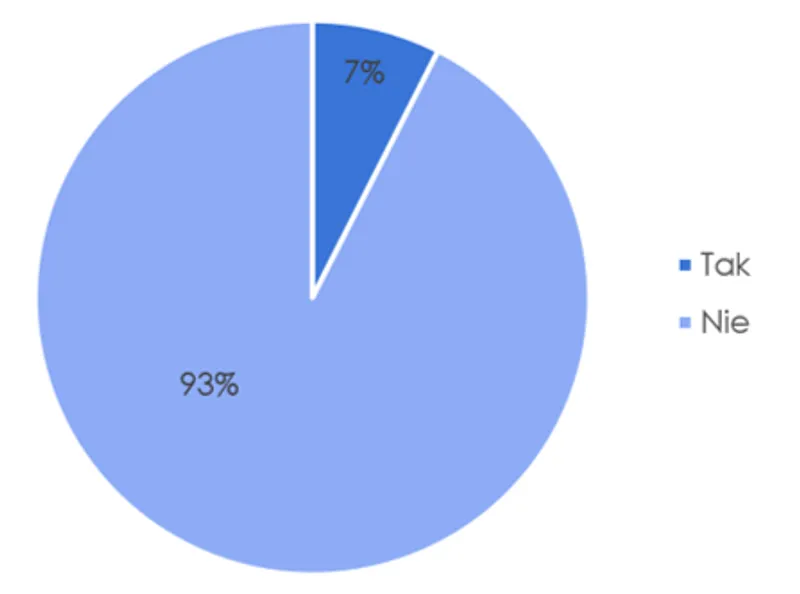
Question 5. Do you have a mobility disability?
7% of respondents reported having a mobility disability (Fig. 5).
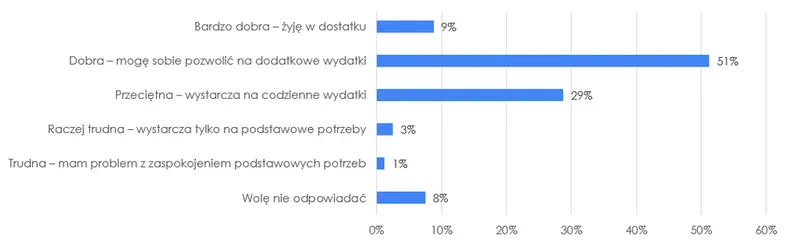
Question 6. How would you assess your financial situation? More than half of respondents rated their financial situation as good, meaning they can afford additional expenses (51%). Other responses included average (29%), very good (9%), rather difficult (3%), and difficult (1%). Some respondents preferred not to answer (8%) (Fig. 6).
Part II: Nowy Port
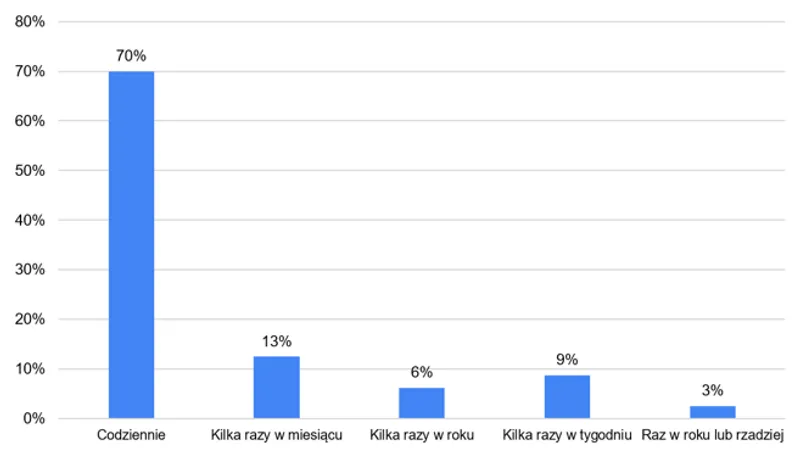
Question 1. How often do you visit Nowy Port?
In the surveyed group, 70% of respondents visit Nowy Port daily (Fig. 7).
Question 2. What is your main purpose for visiting Nowy Port?
The question allowed multiple answers and respondents could add their own. The most common answer was living in Nowy Port (72.5%). Other frequently indicated purposes included shopping (16.3%), visiting family/friends (16.3%), walking (12.5%), and using services (10%) (Fig. 8).
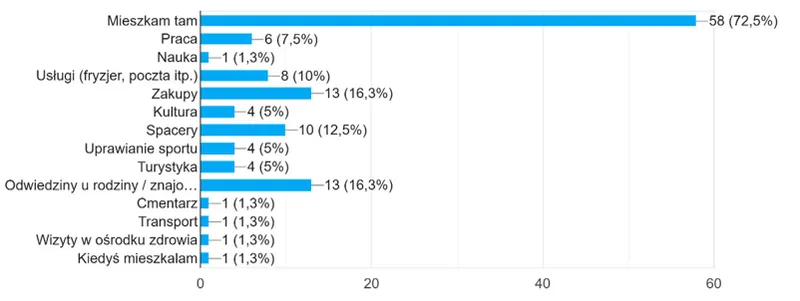
Question 3. What services or places do you use in Nowy Port?
Multiple answers were allowed, with the option to add own responses. The most commonly used facilities are everyday services. The majority of respondents use grocery stores (87.5%). Medical services such as clinics and pharmacies (68.8%) and the post office (41.3%) are also frequently used. Food services (40%) and hairdressing/beauty salons (31.3%) are popular as well. Only 5% of respondents declared that they do not use any services in the district (Fig. 9).
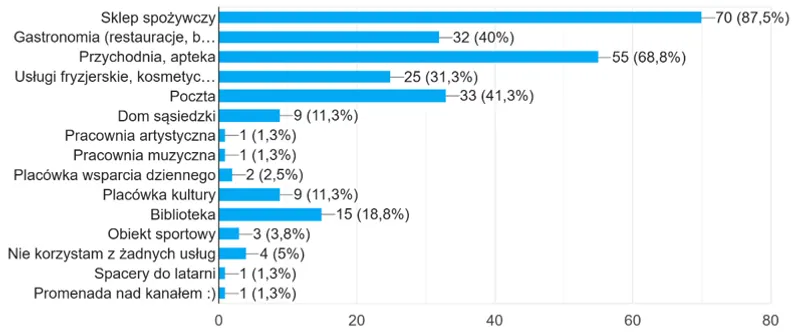
Question 4. What services or places are missing in Nowy Port, in your opinion?
The question allowed multiple answers and respondents could add their own. The greatest need is for recreational spaces and leisure facilities. The most frequently indicated were a gym (38.8%) and a park (37.5%). There is also strong demand for food services such as cafés (35%) and restaurants (27.5%). Cultural and entertainment facilities were also often mentioned, including a cinema (25%) and a bookstore (13.8%). Some respondents indicated a need for creative spaces and places for work or study (13.8% each). A small group (5%) stated that nothing is missing in the district (Fig. 10).
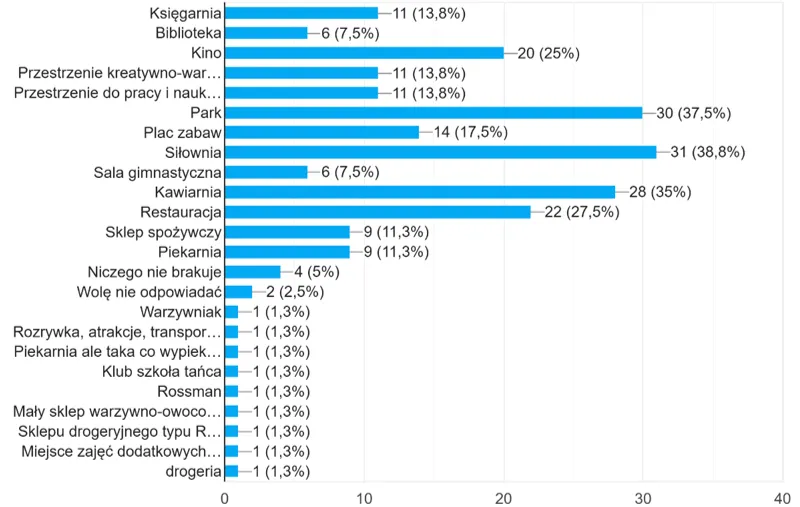
Question 5.1. How do you perceive Nowy Port as a district of Gdańsk?
The largest group of respondents rated the district as rather positive (44%). The second most common response was neutral (29%). Relatively few respondents expressed extreme opinions, both very positive (18%) and very negative (1%). The most positive opinions were observed among people aged 35–59, where 26% selected “rather positive” and 13% “neutral”. In the 18–24 and 25–34 age groups, neutral or moderately positive responses dominate. Negative assessments (total 10%) are rare and evenly distributed across age groups (Fig. 11).

Question 5.2. Justification
This was an optional open-ended question. 57 respondents provided justifications for Question 5.1. Respondents appreciate the unique atmosphere of the district and its historic architecture. Its location near the sea and beach is also highly valued. Many highlighted the calm character of the area, a sense of safety, and strong neighbourhood ties. The district is seen as a place with a “soul”, where life follows a slower, more local rhythm. At the same time, several recurring issues were identified. The most significant are disturbances related to port activity, especially coal dust and noise. Many respondents pointed to infrastructural neglect and a lack of municipal investment, including closing shops and services, which contributes to a feeling that the district is “forgotten” by the authorities. The poor condition of some historic buildings is also mentioned, as well as the lack of amenities such as cafés, gyms, or a swimming pool. Some respondents also noted the presence of alcohol abuse in public spaces and concerns about increasing developer-driven investments.
Part III: Maritime Cultural Center
Question 1. Are you familiar with the former Maritime Cultural Center building in Nowy Port (Marynarki Polskiej Street)?
Most respondents are familiar with and have visited the Maritime Cultural Center. Over half of the respondents (53%) have been inside many times, and a further 18% at least once or a few times. Around 29% know the building only from the outside. No respondents indicated that they were not familiar with the building (Fig. 12).

Question 2.1. Have you previously used services or attended events held at the Maritime Cultural Center?
The majority of respondents declared that they had used the services or attended events organized by the Marine Cultural Center (59%). At the same time, a significant portion of those surveyed indicated that they had no such experience (40%) (Fig. 13).

Question 2.2. If yes, which ones?
This was an optional open-ended question. 55% of respondents provided answers to Question 2.1. The responses indicate a very wide range of functions the Maritime Cultural Center used to serve. The most frequently mentioned activity was cinema, which appears in the majority of responses. Concerts, theatre performances, and various artistic events were also highly popular. A significant group of respondents mentioned additional classes such as art, music, model-making, dance, and sports activities. Many respondents also referred to the library. Cyclical and occasional events were also frequently mentioned, such as children’s holiday parties and New Year’s Eve balls.
Question 3. What functions or types of activity would you like to see in this building?
Multiple answers were allowed, with the option to add own responses. The most frequently indicated function was a cultural centre (67.5%), often combined with a cinema (65%). Other highly popular functions included supporting amenities such as a café (56.3%), restaurant (41.3%), and library (41.3%). A significant group of responses highlighted community integration functions, including a local activity centre (58.8%). Respondents also frequently indicated the need for art studios (51.2%) and exhibition spaces (51.2%). Some also suggested sports-related facilities such as a gymnasium (40%) (Fig. 14).
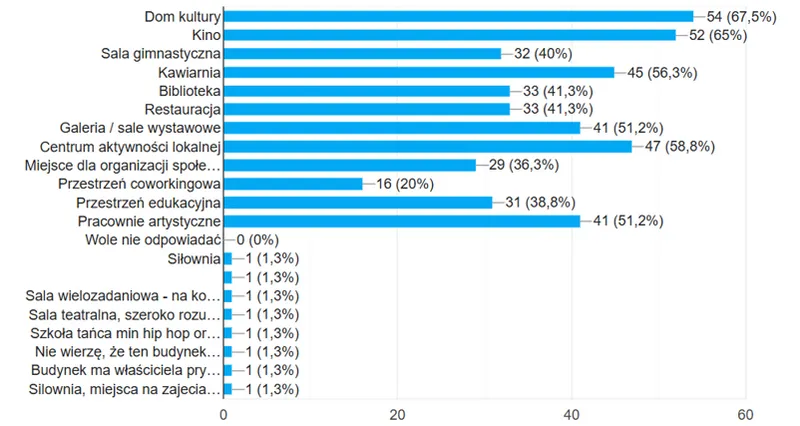
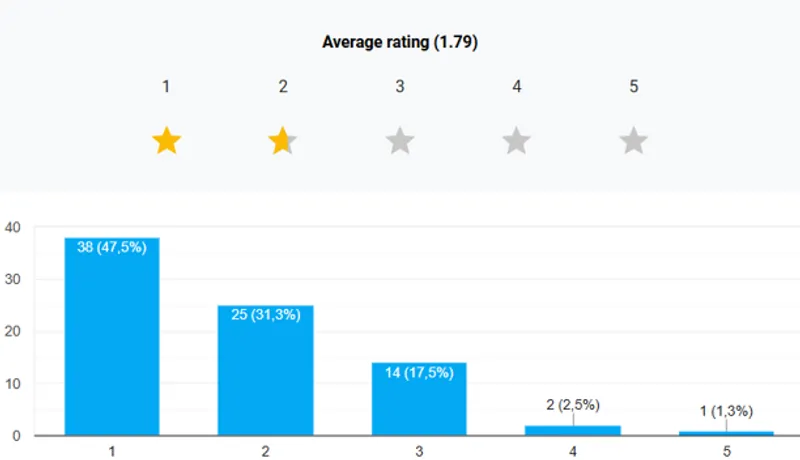
Question 4. How do you assess the current appearance of the building?
This question used a 1–5 rating scale, where 1 was the lowest and 5 the highest score. The results indicate a strongly critical assessment of the building’s current condition. The average score was 1.79. The most frequently chosen rating was 1 (47.5%), showing a widespread perception of poor visual condition (Fig. 15).
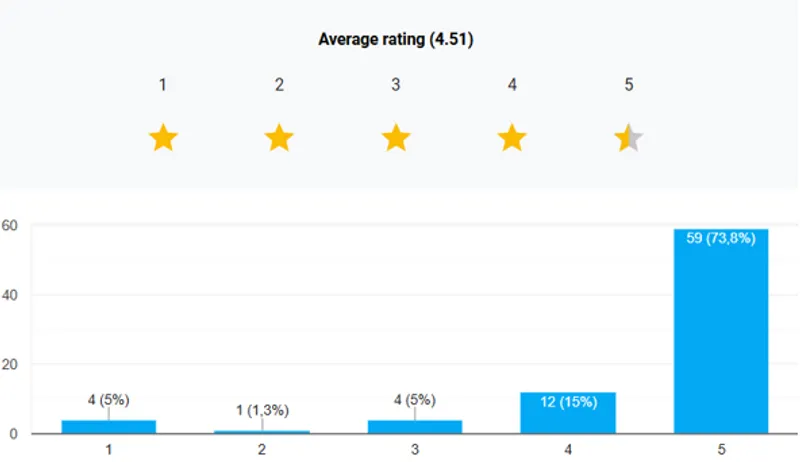
Question 5. How do you assess the potential of this building?
This question used a 1–5 rating scale. The results indicate a very high assessment of the building’s potential. The average score was 4.51, with 5 being the most frequently chosen rating (73.8%). The results show a clear contrast between the negative evaluation of the current condition and the very high perceived potential of the building (Fig. 16).
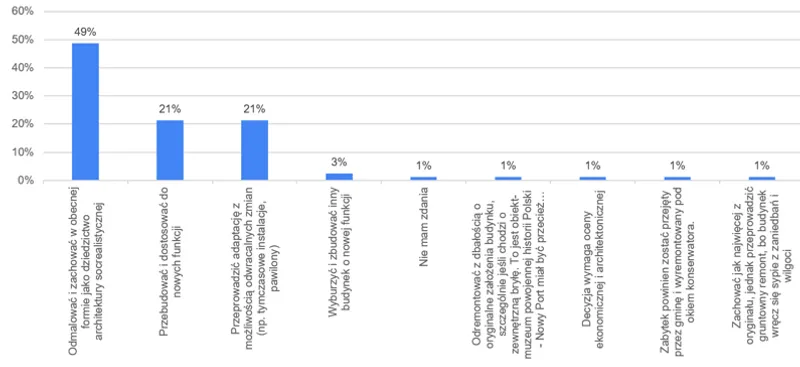
Question 6. What should be done with the building in your opinion?
This was a single-choice question with the option to add comments. The vast majority of respondents support preserving and renovating the building. The most frequently chosen option was repainting and maintaining the building in its current form as a part of socialist realist architectural heritage (49%). Some respondents also supported adaptation with reversible interventions (21%), indicating a preference for flexible reuse. Individual responses emphasized the need for conservation-led renovation, preserving the original structure, and recognizing the building as part of post-war heritage (Fig. 17).
Part IV: Open-ended questions
This part of the survey was optional. Responses were provided by 58 respondents (73%).
Question 1. Would you like Nowy Port to develop in a specific direction? If so, which one?
The analysis of responses indicates that the majority of respondents see the future of Nowy Port in terms of the development of cultural, recreational, and tourist functions. At the same time, maintaining the peaceful residential character of the district is important to the respondents. They pointed to the need to preserve greenery, create spaces for leisure activities for different age groups, and limit the impact of development and industrial activity. There were also voices emphasizing the need to protect the historical character of the district. The dominant theme was a vision of Nowy Port as a district balanced in terms of housing, culture, recreation, and tourism.
Question 2. What future do you see for the Maritime Culture Centre in Nowy Port?
The analysis of responses shows that the vast majority of respondents perceive this facility as having significant social and cultural potential, and that its function should be restored. Participants in the study expressed both emotional attachment to the building and awareness of its current degraded technical condition. The most frequently expressed demand was the restoration of the building and restoring its role as a local cultural centre. Proposed functions included organizing artistic events, concerts, theatre performances, workshops, educational activities, and creating recreational and integration spaces such as a café, reading club, gallery, or art studios. For some respondents, the facility would also serve as a potential meeting place for intergenerational interaction and local community activation.
Respondents also expressed critical opinions regarding the current ownership situation of the building. Some pointed out that the facility is in the hands of private owners who are not taking any action. There were also concerns about the ongoing degradation of the building and the risk of its complete demolition and replacement with residential development.
However, most participants approached the question in a visionary manner, presenting their ideas for an “ideal future” of the Maritime Culture Centre. These responses were dominated by descriptions of a lively building restored to its former glory. The statements reflect a strong attachment of residents to the cultural heritage of the district and the need to preserve spaces important to its identity.
Conclusions
The conducted survey indicates that the residents of Gdańsk (mainly Nowy Port) are strongly engaged in the affairs of their district and have clearly defined expectations. Respondents perceive Nowy Port rather positively, appreciating its intimate character, proximity to the sea, and local identity. At the same time, they point to numerous infrastructural problems and a deficit of services and recreational spaces.
The Maritime Culture Centre is seen as an object with very high potential, despite the very low assessment of its current technical condition. Respondents clearly support its preservation and modernization, seeing it as a future cultural hub of the district.
Overall, the survey results present a coherent vision of the residents: Nowy Port should develop in a balanced way, combining residential, cultural, and recreational functions. At the same time, the quality of public space should be improved and existing heritage, such as the Maritime Culture Centre, should be utilized.


Popular Articles
Popular articles from the community


Tsunami Convergenics: Turning Catastrophic Ocean Forces into Underwater Housing Infrastructure
A speculative underwater settlement off the coast of Onagawa, Japan, treats tsunamis and typhoons as energy sources rather than threats.

Opera by the Sea Estonia: Three Shells Dissolving Architecture into Tallinn's Coastline
A winning opera house proposal replaces monumental form with interconnected shells that blur the boundary between building, park and Baltic Sea.

The Amber Palace Opera: A Geological Fiction Surfaces on Tallinn's Baltic Waterfront
Pierre Brillard reimagines a Baltic legend as a public landscape, opera house, and waterfront promenade rooted in Tallinn's coastal identity.
Temporary Home for Dogs: A Reversed Zoo Rethinks Animal Shelter Architecture
In Bucharest, a sinuous corridor and freed landscape flip the logic of containment, designing a shelter that works to make itself unnecessary.

Similar Reads
You might also enjoy these articles

Play: Fragments of Their World: Remembered Architecture Rebuilt as a Modular Playground for Refugee Camps
Tom Gardner abstracts domes, arches and towers from the homelands of displaced families into a kit of child-scaled play parts for camp settlements.
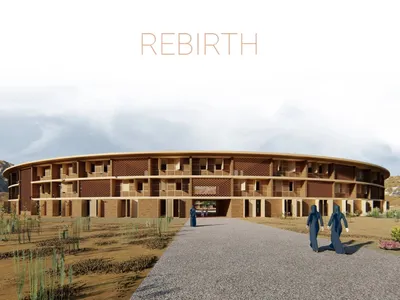
REBIRTH: A Circular Settlement Where Afghan Widows and Their Children Rebuild Life Together
A shortlisted Resile entry turns the circle into a protective ring of timber and brick, gathering homes, classrooms and gardens around a shared landscape.
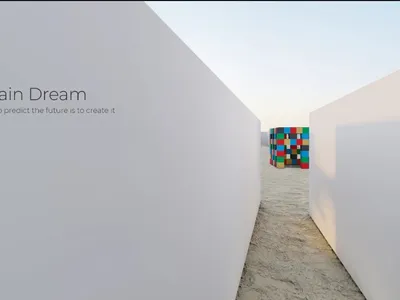
The Main Dream: A Recycled Plastic Kit That Lets Refugee Children Build Their Own Playground
Thirty-centimetre interlocking cubes that connect on three axes turn play into construction, letting children author the spaces they occupy.

Lunar Spiral: A Fibonacci-Driven Moon Settlement Rising from Shackleton Crater
Golden-spiral geometry organises buried infrastructure and orbiting habitable spheres into a lunar base designed to grow as life on the Moon expands.


Comments (0)
Please login or sign up to add comments
No comments yet. Be the first to comment!