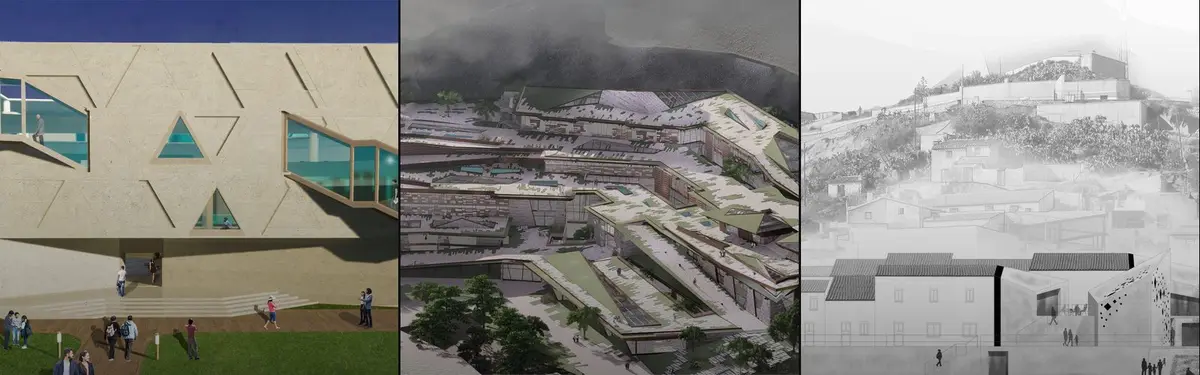

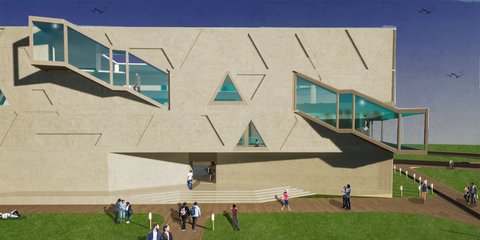
Conservation Architecture
POSArchitecture that preserves cultural heritage, historical sites, and community identity through adaptive reuse and restoration.




Architectural conservation is the practice of restoring old structures to their original built form. As a result, it contributes to the preservation of structures. Restoration is also seen as a feasible alternative to new buildings because it uses less energy and produces less trash. Cultural and historical factors have a significant impact on architectural conservation. The cultural aspect entails the preservation of cultural heritage structures while also taking into account local practices. The historical part of the project entails the preservation of well-known historical structures, as well as developments in building conservation over time, such as technological advancements and new materials. Importance of conservation in architecture Architectural conservation is the practice of preserving the material, historical context, and design durability of humanity's architectural evolution so that it can exist longer and be sustained over time. There are many different ways to conserve, but the most significant four are rehabilitation, restoration, rebuilding, and preservation. Our responsibility to preserve our local communities' architectural legacy is just as important as our responsibility to preserve the significant built heritage and its values or customs from prior times. More than ever, a lack of respect, experience, and care threatens architectural heritage around the world. Some have already perished, and others are in jeopardy. It is a living legacy that must be adequately understood, defined, interpreted, and managed for future generations. Img 1: Historic buildings act as landmarks in local areas, the cultural gems of any urban landscape around the world. Decisions are based on creative as well as contextual criteria. In some circumstances, the locations do not require any restoration at all to remain in place. The most reliable elements in deciding materials creation, the impacts of intervening, and the possible interventions that may be done to the item are the shape and style of the piece. Even though conservation is a societal requirement, legislative formulations are sometimes necessary to help people realize the richness of the past. Conservation comes with many advantages. Preserving a property's history adds tremendous value to it and the adjacent structures. On a larger scale, tourism benefits from heritage preservation, and companies benefit from it as well. Maintaining an area's historic integrity attracts visitors for the sake of the atmosphere alone, which attracts business. Heritage preservation is a wise investment in our community because it benefits us now and provides a valuable resource for future generations. Img 2: The heritage structures in an urban setting are representative of the rich stories of the past. Restoration also helps to limit the amount of garbage generated by building and demolition. Because supplies are supplied locally and more labour-intensive work is required by local trades, restoration retains money in the community. It often requires about half as much energy as new construction. When compared to dismantling a structure and creating a new one, conservation uses a fraction of the Earth's resources. Conservation, Restoration, and Preservation: Value in society The act of repairing, conserving, and managing changes to a particular heritage is known as historical and architectural preservation. It's a method that preserves the historical relevance of these architectural landmarks while also ensuring their long-term viability so that future generations can benefit from their presence. It's also vital to remember that most documented history that allows us to learn about our past would not exist if it weren't for this practice of preserving architectural heritage. Although the preservation of the rich architectural treasures has been a long journey of regulated development over time, it is vital to note that each region has its own approach to this process. Another crucial aspect of the procedure that ensures the durability of these architectural landmarks is the techniques used to maintain them. However, this preservation procedure is critical since it provides viewers with an in-depth look into the past and contributes to the preservation of recorded history. It's a deliberate endeavor by specialists to depict how the world was before us. Img 3: Governments often work hard to ensure that the historic structures are preserved and maintained for the community to experience. Over the last few decades, the preservation of architectural history has progressed significantly. The worth of architectural-historical resources for different individuals, organizations, societies, and governments is the basis for conservation practice. The conservation of architectural legacy can be researched and analyzed at three levels: people, experts, and governments, and holistic preservation of architectural heritage can only be achieved by collaboration between all three levels. The semantic conservation of architectural heritage is heavily influenced by its cultural worth, economic value, historical significance, and identity. In order to comprehend and interpret the legacy in order to illustrate how the world was before us, it has been attempted to understand and interpret the heritage in order to have an embodied reality for its interpretation. The terms "conservation" and "maintenance" are interchangeable. The term "architectural conservation" refers to the preservation of important structures or architectural values. Conservation and restoration of architecture have been a guiding theme since its inception. Damaged monuments in ancient Greece were renovated in such a way that the original contour of the structure was preserved. Img 4: Conservation of heritage buildings is an expensive endeavour undertaken by field professionals. (The Acropolis Restoration) The physical processes of repair and adaptation are not the same as building conservation. It is a mental attitude, a philosophical approach, that seeks to first understand what people value about a historic building or place beyond its practical utility, and then to use that understanding to ensure that any work done harms as few characteristics as possible that hold or express those values. Because of the diversity of the structures and places that people have come to appreciate and seek to pass on to future generations, conservation must now be presented in such terms rather than by technical directives (that is, to be operative rather than prescriptive). How does conservation take place? Conservation is defined as "the preservation of [tangible] cultural heritage for future generations in order to preserve historical testimonies and thus irreplaceable originals." It is the responsible preservation of creative and cultural assets for future generations in an authentic and sustainable manner." Because works of art and items are priceless originals and true testimonials to our history, they must not be altered at will. Buildings must be revered and handled with care in the sense of architecture since their beauty, spaces, workmanship, and construction technologies are all that remains of our past's social, cultural, and economic manifestations. Img 5: Culture is prevalent in society in built forms in the environment as well as the social and community rituals part of the local lifestyle. There are two types of cultural heritage: tangible and immaterial. Immovable and mobile cultural heritage are the two types of tangible cultural heritage. Historical structures, monuments, and archaeological sites are examples of immovable legacy. The most fundamental parts of a nation's social and intellectual life, the foundation of identities, diversity, and creativity, are semantic and intangible values. Although these values are not of a material character, their materialistic expressions, such as language, ideas, thoughts, and practices that are not objective in nature, are perceivable and reviewable. The following permanent properties are included in the definition of "architectural heritage": All buildings and structures of historical, archaeological, aesthetic, scientific, social, or technical significance, including their fixtures and fittings, are referred to as monuments. • Building groups: homogenous groups of urban or rural buildings that are sufficiently coherent to form topographically definable units and are notable for their historical, archaeological, aesthetic, scientific, social, or technical interest. • Sites are man-made and natural works of art, regions that are partially built upon and sufficiently distinct and homogenous to be topographically identifiable, and are of significant historical, archaeological, aesthetic, scientific, social, or technical significance. The conservation journey There have been various methods for repairing structures in the past (mostly religious buildings). Prior to the seventeenth century, most conservation methods for religious buildings were founded on religious convictions, and in some cases, logical underpinnings, where upkeep and repair were less expensive than replacement and reconstruction. Prior to the nineteenth century, conservation of architectural heritage was largely concerned with a set of procedures to eliminate erosive forces and improve the physical condition of the architectural heritage, with some attention paid to their artistic, aesthetic, and symbolic components of them. Although conservation theorists and architects have had differing interpretations of the notion of conservation from the eighteenth century, the tangible and visible parts of the heritage have always received more attention than the sensory and intangible categories. Perspectives on the qualitative and semantic aspects of spaces were developed and their intangible dimensions were considered several decades ago, with the introduction of some concepts related to the environment, psychology, and human behaviour in the fields of science, philosophy, and environmental sciences. This shift in attitudes has had an impact on the issue of architectural heritage conservation, prompting researchers and experts to consider conservation not only as an attempt to optimize and preserve the physical aspects of buildings but also as a process that deals with the semantic aspects of the architectural heritage. In general, conservation is divided into two categories: physical conservation and semantic conservation. Examples of conservation architecture To maintain, preserve, and conserve the physical fabric of the tangible cultural property, a conservator must have a thorough understanding of the asset's history and age. Conservators also adhere to scientific and methodological norms, relying on a significant understanding of chemistry, physics, geology, biology, and other subjects. A conservator is important in a restoration project because they collaborate with professionals from other scientific fields such as natural scientists, art historians, architecture historians, engineers, and architects, among others. Fallingwater is widely regarded as one of Frank Lloyd Wright's masterpieces, with its dramatic cantilevered terraces falling over the waterfall that inspired its composition. It was designed in 1935 as a holiday home for Pittsburgh department store mogul Edgar J. Kaufmann. Moisture, structural tension, and the elements have all taken their toll on this National Historic Landmark over the years. The Getty Foundation responded by awarding a three-year implementation grant to help preserve the structure and its Wright-designed interior furnishings. Fallingwater's maintenance staff and college interns were trained on conservation techniques for 20th-century architectural materials as part of the conservation programme. Img 6: Restored Falling Water facility is now open for public viewing and tourism. (Credits-Designbuildings.co.uk) The Spanish colonial Basilica and Convent of La Merced, located in the UNESCO World Heritage City of Quito, was built in the 16th century and underwent substantial renovations in the early 18th century after being damaged by a major earthquake. The Curio Provincial de la Merced received a grant from the building in 1990 for the stabilization of the church's bell-tower and a survey of the historic fabric. Structural stability, roof consolidation, external and interior stucco consolidation, floor repair, and door and window restoration were all part of the project. Local workers and students were given on-the-job training in historic restoration as part of the work that was done with the money. Two funds were awarded to the Maharana of Mewar Charitable Foundation, a public charitable organization responsible for development projects in Udaipur, to help with conservation planning for the City Palace Complex. The construction complex, which began in 1559, is a perfect example of medieval Rajput architecture with later Mughal extensions. Despite its many layers, the stronghold maintains a consistent style with its stone carvings, cupolas, and projecting balconies, making it one of Rajasthan's most majestic monuments. The restoration grants were used to remedy past patchwork improvements and develop a site-wide conservation strategy. The conservation strategy yielded excellent documentation as well as emergency structural stabilization work. Given the large visitor volume at the site, the subsidies also permitted the formulation of a plan for future usage. Finally, the project included training for architectural students in the development of working drawings as well as a risk management workshop for the City Palace Complex's historic site managers and staff. Img 7: Restoration works include not just rebuilding the parts in their previous image but also new additions that indicate the confluence of present times as well. (Credits-Cemal Emden) In the 13th century, King Henry III began construction on Westminster Abbey, which included the introduction of the Cosmati pavement in front of the high altar in the church Sacrarium. The Cosmati technique, which was popular in the 12th and 13th centuries and featured minute shapes of coloured stones and glass inlaid into a stone base is complicated, geometric patterns, was named after a Roman dynasty of accomplished architects, craftsmen, and mosaic workers. The flooring has served as the location of royal coronation since its creation and is of remarkable artistic and historic value as one of the last few extant and in situ examples of cosmetic work in England. Unfortunately, due to its age and fragile state, the pavement had only been seen a few times and had severely degraded. The stabilization and cleaning of the floor were made possible by a Foundation grant, allowing the protective covering to be removed more frequently, allowing more visitors to see the mosaic work. Funds were also used to support student conservation internships and public educational talks. Architecture Competitions Architecture competitions have been a big part of historic construction innovation. For centuries, architecture competitions have helped source the best and most unique designs for projects, spurred community development (think: urban planning), and created huge publicity around new projects. Competitions are a great way to try out new things, make mistakes and learn from them. They're also a great opportunity for portfolio building because everything you submit gets contextualized based on where it ranks against everyone else's work. And perhaps most importantly, they give you extra insight into what the judges see in your submitted work as well as how they don't see it - which is yet another fantastic way to improve your designs in unexpected ways! Explore projects of conservation architecture published on UNI website: UNI Design Competitions UNI is a global network of architects and designers who are solving some of the most challenging problems around the globe. UNI brings together the world's largest pool of design challenges that are curated by the finest architecture academicians and professionals globally. With over 200,000+ registered members, UNI brings academia and professional spheres of architecture together through a unique knowledge-sharing web platform. Since 2017, UNI has hosted more than 200+ architecture competitions for various idea level to realization level briefs. In the past, UNI has helped 50+ organizations, universities, and government bodies to use our platform to generate architecture and design solutions through competitions. There are many competitions hosted by UNI on our website for conservation architecture disciplines such as Arch-de-ville and so on. Discover other competitions: https://uni.xyz/competitions