
Sustainable Architectural Design: The Pioneering Vision of 'DESIGN FOREST' by Peer Roeder
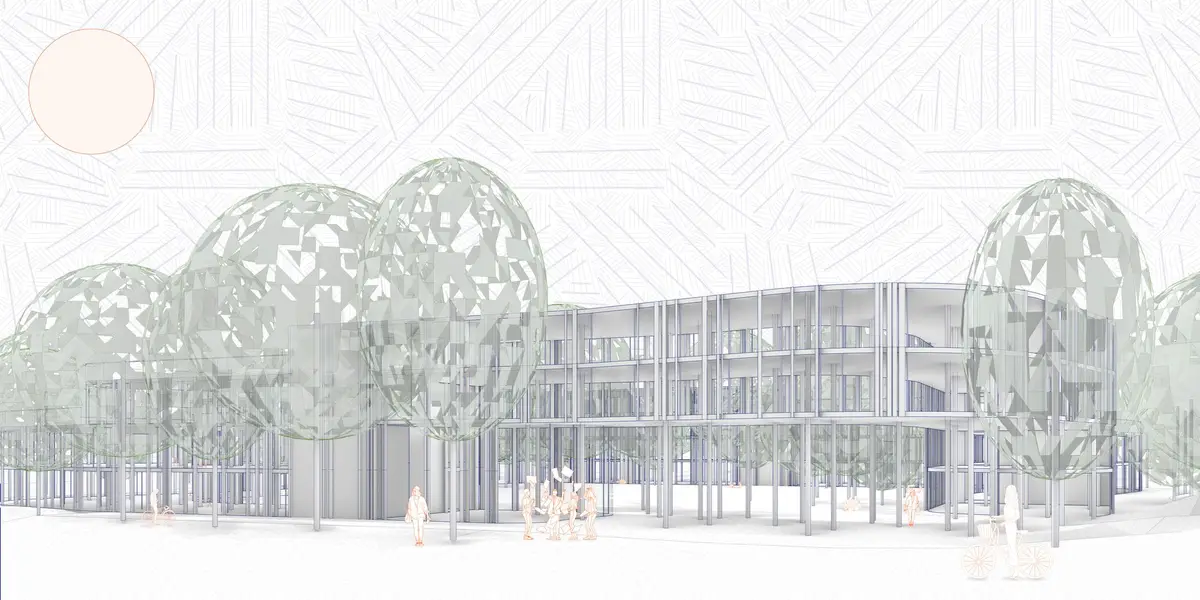
DESIGN FOREST: Integrating sustainable architecture with nature for a living, breathing design that leaves a forest legacy."


In a world increasingly conscious of its environmental footprint, the architectural landscape is shifting. 'DESIGN FOREST' by Peer Roeder stands as a testament to this change, emerging as a beacon of sustainable architectural design. With its innovative approach that intertwines ecological awareness and architectural finesse, this project marks a significant milestone in the industry.
The Concept of a Living Design
Imagine stepping into an office space that resonates more with the tranquility of a forest than the hum of a workplace. This is the essence of 'DESIGN FOREST' - a sustainable architectural design masterpiece crafted not just to serve its temporary inhabitants but to integrate with the ecosystem, enhancing it for years to come.
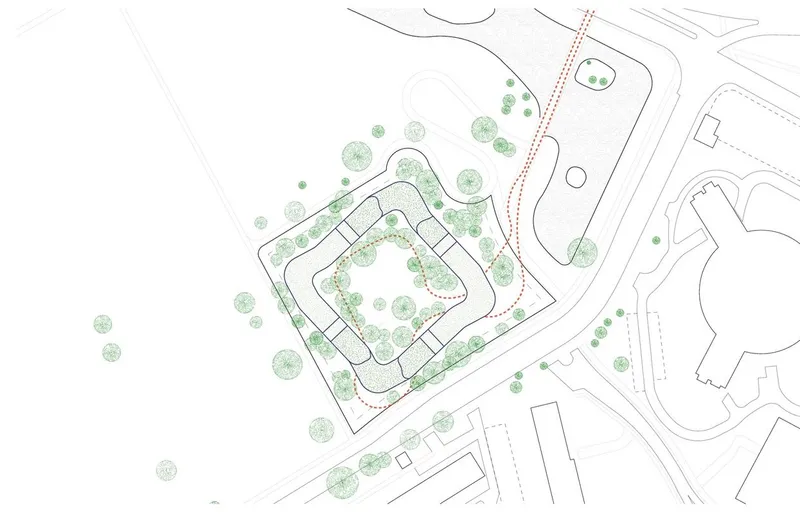
The project is unique, not just for its aesthetics but for its commitment to the environment. At the heart of its conception was the idea that buildings should be more than temporary structures; they should contribute to the longevity and health of their surroundings. Therefore, trees were planted at the beginning of the building’s life cycle, ensuring that once the structure served its purpose, it would leave behind a mature forest rather than an empty plot.

A Walk Through the 'DESIGN FOREST'
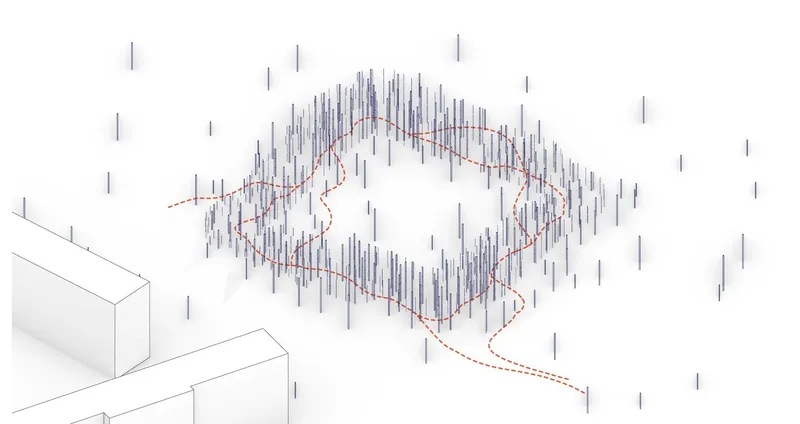
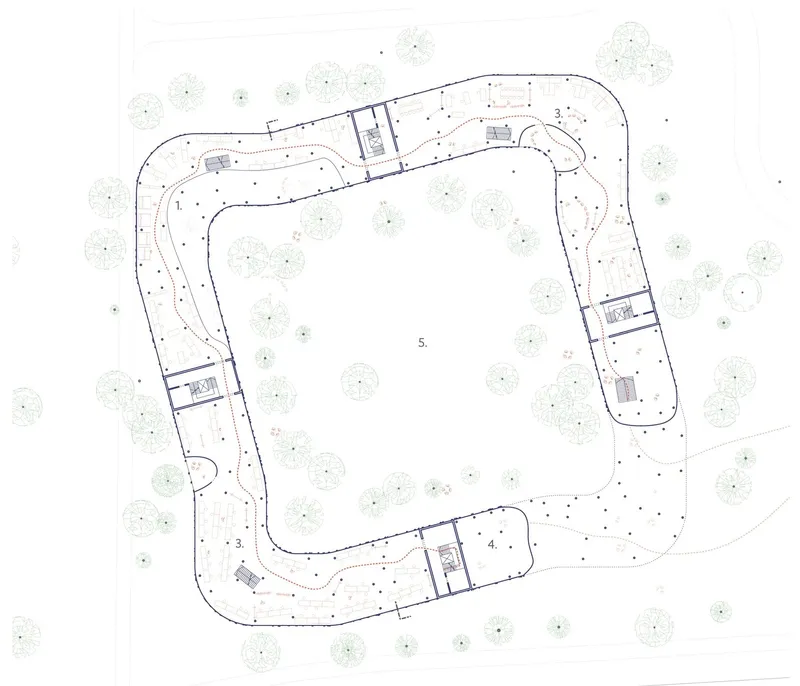
The design journey through 'DESIGN FOREST' is an orchestrated experience of spaces shaped like a forest of columns, blurring the lines between indoors and outdoors with seamless floor-to-ceiling glass panels. The building's design follows a cyclical process of research, design, implementation, and analysis, which is manifested in the physical layout. Each of the building's corners is dedicated to one of these phases, facilitated by relevant tools and furniture, and is accessible via one of the four core access points.
The Core of Collaboration and Innovation
The heart of 'DESIGN FOREST' is its central courtyard, an open space designed for a myriad of activities, from presentations to casual gatherings. It's a nod to the traditional Italian piazza, fostering community and knowledge exchange in a natural setting. Moreover, the affordable rents and flexible booking of workstations make this space particularly appealing to freelancers, startups, and small businesses, catalyzing a melting pot of diverse expertise, which is vital for sustainable and innovative design.

Sustainable Architectural Design Principles
Peer Roeder's approach extends beyond the visible design elements; it is ingrained in the very structure and operation of the building. The load-bearing elements are constructed from wood, significantly reducing the carbon footprint, and the building utilizes plug-and-screw connections to ensure that it can be disassembled and its parts reused. The surrounding trees, planted early on, grow to provide natural climate control, reducing the need for artificial cooling.

A Legacy Beyond the Building
Perhaps the most striking feature of 'DESIGN FOREST' is what it leaves behind – a legacy. Once the building has served its purpose, it can be completely dismantled, leaving behind a park. This approach fundamentally redefines the concept of a building’s lifecycle, setting a new standard for sustainable architectural design.
'DESIGN FOREST' by Peer Roeder is a bold step forward in the evolution of sustainable architecture. It represents a harmonious blend of environmental stewardship and innovative design, serving as a model for future sustainable architectural projects. By planting the seeds of sustainability today, 'DESIGN FOREST' ensures that the architecture of tomorrow will grow from a place of ecological consciousness and responsibility. As this building shows, architecture can – and should – be a positive force for the environment, creating spaces that nurture the earth as much as they serve their human occupants.


Popular Articles
Popular articles from the community


Lunar Spiral: Space Architecture Shaped by the Mathematics of the Universe
Lunar Spiral reimagines space architecture through Fibonacci geometry, lunar regolith, levitating habitats, and self-sustaining Moon living.

ALGAL REALM: A Bio-Integrated Lunar Habitat Design for Life Beyond Earth
ALGAL REALM reimagines lunar habitat design with algae-powered life support, 3D-printed regolith, and vertical living for a lunar future.

Hill & Cross Opera: Sculptural Opera House Architecture Shaped by Tallinn’s Landscape and Identity
Hill & Cross Opera reimagines opera house architecture in Tallinn through its sculptural hill, civic plaza, glass wave and a luminous cross.

Little Red Riding Hood: Architectural Design as a Journey Through Fear, Light, and Storytelling
Little Red Riding Hood reimagines the fairy tale through architectural design shaped by fear, light, scale, memory, uncertainty, and choice.

Similar Reads
You might also enjoy these articles

Day and Night Park: A Time-Based Urban Newsstand in Beijing
A temporary urban newsstand in Beijing blending travel, light, and reading through poetic colors, compact form, and community-focused design.

Modernist Patio Renovation in El Masnou, Barcelona by Oliver Segura Arquitectura + Cebrià Arquitectura
Modernist patio renovation blending tradition and innovation with a movable pool, leveled floors, and Catalan materials in El Masnou.

Alto Residencial Coop: Cooperative Housing Development in Santiago de Compostela by Carbajo Barrios Arquitectos
A linear cooperative housing complex blending white volumes and perforated metal façades, enhancing community living, natural light, privacy, and urban integration.

Vil Genis School by BPA ARCHITECTURE – Massy, France
Vil Genis School in Massy, France, features sustainable design, south-facing classrooms, community integration, accessible spaces, and modern educational architecture.


Comments (0)
Please login or sign up to add comments
No comments yet. Be the first to comment!