Sustainable Sports Training Center Design: Sportsmen Training Center in Druskininkai
This article highlights the sustainable design of Lithuania's largest athlete training center, blending functionality with environmental harmony.


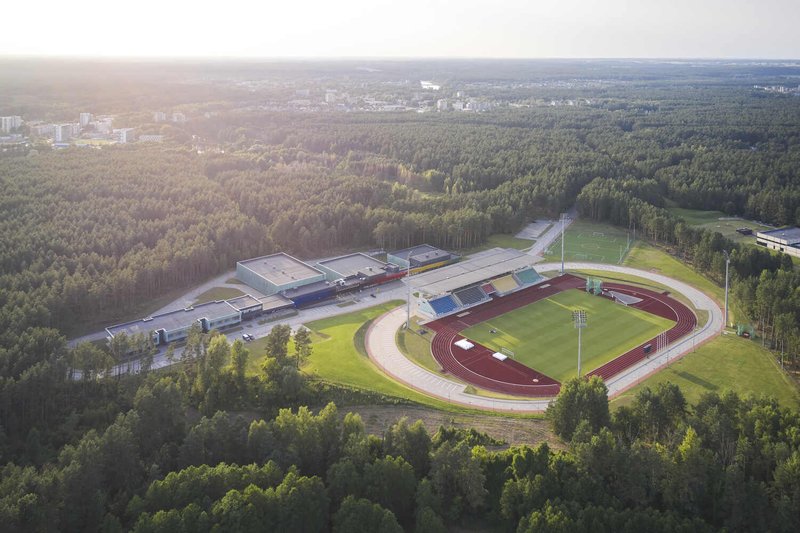
The Sportsmen Training Center in Druskininkai, Lithuania, stands as the largest and most innovative athlete training center in the country. Designed by Architektūros linija and completed in 2022, this 16,500-square-meter facility is nestled amidst a pristine natural landscape of tall pine trees. The architectural approach combines functionality, sustainability, and sensitivity to the surrounding environment, setting a benchmark for sports infrastructure.
Integration with the Natural Landscape
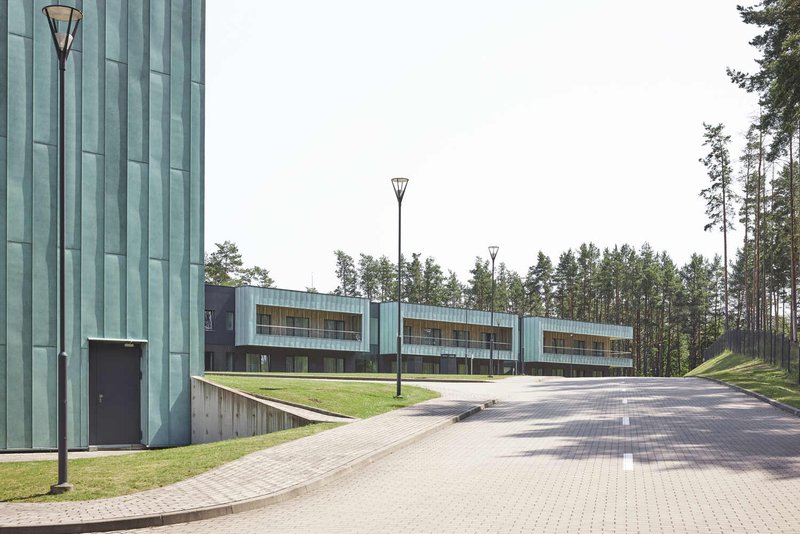
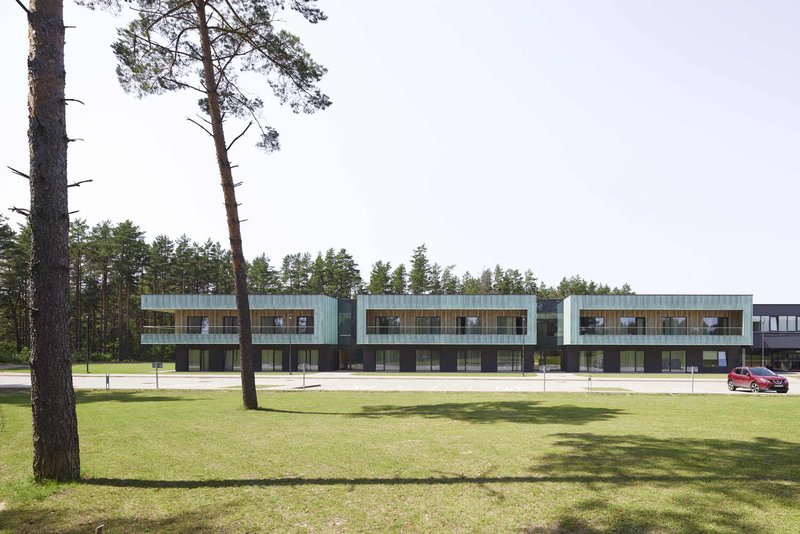
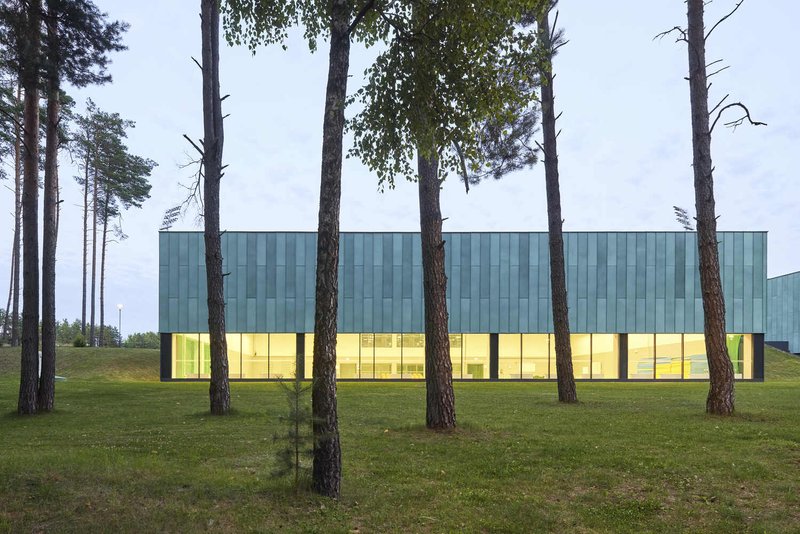
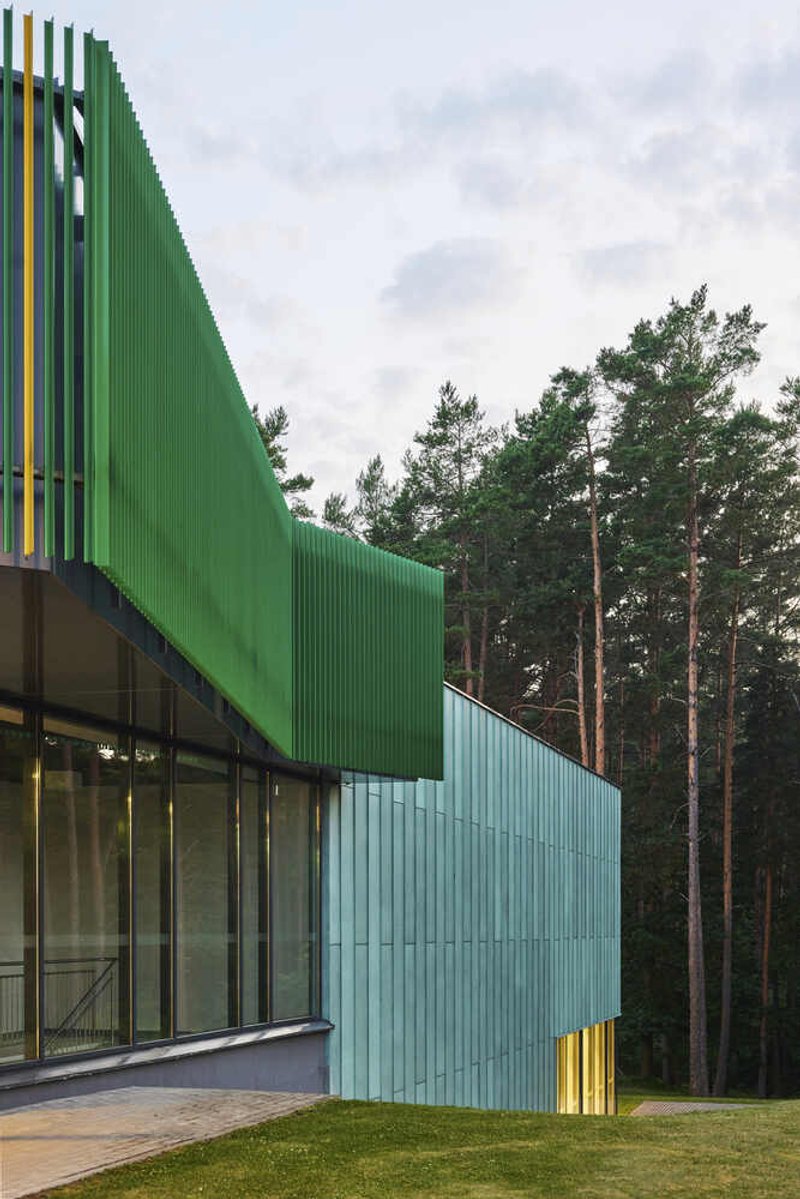
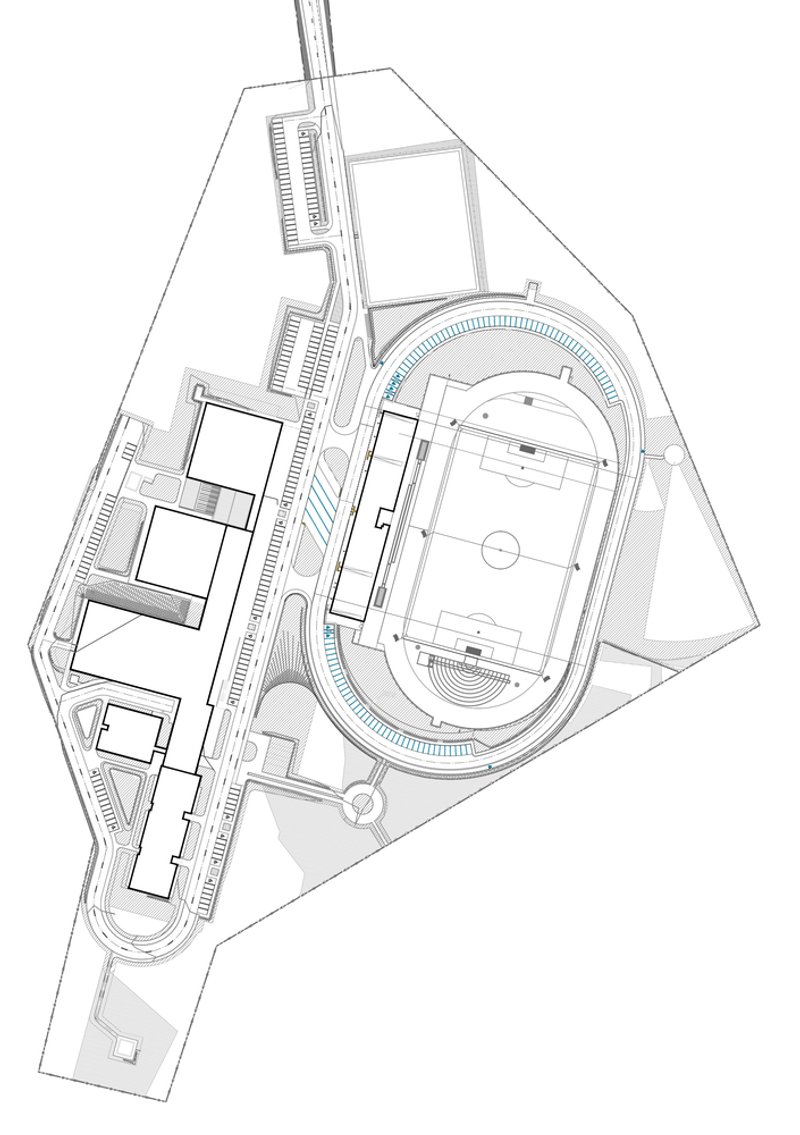
Located in a fragile natural area, the center embraces its unique setting without disrupting the surrounding environment. The architects carefully integrated the facility into the expressive terrain, ensuring that its rational forms complemented rather than overwhelmed the scenic beauty of the pine forest.
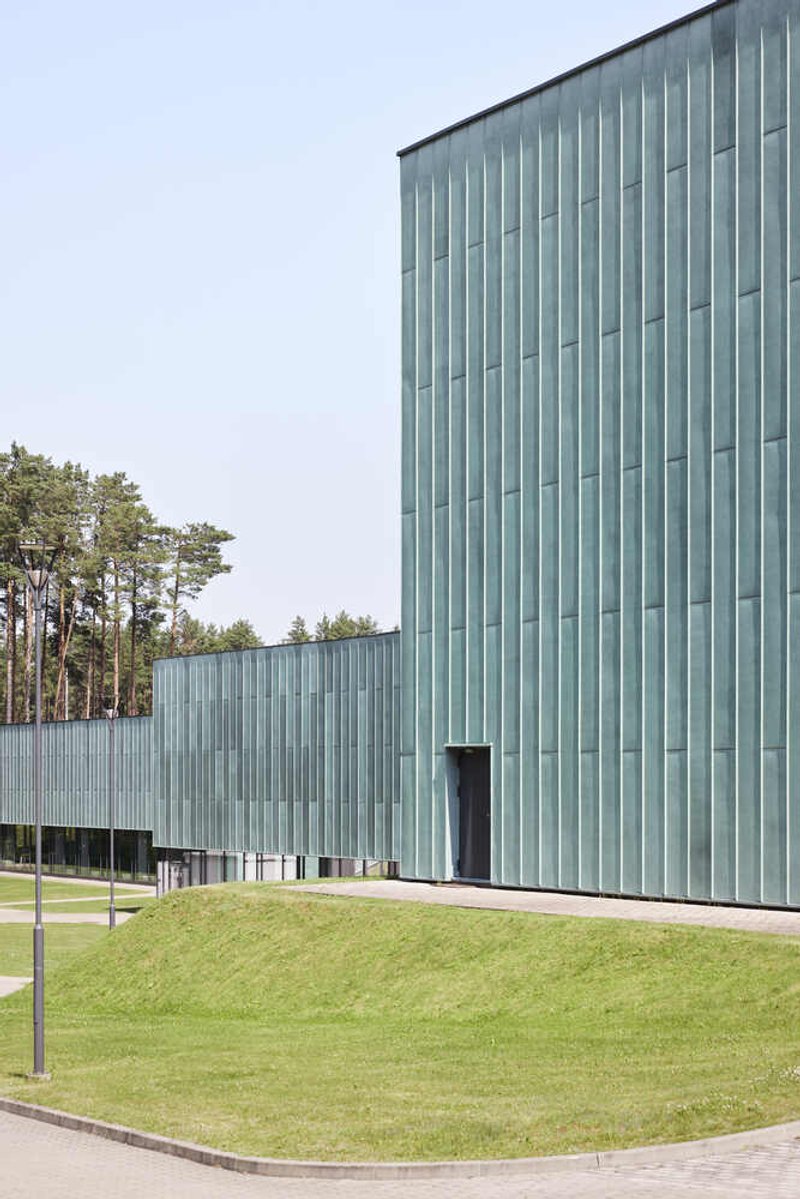
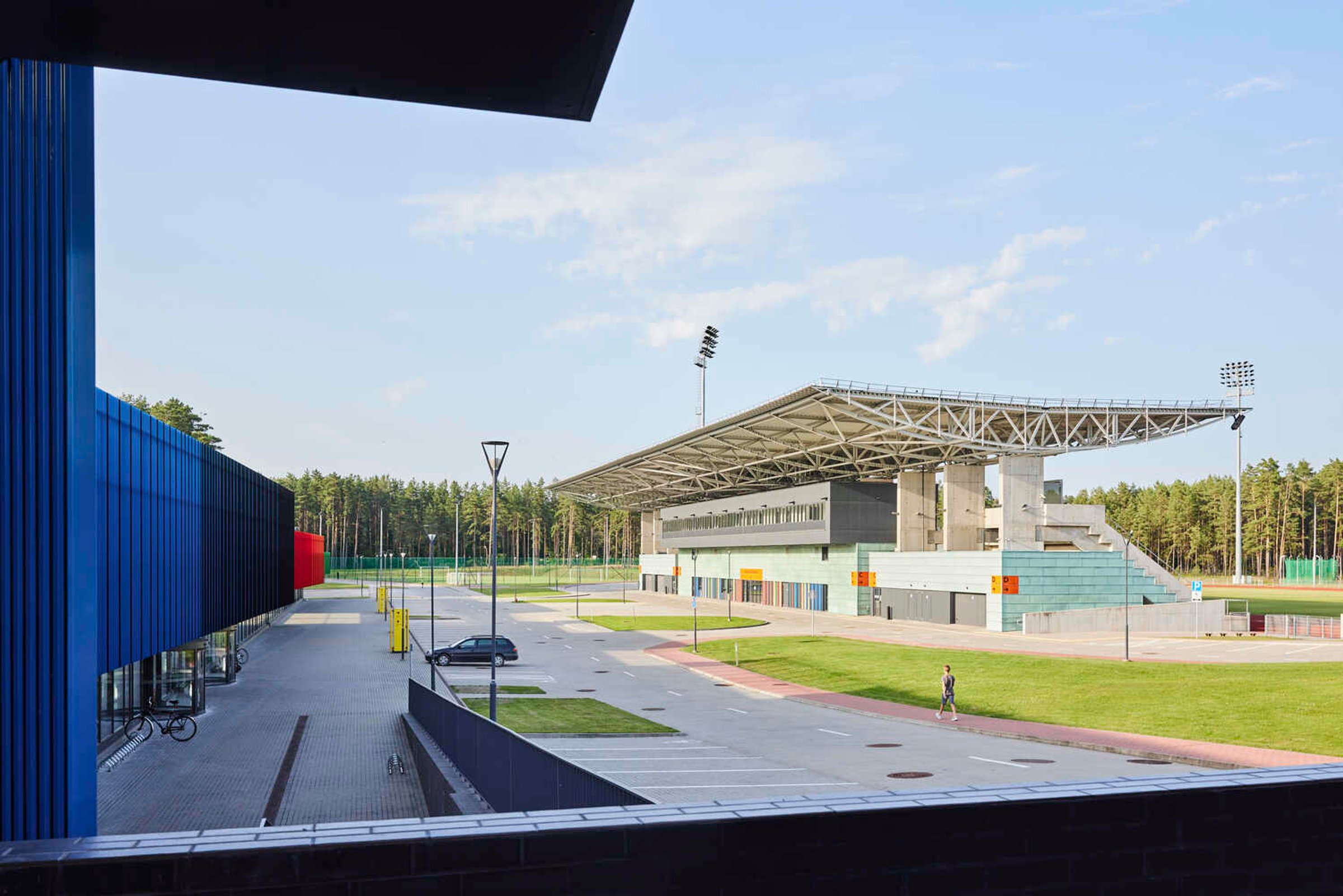
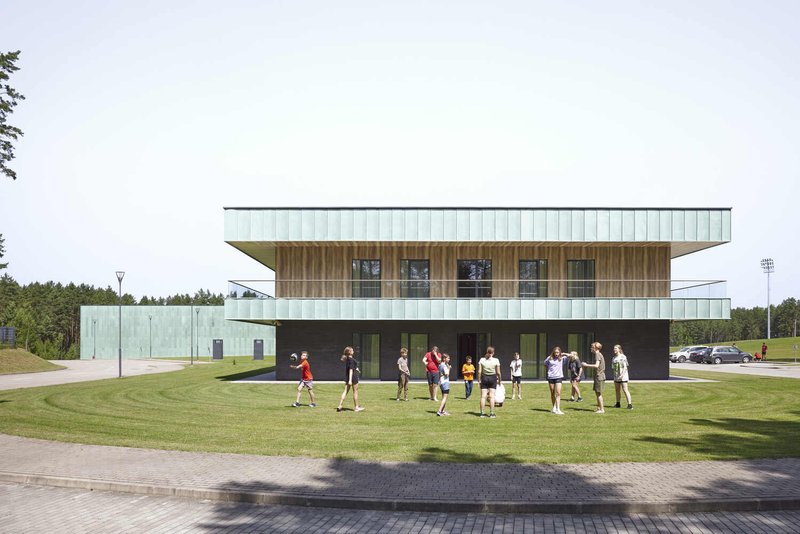
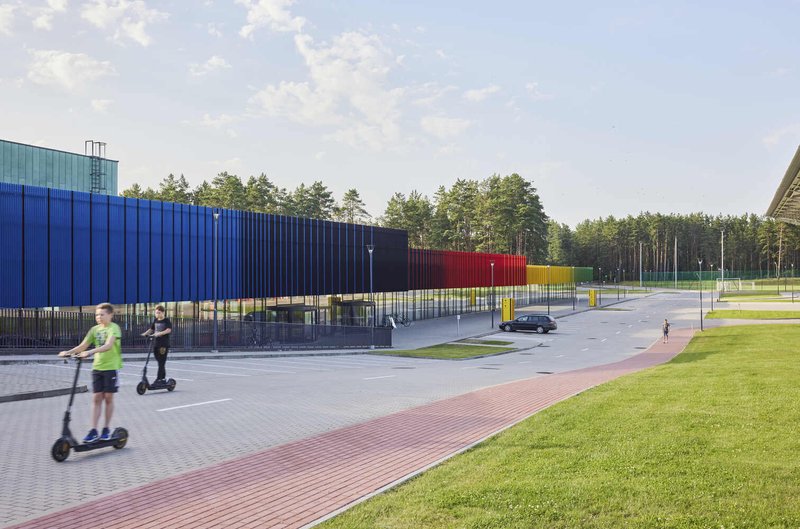
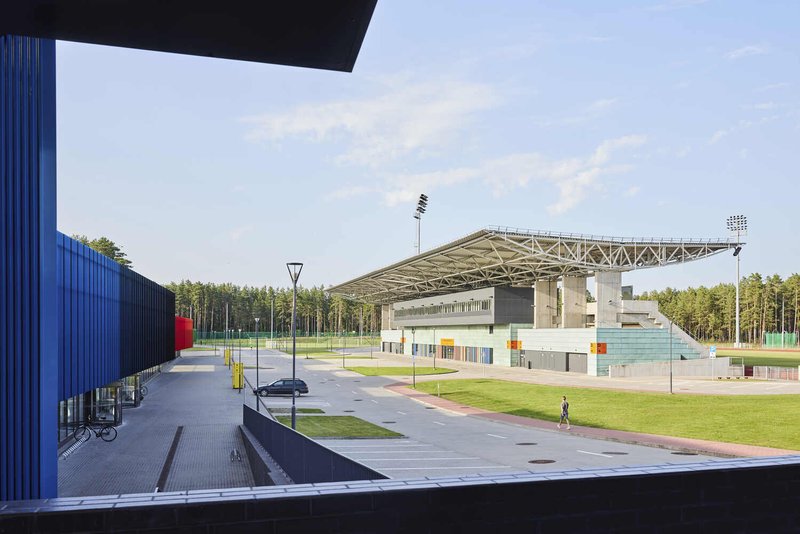
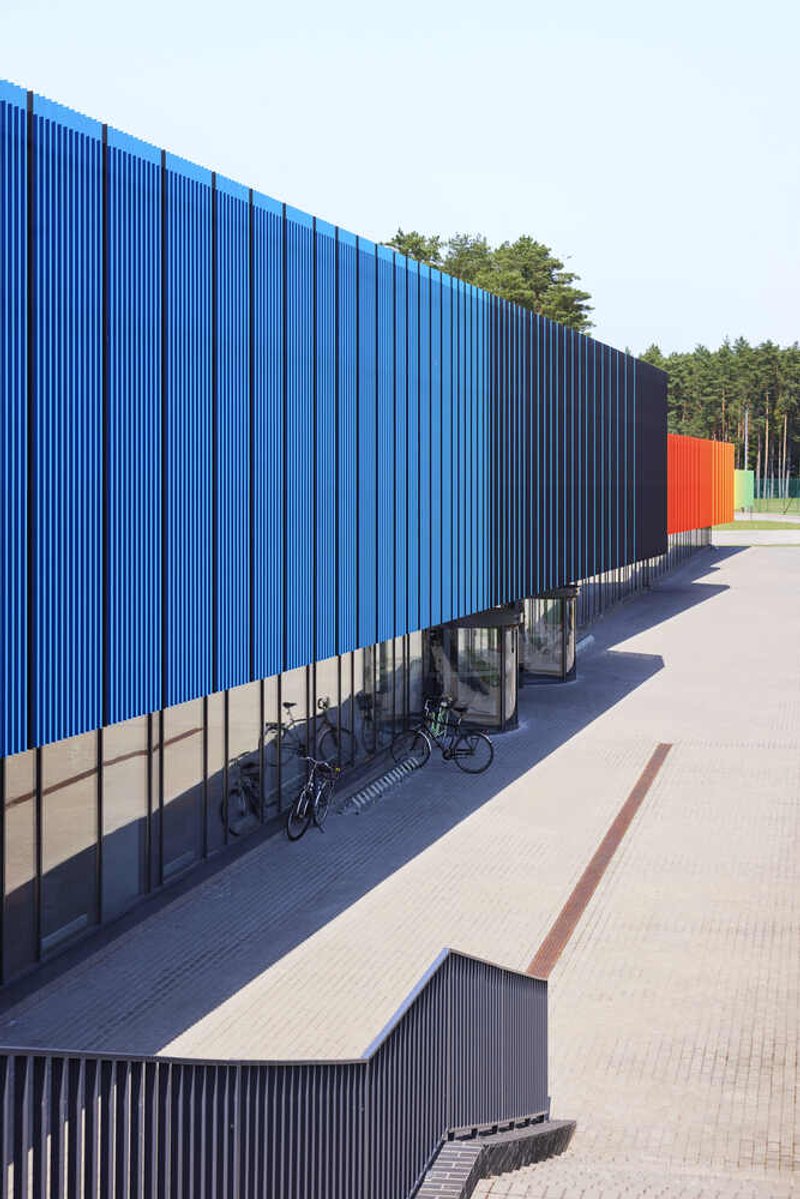
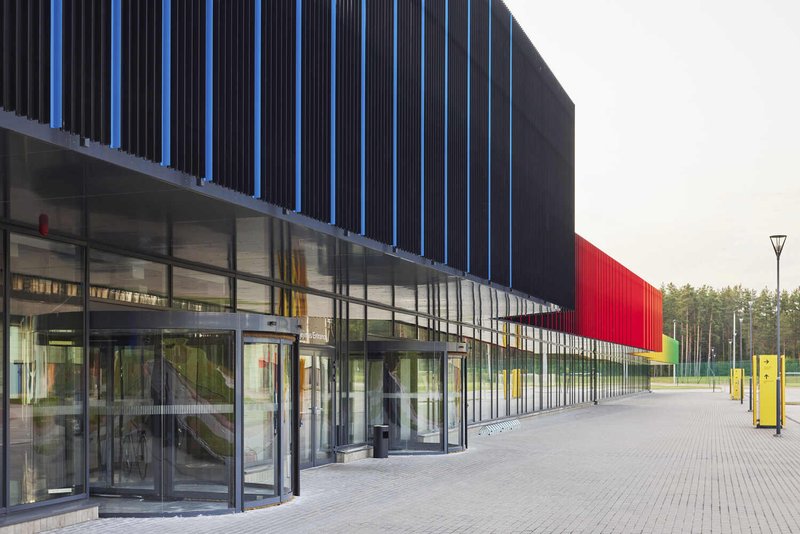
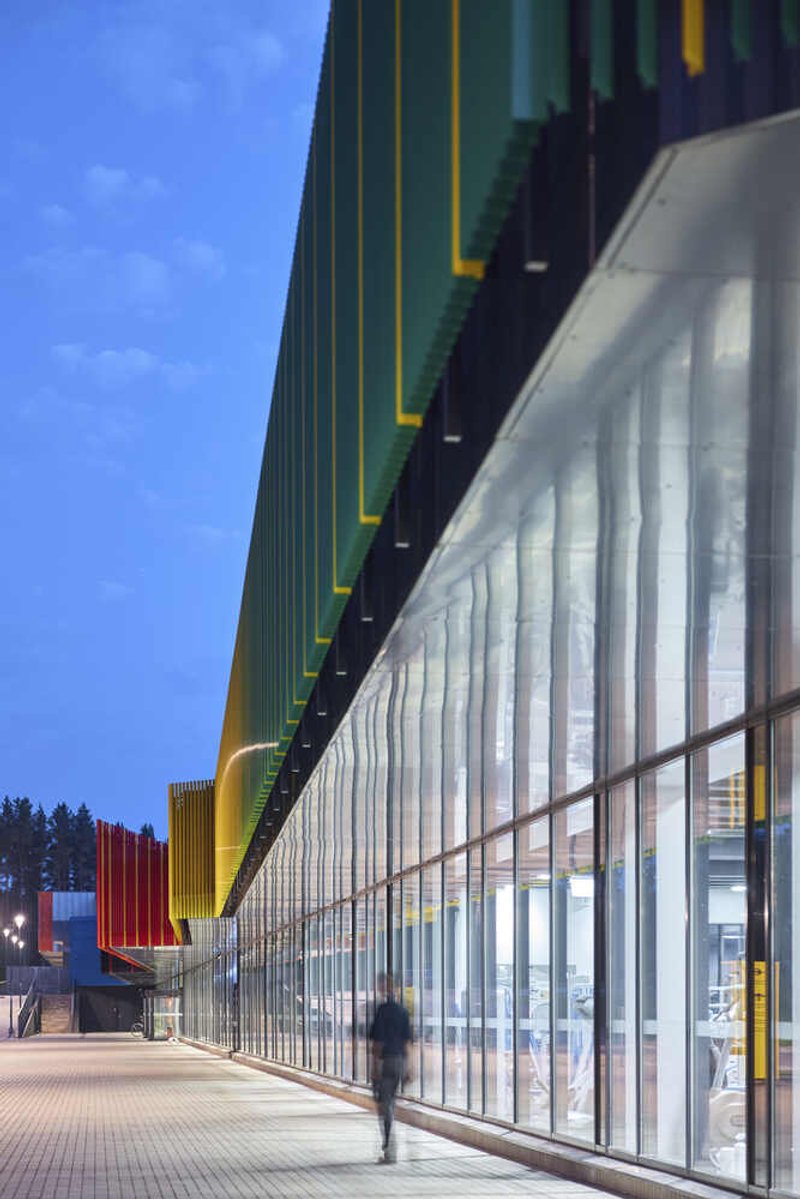
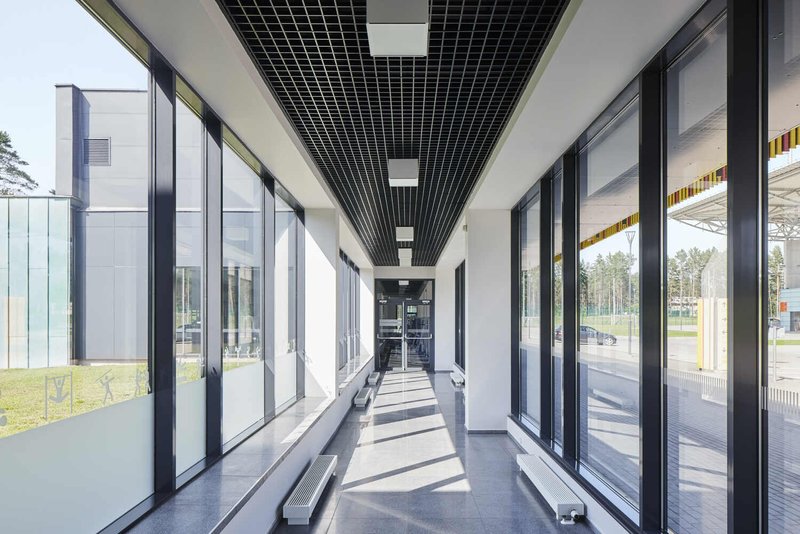
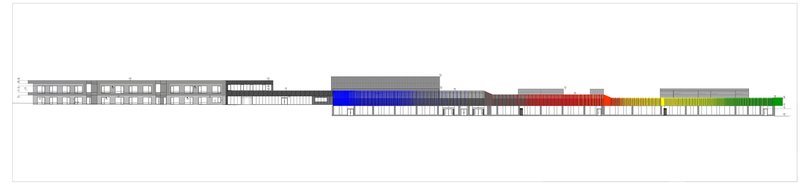
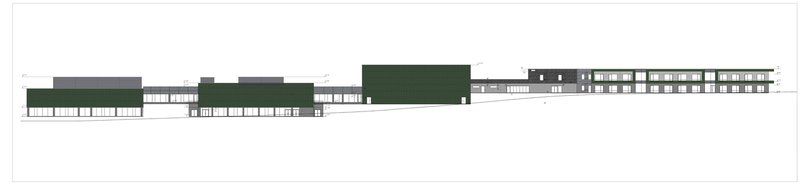
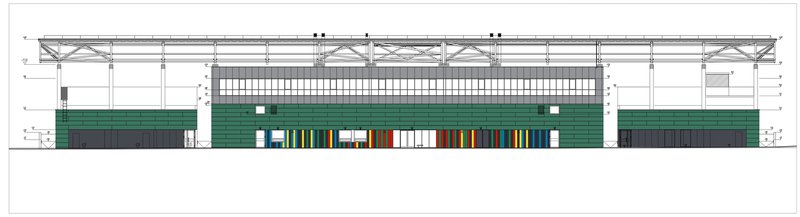
The design strategy employs perspective principles, with each successive building increasing in size. This approach reduces the visual impact of the complex, making it appear less imposing. The colorful horizontal strip along the ground floor not only draws attention but also creates a harmonious relationship between the built environment and the natural surroundings.
Architectural Features and Materials
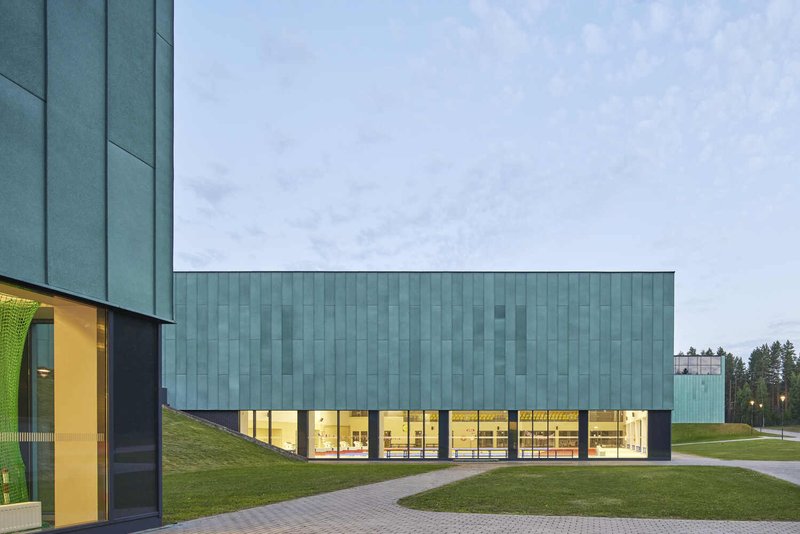
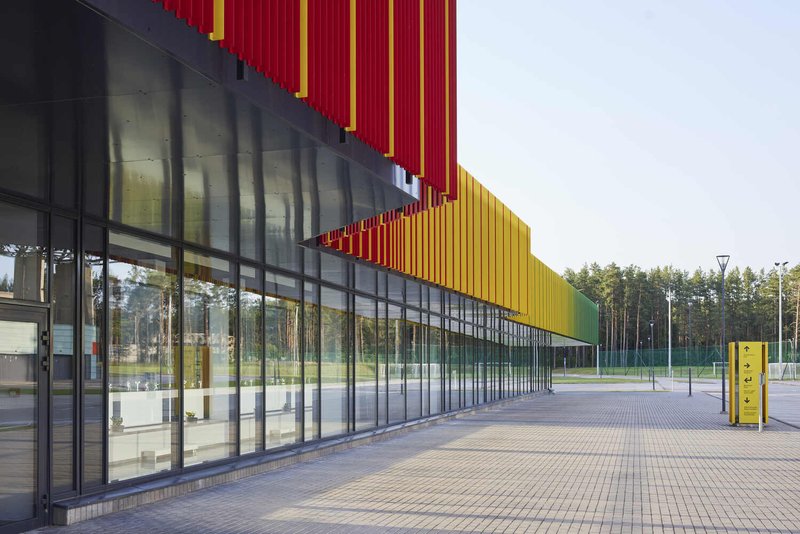
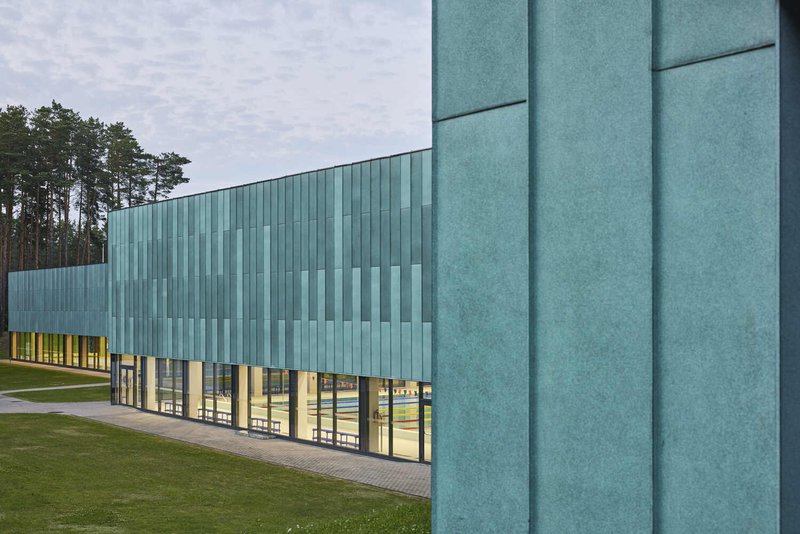
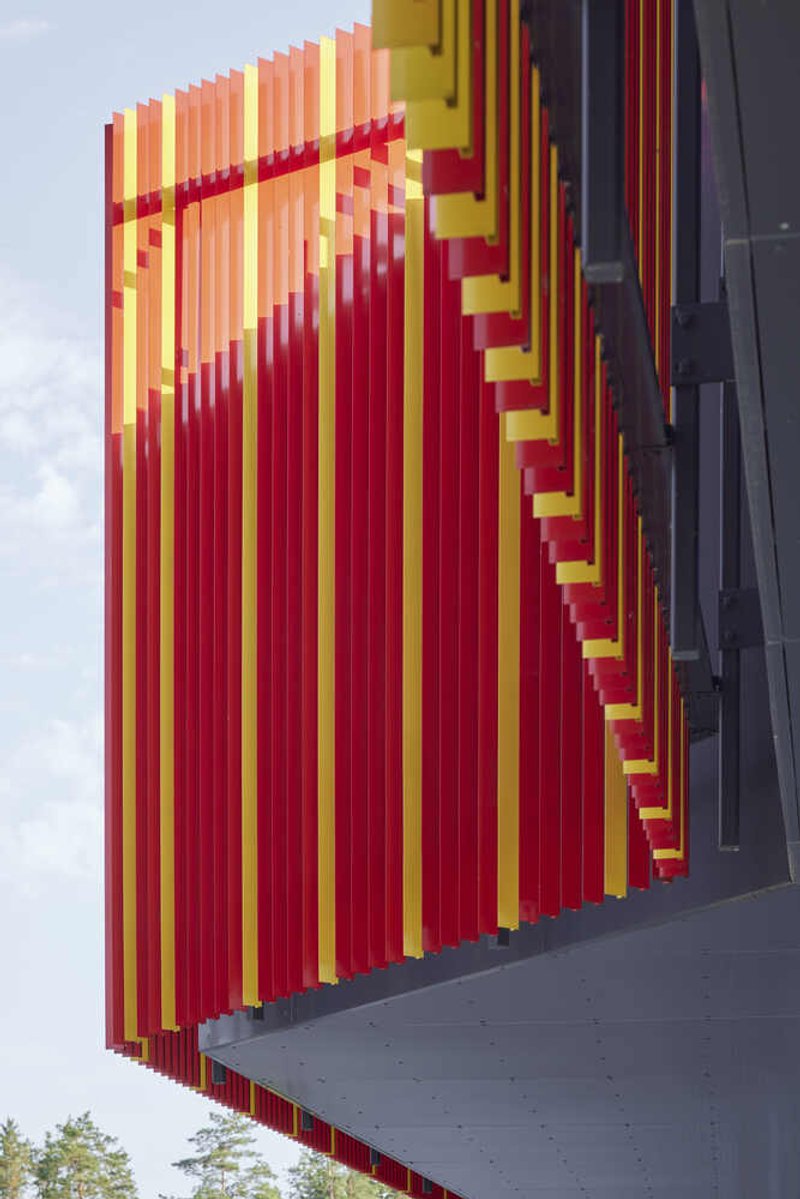
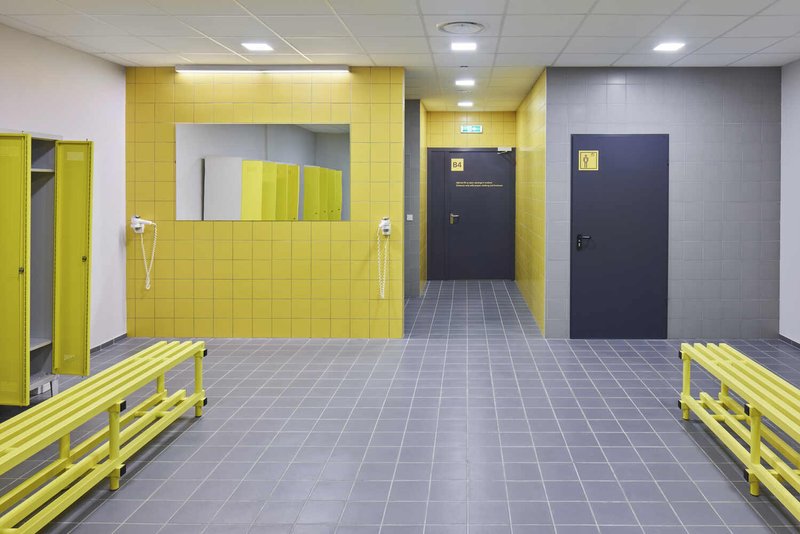
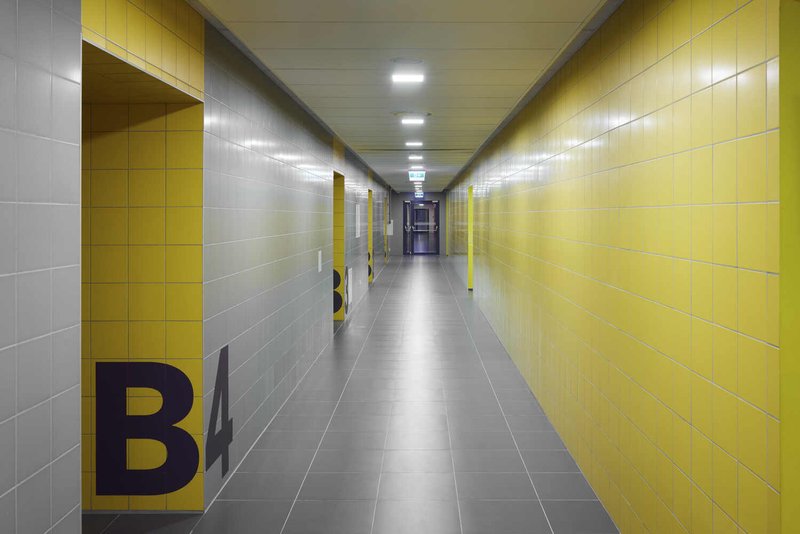
The façade of the training center incorporates natural copper, chosen for its durability, low maintenance, and ability to age gracefully in response to the forest's sap and pollen. A unique design element is the ground-level decorative strip featuring a computer graphic inspired by the Olympic color palette, adding vibrancy and a connection to the center’s purpose.
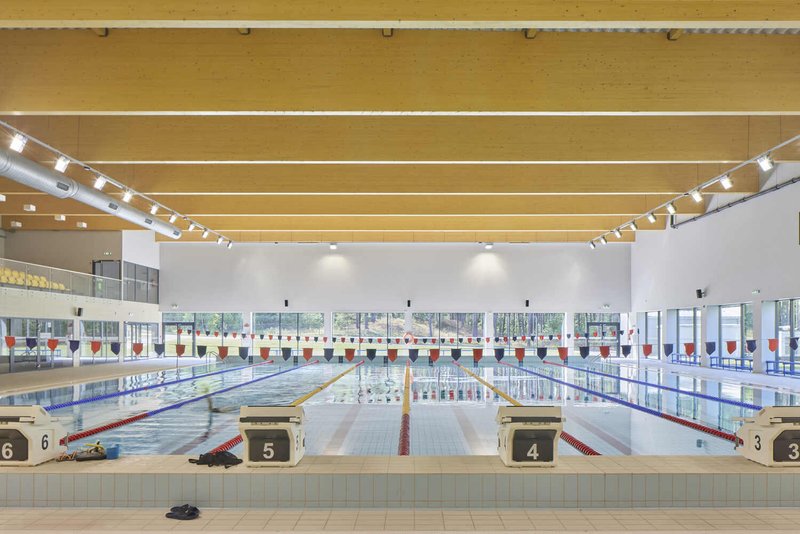
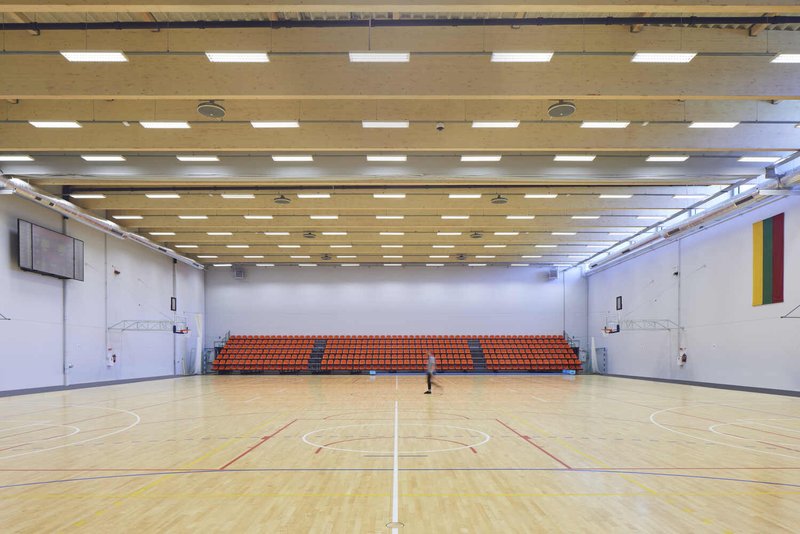
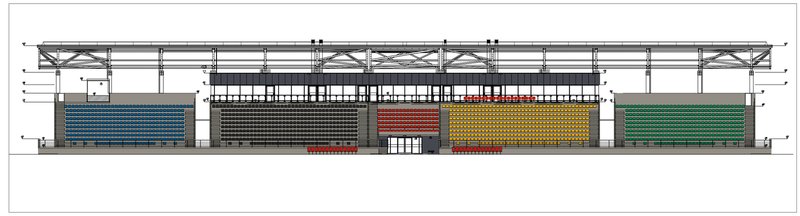
The building's design is not just visually appealing but also highly functional. The gymnasium, a central feature of the facility, is a versatile space that can host practice sessions, sports competitions, and events with moderate audiences. The space can be divided into two training areas with special curtains or expanded to accommodate up to 600 spectators by using foldable seating.
Facilities for Comprehensive Training
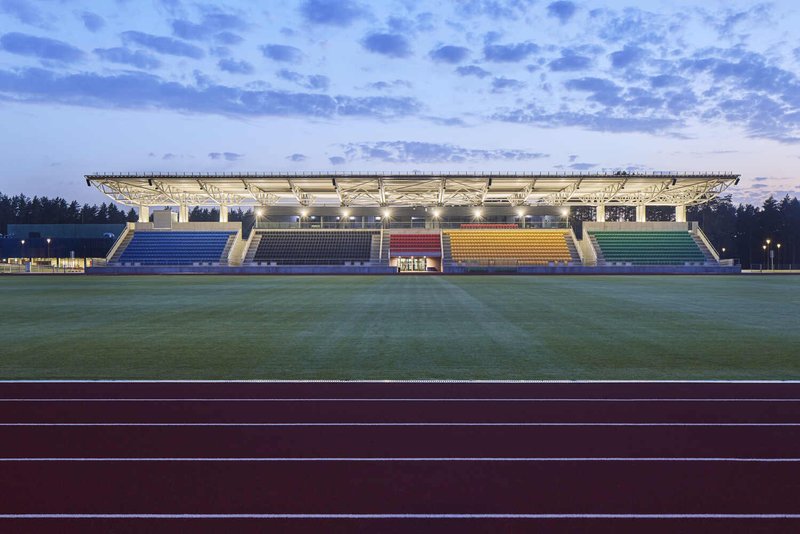
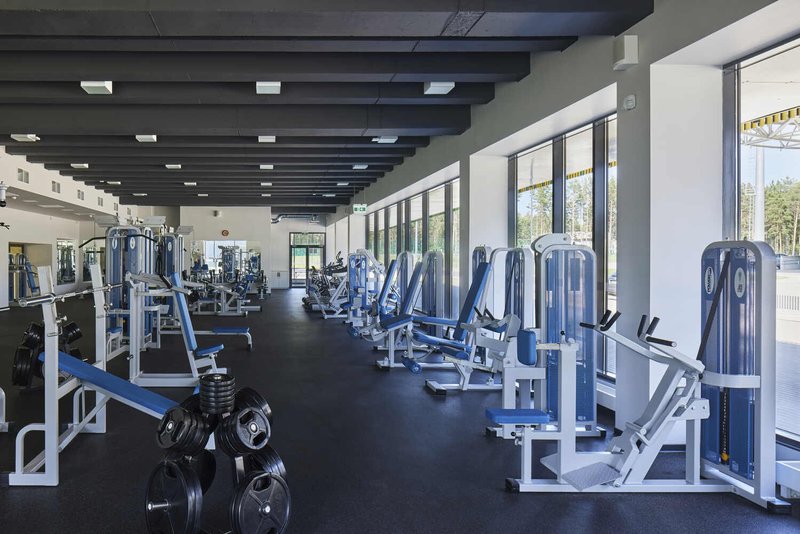
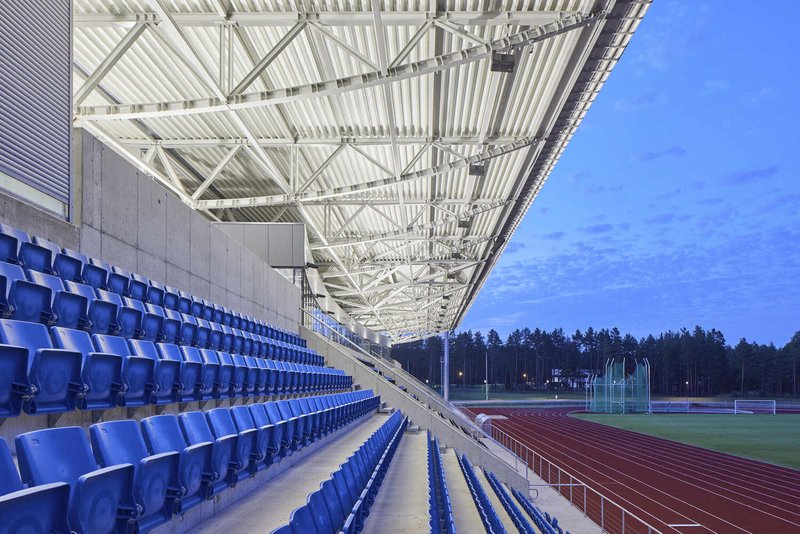
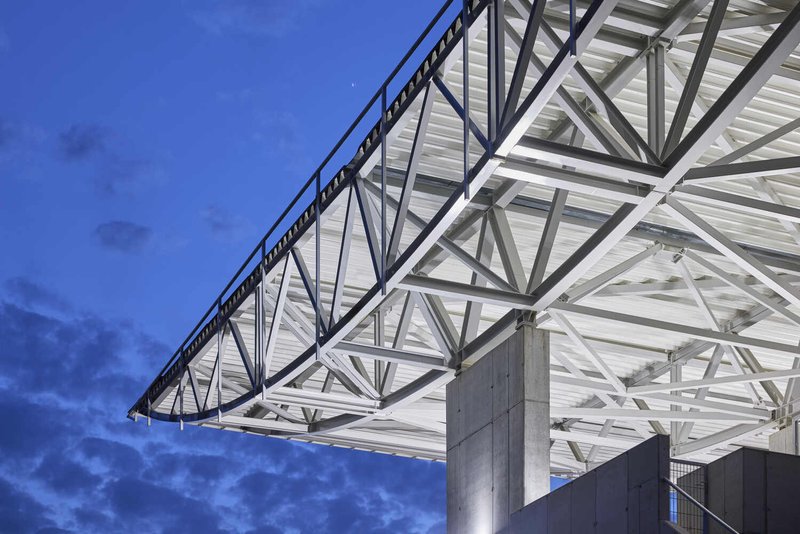
The Sportsmen Training Center offers an array of facilities to support athletes' training and well-being. These include a hotel, catering facilities, administration offices, and rarefied air chambers designed for specialized athletic conditioning. The complex also features outdoor amenities such as a football field with a covered seating area for 300 spectators, as well as courts for various sports.
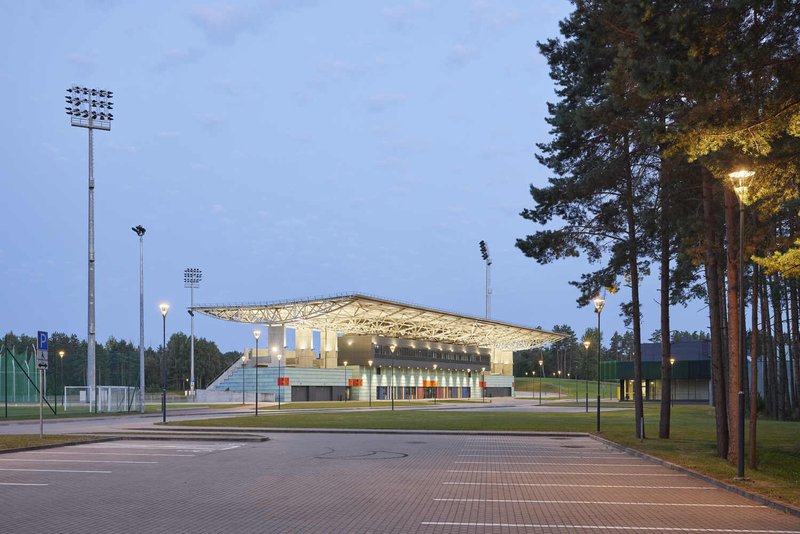
The multifunctional nature of the center ensures it caters to a wide range of sports and events while maintaining a focus on sustainability and integration with nature.
Sustainability and Long-Term Impact
The architects’ commitment to sustainability is evident in every aspect of the project. From the careful choice of materials to the preservation of the natural terrain, the design minimizes environmental impact while maximizing functionality. The integration of natural elements and thoughtful landscaping allows the facility to blend seamlessly into its surroundings, ensuring that it complements rather than competes with the natural beauty of the area.
A Model for Modern Sports Architecture
The Sportsmen Training Center in Druskininkai exemplifies sustainable sports training center design. Architektūros linija has created a facility that not only meets the needs of athletes but also respects and enhances its natural environment. This project serves as an inspiring model for future sports infrastructure, demonstrating how functionality, aesthetics, and sustainability can coexist.
All Photographs are work of Norbert Tukaj