Tea time!
How can tea incentivise new forms of discourse?

Tea time!
The project thematizes the relation between the public and the governement
through the act of drinking tea.By establishing different microambients for tea
drinking, and spatial relations, new forms of discourse are being incentivised,
collective or intimate.
These microambients serve as emblems representing different cultures
significant to the history of tea, affirming the multicultural origin of
British tea time.Together they comprise a pavilion.
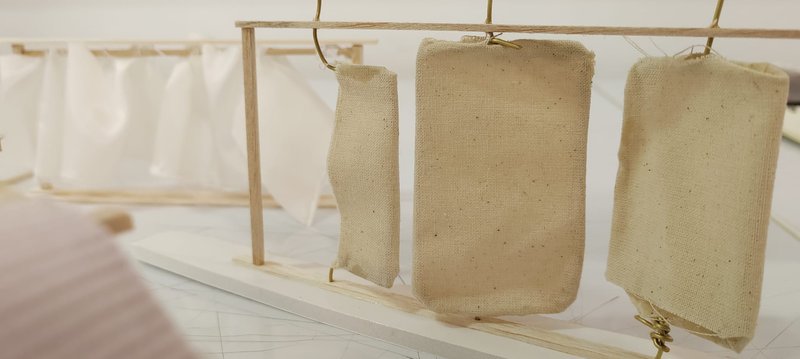
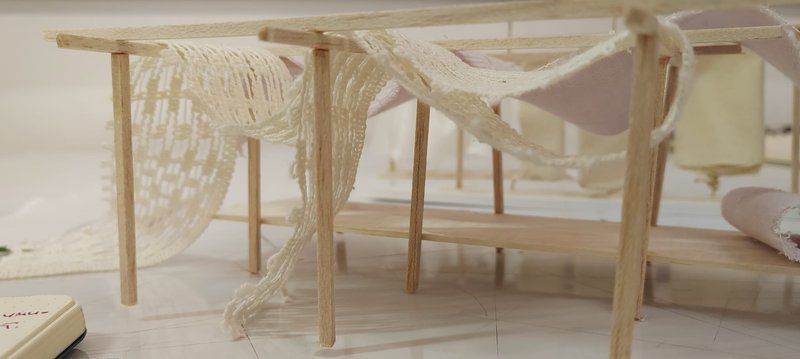
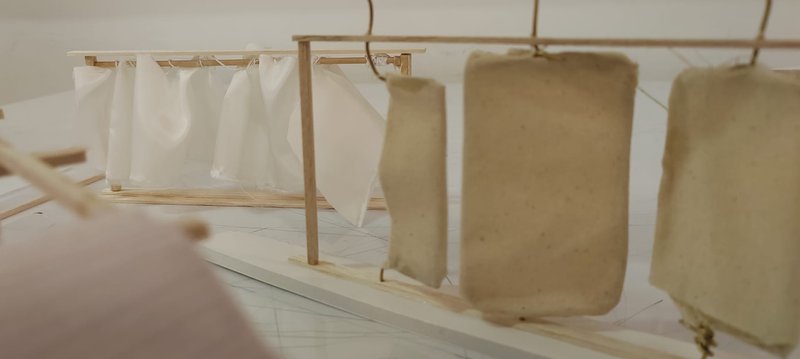
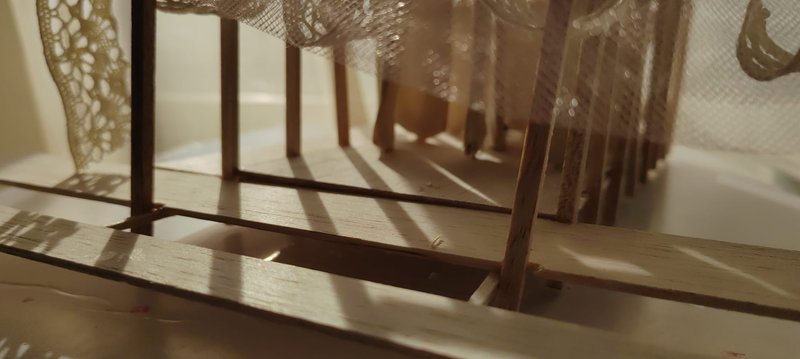
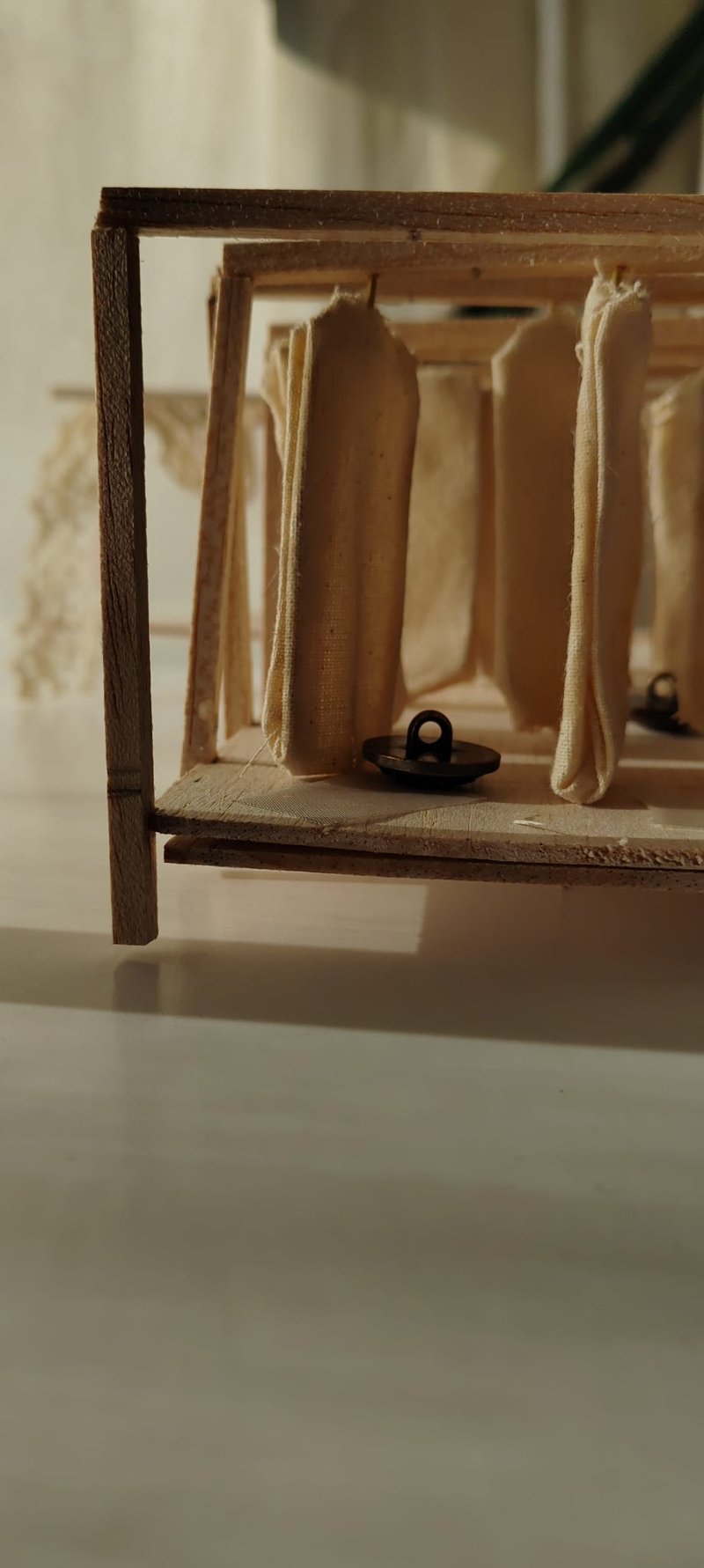
This pavilion, ortogonal in form, consists of lightweight wooden frames, that
support diverse types of fabric, and draping typologies. The material and
method of hanging that is used, signifies the culture that is being emulated.
The pavilion is situated between gardens of tea, and spices, which are
cultivated for small scale tea production and consumption.
The complex aims to connect, educate, and stimulate the senses!
Why tea?
Tea time represents somewhat of a social phenomenon, as it is a ritual present
in many cultures, across the globe. The
significance of this act lays in its ability to connect people, and enable
exchange of information and experience.Sharing tea is regarded as a symbol of
kinship
The history of tea is a valuable topic to engage with because of what it can tell
us about identity within specific
cultures, about their etiquette, early globalisation, class and status, as well
as gender dynamics.
Therefore, tea can foster space for all types of discourse.
Five cultures are chosen to be represented within the pavilion, those are Inidan,
Chinese, Turkish, Russian, and finally English.The selection was made with the idea of providing a varied experience.
These cultures have long histories of tea consumption and rank highly on the
list of average tea consumpiton by country.
Disposition and architecture
The whole structure spands around 75m in one direction, and 51m in the other. Two communicatons, that connect the
individual pavilions, form axes and intersect at a right angle, enabling direct
acces to every part of the structure and park.
A simple modul of 4.8 X 4.8m was established, consisting of 4 wooden frames,and
a board.
The basic construction material is wood, the type can vary based on the culture
being represented. The wooden frame system is also equiped with a glass
panneling system that allows pavilions to be used even during winter months,
therefore forging an all year experiense, accesable to the public.
The design itself embodies a specific aesthetic that exudes a sense of airines and invites natural light in, forming a space
that is bright and filled with warmth, even open despite its size.
Landscape and plants
Since there is no tea time without the plant Camellia Sinensis and its
variations, most of the landsape is decated to the growth and cultivation of
this plant. Alongside the Camelia Sinensis plant, small garedns are dispersed
althrough the complex. Some of which include mint, rosemary, rose, lavander,
lemon grass, spice gardens (cardamom, ginger etc...). Users are encouraged to
explore, sit among the greenery, and experience this complex not only
through the sense of sight, but by the
senses of touch and smell.
Many of these plants are invisioned to be used in the making of tea, later
served, and in workshops held in the production centre.
The programme
Besides the tea pavilions a production zone is formed, which facilitates space for small scale tea production,
storage. Amidst this zone, a space is designated for workshops and interactive and educational events. Some of
the pavilions can fascilitate similiar events.
Throughout the central corridor informative plaquettes are exhsibited alongside
vintage tea sets, utencils, objects that
pertain to the subject of tea history and culture
The pavilions
- Indian pavilion
The indian pavilion was inspired by tea street vendors, known as the
Chaiwallah. It was designed for brief
stays, and on the go consumption. Two moduls form this pavilion, although
solitary moduls could be placed throughout Hyde park. Every modul is equpied
with a small central area, which is lowered 40cm, in which appliences can be positioned
and tea can be made and sold.
The fabric that is draped is Muga silk. This fabric can be embeleshed with
traditional pattern. The silk itself is from the Assam regon where the Camelia
Sinensis var. Assamica originates from.
-Chinese pavilion
The Chinese pavilion is situated near the centre of the main corridor, it
consists of three spaces, onlooking a small lake. Every space is equiped with a
system of rotating panels inspired bay chinese silk,paravans/screens. The rotation
of these panels forms different typologies of space, from separe like
configurations for two, to more open variations suitable for a party of people.
These configurations of space allow different degrees of privacy. The panels
are 80cm in width and 2,4m in height, with a metal frame dressed in silk
-Turkish pavilion
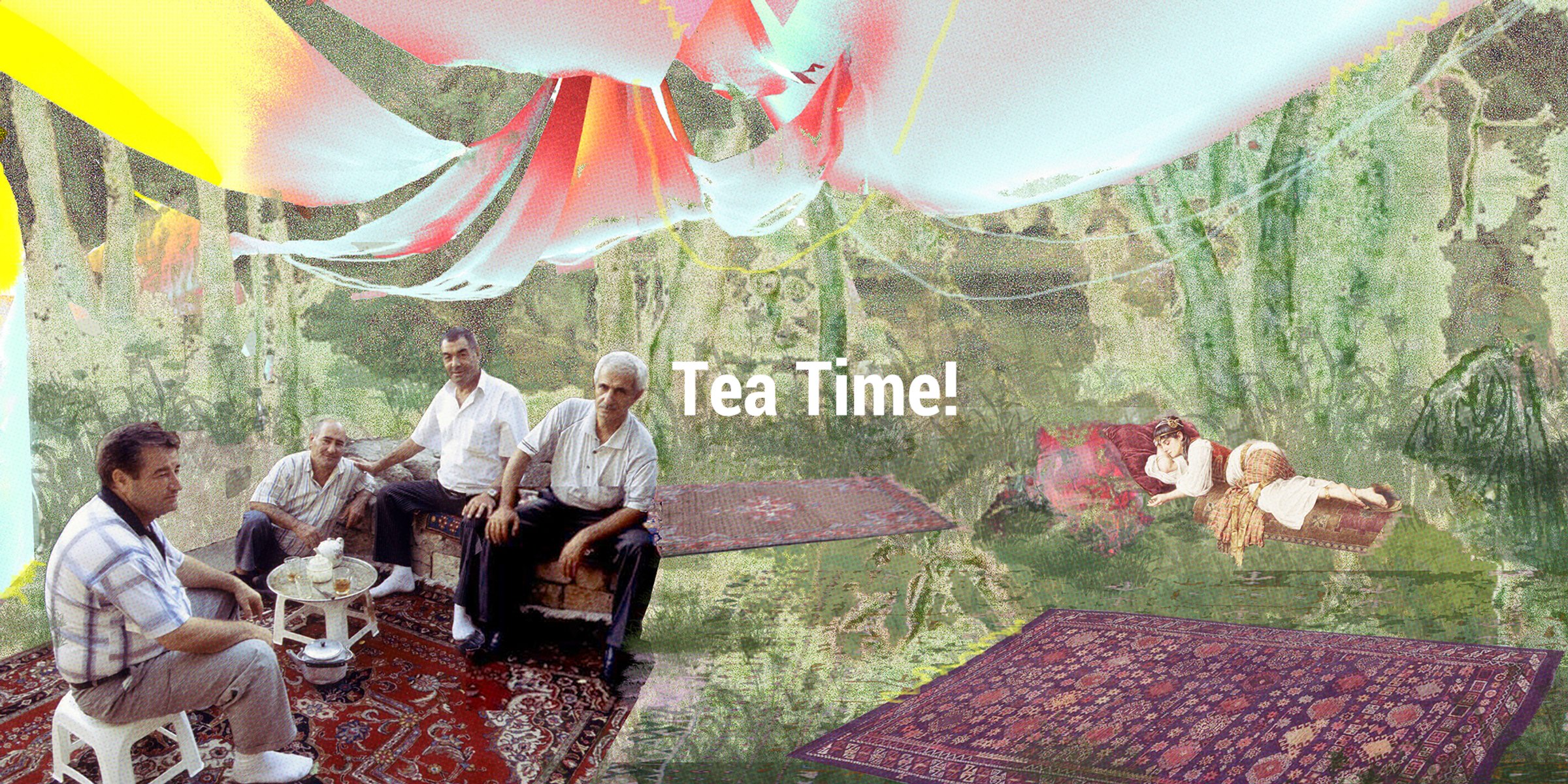
The Turkish pavilion is a communal space, designed for gathering of several
groups at once. Cotton fabric drapes from the ceiling, making the space open and
warm, as light passes through. The floor is covered with carpets inspired by
traditional turkish, these carpets function as moduls, on which up to 3 people
can be sitted. Carpets can be easily moved and placed to someones liking,
formin an archipelago of communication.
-Russian pavilion
The Russian pavilion is one of familial feelings, two moduls represent spaces
in which tea is most commonly consumed in this culture - the dinning room and the living room. A sense
of privacy is provided by heavy curtains, draping from a additonal support
frame. The pavilion is designed for smaller groups of people.
English pavilion
The English pavilion is based on the history of afternoon tea. Aiming to
replicate and modify this social event, the pavilion is designed to be open for
bigger gatherings. Two spaces, each comprised of two moduls facing eachother,
Saten drapes hang from the frames, and enable closing off certain areas for
more intimate gatherings of people. The pavilion is accompanied by a rosebush
garden and an open chess area, as games were frequent pastime activities during
afternoon tea.
The process
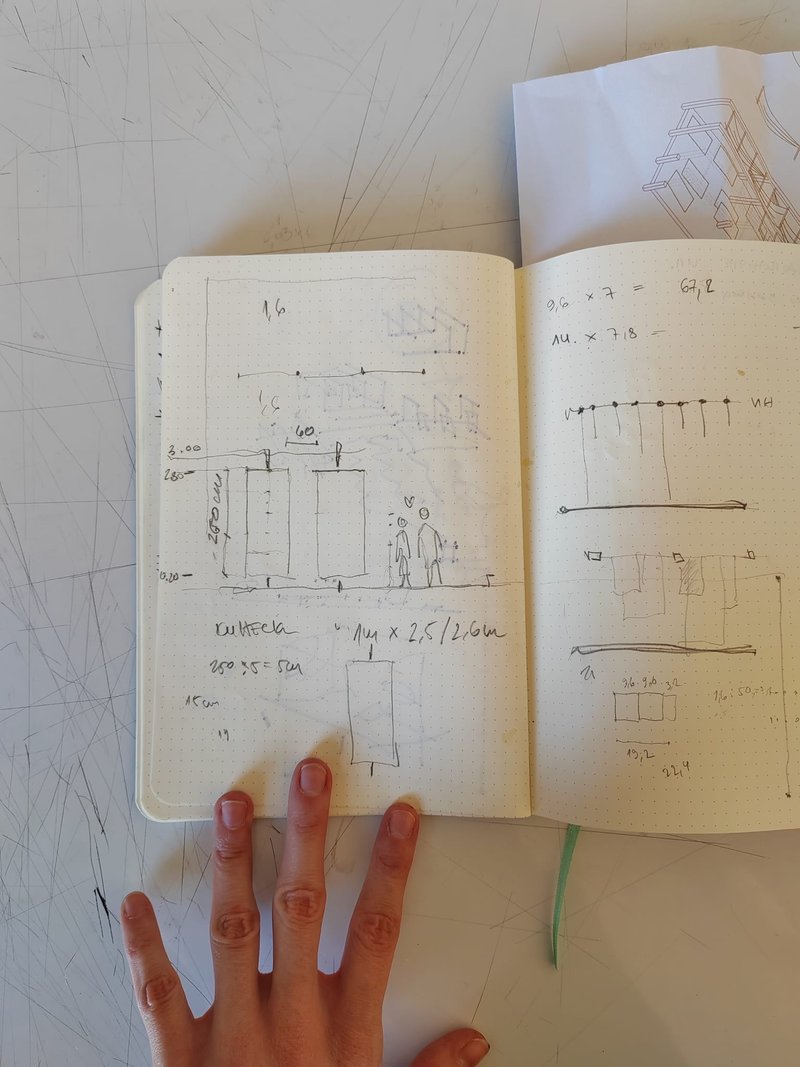
Much of the process was research. Accumulating knowledge about
diffferent tea cultures was of essence so motives could be properly chosen. Also modeling and playing with fabrics, as well as sketching were crucial to the project.