
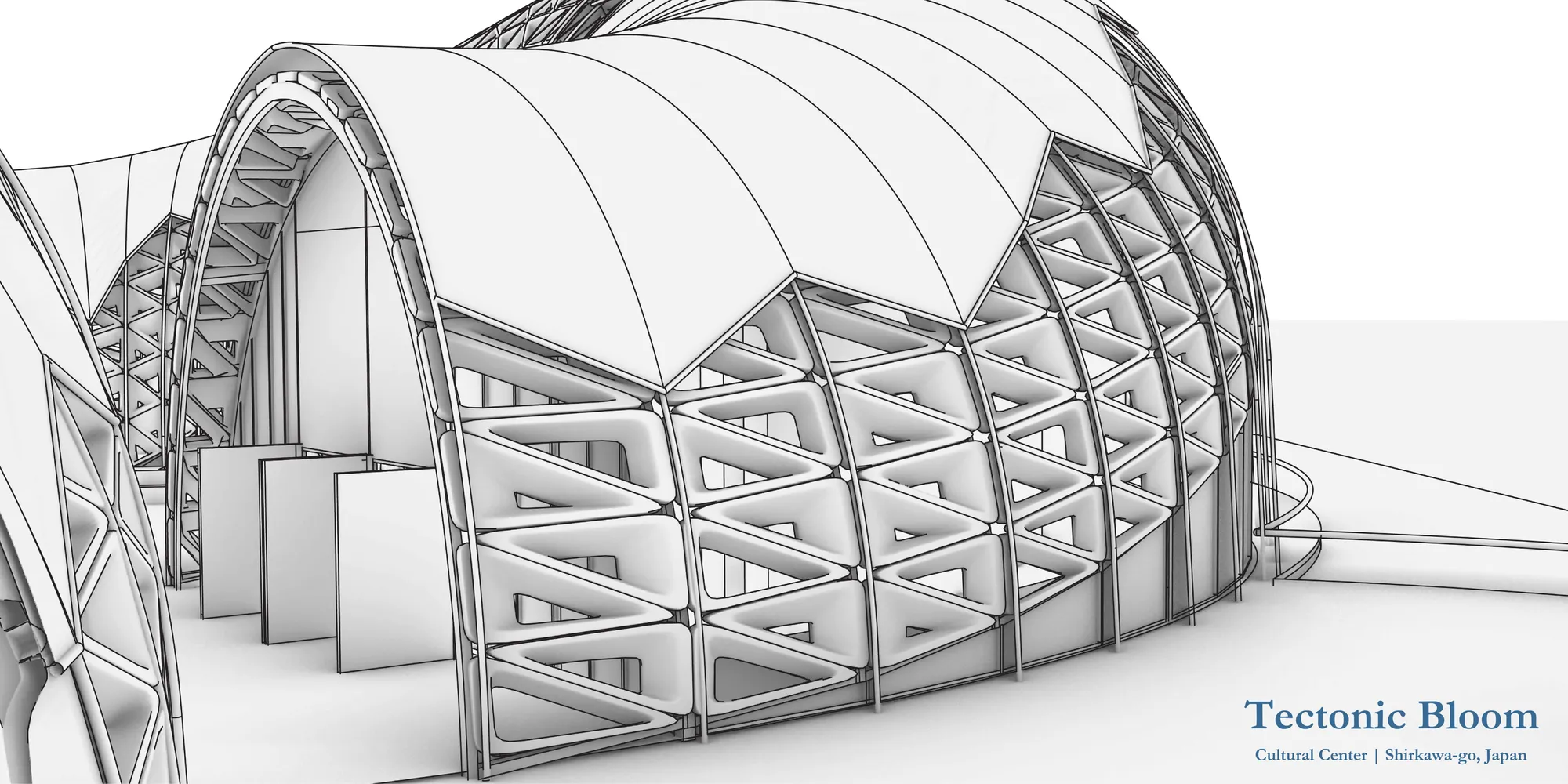
Tectonic Bloom
Sherina AlThani & Shaikha AlSalman

The main inspiration behind the project is the idea of the Sakura Tree. Upon receiving the project site, we were brainstorming what words come to mind when we think of Japan. We came up with many words but the word that struck us the most was the Sakura. Many tourists travel to Japan in April or May just to experience the ‘Cherry Blossom’ season, which is when the Sakura Tree blossoms. Something else we looked at was the fact that the site is very typographical. It sits between high mountains. We wanted to compliment this idea by elevating some spaces in the project and keeping some closer to the ground. The instant you look at the project you feel like it looks familiar but you’re not sure how, as you start to experience It from the inside, it becomes more and more interesting as the architecture itself is very interactive with the people that will be visiting the space. The main element we looked at when analyzing the site is the sun path, the project wants to be something accessible even during the day, or even especially during the day. That’s why, in the project there is an inner courtyard that is enclosed by 3 domes surrounding it. What this does is it creates beautiful shadows casted from the dome onto this courtyard during different times of the day. Something else we looked at were the parking lots. The project wants to be easily accessible, because of the extreme weather conditions, expecting a very hot summer and an extremely cold winter, it would be preferred that the guests wouldn’t have to walk a long distance to access the project, instead it would be closer to the parking. It was also intended that there are 2 entrances to the project. There is an entrance which is considered a main entrance, it is accessible by everyone, but we decided it would be good to also have a second entrance that is also accessible by everyone, but it is preferred that it is utilized by people that work in administration or people that only want to access the library, a more quiet or private entrance. Overall, the project has been through many diverse iterations, but there were 3 main iterations that are worth mentioning. Most of the iterations were concerning the inner courtyard, at first, we experimented the idea of having one single dome, and having all the program inside this one full circle dome. Then we were experimenting how we could overlap different domes, in different sizes, then came to the conclusion that it would be better to have 2 zones, the outer dome zone then the inner area. We were then looking into having the courtyard as an enclosed area, but then decided to embrace the weather and open it up. The main method of design that was experimented with this project is the idea of Tectonics. Japanese architecture is known for extremely tectonic, wooden structure. We did not want to step away from that and decided to use something that is familiar to the villagers and to the tourists. We started by creating a single unit, then this unit turned into a cluster which then turned into a whole module. This module was originally a full circle that was then edited into the shape it finally turned out to be. The program in the project is very sequential. We thought of every single detail before finalizing the program division, the 3 domes are all very close to one another and they are placed in a way where you can meander around the site, moving from one place to another and experiencing many different things at once. The project divides into many experienced, you enter into a space that is outdoors but has structure on top that then turns into an airconditioned space then you suddenly find yourself outside in the courtyard. All of this happens very smoothly because the floor plan is circular, which promotes movement. Even within the spaces, the furniture or other elements within the building they all promote this sense of flow, almost like you are being pushed by a wave. Especially in a space like the exhibition area, you would always be curious to move around and look at the pieces because they are not all easily accessible and close to each other, rather they are curved and would promote this sense of curiosity as to what is behind each wall. The main material chosen was wood, the reason for that is because we wanted to embrace Japanese architecture. We understand and appreciate that the villagers are very conservative and look deeply into new materials that get introduced. With that, we decided to use wood which is something they are familiar with. Then there was an introduction to ceramic tiles which might be something new to the site, because it’s a new building to the villagers we wanted something that wasn’t only new to the tourists but also to the villagers, they could experience different materials, different colors within the materials. Most objectives were met by a series of iterations. The project was filled with trials and errors, which is how architecture mostly works. A detail we intended on leaving questionable is the color of the ceramic, which is the top layer. It is visible in the elevations that each elevation has a different colored ceramic. Shirakawa-Go is a site that has 2 extreme weathers. It is very hot in the summer and very cold in the winter, we wanted something to compliment this change in weather, which is why we added different ceramic color that is adjustable according to the Sakura Tree. The project is easily changeable over the years, and we say that because we intentionally decided to make the wooden units scaled to a human’s size. So, each and every single unit can be carried by a human being. We respect that the villagers are very hands on with all of their buildings, we wanted to celebrate that and give them the freedom to be able to dismantle or change something in the project without having to make major renovations, instead can be fixed by someone from the village.


Popular Articles
Popular articles from the community


Co-Life: Senior Housing Design That Reconnects Older Adults With the City
Co-Life reimagines senior housing design through healing gardens, shared streets, workshops, and a sustainable community across generations.

The Ocean Hive: Sustainable Architecture for a Self-Sufficient Civilization at Sea
The Ocean Hive imagines sustainable architecture at sea, where modular habitats, algae, wave power and ocean waste sustain a growing colony.

The Earth Pod: 3D Printed Homes for Resilient Refugee Communities
The Earth Pod reimagines refugee housing through 3D printed homes made from clay, combining resilience, self-sufficiency, and rapid shelter.

Lunar Spiral: Space Architecture Shaped by the Mathematics of the Universe
Lunar Spiral reimagines space architecture through Fibonacci geometry, lunar regolith, levitating habitats, and self-sustaining Moon living.

Similar Reads
You might also enjoy these articles

Day and Night Park: A Time-Based Urban Newsstand in Beijing
A temporary urban newsstand in Beijing blending travel, light, and reading through poetic colors, compact form, and community-focused design.

Modernist Patio Renovation in El Masnou, Barcelona by Oliver Segura Arquitectura + Cebrià Arquitectura
Modernist patio renovation blending tradition and innovation with a movable pool, leveled floors, and Catalan materials in El Masnou.
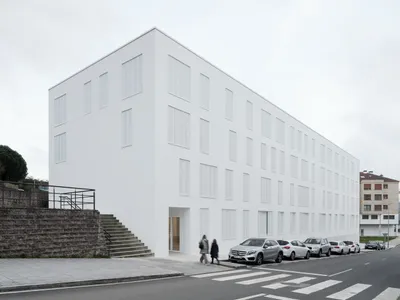
Alto Residencial Coop: Cooperative Housing Development in Santiago de Compostela by Carbajo Barrios Arquitectos
A linear cooperative housing complex blending white volumes and perforated metal façades, enhancing community living, natural light, privacy, and urban integration.
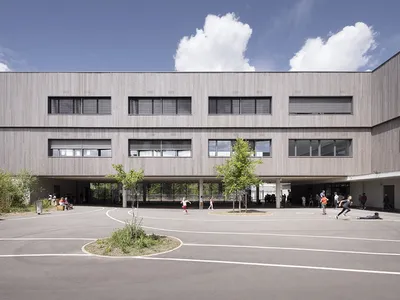
Vil Genis School by BPA ARCHITECTURE – Massy, France
Vil Genis School in Massy, France, features sustainable design, south-facing classrooms, community integration, accessible spaces, and modern educational architecture.


Explore Arabic Architecture Competitions
Discover active competitions in this discipline




Challenge to reimagine the Iron Throne


Photograph architecture without architects


Illustrate the lost glory of Angkor Wat - Render Challenge


Bring back Drive In's
Comments (0)
Please login or sign up to add comments
No comments yet. Be the first to comment!