The City Link – Tordenskjolds Bro
A transformative sustainable urban design bridge redefining mobility, culture, and public space in the heart of Copenhagen.


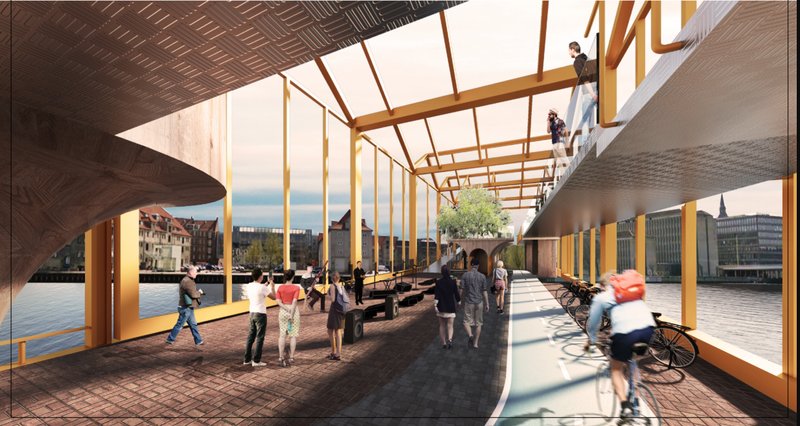
The City Link – Tordenskjolds Bro is conceived as a living architectural organism rooted in sustainable urban design. Rather than functioning solely as a passage between two shores, the bridge transforms into an inhabitable public realm—an active civic platform that integrates mobility, culture, and environmental consciousness.
Designed by María Camila Leal Acevedo, Josue Amaya Gonzalez, and ROAM ESTUDIO, the project draws inspiration from Danish vernacular architecture while embracing contemporary structural innovation. The result is a bridge that does not merely cross water—it reshapes the identity of urban public space in Copenhagen.
A Dialogue Between Vernacular Heritage and Contemporary Architecture
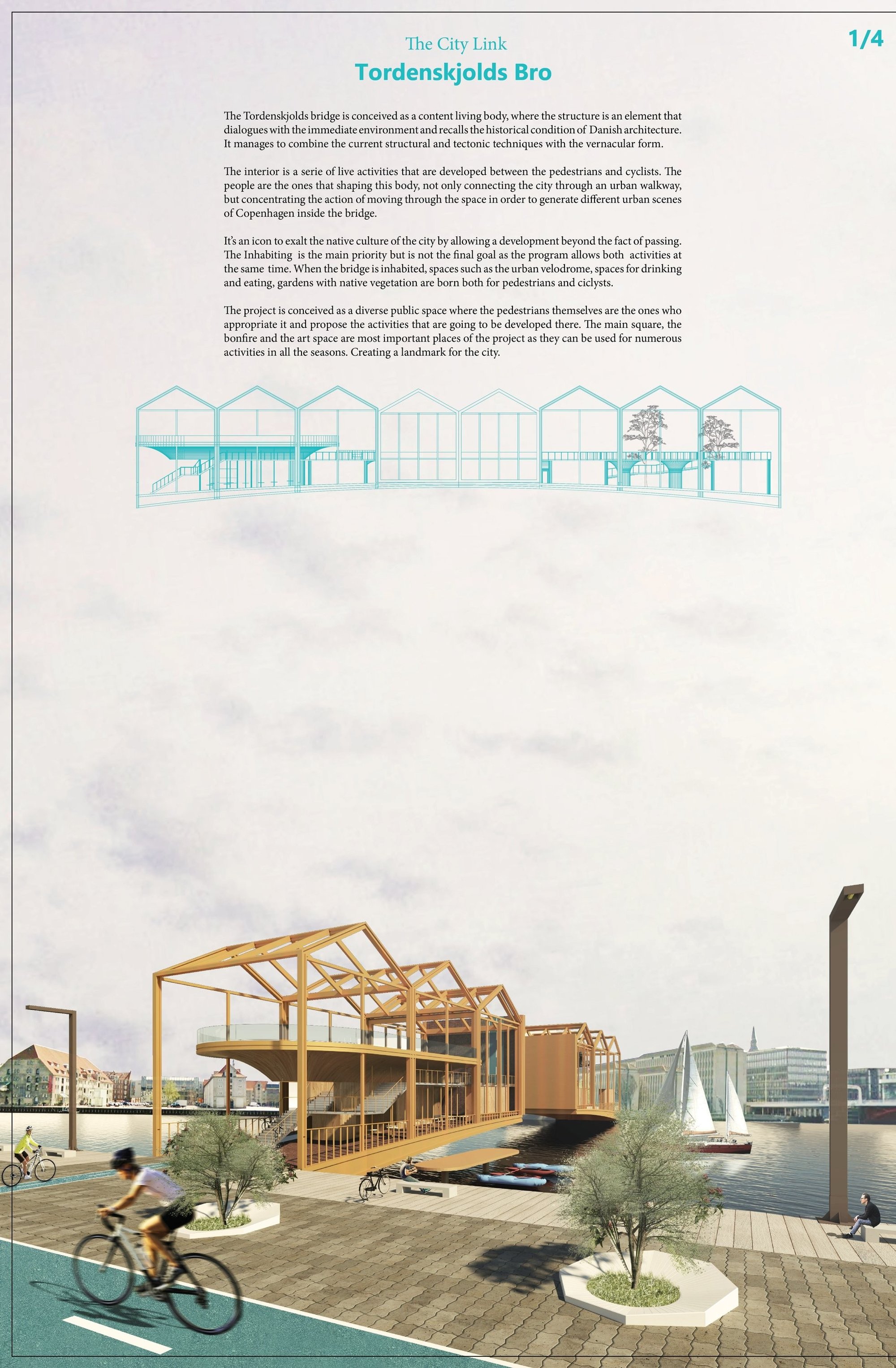
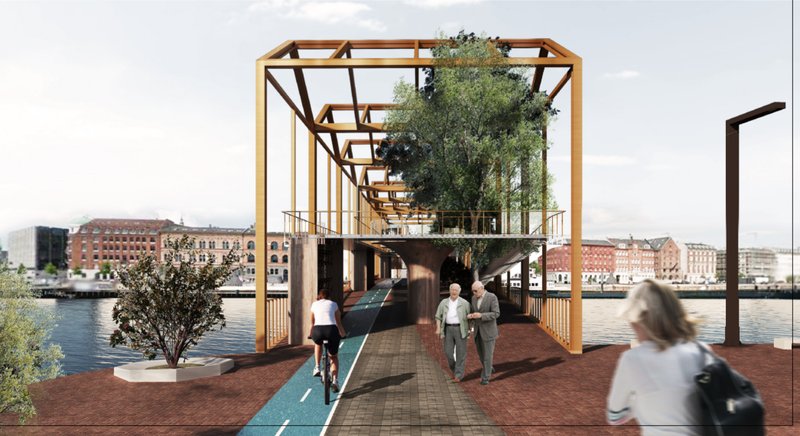
The formal language of the bridge is based on the historical architectural fabric of Copenhagen’s old town. The repetitive pitched-roof rhythm recalls traditional Danish forms, while its tectonic expression introduces a contemporary modular timber structure.
This fusion of past and present exemplifies sustainable urban design at both aesthetic and structural levels. The architecture establishes continuity with its surroundings, ensuring that the bridge feels embedded within the city’s historical narrative rather than imposed upon it.
The structure becomes a dialogue—between old and new, land and water, transit and permanence.
More Than Infrastructure: A Public Space in Motion
In conventional infrastructure planning, bridges prioritize efficiency and movement. The City Link challenges this paradigm by embedding programmatic diversity into its structure.
The bridge accommodates:
- A dedicated bikeway and pedestrian promenade
- Public squares and gathering platforms
- Urban gardens and hammock lounges
- Viewing platforms and social seating areas
- Bike workshops and service spaces
- Kayak port connections
- Multipurpose cultural zones
By layering functions vertically and longitudinally, the project transforms transit into experience. Movement becomes social. Crossing becomes dwelling.
This multi-layered approach is a key strategy within sustainable urban design—maximizing spatial utility while encouraging community engagement.
Sustainable Mobility and Cycling Culture
Over 100 years after the invention of the bicycle, cycling has re-emerged as a cornerstone of climate-responsive cities. Copenhagen, globally recognized for its cycling culture, provides the perfect context for this rethinking of infrastructure.
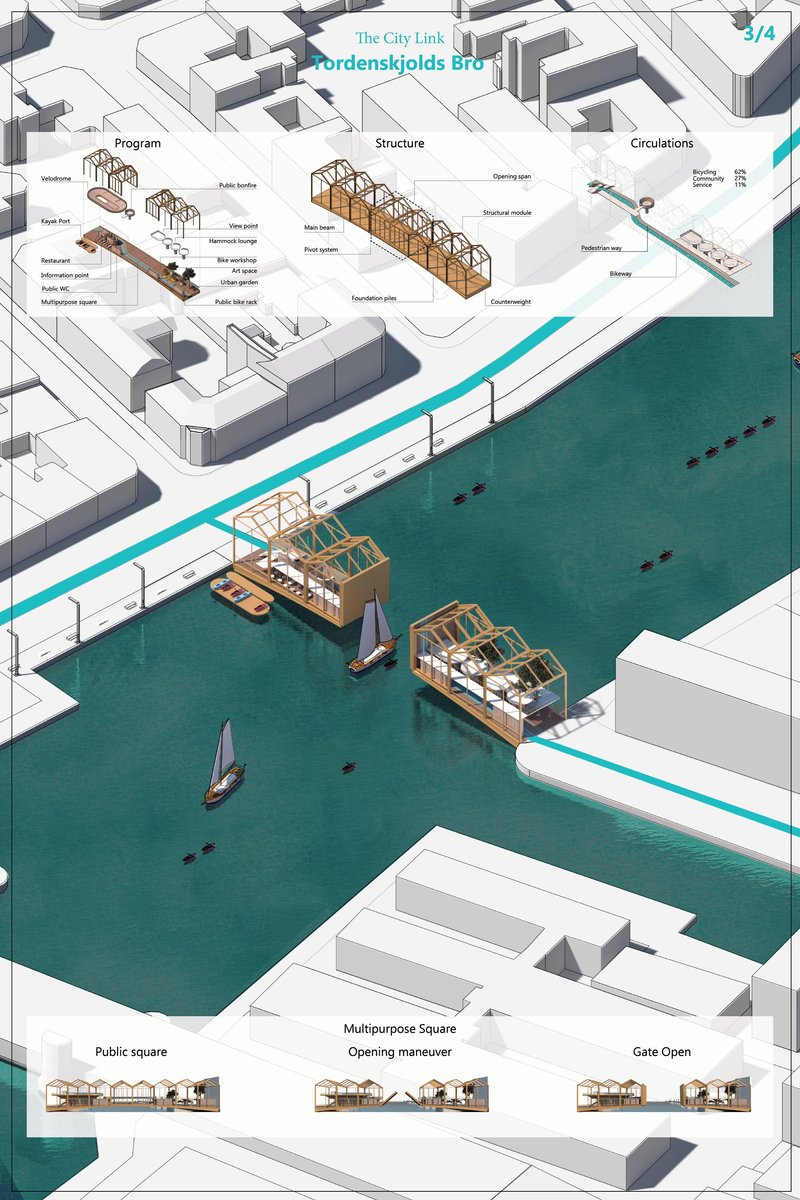
The City Link enhances sustainable mobility by prioritizing cycling circulation while integrating pedestrians seamlessly. The circulation diagram reveals a balanced distribution between bicycling, pedestrian movement, and service zones.
The bridge not only supports bicycle traffic—it celebrates it. Velodrome-inspired spaces and continuous cycling paths allow uninterrupted movement even during opening maneuvers of the structure.
In doing so, the project demonstrates how sustainable urban design can foster environmentally responsible transportation systems while enriching public life.
Structural Innovation and Opening Mechanism
Technically, the bridge incorporates a modular structural system supported by foundation piles and pivot mechanisms. Its opening span allows maritime traffic to pass while maintaining spatial continuity for users.
Even when the bridge opens, pedestrians and cyclists can continue moving through designated platforms such as viewing decks or elevated circulation loops. This ensures that urban activity never fully stops—mobility adapts rather than ceases.
The structural rhythm of timber frames creates both enclosure and permeability. The open lattice allows light, air, and visual connections with the surrounding waterfront, reinforcing environmental responsiveness.
Public Square Over Water
One of the most compelling aspects of the project is its transformation into a multipurpose square. Rather than conceiving the bridge as a linear corridor, the design widens and compresses spatial zones to create gathering thresholds.
These expansions allow performances, markets, informal seating, and communal interaction. The bridge becomes a floating plaza—an elevated civic platform that extends the city grid across water.
Through programmed flexibility, users are invited to reinterpret the space daily. This participatory approach is central to contemporary sustainable urban design, where adaptability ensures long-term relevance.
Environmental and Social Sustainability
The project integrates environmental awareness not only through mobility but also through materiality and spatial planning. The modular timber structure reduces embodied carbon compared to conventional heavy infrastructure.
Urban gardens and planted areas introduce biodiversity into the waterfront environment. Shaded areas improve microclimatic comfort, encouraging longer stays and reducing urban heat accumulation.
Social sustainability is equally prioritized. By combining transit functions with leisure, culture, and interaction, the bridge becomes inclusive and accessible to diverse user groups.
From Transit to Landmark
How does a bridge become a landmark?
The City Link transcends infrastructure by transforming transit into identity. Through form and function, it shifts from being a passage to becoming a place.
The repetitive pitched structures create a recognizable silhouette within Copenhagen’s skyline. The dynamic interplay of cyclists, pedestrians, public programming, and maritime activity generates constant urban animation.
As a result, the bridge evolves into a reference point for sustainable urban design—demonstrating how infrastructure can embody culture, climate responsibility, and architectural innovation simultaneously.
Changing the Collective Imaginary of Bridges
Traditionally, bridges are perceived as connectors—neutral thresholds between destinations. The City Link proposes a new collective imaginary: a bridge as an inhabitable civic landscape.
By integrating cultural programming, flexible public zones, and environmental responsiveness, the project challenges the binary of crossing versus staying.
Here, one can cycle, rest, gather, perform, observe, or simply inhabit the waterfront from a new perspective.
In an era where cities must confront climate change, social fragmentation, and mobility challenges, sustainable urban design offers a path forward. The City Link – Tordenskjolds Bro embodies this approach by merging architectural heritage with forward-thinking infrastructure.
Designed by María Camila Leal Acevedo, Josue Amaya Gonzalez, and ROAM ESTUDIO, the project stands as a visionary example of how bridges can become platforms for culture, sustainability, and urban life.
Rather than separating two shores, it connects people, histories, and futures—proving that infrastructure, when designed thoughtfully, can become the heart of the city.