
THE FUTURE OF ARCHITECTURE:
UTOPIAS, DYSTOPIAS, HETEROTOPIAS

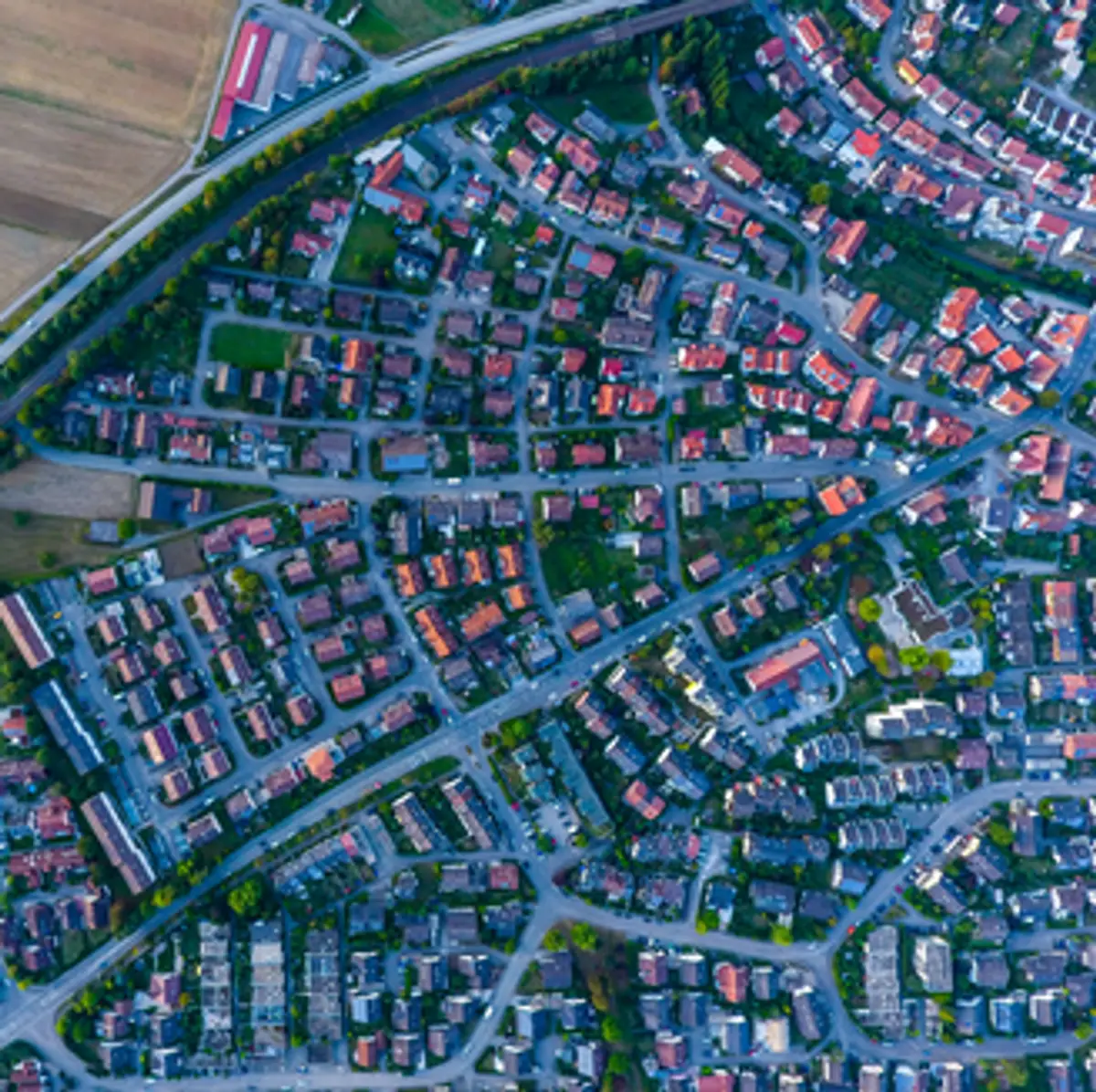
The problems that have arisen over the years in the cities have led to the emergence of the concept of utopia as a solution. Cities and the lives in them have been tried to be changed with utopian architectural projects.
Utopias
Utopia is an ideal and perfect place setting without mistakes. Since it consists of a non-existent world, it contains ideas that will oppose the conditions of the periods. It is not only concerned with society but also includes architecture. Ideal societies and ideal cities coexist. It is involved in architecture with future lives, cities, and design processes.
“The home of the Utopian impulse was architecture rather than painting or sculpture. Painting can make us happy, but building is the art we live in; it is the social art par excellence, the carapace of political fantasy, the exoskeleton of one’s economic dreams. It is also the one art nobody can escape.” (Hughes, 1980)
Architects’ Utopias
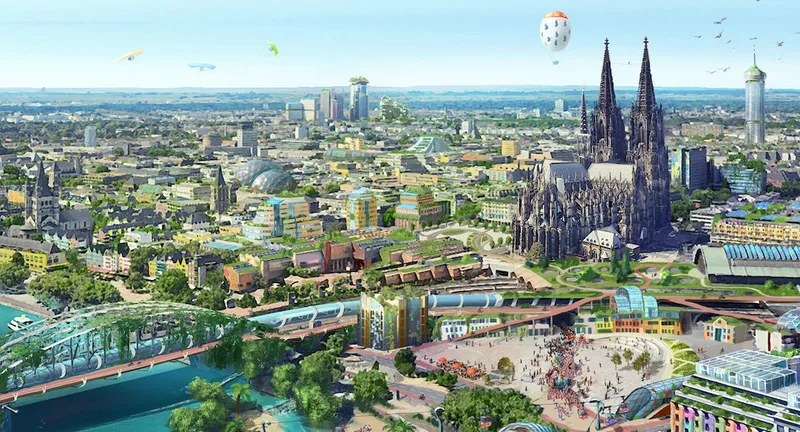
In the 15th century, urban design was developed in the search for the ideal during the Renaissance. Ideal cities are depicted in the form of stars. Visionary architects such as Étienne-Louis Boullée emerged in the 18th century. They designed symbolist, majestic buildings that were considered utopian to be built using large-scale geometric forms. At the beginning of the 20th century, the futuristic architecture movement emerged. They imagined modern worlds by using new materials and production techniques with technological developments. Antonio Sant'Elia, one of the idol architects, thought of Città Nuova as full of high skyscrapers and industrial elements. After the 1960s, pop culture studies emerged with neo-futurists' manifesto works. Archigram established. Within the framework of the possibilities that the developing technology can provide, a more intense and different lifestyle has been sought.
Anti-Utopias (Dystopias)
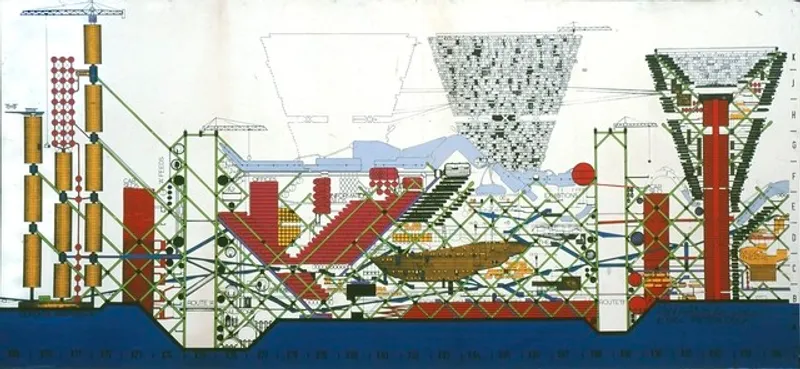
Dystopias have a more pessimistic outlook on the future. They believe that the future world will be a nightmarish place and that technology is dangerous. They criticize the great changes and chaos in the cities where anarchy prevails in human-urban relations. In dystopias, instead of personalization, uniformity, and placelessness, lack of identity can be emphasized. Science Fiction is a pioneer in producing dystopian products.

Science Fiction Cinema
The architectural structures and city images visualized in science fiction cinema, beyond being a superficial background, open the doors of a fictional world that provide the opportunity to criticize the present and reveal dreams and fears for the future. With this aspect, science fiction cinema offers people the most suitable ground for understanding the phenomenological history of the spatial and temporal transformation of the city. (Sobchack, 1997).
Besides architecture, Science fiction speculates about the future in cinema or literature. It shows us the effects of technology on space design with movies.
Creating space is a common issue in cinema and architecture so these 2 fields feed each other. Architects' drawings and paintings allow 3D animation thanks to cinema, that is, they can solve already thought-out science fiction ideas in a cinema or create new worlds and spaces that are thought to be realized in the future. But of course, producing space in the cinema is more flexible than architecture. There are references to future locations in some films, for example:
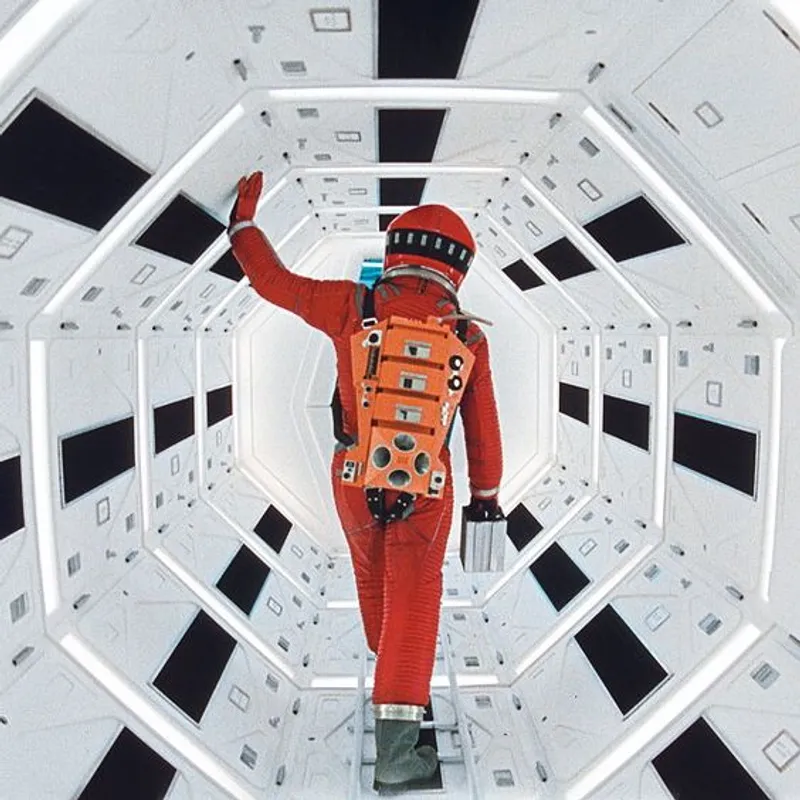
In the city depiction in the movie Metropolis directed by F. Lang, the bad effect of technology on human life is shown. It does not show that the past has been erased and replaced by new super technologies, but that the past and the future have collapsed on top of each other and the city has become ruined and devastated. The lack of identity of place is emphasized in the movie Playtime directed by J.Tati. Unrelatedness makes it difficult to understand where it is. The locations depicted in the movie Brazil, directed by T. Gilliam, take place in a nightmarish atmosphere. Reference is made to the excess of technology and gigantic structures stand out. Other movie examples: Alphaville- J.L. Godard, 2001 A Space Odyssey-Kubrick, Blade Runner- R. Scott, Delicatessen-M. Caro J. Jeunet, Inception-C. Nolan
Physical Representation of Utopias (Heterotopias)
Heterotopias, on the other hand, are the formation of original resistance efforts, different and opposing things in a space where social order is sought. They are places that exist in real space and that are also divided in time and space. Foucault distinguishes these two concepts through the metaphor of "mirror". The mirror is a utopia because it is a place without a place. A kind of shadow formed in a place where there is no mirror image, in an unreal space that opens virtually behind the surface; mirror utopia. But the mirror is also a heterotopia to the extent that it has the effect of a kind of return to the place. Neighborhoods that contain more than one time and place in a single real space such as museums, libraries, cemeteries, prisons, retirement homes, cinemas, theaters can be examples of heterotopia. ” (Foucault, 1997)
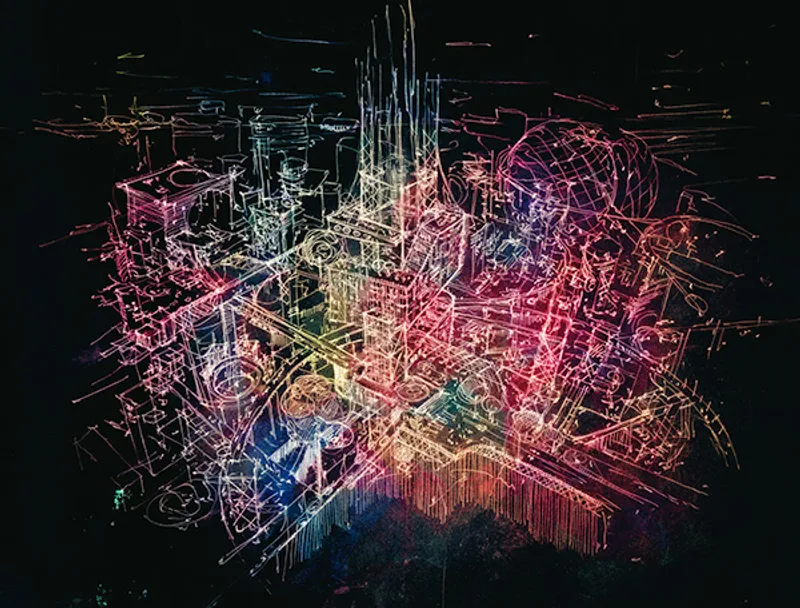
Three of these ways, utopias, cause collective spaces, dystopias cause collapse, and heterotopias cause physical spaces that act as other spaces alongside existing spaces, allowing for different expansions about the architecture of the future.


Popular Articles
Popular articles from the community


Studio Andre Lenza Shrinks a Family Home into a Single-Storey Goiânia House Behind Timber Screens
A couple's move to a smaller home in eastern Goiânia becomes a single-storey concrete house wrapped in timber screens, around a plunge pool and garden.

Some Thoughts Clamps Felt and Metal Together to Build a Modular Eyewear Store in Wuhan
A 98 m² MOLSION eyewear shop in Wuhan builds its displays from stacked red and grey felt modules held by custom triangular metal fasteners.

U.GA Architects Wraps an Oval Rooftop Pool in Curved Board-Formed Concrete on Busan's Jeollidan-gil
In Busan's Jeonpo-dong, a 454 m² mixed-use block stacks a neighborhood facility, guest rooms and an oval rooftop pool inside spiraling concrete walls.

Tenter Studio Steps a Valle de Bravo Holiday House Down a Slope Around a Void Built for Pausing
In Valle de Bravo, Mexico, two dark brick volumes descend a steep plot and frame a deliberate gap, keeping the landscape quiet rather than staged.

Similar Reads
You might also enjoy these articles

3XN, B+H and ZHUBO Design Shape the Shenzhen Natural History Museum as a Walkable Geological Landscape
Beside Yanzi Lake in Shenzhen's Pingshan District, a 105,300 m² museum folds its galleries under a public roof that behaves like a river-carved hillside.

Not a Number Architects Splits a Halkidiki Stone House into a Tower and a Long Wing Beneath Ancient Olive Trees
A 200 m² retreat in Halkidiki, Greece, reworks the rubble stone house as a tower, a planted bar and porches threaded through ancient olives.

Cambra Buró Sets a Kuwaiti Coastal Villa on a Sculpted Travertine Plinth and Lets the Upper House Float
In Abu Al Hasaniya, Kuwait, a 3,000 sqm seaside villa pairs a heavy stone base with clay, cork and walnut to work with the Gulf climate.

Studio Krubka Folds a Butterfly Roof over a Courtyard Garden for a Thai Herbal Medicine Headquarters
In Bang Khae Nuea, on Bangkok's edge, a board-formed concrete office wraps a mossy rock garden and turns wellbeing into a daily walk.

Explore Dystopian Architecture Competitions
Discover active competitions in this discipline


The International Standard for Design Portfolios

The Global Benchmark for Architecture Dissertation Awards

The Global Benchmark for Graduation Excellence

Challenge to visualize a collision of the future and past
Comments (0)
Please login or sign up to add comments
No comments yet. Be the first to comment!