The Rhythm of Seasons
A Farmers' Market Connecting Nature and the City

The Need for Sustainable Urban Agriculture
In modern cities, the demand for fresh, locally produced food is increasing. However, traditional distribution systems involve long supply chains, reducing freshness and limiting direct connections between local farmers and consumers. To address this issue, we need an environment that goes beyond simple agricultural trade—one where urban residents can directly experience nature and farming, fostering self-sufficiency and a deeper understanding of food production
"The Rhythm of Seasons" proposes an innovative farmers' market that integrates the cyclical rhythms of nature with agricultural practices, offering sustainability and educational value. This space serves as a platform connecting nature and urban life, fostering a healthy food culture within the local community.
Architectural Concept and Spatial Organization
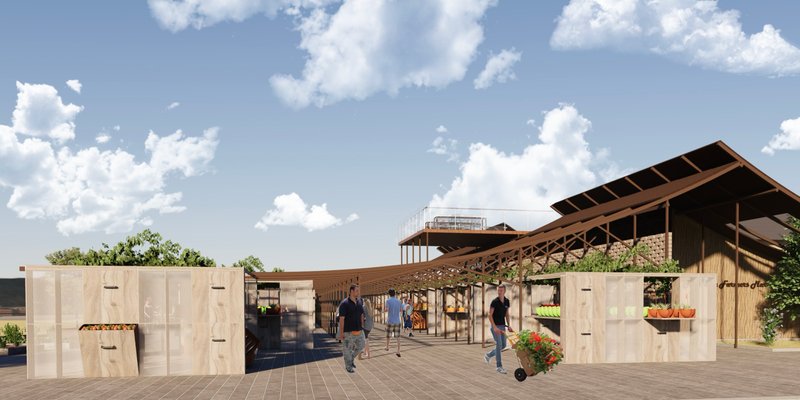
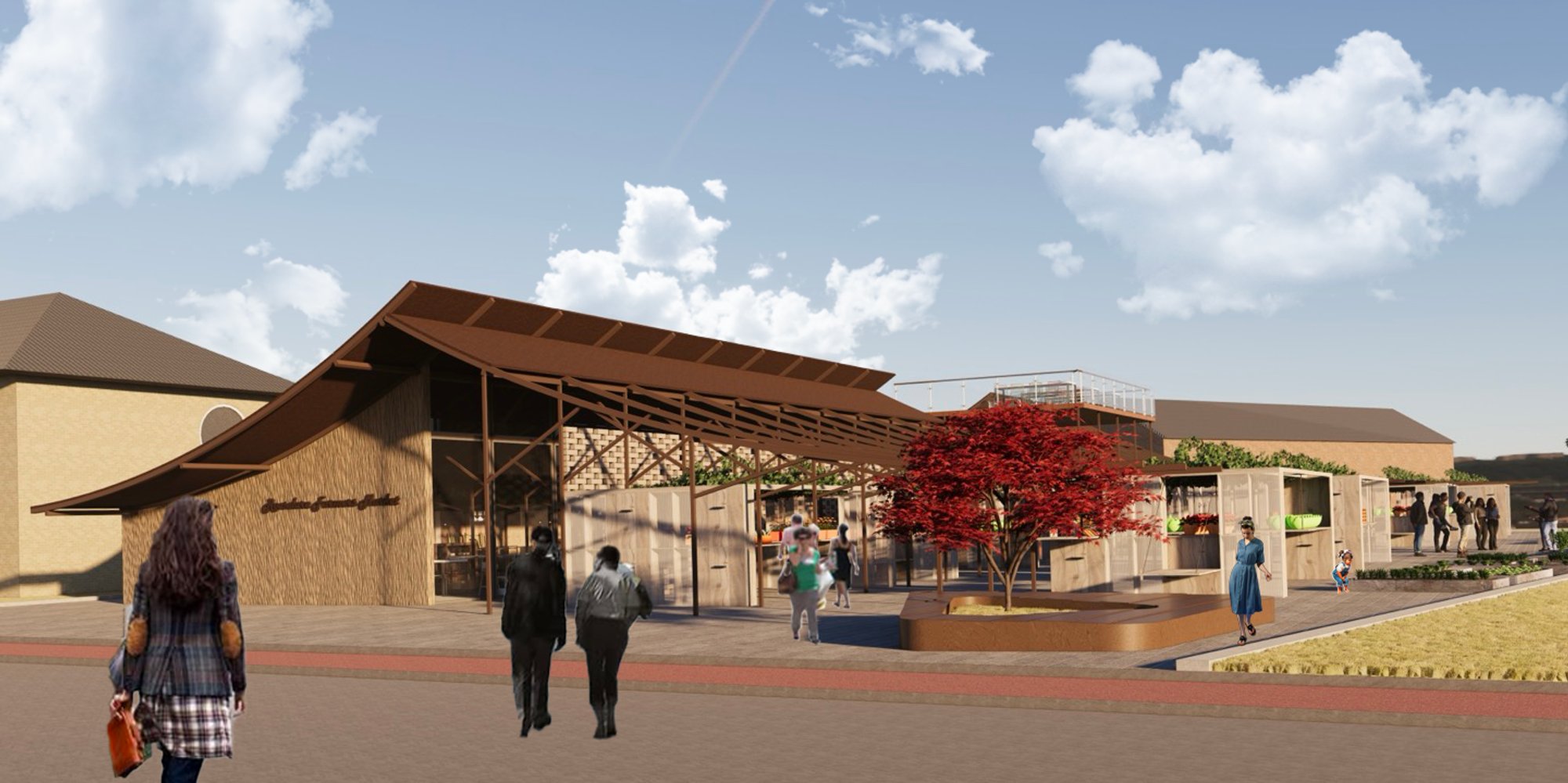
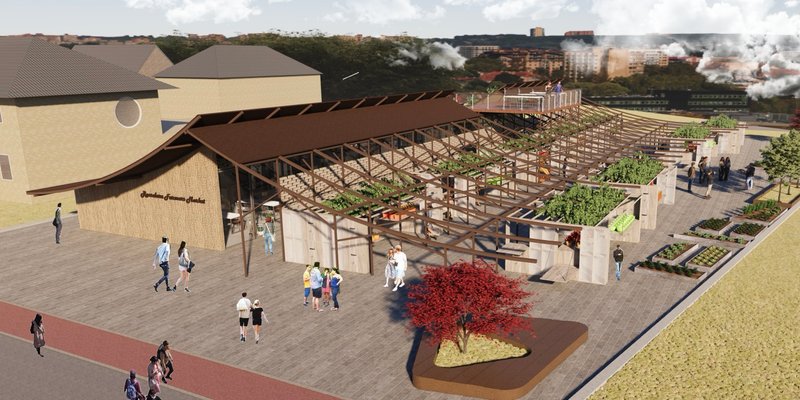
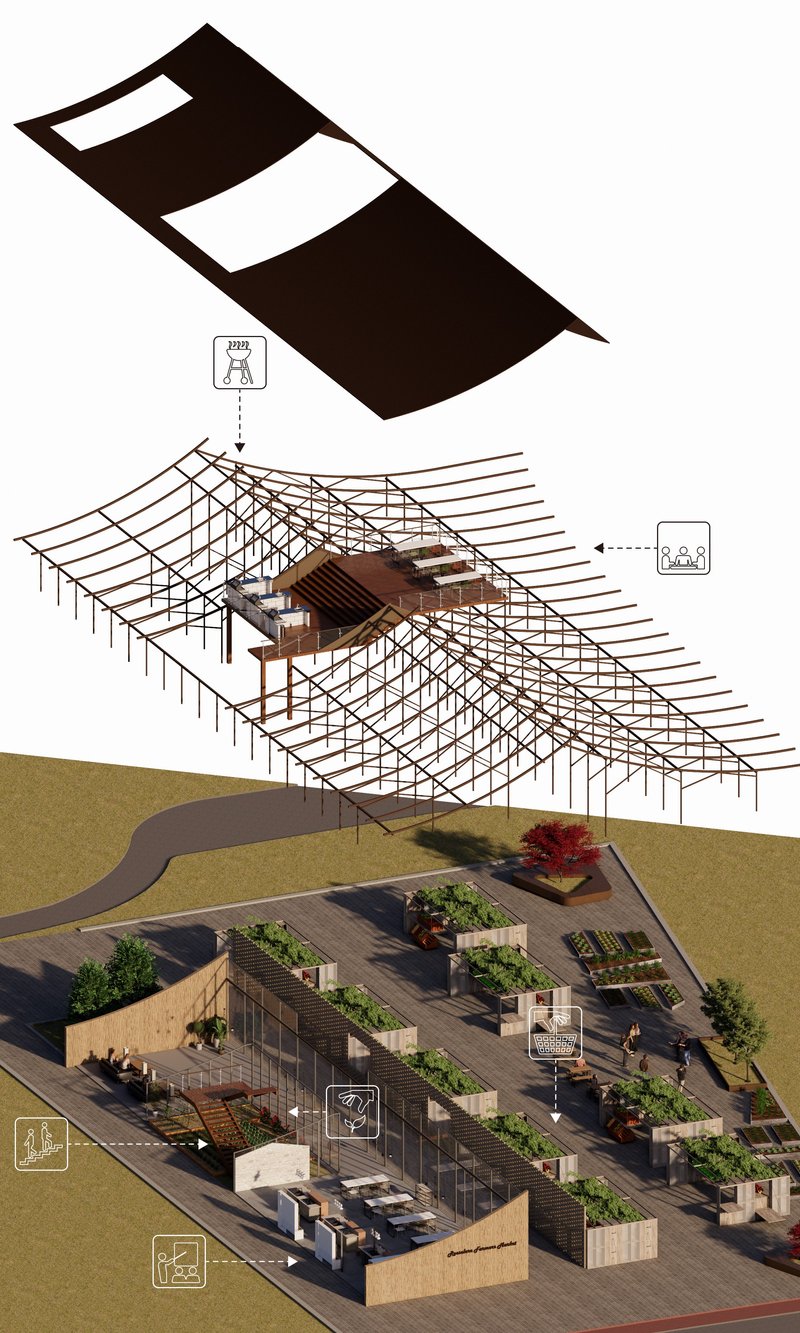
This project incorporates the rectangular site and the gabled roof forms of surrounding buildings to create a design that harmonizes with the existing urban organization while ensuring an efficient space configuration. The gabled roof form, as a modern reinterpretation of traditional agricultural architecture, emphasizes the heritage of farming while incorporating contemporary sensibilities, symbolizing the fusion of past and present.
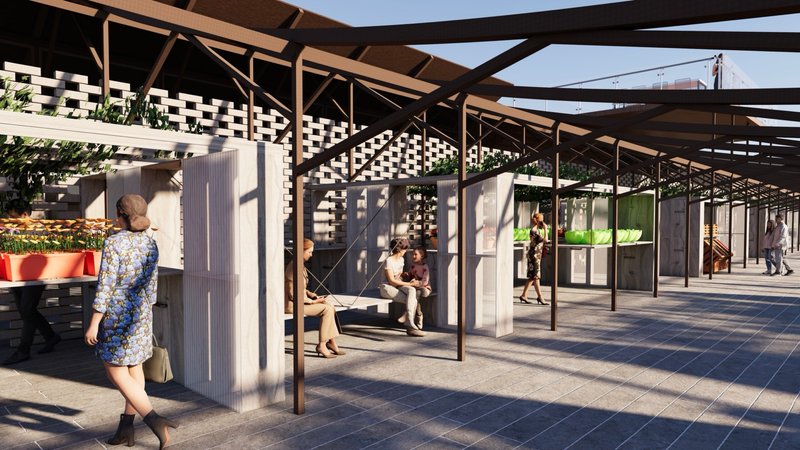
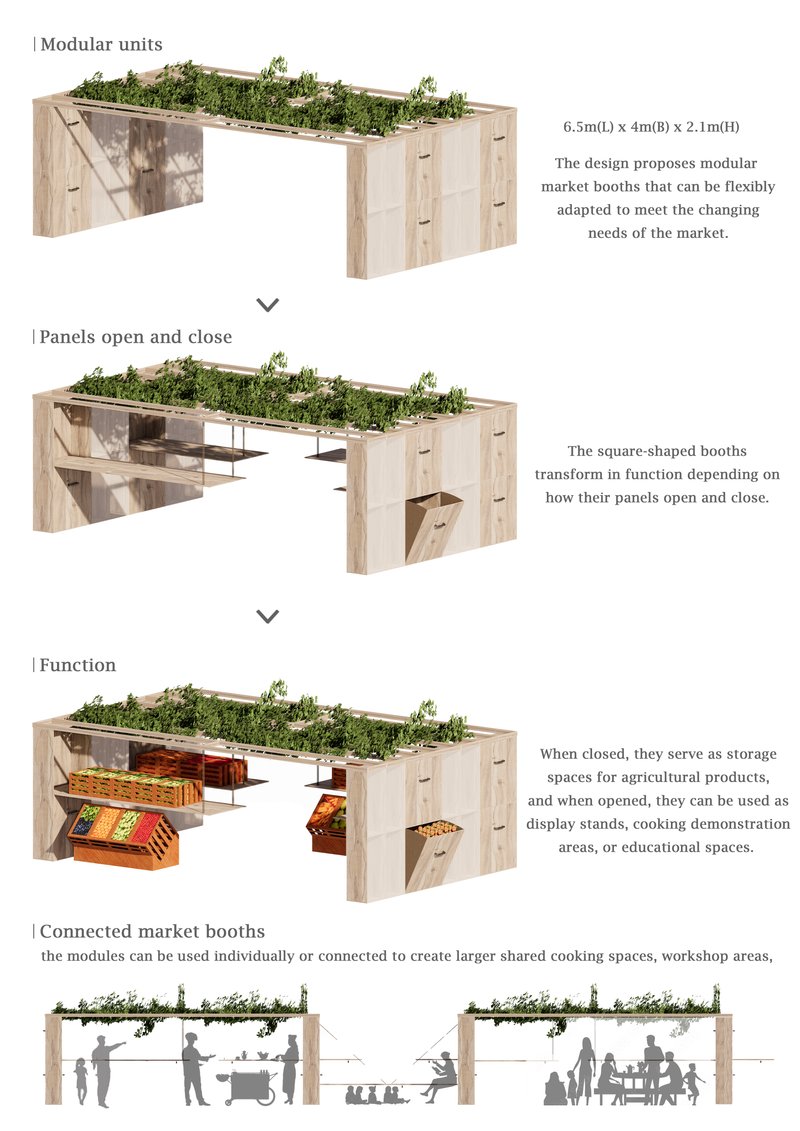
The design prioritizes openness and flexibility by actively utilizing structural frames, walls, and semi-external spaces. This approach encourages natural ventilation and daylighting while seamlessly connecting the community and market spaces. Visitors can experience this organic flow, naturally immersing themselves in both agriculture and the communal atmosphere. As part of this approach, the design proposes modular market booths that can be flexibly adapted to meet the changing needs of the market. The square-shaped booths transform in function depending on how their panels open and close. When closed, they serve as storage spaces for agricultural products, and when opened, they can be used as display stands, cooking demonstration areas, or educational spaces.
Additionally, the modules can be used individually or connected to create larger shared cooking spaces, workshop areas, and more. Lightweight materials such as wooden panels and polycarbonate ensure easy mobility and transformation, while ventilation and waterproofing considerations create an optimal environment for storing fresh produce.
he entrances and circulation paths are carefully designed to guide visitors from the village into the market intuitively, allowing them to explore the space gradually through controlled openness and enclosure. These architectural gestures create a seamless connection between agriculture and urban life, nature and people, fostering a space that is both functional and flexible.
The Relationship Between Reeds and Agriculture
The name "Roeselare" originates from the area's historical landscape of wetlands and reed fields. "Roes" is derived from an old Dutch word meaning "reed," and "Lare" signifies an open space or settlement. This etymology reflects the relationship between nature and human, a concept central to this design.
Reeds are one of the best representations of nature’s rhythm, thriving and propagating primarily in spring and autumn. This growth cycle parallels the fundamental agricultural principle of "sowing in spring" and "harvesting in autumn." It illustrates the process of nurturing new life in accordance with the seasons.
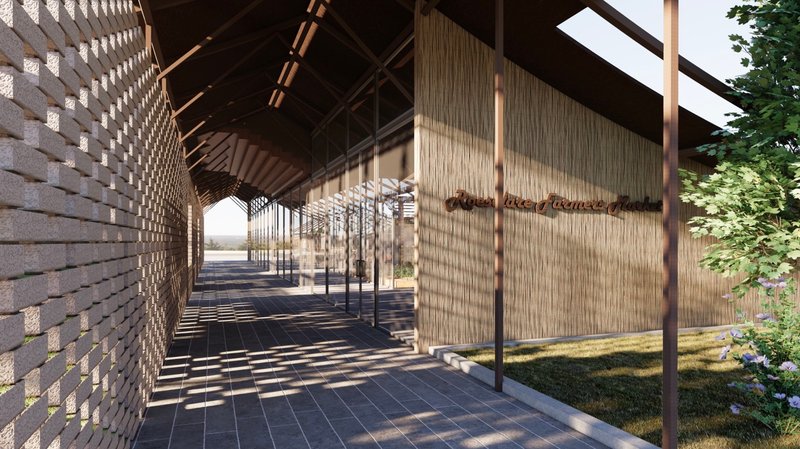
Inspired by this, the facade incorporates reeds to create a texture that changes with the seasons. Rather than being a mere exterior element, the facade extends into an interactive experience of nature’s cycles, where the movement and texture of reeds offer both visual and tactile engagement. Visitors entering the market through this façade are naturally drawn into the cyclical flow of agriculture, gaining a renewed awareness of their connection to nature.
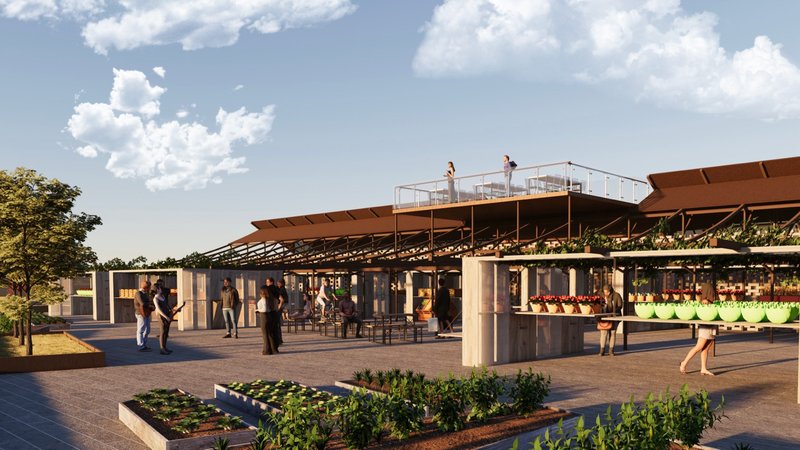
A Circulatory Structure Reflecting the Seasons, A Path Connecting People
This design integrates the agricultural cycle—sowing, growing, harvesting, and consuming—into the spatial experience, allowing visitors to immerse themselves in the natural flow of time. To achieve this, the internal and external spaces are organically arranged to facilitate education, hands-on experiences, community activities, and the sale of produce in a sequential flow to enhance spatial continuity.
Visitors are guided through the market along a circulation path designed to flow the passage of the seasons. This intentional journey allows them to experience seasonal changes and the agricultural cycle firsthand.
The first floor embodies the moment when seeds sprout beneath the soil, symbolizing the birth of new life. The entrance facade, adorned with green reed patterns and sprouting imagery, conveys the vitality of spring. In the experiential zone, visitors can plant seeds and observe their germination process. The low ceilings and soft indirect lighting create an atmosphere reminiscent of seeds germinating ground, while the central hall, filled with lush greenery, captures the warmth of summer through natural light.
"The stairs from the first to the second floor are more than just a passage—it serves as a 'Bridge of Seasons.' The staircase allows visitors to observe the process of seeds taking root beneath their feet, while the railings feature artwork depicting the harvest season, visually evoking the richness of autumn."
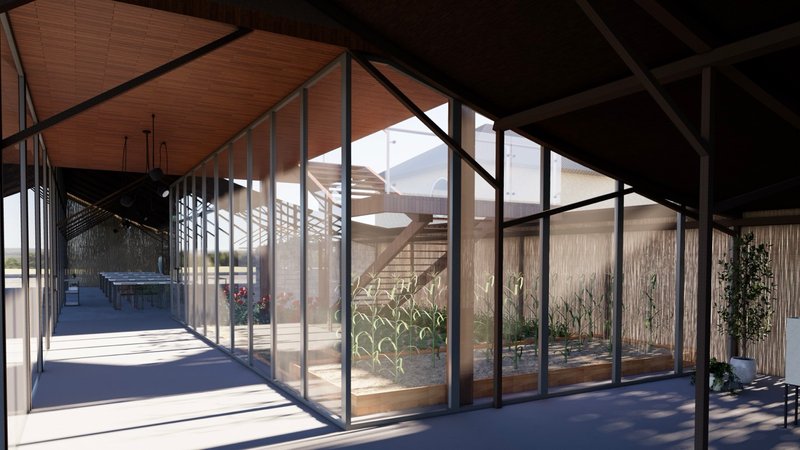
"The second floor is a space for celebrating the harvest. The rooftop garden in the harvest zone allows visitors to pick fresh produce themselves, while the community kitchen fosters interaction by offering a space to cook and share meals using freshly harvested ingredients. Designed with warm materials and tones, the community zone provides a cozy environment where visitors can gather, communicate, and unwind, embracing the warmth of winter."
A Future-Oriented Farmers' Market Connecting Nature and the City
This project redefines the traditional farmers' market by integrating educational and experiential functions that promote local agriculture. Urban residents are encouraged to embrace the cycles of nature and the lifestyle that comes with it. Through architectural elements such as lighting, materials, vegetation placement, and spatial openness, visitors can experience the essence of each season—anticipating the promise of planting seeds, the lushness of summer, the abundance of autumn, and the warmth of winter.
Ultimately, "The Rhythm of Seasons" will serve as a warm connection, helping urban dwellers truly appreciate the value of nature and foster an organic relationship with agriculture.