

KOMINORU Design Carves a Courtyard Heart into a Narrow Japanese Townhouse
On an old road in Japan, a timber-screened house wraps living spaces around a vertical garden courtyard that pulls light deep inside.


Narrow urban lots in Japan have long forced architects into a productive constraint: how to bring air, light, and the feeling of openness into a house that is essentially a sliver between its neighbors. KOMINORU Design answers with House Along the Old Road, a multi-level residence that organizes itself entirely around a central courtyard void. The courtyard is not decorative. It is structural to the way the house breathes, the way it is lit, and the way its inhabitants move through it.
What makes this project worth studying is the discipline with which the courtyard operates at every scale. At ground level it is a planted garden with slender trees. At the upper floors it becomes a visual anchor, framed by steel balconies, glass railings, and walkways that turn circulation into a kind of slow promenade. The timber louvre facade facing the street simultaneously screens the interior from the road and signals that something more considered is happening behind it. The house is a lesson in how a single organizational idea, executed with material clarity, can make a compact footprint feel generous.
A Timber Screen Holds the Street
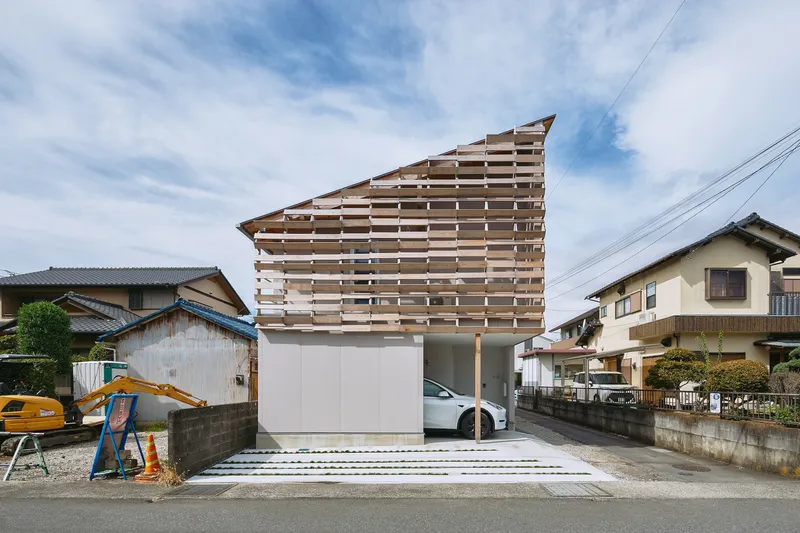
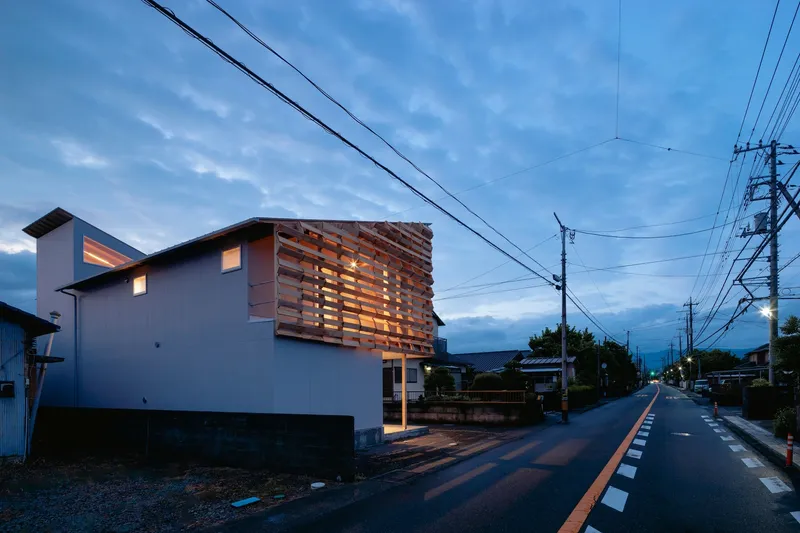
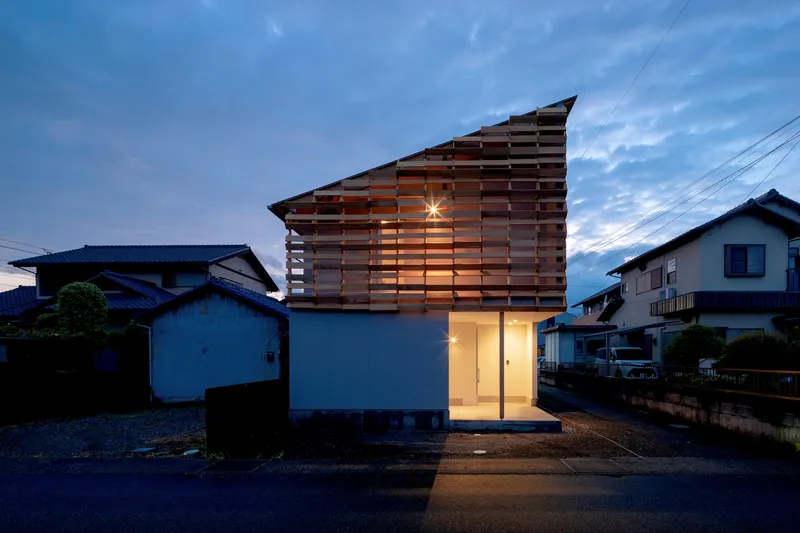
The public face of the house is a wall of horizontal timber louvres set above a white plastered base that conceals the garage. It reads as a warm, layered surface rather than a solid barrier, filtering views in and out while establishing a clear threshold between the domesticity inside and the overhead wires and close neighbors of the old road outside. At dusk the louvres glow from within, transforming the facade into a lantern that subtly announces habitation without exposing it.
The proportions are deliberately horizontal in a street of pitched roofs and ad hoc additions. The effect is calm and grounded. There is no attempt to stand out through form; the timber screen does the work of giving the house identity while remaining deferential to its context.
The Courtyard as Vertical Garden
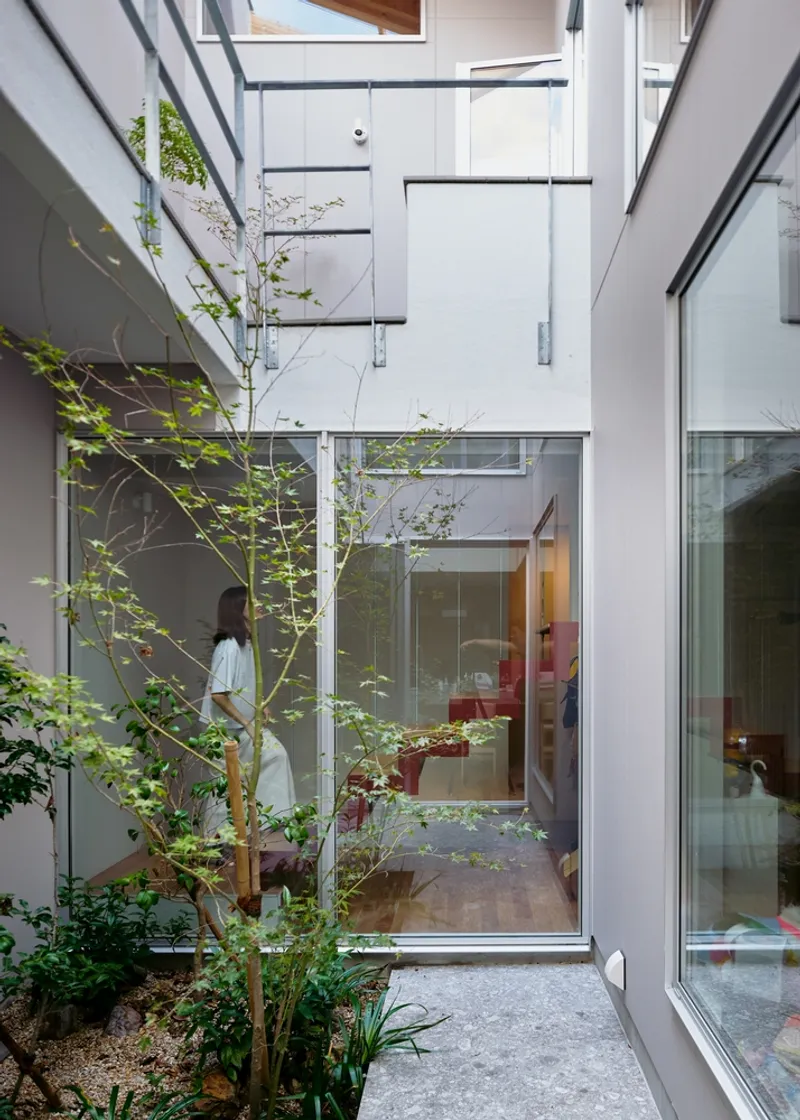
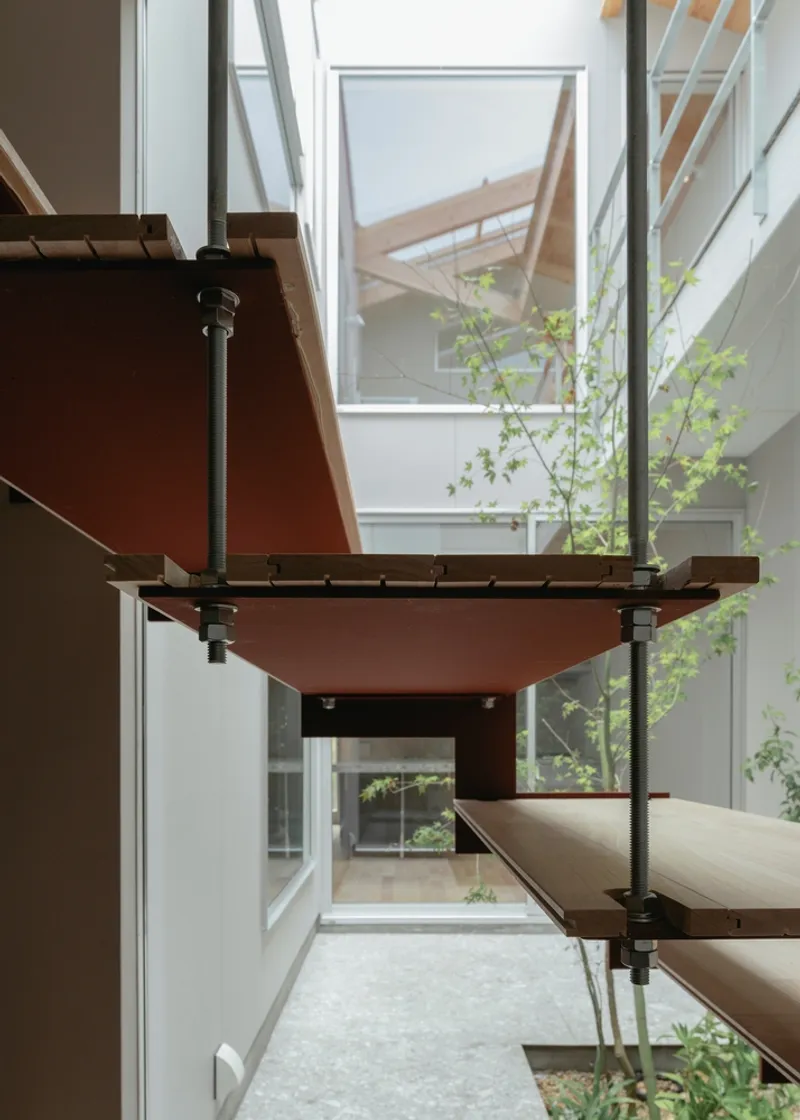
The interior courtyard is the engine of the entire plan. Young trees rise from a ground-level planting bed, surrounded on all sides by glazed walls and steel stair landings. Skylights overhead ensure the courtyard receives direct daylight that bounces off the white and timber surfaces surrounding it. The result is a column of green and light punched through the center of the house.
From the stacked steel balconies on the upper floors, residents look down into this garden as if peering into a small ravine. The planting is intentionally sparse: slender trunks and a few low groundcovers that will mature slowly. The courtyard will change character over years, which gives the house a temporal dimension that fixed finishes cannot.
Stairs That Double as Architecture
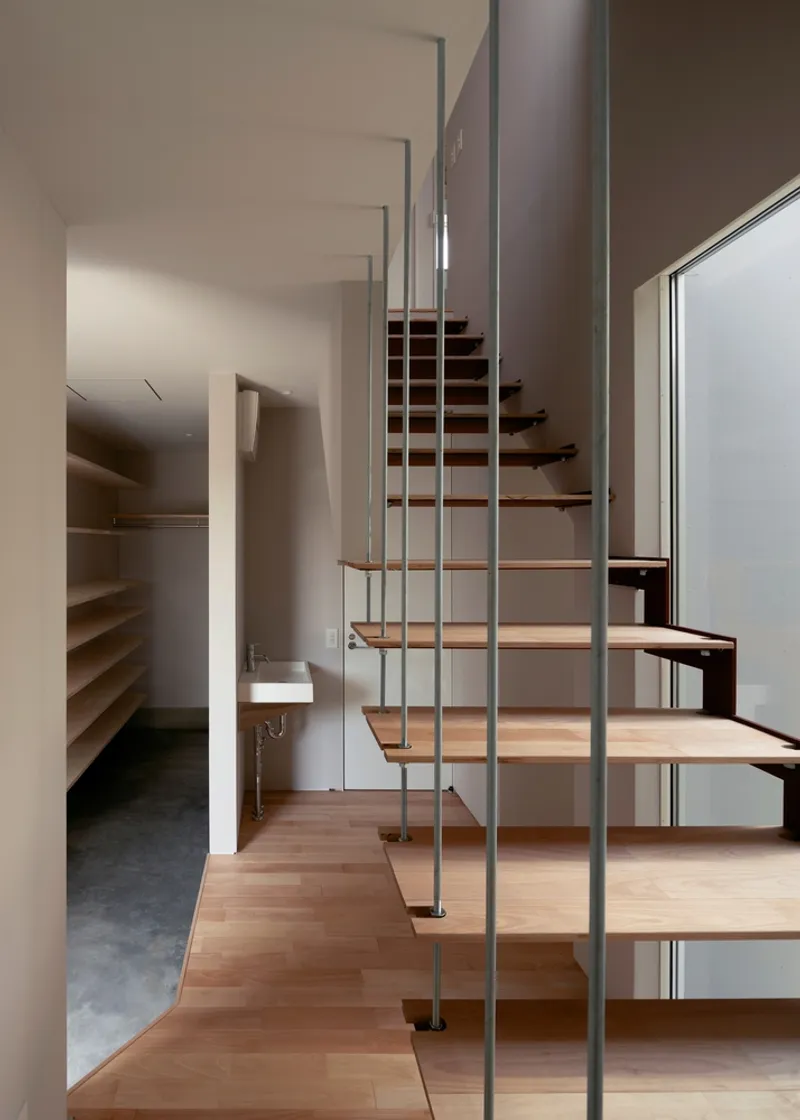
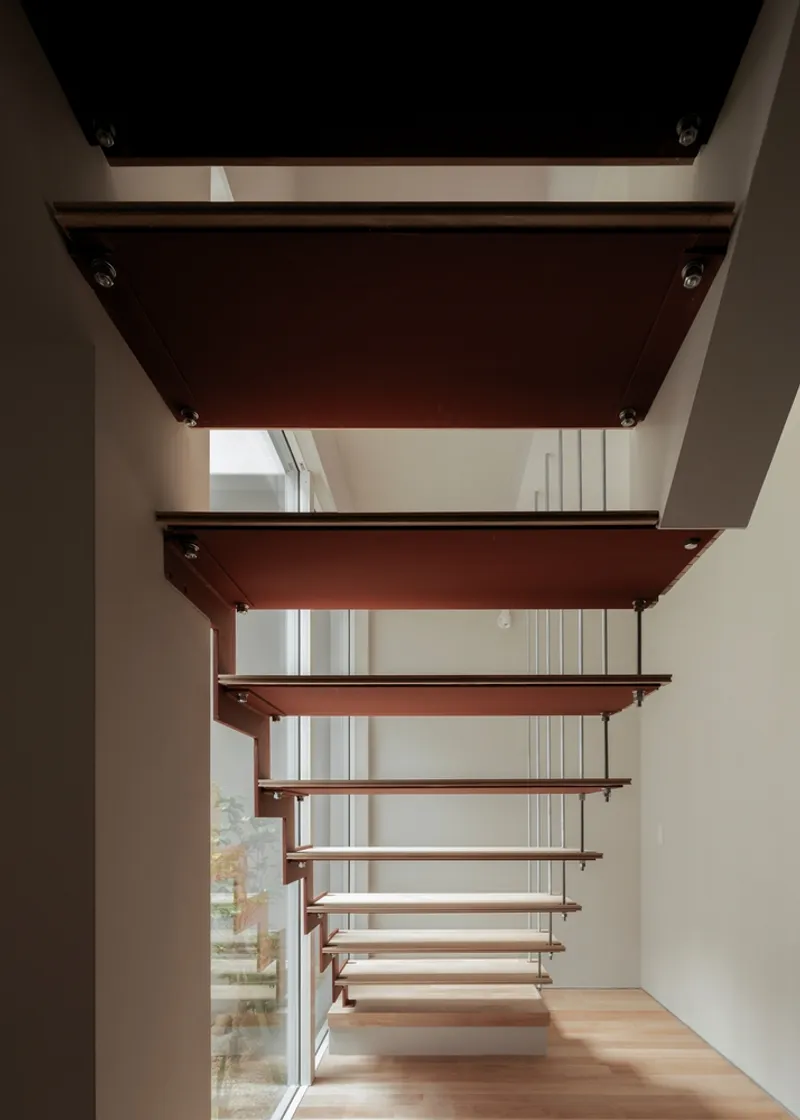
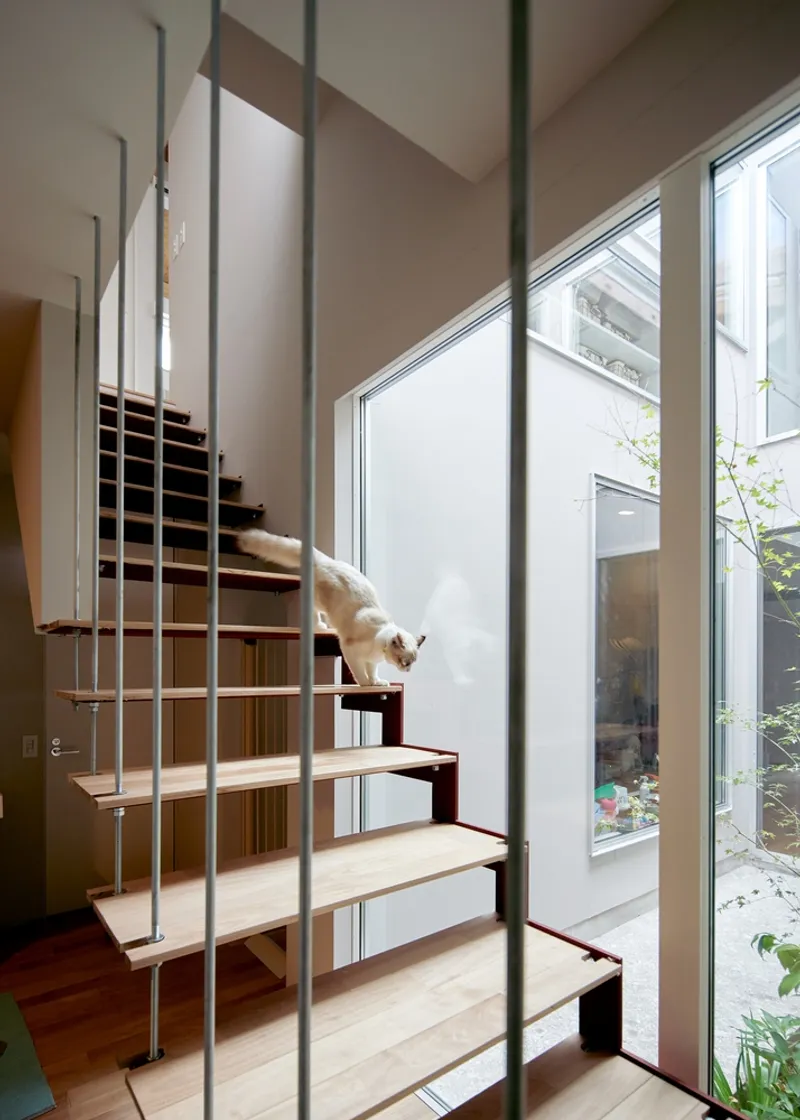
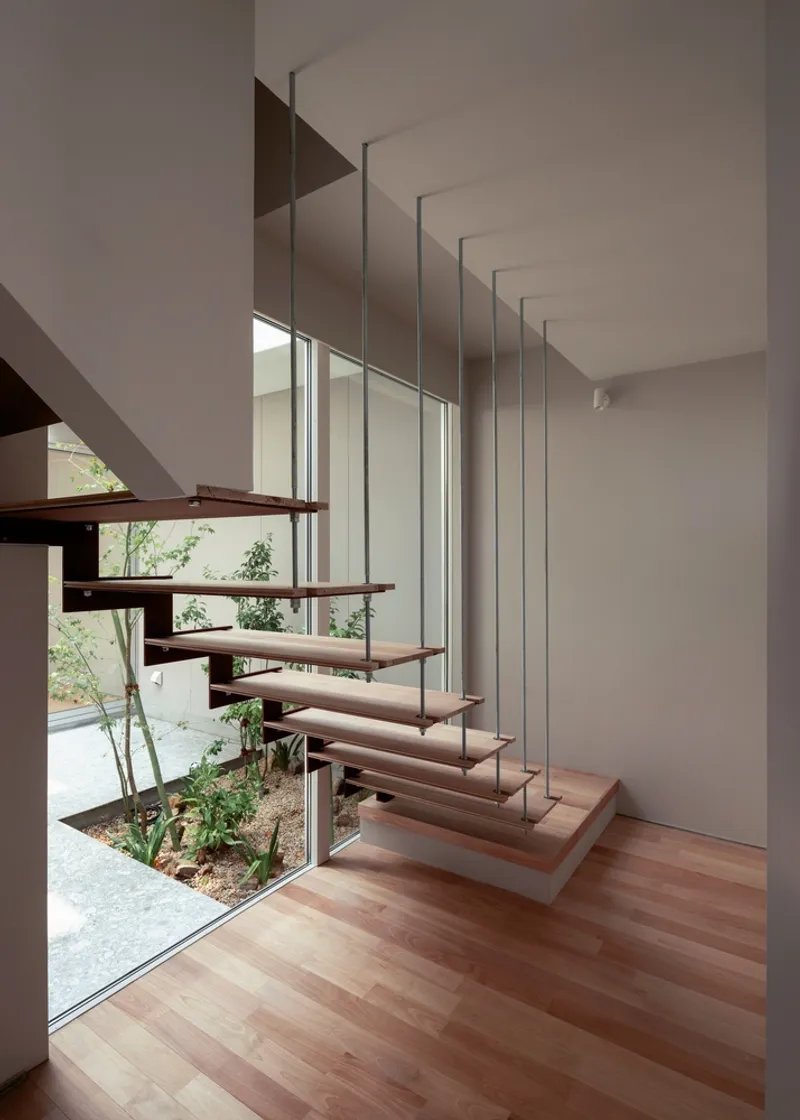
Circulation in a house this compact cannot afford to be merely functional. KOMINORU Design treats the staircase as a piece of spatial infrastructure. Cantilevered timber treads are suspended by slender steel rods, creating an open tread arrangement that allows light to pass through the stair volume rather than being blocked by it. The vertical steel rod balustrades reinforce the visual lightness.
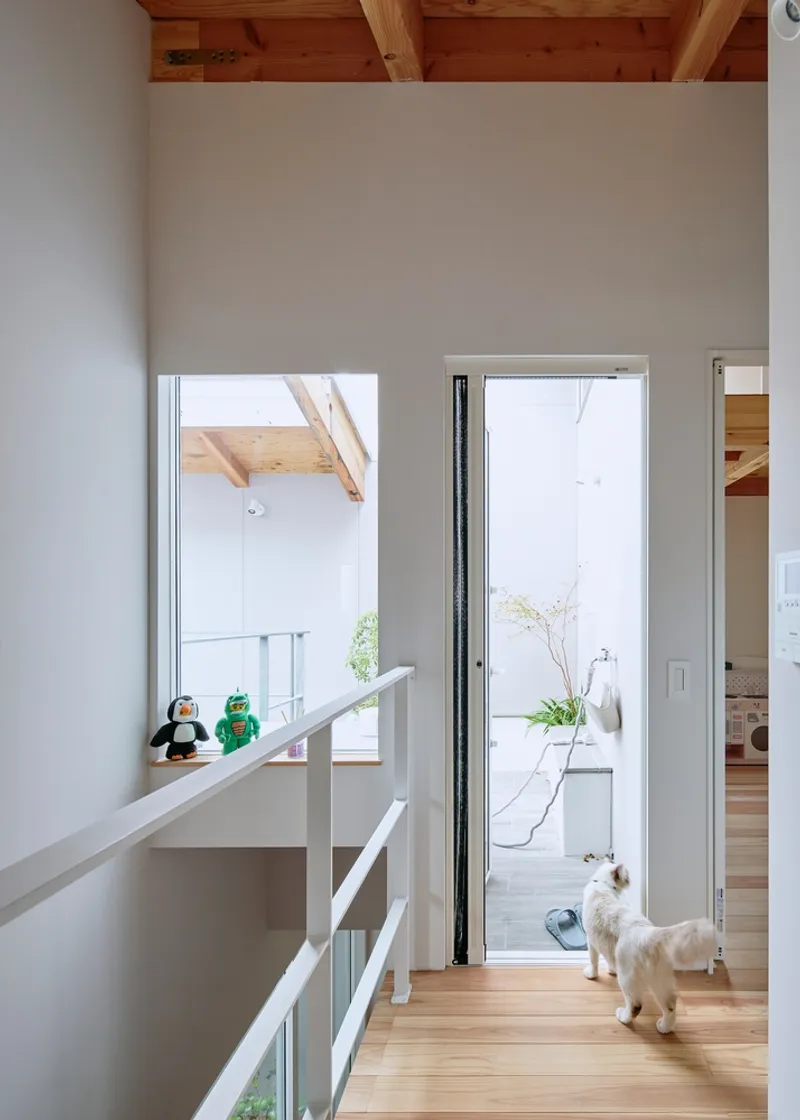
Each stair run is positioned beside the courtyard glazing, so the act of ascending or descending the house is always accompanied by a view into the planted void. It is a simple move that turns routine movement into a moment of connection with the garden. The white cat on the stairs in one photograph is an unscripted reminder that this is, above all, a house that works for its occupants.
Living Spaces Open onto the Void

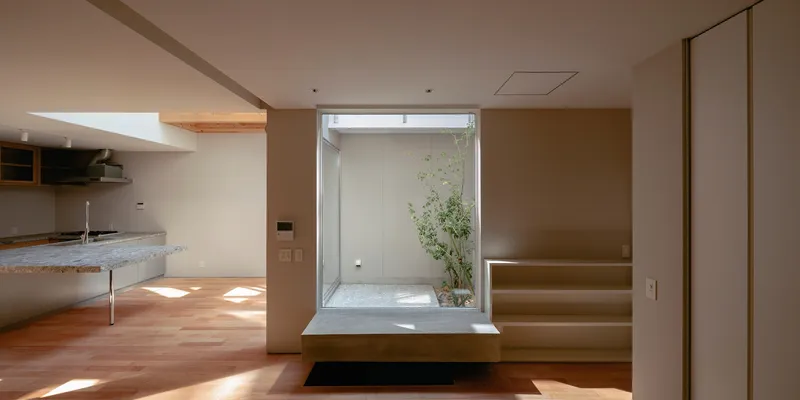
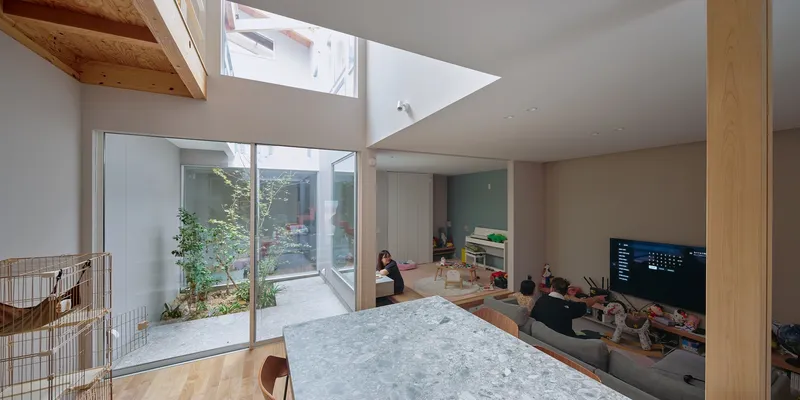
The ground-floor living area is an open plan anchored by a timber column and defined by its relationship to the courtyard. The kitchen, dining, and sitting zones all face the glazed wall, which means every activity in the common space has a sightline to greenery and sky. A recessed skylight above the courtyard floods this level with diffused light even on overcast days.
Timber steps along the courtyard edge create a gentle topographic shift within the living area, defining zones without walls. Warm afternoon light rakes across the timber flooring and catches the grain of exposed structural elements. The palette is restrained: plywood, steel, glass, and white plaster, with material transitions kept precise. Nothing competes with the courtyard for attention.
Intimate Rooms at the Upper Level
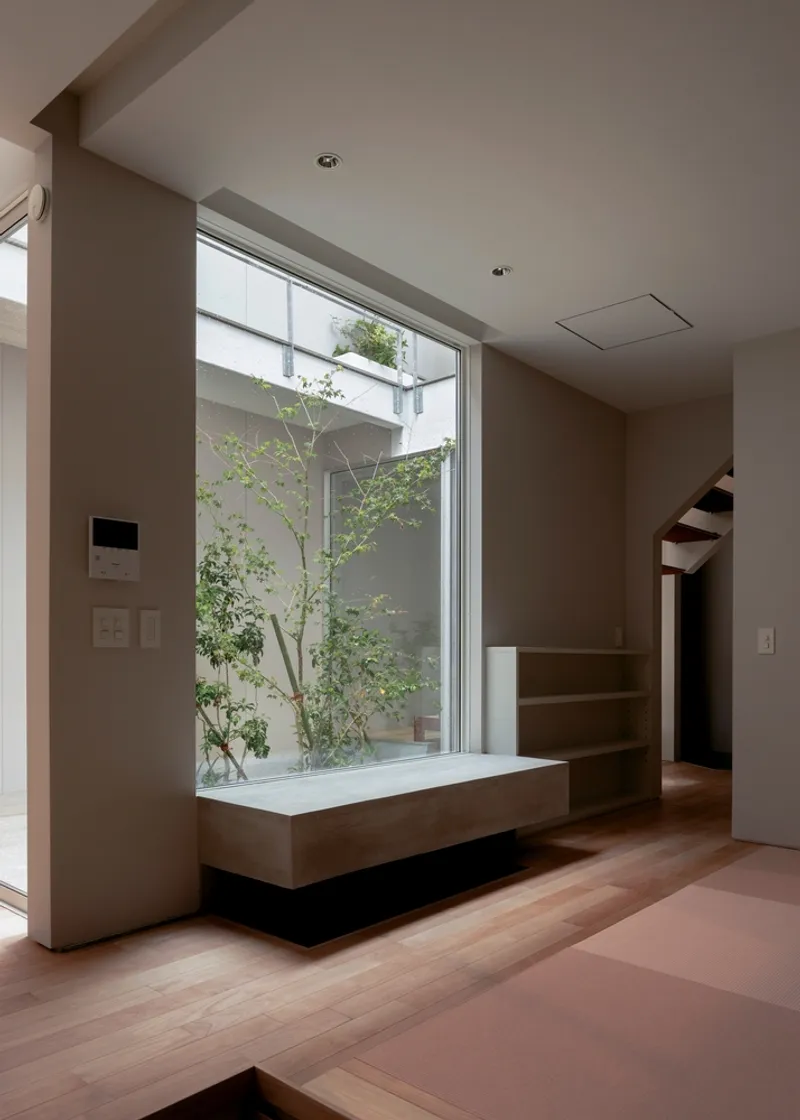
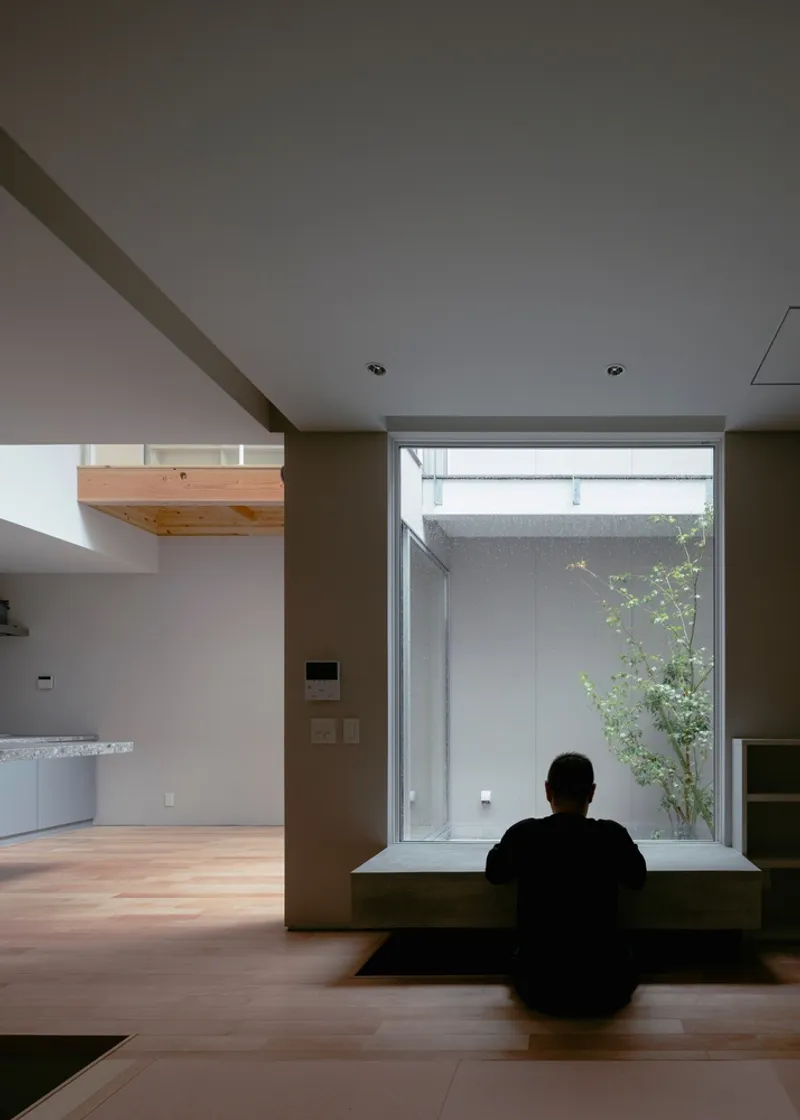
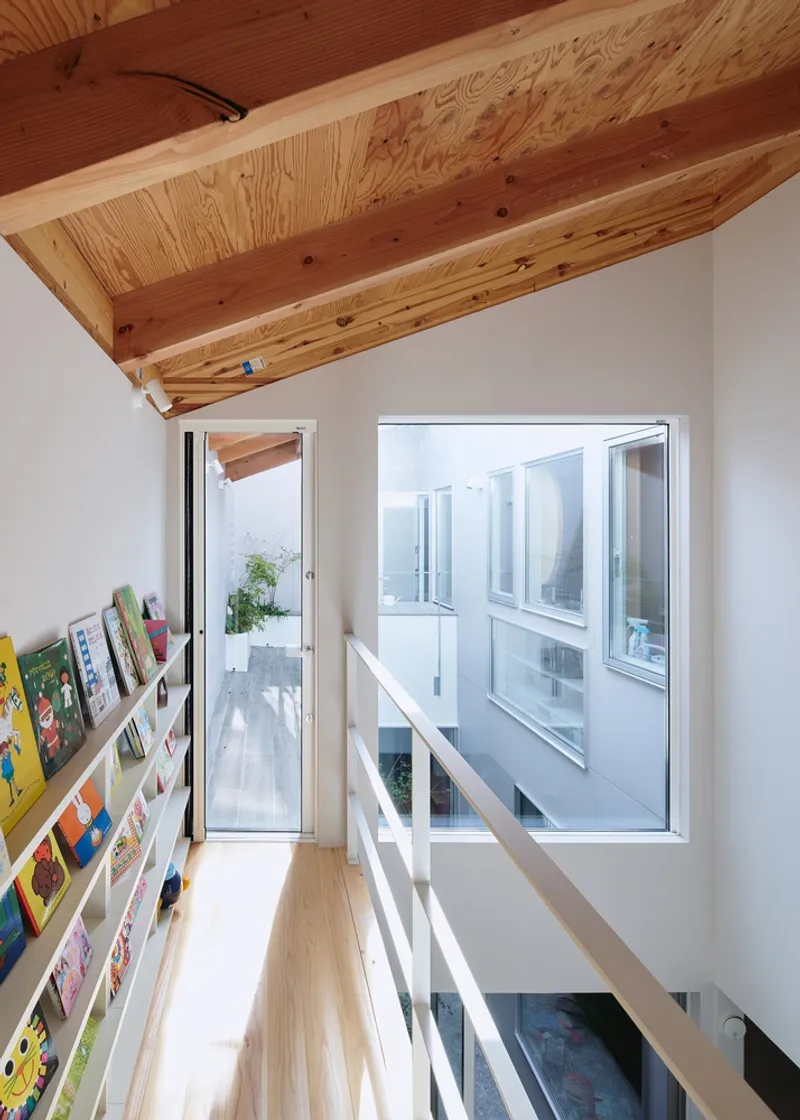
Where the ground floor is open and communal, the upper levels shift to smaller, more introspective rooms. A raised timber platform beside a floor-to-ceiling window creates a place to sit and look into the enclosed courtyard, quietly enough to hear the leaves. A reading nook lined with white bookshelves opens through glazed doors onto the same void, giving even the most private corners a borrowed landscape.
These upper rooms rely on the courtyard not just for light but for psychological relief. In a dense urban context, the alternative would be windows facing directly into neighboring walls. Instead, every room turns inward to the house's own garden, making the boundary between inside and outside something the architect controls rather than the city.
Material Consistency Under a Timber Ceiling
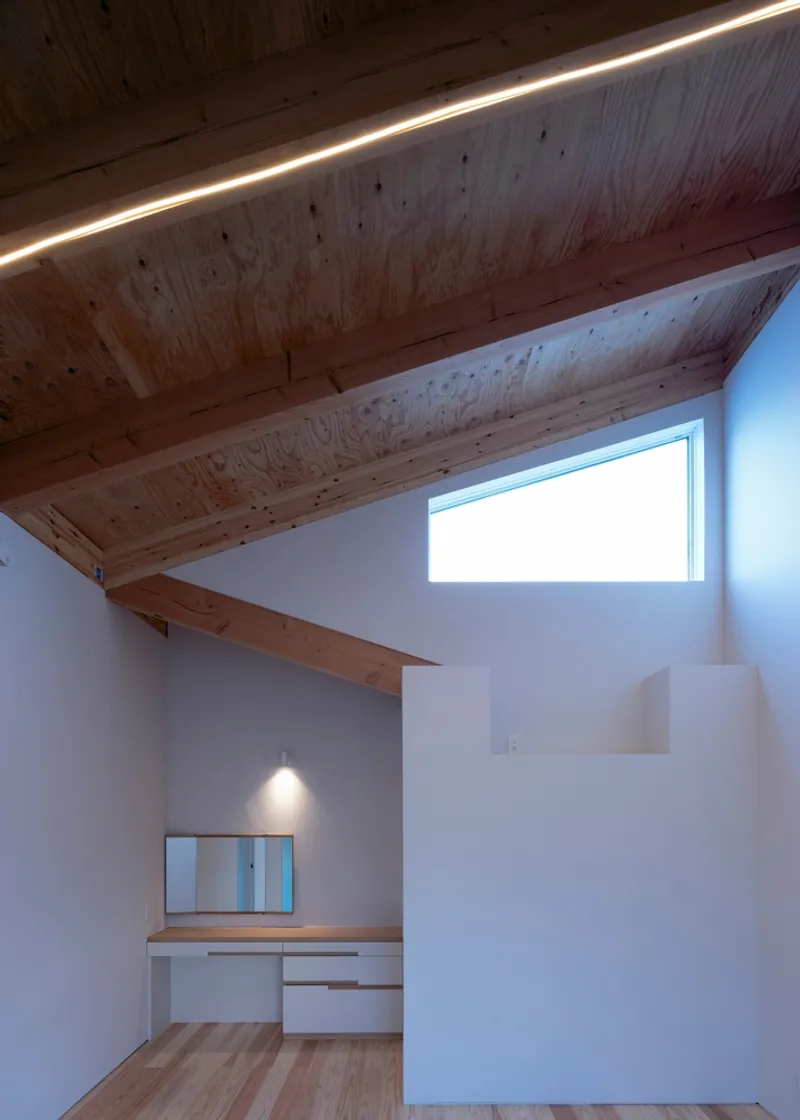
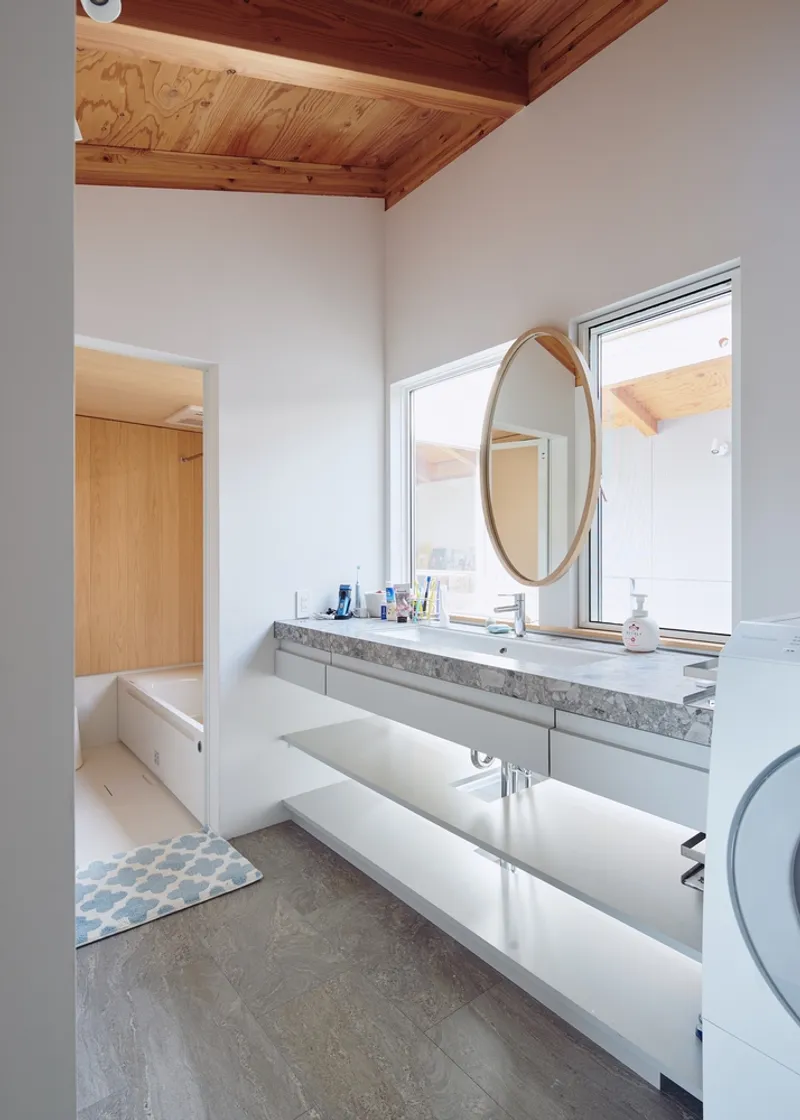
The exposed timber ceiling runs throughout the house, sometimes flat with visible beams, sometimes sloped to follow the roof pitch. Linear lighting strips follow beam lines, and clerestory windows tuck into the highest points to pull in additional daylight. In the bathroom, a vaulted timber ceiling presides over a terrazzo vanity and round mirror, a combination that elevates a utilitarian room into something worth pausing in.
Hallways are not afterthoughts. One corridor shows exposed ceiling beams leading the eye toward the courtyard, where a dog stands mid-frame as if to confirm the house is genuinely lived in. The consistency of material language, timber above, white and timber at the sides, glass toward the courtyard, means the house reads as one continuous environment rather than a series of rooms strung together.
Upper Walkways and Borrowed Views
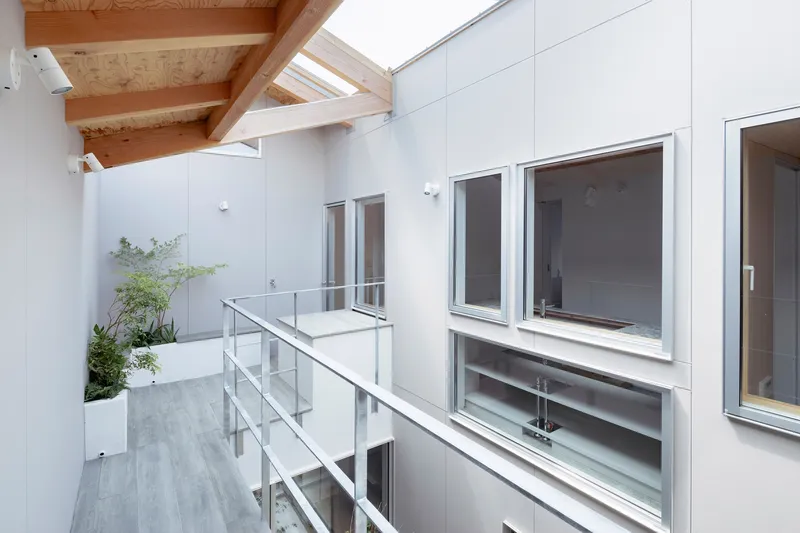
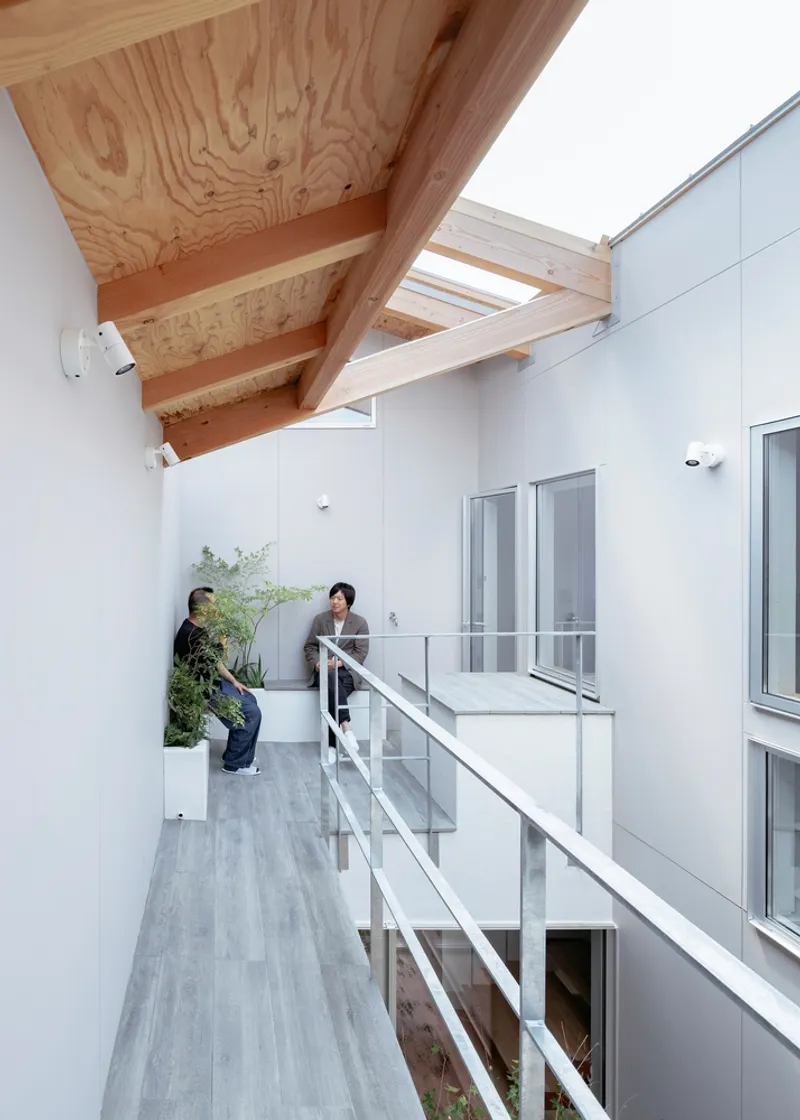
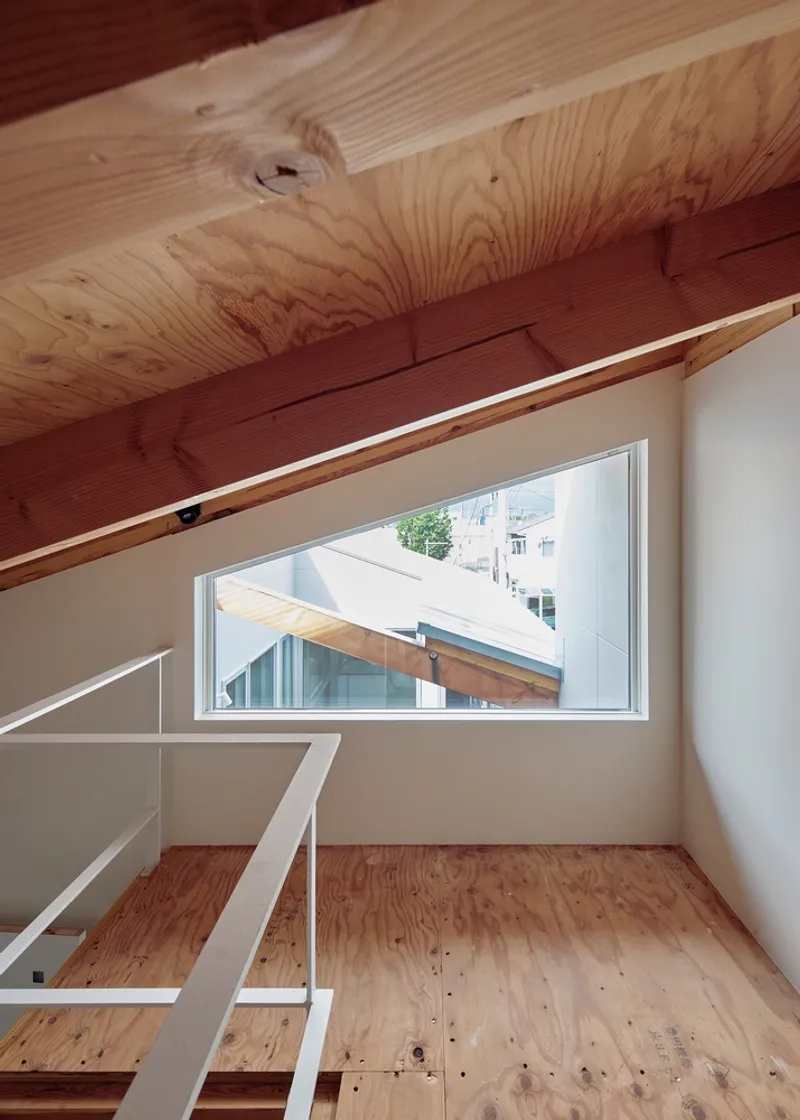
The upper-floor walkways bridge across the courtyard void beneath skylights, with glass railings that keep the space visually continuous. These corridors serve double duty as informal terraces where residents can tend to plants or simply stand and look down. A horizontal window on the top floor frames views out across the neighboring timber roofs, connecting the house back to the broader urban fabric of the old road.
There is a deliberate choreography to the way interior and exterior views alternate as you move through the upper level. One moment you are looking inward to the courtyard garden; the next, a clerestory or horizontal slit frames the sky or a neighbor's roof tiles. The house never lets you forget it sits in a dense neighborhood, but it curates exactly how much of that neighborhood you see.
Plans and Drawings
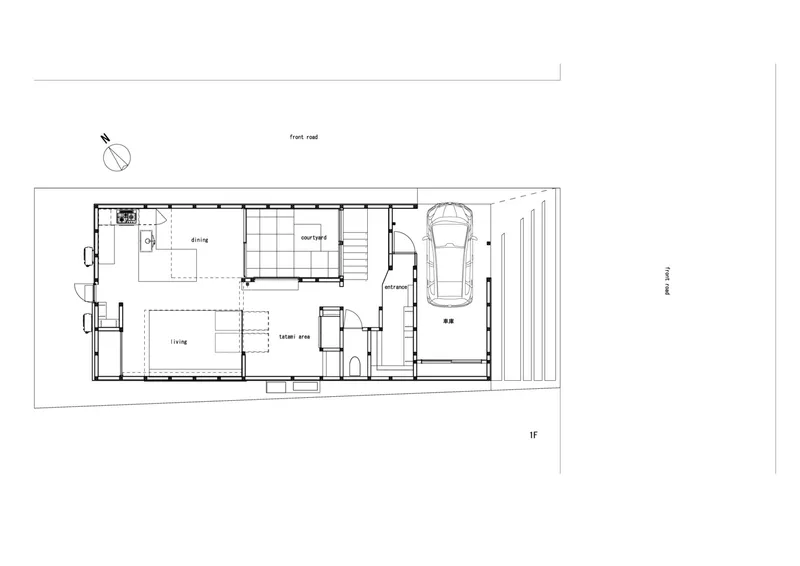
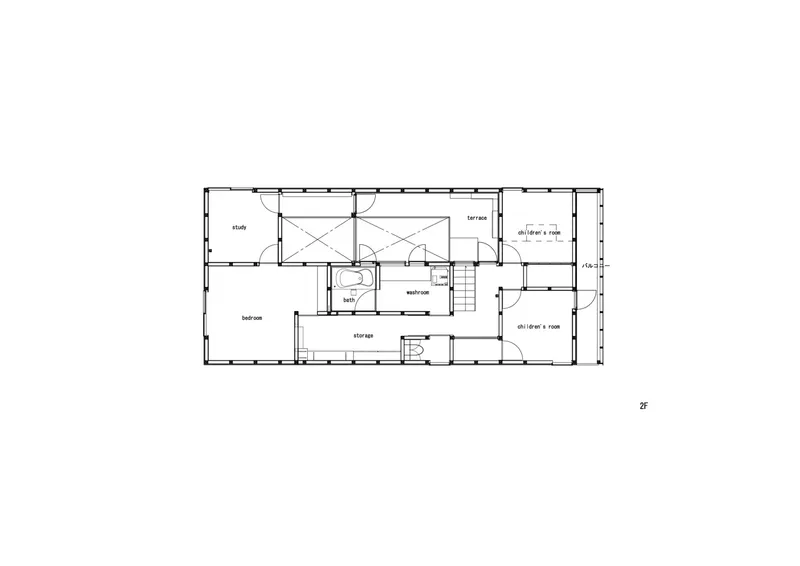
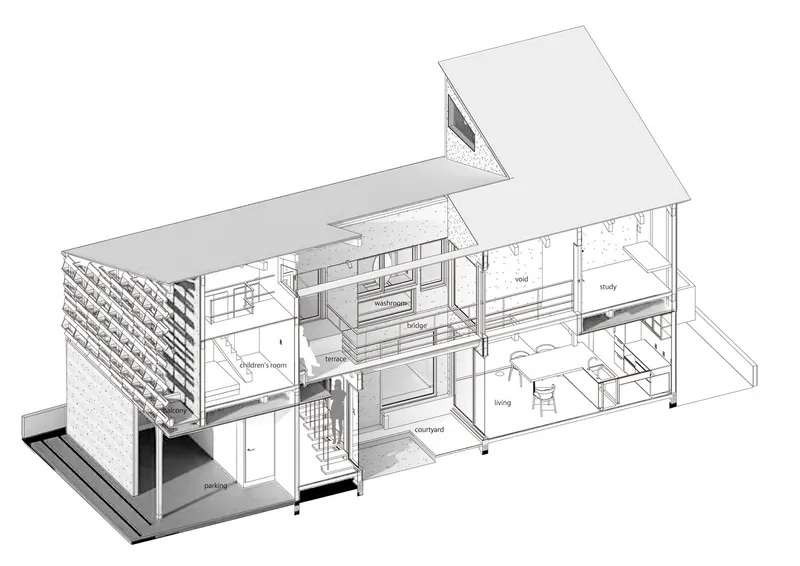
The floor plans confirm what the photographs suggest: the courtyard is not tucked to one side but placed centrally, forcing every major room to address it. The first floor wraps living, dining, and kitchen around the void with the carport at the street edge. The second floor distributes bedroom, study, and bathroom around the same opening, with a terrace that extends the courtyard experience outward.
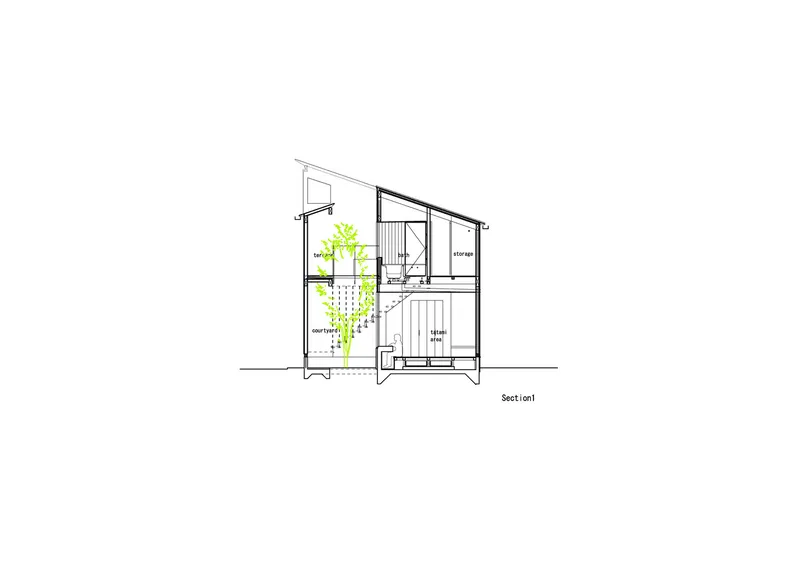
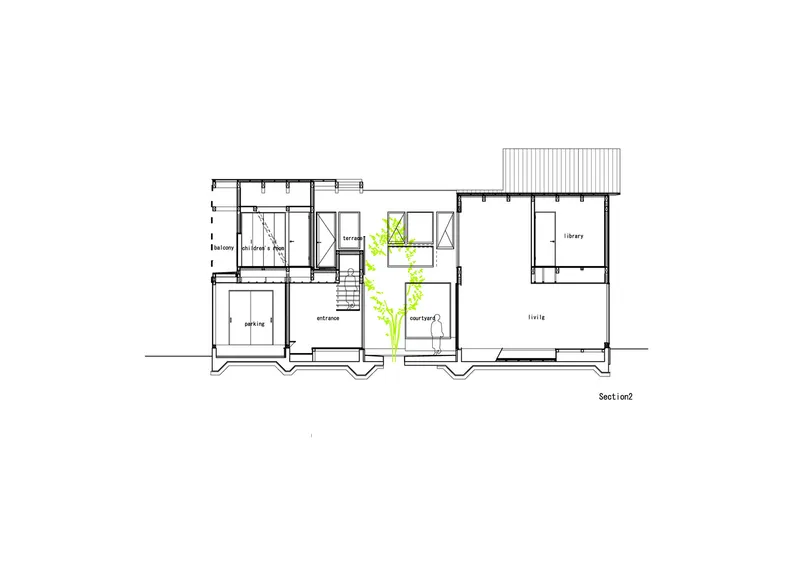
The section drawings are the most revealing. They show how the sloped roof creates varying ceiling heights, how the courtyard planting descends from an upper skylight to the ground-level garden, and how the library volume and living spaces stack to create visual connections across floors. The axonometric cutaway labels program spaces across three levels and makes clear how tightly the house is organized. Every square meter is accounted for, and the courtyard earns its footprint by serving every room around it.
Why This Project Matters
House Along the Old Road is not trying to reinvent the Japanese courtyard house. It is trying to execute one well, with contemporary materials and an honest understanding of how a small family actually uses space. The courtyard does not exist for photographs; it exists because without it, the house would be dark, airless, and turned against its own context. That functional logic gives the design its integrity.
KOMINORU Design demonstrates that the most compelling residential architecture in dense urban Japan still comes from working within constraints rather than against them. A narrow lot, close neighbors, and a modest budget are not obstacles here. They are the conditions that produce the house's best qualities: its layered light, its vertical garden, and its careful choreography of movement and view. The timber screen, the suspended stairs, and the planted void are not formal gestures. They are solutions that happen to be beautiful.
House Along the Old Road by KOMINORU Design, Japan.
About the Studio
Share Your Own Work on uni.xyz
If projects like this are the kind of work you want to make, uni.xyz is a place to publish your own, find collaborators, and enter design competitions.


Popular Articles
Popular articles from the community


Extended Shell: Retrofitting Kolkata's Balconies as Living Urban Thresholds
A modular retrofit system recovers the social and environmental intelligence of Kolkata's historic verandas for contemporary Park Street residents.
Opera by the Sea Estonia: Three Shells Dissolving Architecture into Tallinn's Coastline
A winning opera house proposal replaces monumental form with interconnected shells that blur the boundary between building, park and Baltic Sea.

Opera on the Sea: Driftwood Logic Shapes a Timber Opera House on Estonia's Coast
Trevor Orgill's opera house translates the entangled drift of floating timber into a civic building where wood, water, and music converge.

Temporary Home for Dogs: A Reversed Zoo Rethinks Animal Shelter Architecture
In Bucharest, a sinuous corridor and freed landscape flip the logic of containment, designing a shelter that works to make itself unnecessary.

Similar Reads
You might also enjoy these articles


Hodi-Mandai Geram
Project Function: Preservation and revitalization of the Intangible heritage and socio-spatial identity of the Hodi by Housing, Cultural Memory Center, Sacred Grove, landscape, local tourism economy


Olio Towers: A Mid-Rise for Performers That Fuses Housing, Rehearsal, and Stage
Located blocks from Houston's Theater District, this modular tower stacks living units around a central performance atrium.

Oasis: Modular Green Housing Carved into Dhaka's Urban Fabric
A shortlisted Plugin Housing entry reclaims unauthorized settlements in Dhaka with stepped concrete volumes, green roofs, and ventilation-driven design.

Black Hole: A Floating Megastructure for the Post-Physical Era
Emiliano Mazzarotto envisions a spherical, self-scaling arena where e-sports, digital hotels, and holographic stadiums replace traditional public space.

Explore Traditional Japanese Competitions
Discover active competitions in this discipline

Challenge to reimagine the Iron Throne

Photograph architecture without architects

Illustrate the lost glory of Angkor Wat - Render Challenge

Design challenge to reuse E-waste
Comments (0)
Please login or sign up to add comments
No comments yet. Be the first to comment!