
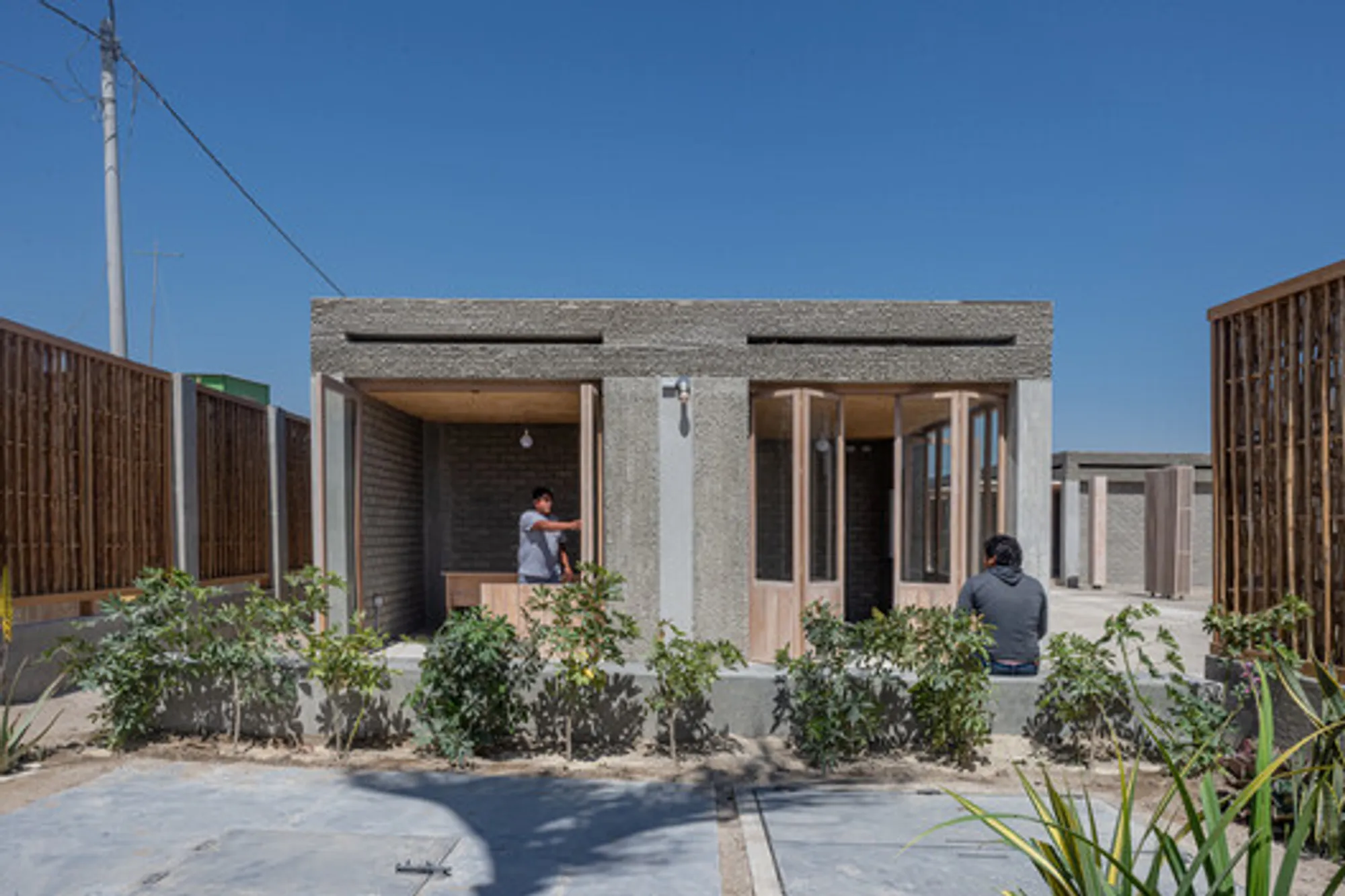
Transforming Education in Villacuri: A Sustainable Approach to School Construction
Transforming Villacuri's educational landscape, architects blend cultural identity with sustainable design in a new elementary school, addressing the town's unique challenges.


In the heart of the Peruvian desert lies Villacuri, a community born 25 years ago from the convergence of immigrants from the mountains and jungle. This article delves into the transformative project led by architects Betsaida Curto Reyes and Atelier Ander Bados, focusing on the construction of an elementary school in this unique and often overlooked town.


The Unseen Town of Villacuri
Situated halfway between Ica and Paracas, Villacuri remains a non-place for drivers speeding along the Panamericana Sur highway. However, beneath the surface, this town thrives with thousands of inhabitants, working tirelessly in nearby agro-export companies. As night falls, Villacuri comes alive, revealing its makeshift homes, shops, and restaurants.


Educational Challenges in Villacuri
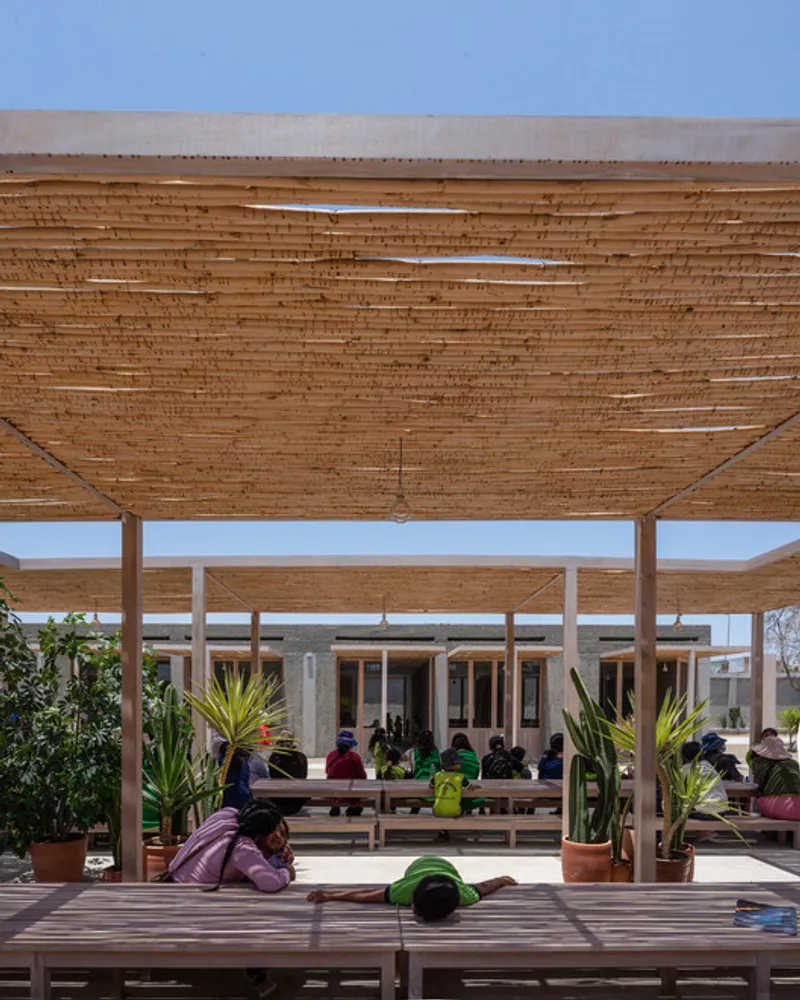
Despite its vibrant community, Villacuri faces significant challenges, particularly in education. The original school, damaged in the 2007 earthquake, was never rebuilt by the government. Over 300 students have been learning in prefabricated classrooms for years, highlighting the lack of attention from authorities.

All Hands and Hearts Initiative
In 2019, the NGO All Hands and Hearts took matters into their own hands, recognizing the urgency of rebuilding the school. The architects embarked on a mission to create a space that not only addresses the educational needs of Villacuri but also integrates seamlessly with its diverse cultural identity.
Architectural Design and Cultural Integration
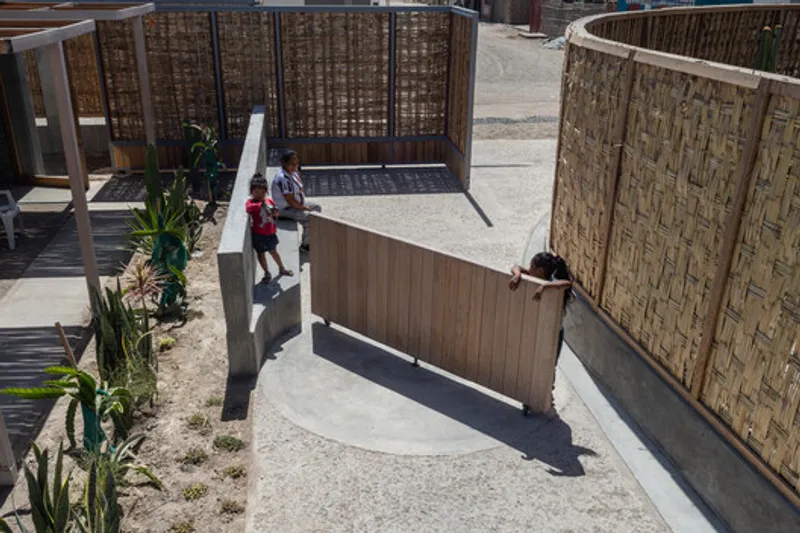
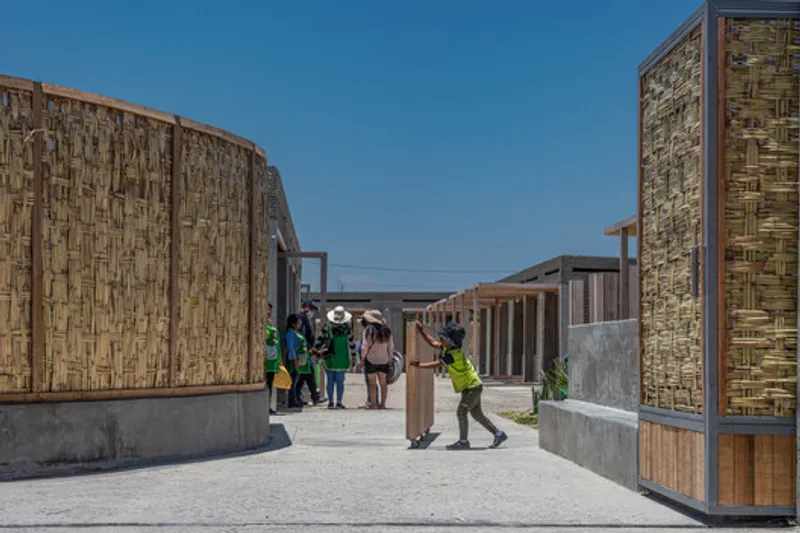
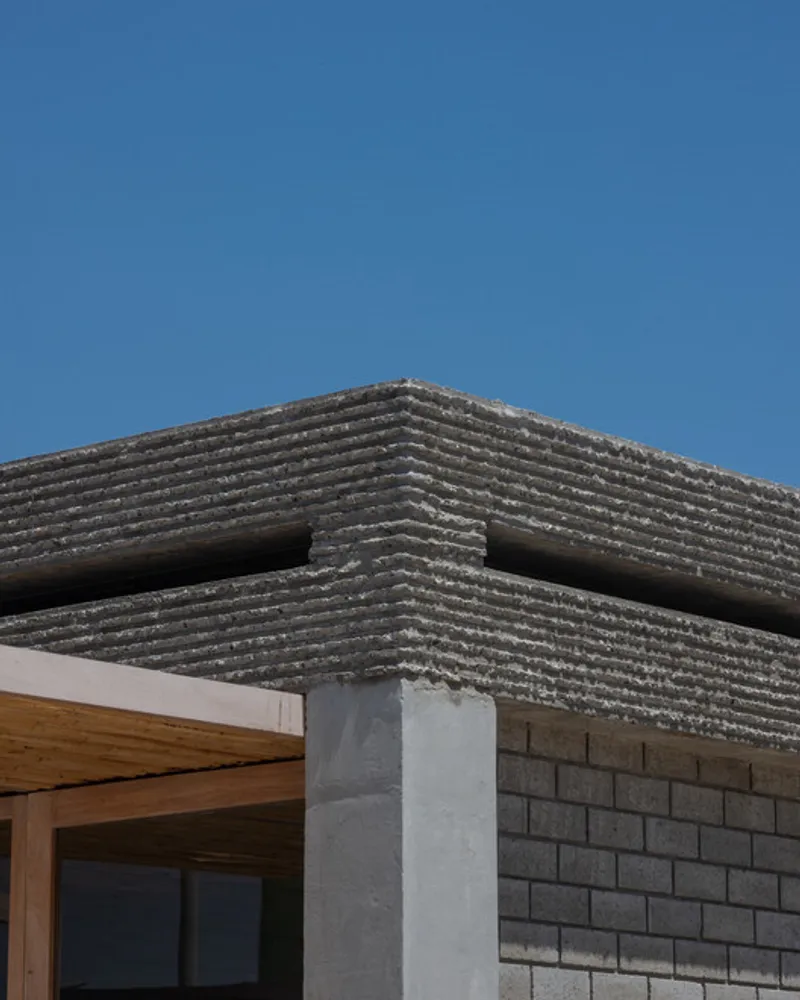
The design of the school revolves around a grid of spaces with proportional dimensions, housing classrooms and service buildings. The choice of materials, such as exposed brick, concrete, mat, cane brava, and wood, not only reflects the community's identity but also contributes to cost-effectiveness.

Battling Desert Temperatures
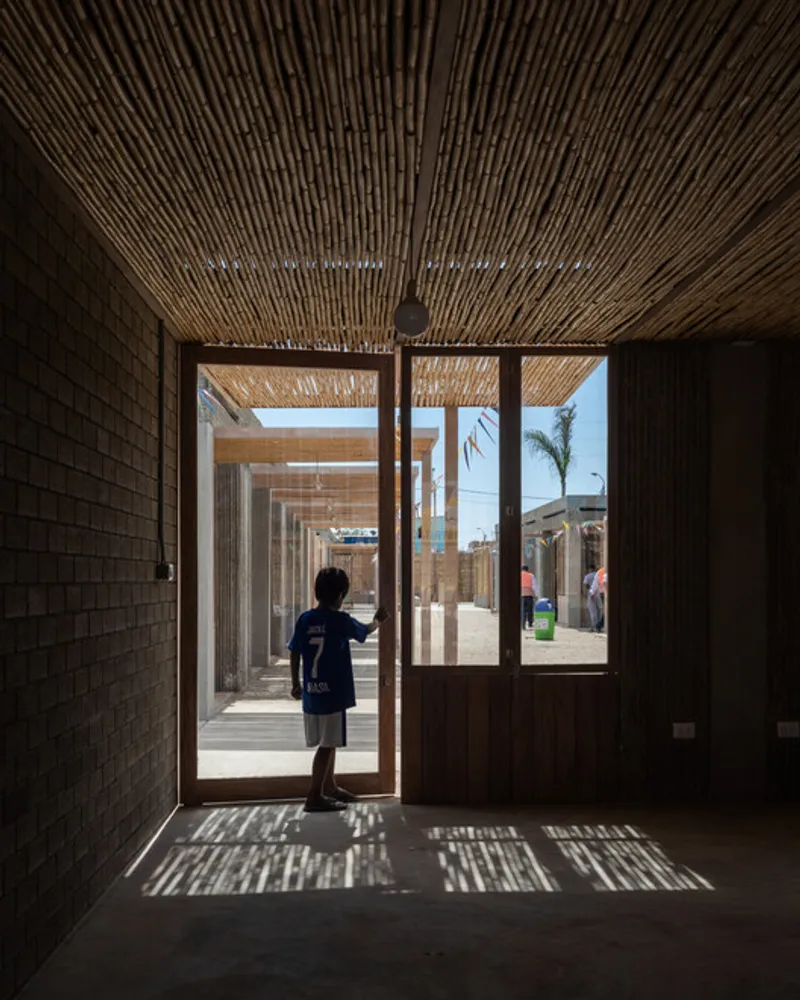
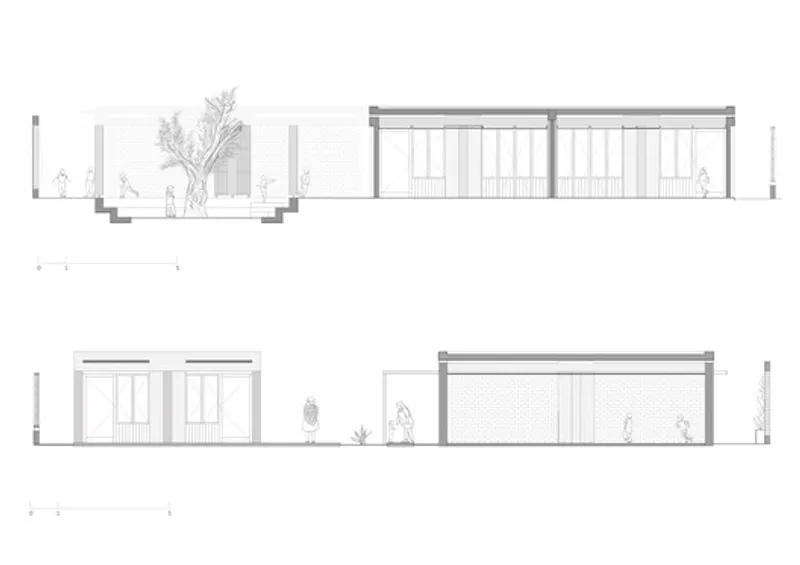
One of the fundamental concerns addressed in the design is combating the scorching temperatures of the desert, which can reach up to 45°C. The architects ingeniously incorporate traditional Ica roofs with a ventilated air chamber using locally sourced cane brava. This, combined with cross ventilation, significantly reduces interior temperatures.

Unifying Elements of the Project
The use of wild cane and mat emerges as unifying elements, providing closure, shadow, and compartmentalization. The architects intentionally enhance the project with textures and materials that harmonize with the harsh desert environment, creating a school that seamlessly blends with its surroundings.

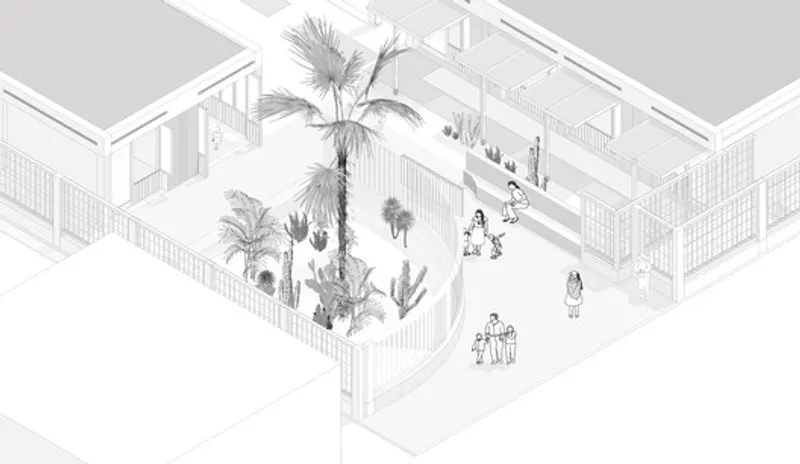
In conclusion, the Villacuri elementary school project is not just about construction; it's a carefully crafted continuity of the community's context. Mats, olive trees, wild cane, yuccas, and the local terrain collectively form the soul of Villacuri, now intricately woven into the fabric of the educational space. This transformative project serves as a beacon, showcasing the power of sustainable architecture and cultural integration in shaping the future of education in overlooked communities.
All photographs are work of Eleazar Cuadros




Popular Articles
Popular articles from the community


The Musturak Paradise: Senior Living Architecture for a Connected Future in Temara, Morocco
The Musturak Paradise reimagines senior living architecture in Temara via private homes, social spaces, culture, community, and shared care.

Co-Life: Senior Housing Design That Reconnects Older Adults With the City
Co-Life reimagines senior housing design through healing gardens, shared streets, workshops, and a sustainable community across generations.

Lunar Spiral: Space Architecture Shaped by the Mathematics of the Universe
Lunar Spiral reimagines space architecture through Fibonacci geometry, lunar regolith, levitating habitats, and self-sustaining Moon living.

The Ocean Hive: Sustainable Architecture for a Self-Sufficient Civilization at Sea
The Ocean Hive imagines sustainable architecture at sea, where modular habitats, algae, wave power and ocean waste sustain a growing colony.

Similar Reads
You might also enjoy these articles

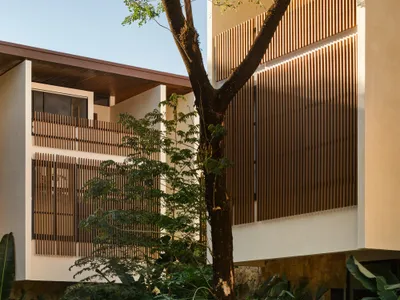
FAMM Arquitectura Organizes Ten Villas Around Courtyards and Jungle in Nosara, Costa Rica
El Molino pairs two elongated volumes with deep overhangs and timber louvers to build a compact coastal community five minutes from the beach.
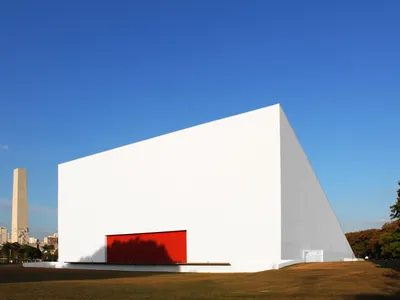
Oscar Niemeyer's Ibirapuera Park Pavilions Define São Paulo's Cultural Identity in Concrete and Curve
A constellation of modernist volumes set within São Paulo's most important urban park, conceived for the city's 400th anniversary in 1954.
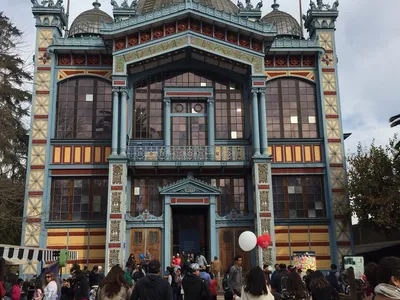
How Henri Picq's 1889 Paris Pavilion Traveled 11,000 Kilometers to Become Santiago's Artequín Museum
A prefabricated iron and glass pavilion built for the Paris Universal Exposition found a second life as a children's art museum in Chile.
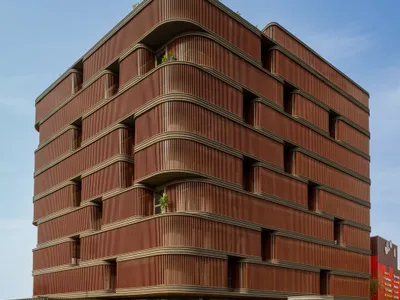
Sanjay Puri Architects Wraps a Jaipur Office Tower in Capsule-Shaped Green Buffers
A nine-level climate-responsive workplace near Jaipur Airport uses stacked planter terraces and aluminium screens to fight 40°C heat.


Explore Educational Building Competitions
Discover active competitions in this discipline


Challenge to design public laboratory


Challenge to reimagine the Iron Throne


Photograph architecture without architects


Illustrate the lost glory of Angkor Wat - Render Challenge
Comments (0)
Please login or sign up to add comments
No comments yet. Be the first to comment!