
Tyr, The Mosaic City | Urban Regeneration Architecture
Reconnecting archaeology, urban voids, and public life through a regenerative architectural strategy for the future of Tyr.


Tyr, a historic coastal city in southern Lebanon, is a fragmented mosaic shaped by centuries of transformation. Once an island and now a coastal urban condition, the city has evolved through layers of ancient civilizations, modern expansion, and archaeological remains that coexist, often uneasily, with everyday life. This project, Tyr, the Mosaic City, explores how urban regeneration architecture can reconnect these fragments while preserving the unique character and memory embedded in each layer.
Designed by Cathrine Skaf, the project responds to Tyr’s complex urban condition by treating the city not as a finished object, but as a porous system: one where voids, boundaries, and archaeological traces become opportunities for spatial continuity and public engagement.

A Fragmented City in Need of Connection
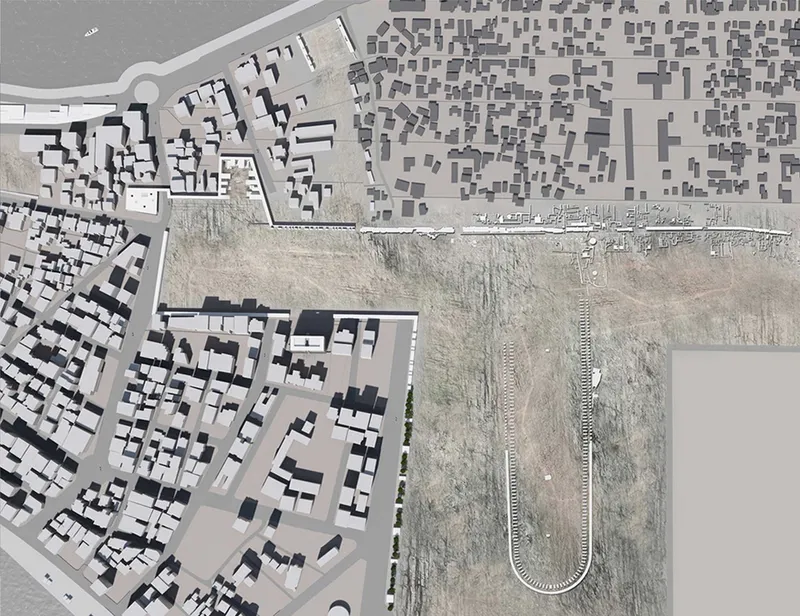
Tyr today can be read as a puzzle of disjointed urban pieces. Archaeological sites, some visible, others buried or erased, interrupt the continuity of the modern city. Internal limits constantly shift, creating sharp edges between historic remains, dense residential neighborhoods, markets, and infrastructural zones. Rather than erasing these limits, the project asks a fundamental question: how can architecture connect urban fragments while maintaining the identity of each?
The proposed strategy is rooted in urban regeneration architecture, where boundaries are transformed into interfaces. By creating porous links across the modern city, the project reveals three types of archaeological fragments: the visible, the invisible, and the built-upon. These layers are not isolated but woven together through a sequence of public spaces, courtyards, and architectural interventions.
Living with Saturation: Defining the Urban Void
By 2030, Tyr is expected to reach full urban saturation. With no room for horizontal expansion, the city’s remaining voids, often associated with archaeological land, become critically important. Instead of viewing these voids as constraints, the project redefines them as generators of value.
Through architectural delimitation, the void is preserved while activated. The project explores multiple ways of inhabiting these spaces: living on the edges, floating volumes above sensitive ground, occupying roofs, and inhabiting the in-between spaces of existing structures. Each intervention treats the void as a landmark, an essential component of the city’s collective identity.
At the core of this approach is the courtyard, a spatial typology that traces the evolution of the agora across centuries, from ancient gathering spaces to U-shaped khans and contemporary public courts. These courtyards become anchors of social life within Tyr’s regenerated urban fabric.
Agora of the City: Preserving Through Minimal Intervention
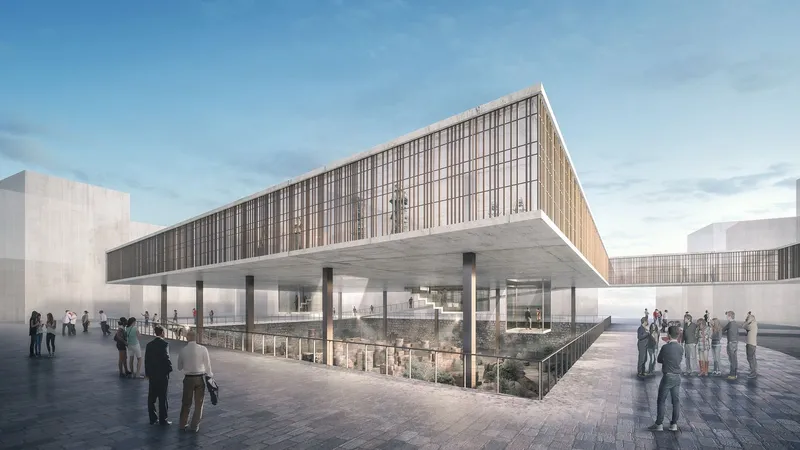
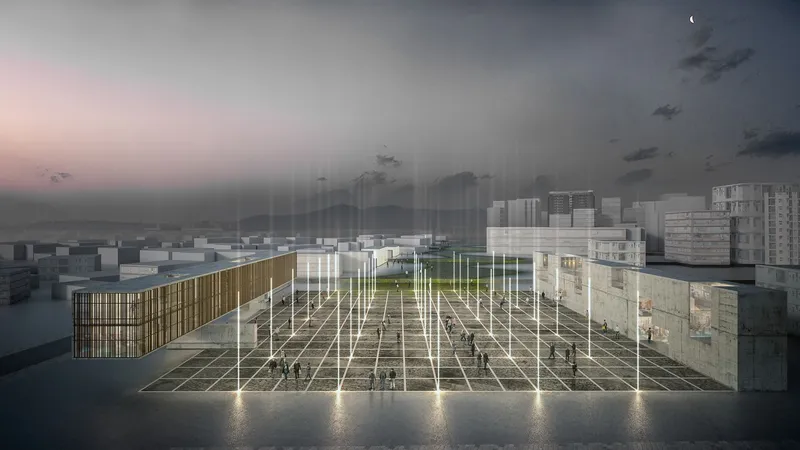
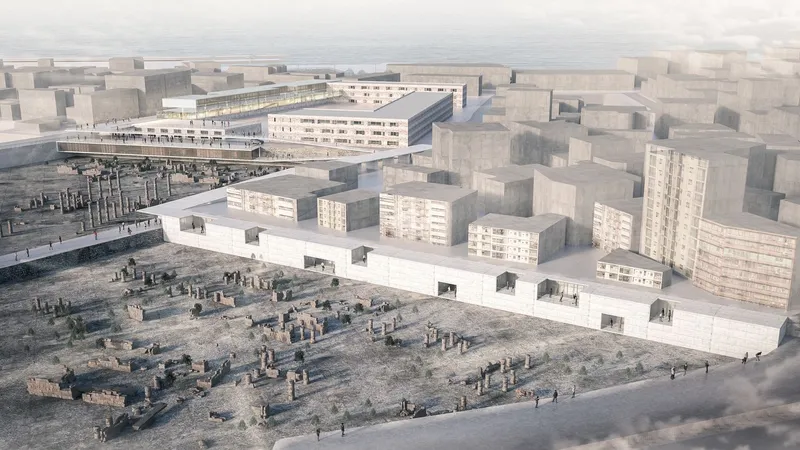
The first major intervention is the Agora of the City. Here, the archaeological site is preserved by building along its limits rather than over it. Minimal ground contact ensures the integrity of the ruins while allowing the space to function as a civic heart. This agora responds simultaneously to the needs of the modern city and the protection of heritage, embodying a key principle of urban regeneration architecture: coexistence rather than domination.
Museum of the City: Revealing the Real DNA of Tyr
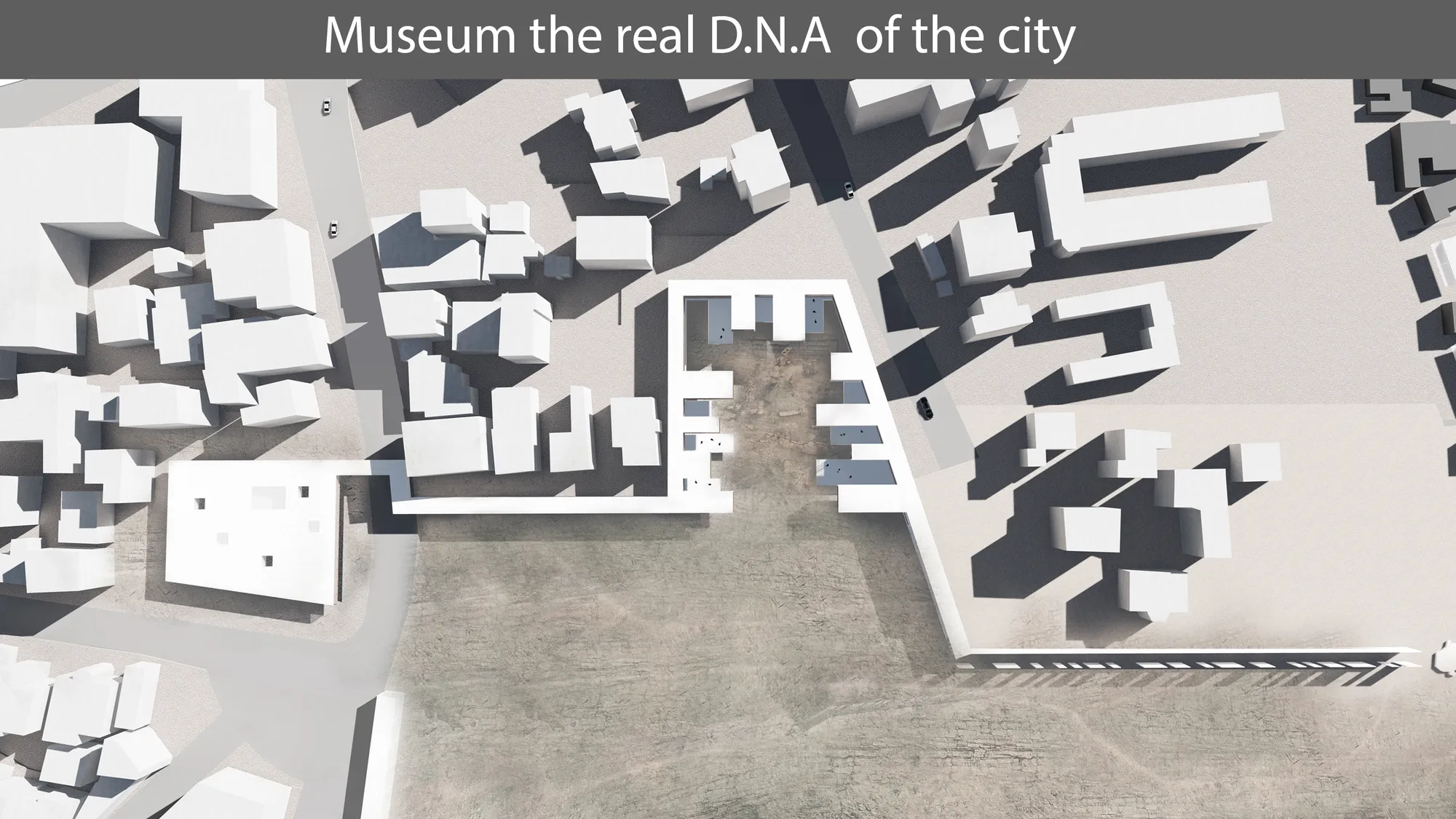
The Museum of the City addresses visible archaeological fragments through a dual-path experience. One path follows the archaeological remains directly, while the other traces a curated museum route. These paths intersect and overlap, allowing visitors to oscillate between direct engagement with history and interpretive narratives.
An urban canopy shelters the ruins while remaining lightweight and reversible. Above, a Khan U-shaped configuration creates inhabited edges, spaces that allow people to live on the limits without erasing what lies beneath. The museum becomes not an isolated object, but an extension of the city’s living structure.
Existing Buildings on Archaeological Sites
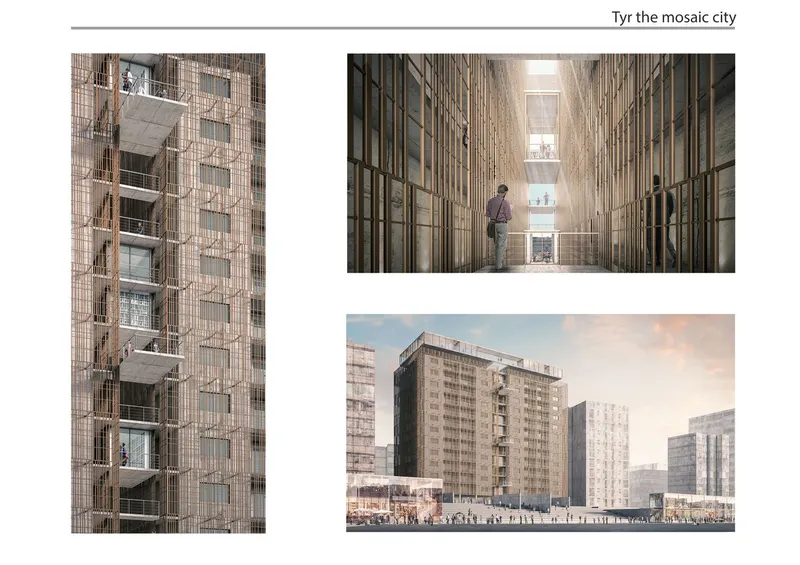
Rather than displacing residents from buildings located on archaeological land, the project proposes adaptive living strategies. Semi-private zones are introduced at ground level, on rooftops, and within the narrow spaces between existing blind walls. This approach preserves social continuity while carefully integrating daily life with heritage protection, a critical balance in sustainable urban regeneration.
Squares as Urban Interfaces
Several key squares act as connectors across Tyr’s fragmented landscape:
- Cultural Square addresses invisible archaeological remains by creating a virtual and symbolic public space above them, preserving the site without physical intrusion.
- Al Bawabah Square is revalued through programmatic layering, combining parking, public space, and market functions to reconnect it to city life.
- Roman Agora is reactivated by inhabiting its perimeter, framing the archaeological core while encouraging contemporary use.
- Al Jaffarieh Square introduces a craft school on the roof of an old market, linking heritage, education, and economic activity.
Each square functions as a social condenser, reinforcing the role of public space within Tyr’s urban regeneration framework.
Architecture as a Cultural Door
At a larger scale, the project positions architecture as a cultural threshold between refugee camps, archaeological zones, and the modern city. By aligning cultural and artistic functions along a continuous urban sequence, the design establishes a ‘cultural door’, a spatial narrative that reconnects fragmented communities and histories.
Reweaving Tyr Through Urban Regeneration Architecture
Tyr, the Mosaic City demonstrates how urban regeneration architecture can operate with precision, sensitivity, and restraint. By living on boundaries rather than erasing them, the project transforms archaeological constraints into spatial opportunities. Voids become landmarks, limits become inhabitable edges, and history becomes an active participant in contemporary urban life.
Rather than offering a single monumental solution, the project proposes a network of interventions, each modest in scale, yet powerful in collective impact. Together, they reweave Tyr into a coherent mosaic, where past, present, and future coexist through architecture.



Popular Articles
Popular articles from the community


Conexión: Biophilic Design Reimagines High-Rise Living in Hong Kong
Conexión reimagines high-rise living in Hong Kong through biophilic design, green facades, shared spaces, daylight, water and nature within.

Riyadh For All: Intergenerational Urban Design for Active Aging in Rabat
Riyadh For All reimagines urban design in Rabat with intergenerational co-living, adaptive courtyards, and Moroccan cultural exchange today.

The Musturak Paradise: Senior Living Architecture for a Connected Future in Temara, Morocco
The Musturak Paradise reimagines senior living architecture in Temara via private homes, social spaces, culture, community, and shared care.

The Earth Pod: 3D Printed Homes for Resilient Refugee Communities
The Earth Pod reimagines refugee housing through 3D printed homes made from clay, combining resilience, self-sufficiency, and rapid shelter.
Similar Reads
You might also enjoy these articles

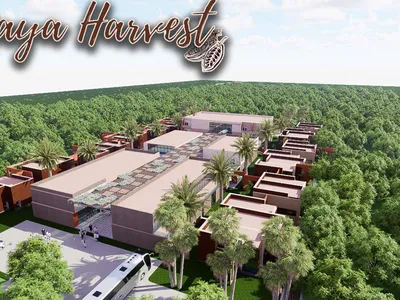
Maya Harvest: A Cacao Resort Village Rooted in Mayan Tradition and Local Craft
Situated within a Tabasco cacao plantation, this shortlisted resort proposal merges vernacular materials with hands-on cultural immersion.
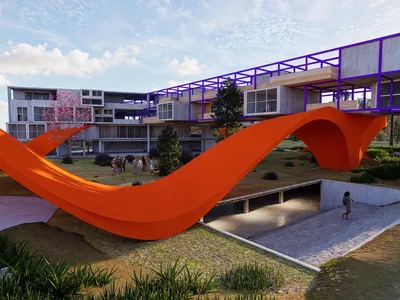
Harmonia: A River-Shaped Community That Grows Over Decades in Boa Vista
Curved pathways and modular grid structures along the Branco River create a phased settlement designed to evolve from 2030 to 2050.
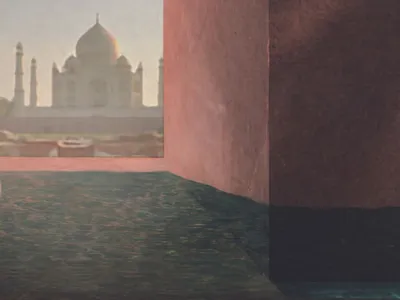
The Architecture of Bathing: A Mughal Hammam Reimagined Across the Yamuna
Charlotte May's honorable mention entry for The Black Taj reinterprets Agra's bathing rituals through red sandstone, water, and framed views of the Taj Mah
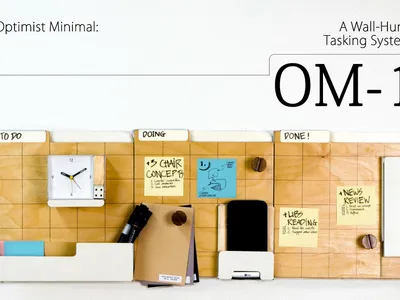
Om-1: A Wall-Hung System That Moves Your Workspace Off the Desk
Modular plywood boards, magnetic pegs, and utility elements migrate clutter from the horizontal surface to the vertical plane.


Comments (0)
Please login or sign up to add comments
No comments yet. Be the first to comment!