
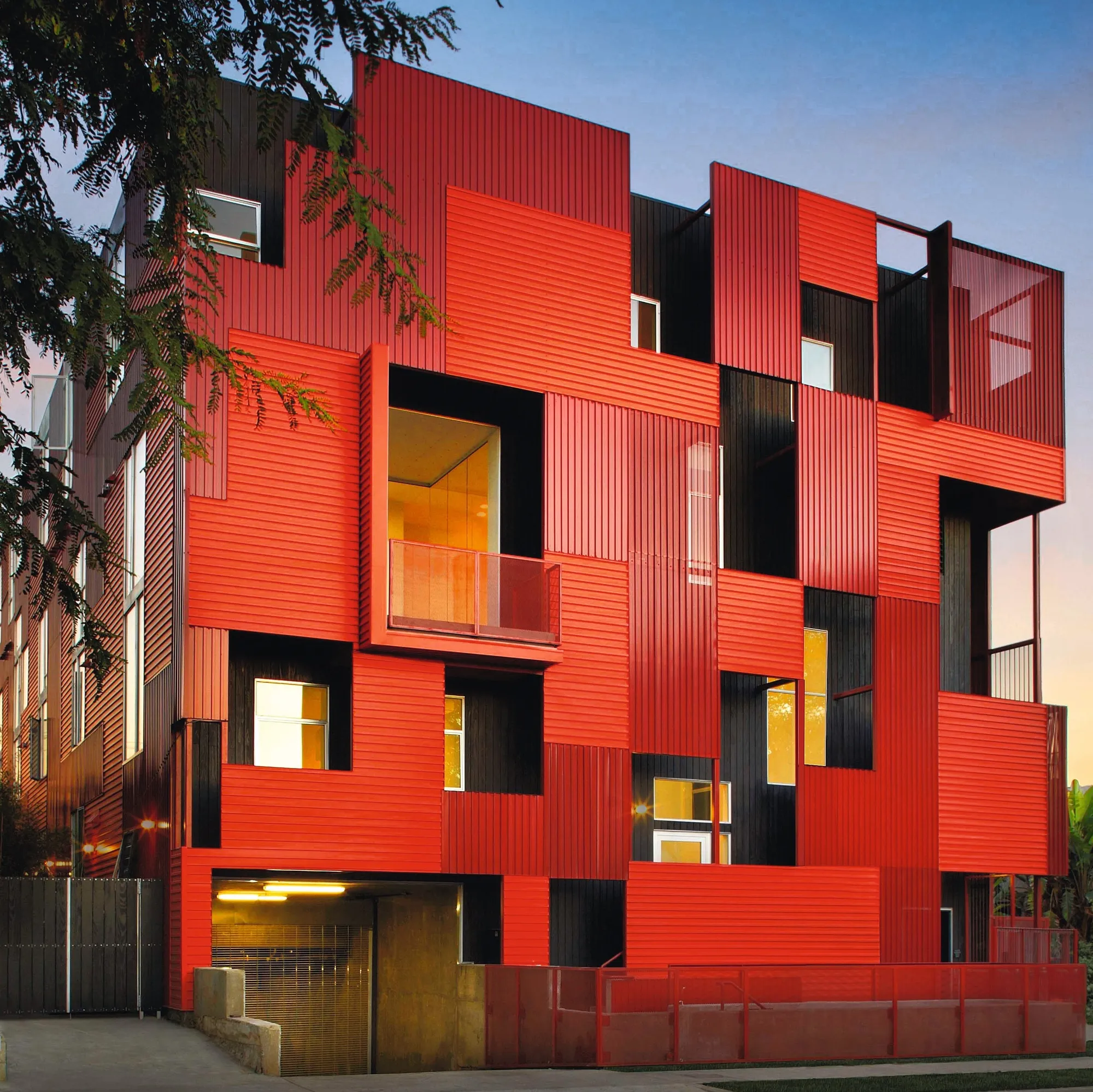
Unban Living Room
An Improvising Ground for Citizens

[Introduction]
Architecture plays a role in shaping user patterns, though not quite likely defining actual events. We’ve seen emerging cases where adaptive uses are happening within fixed or outdated structures. However, is there a possible way a building - from the very beginning when it comes into being - invites, inspires, and accommodates a wide range of activities beyond the architect’s vision? A ground, that is well curated, for improvisation?
This piece of design research is set on a very particular typology - government buildings or town halls.
Throughout human history, this type seems to be associated with certain sort of authority and bureaucracy. Due to their functional nature, a highlight spot is spontaneously created, taking the form of a civic plaza or a gathering hall. They become a local destination for people to meet and engage in both social and political affairs. That would be the ideal occasion. Yet many of those town hall facilities, through the historical and typological evolution, have adopted certain rigid rules, and thus not as suitable as one would envision, to offer maximised flexibility for multiple civic activities. In other words, such rigid typologies are failing expectations to encourage political participation and social values.
How can we, as architects, help to adapt this outdated typology for contemporary, or even future requirements? This piece of design research started by looking into other building genres, which are generally thought to be more successful around the idea of ‘civic engagement’, for example, museums, galleries, universities and other cultural venues.
[Typological Study]
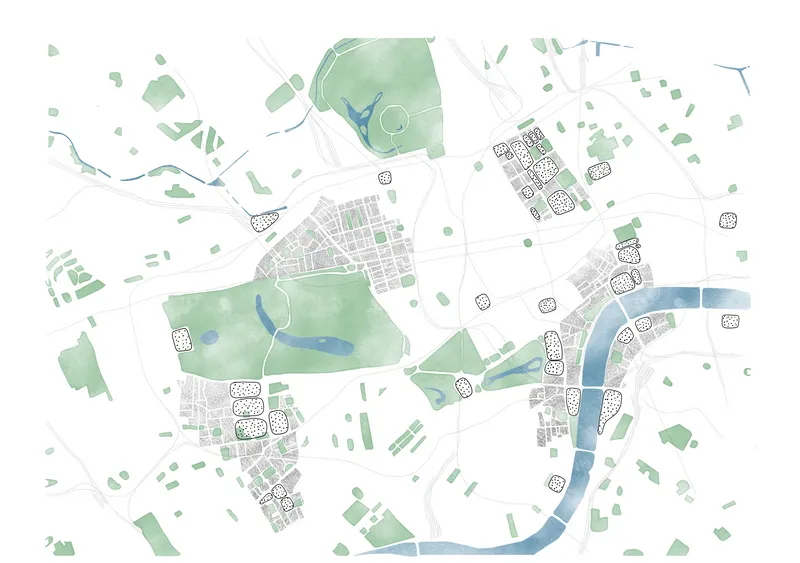
Why not look into the existing urban morphology of London? We picked three other segments from the central area of London. They provide a good sample for us to develop a comparative understanding of urban conditions. The questions that we should bear in mind when carrying out the following study would be: ‘How do civic buildings fit into an urban setting? What do they provide for citizens? What values do they generate? And how is that related to its architectural forms and types?’
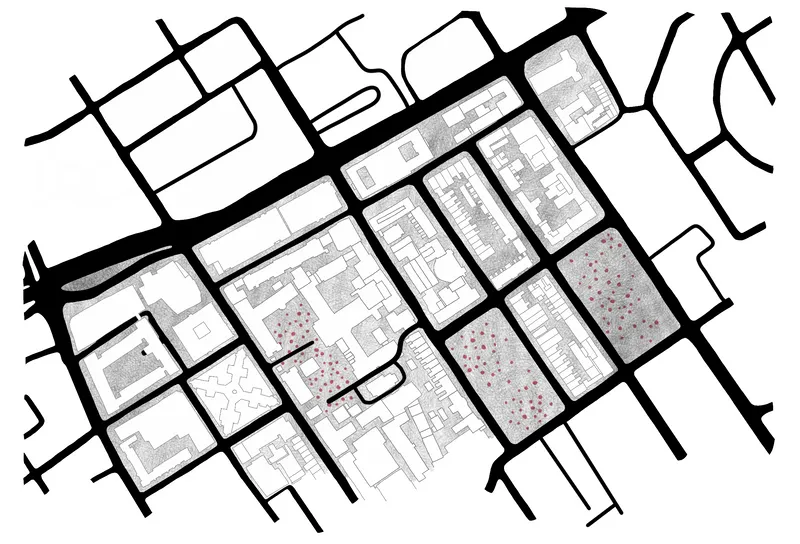
The first piece is the UCL campus area. To make it short, each department has one - either building or building cluster - to perform individual autonomy. In the meantime, they are further clustered together to make ‘a campus’. It is a highly permeable campus, that fits into the urban grids without upsetting street patterns, although the interfaces are rather negative - educational facilities are not a 100% public building after all!
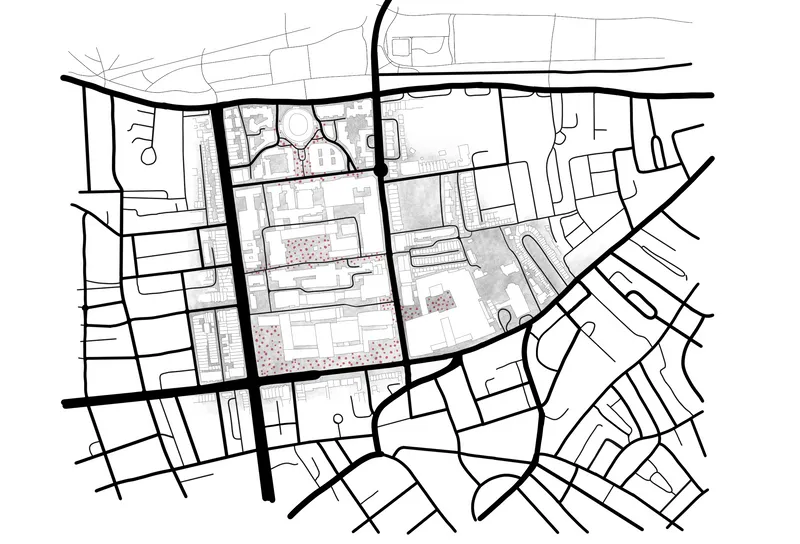
If we move on to study the V&A museum, the Natural History Museum and the neighbourhood around, we would immediately find urban block on a completely different scale. But green space, street parks or courtyard moments are placed in a ‘well curated’ manner.
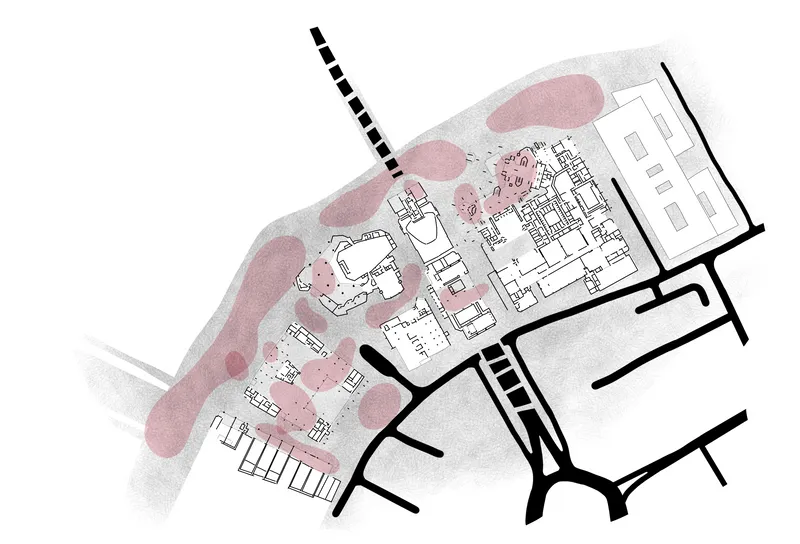
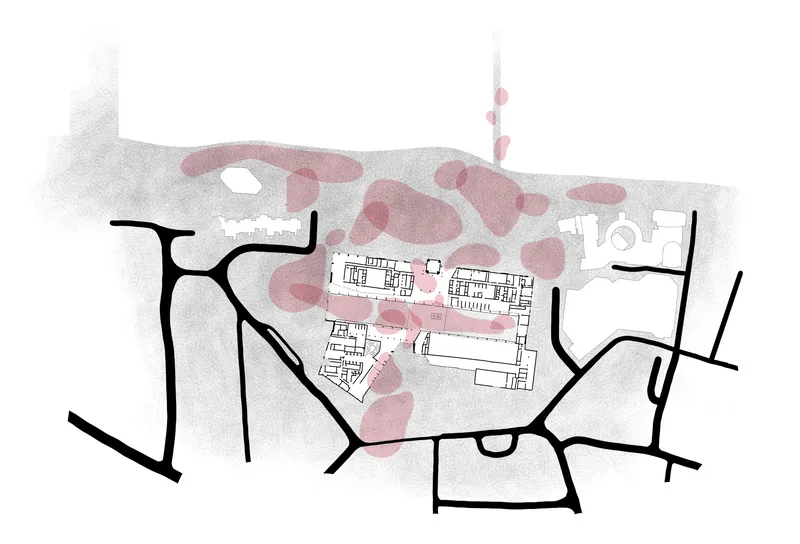
Another successful/popular area is the Southbank. Here a series of cultural venues are densely clustered next to the riverfront. Rigid street grids have disappeared, and instead, we find each building trying to make a statement with their forms and the contents they contain. These buildings could have something in common, for example, they are dedicated to ideas such as open ground, free accessibility, and active uses.

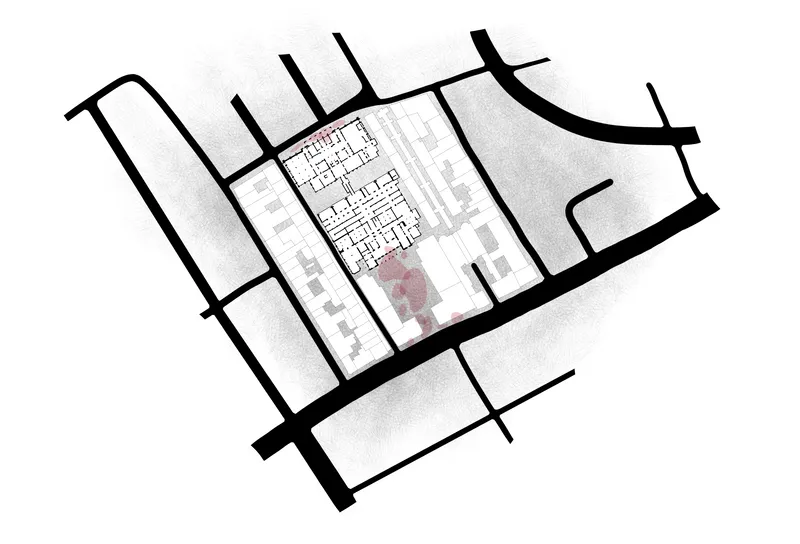

Zooming to a more focused scale, we also picked individual building to learn from their typological features, including courtyards in the Royal Academy of Arts and the Somerset House, front-of-house plaza at the Trafalgar Square, and the continuous, open, and permeable ground formed by the Southbank cultural venues. These all contributed to a better understanding of civic building qualities, and inspired our own study to regenerate the town hall model.
[Site Context]
The urban area around our Hyde Park site is made up of some typical elements we find all around London and many other cities. The high street. The residential blocks. The hierarchy of street patterns.
There is something interesting if we try diagramming from a pedestrian perspective: The blocks and streets dictate a set of ‘fixed rules’ for people walking among them. Yet, when we shift to the park, things have changed. Although The Hyde Park is designed to demonstrate highly rational geometrical patterns, it allows visitors to deviate from the paths, and ‘break the implicit rules’.
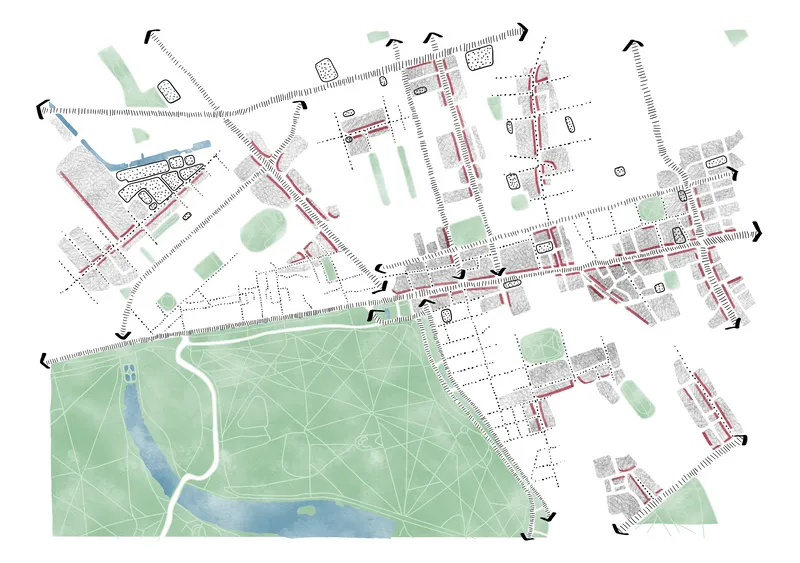
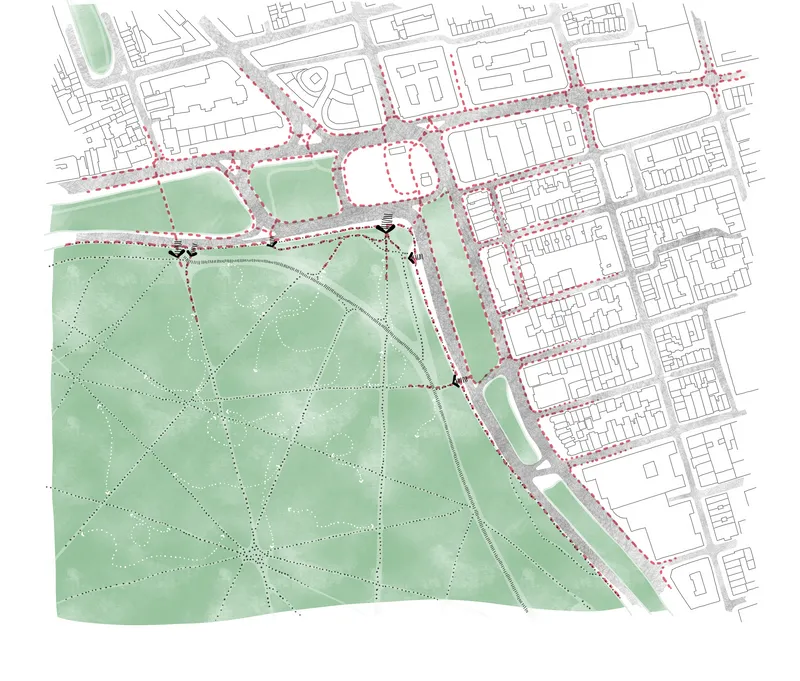
That forms one of the basic ideas of our design: to build but without disturbing the ‘implicit rules’. Visitors in the park are encouraged to wander through the interface and into the building, freely.
[Design Intention - the Curated Part]
The building is briefed as a town hall (an official building) and a shared space (a venue for gathering). It’s one single piece that meets requirements from both sides.
We explored different methods to integrate the two into one. And gradually it’s developed into ‘four quadrants’ but two themes: part of it will be curated spaces to hold events (the formal part), while another part of it will be open to improvisation where citizens arrive and determine how to use the rooms by themselves (the informal part).

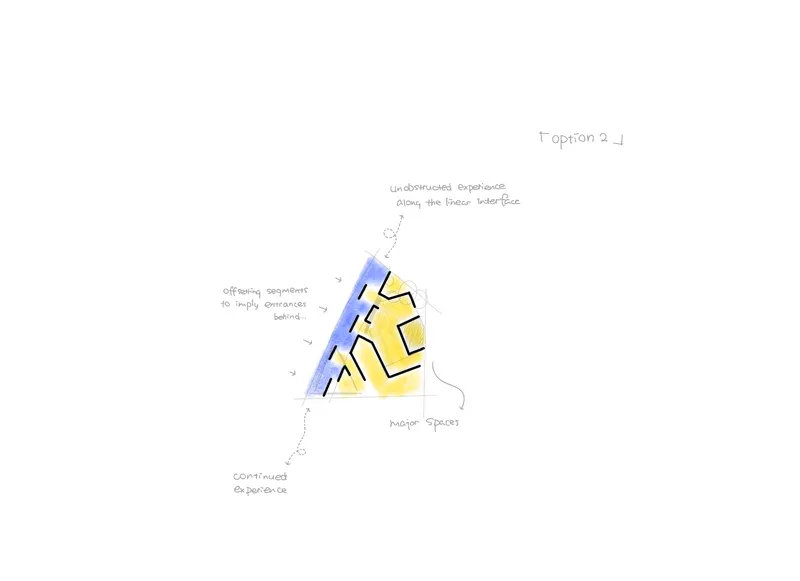

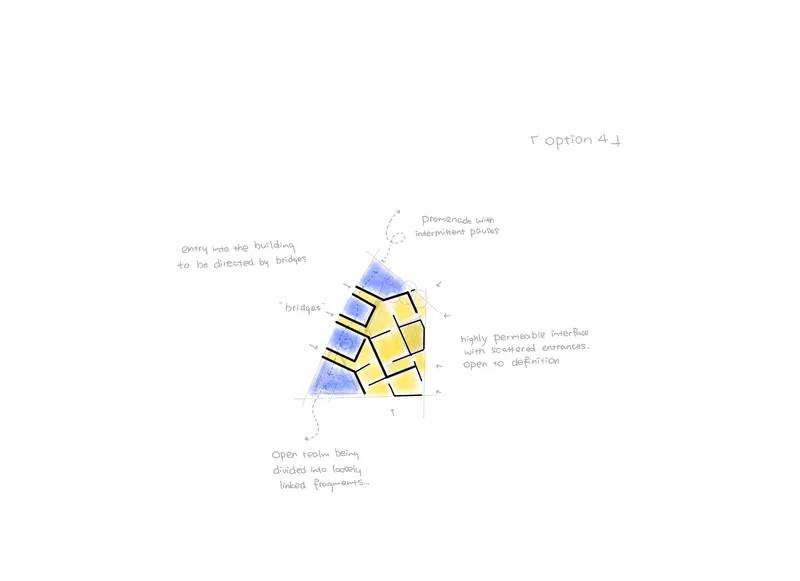
The formal part includes two office blocks, one courtyard, and one feature event hall. The event hall layout allows flexible partitioning according to specific scenarios. It provides a u-shape flow, bringing visitors deep into the centre, where the stage is placed.
It breaks from conventional performing theatres, and visitors enter the building directly into the most active, vivid, and engaging space.
[Design Intention - the Improvising Part]
The surrounding informal spaces, conceived as cabins of a living room, afford possibilities for varying events through serving as an alternative complement in terms of architectural scale, massing and interface.
Event space divided into several small-sized ones, in reference to a Wunderkammer for a house, where uncommon exhibits are collected, contains improvising occurrences of unpredictably events different from daily routines. Small-scale rather than a large one promises higher identity and likelihood for each political expression independent of mutual over-effects, while a proper spatial looseness, here namely the canopied corridors connecting all the separated rooms, guarantees the right of mutual communications.
To properly accommodate small-sized informal rooms in the site, the massing is broken from a whole into several parts with polygonal boundary, providing an open and easily accessible interface facing to public urban space.
[A Model for Future]
This project is exploring a new typological model, to integrate political buildings with daily creative uses. It's not a deeply resolved solution yet, but would hopefully inspire future efforts to bring life and value back into this building genre again.


Popular Articles
Popular articles from the community


Co-Life: Senior Housing Design That Reconnects Older Adults With the City
Co-Life reimagines senior housing design through healing gardens, shared streets, workshops, and a sustainable community across generations.

Lunar Spiral: Space Architecture Shaped by the Mathematics of the Universe
Lunar Spiral reimagines space architecture through Fibonacci geometry, lunar regolith, levitating habitats, and self-sustaining Moon living.

Conexión: Biophilic Design Reimagines High-Rise Living in Hong Kong
Conexión reimagines high-rise living in Hong Kong through biophilic design, green facades, shared spaces, daylight, water and nature within.

The Earth Pod: 3D Printed Homes for Resilient Refugee Communities
The Earth Pod reimagines refugee housing through 3D printed homes made from clay, combining resilience, self-sufficiency, and rapid shelter.

Similar Reads
You might also enjoy these articles

The Rhythm of Seasons
A Farmers' Market Connecting Nature and the City

More Than a Building-Designing a Living System
More Than a Building-Designing a Living System
Base Beyond
DESERT COMPOUND ARID: TOURISM OF ABSENCE AND ABUNDANCE


Explore Urban Design Competitions
Discover active competitions in this discipline




Challenge to reimagine the Iron Throne


Photograph architecture without architects


Illustrate the lost glory of Angkor Wat - Render Challenge


Design challenge to reuse E-waste
Comments (0)
Please login or sign up to add comments
No comments yet. Be the first to comment!