
Urban Re-densification Strategies in Architecture: A Case Study of "A House Next to the House"
Exploring "A House Next to the House," a case study in urban re-densification strategies through innovative architectural design in Argentina.


Urban re-densification is becoming an essential strategy in architecture and urban planning to address the growing demands for housing in city outskirts. With the housing crisis deepening in many urban areas, architects and urban planners are tasked with finding innovative ways to utilize available spaces efficiently. "A House Next to the House," designed by Flesia-Bertoya and Rare Studio Experimental, serves as an exemplary case study in applying urban re-densification strategies.


The Concept of Urban Re-densification
Urban re-densification refers to the process of increasing the density of an urban area by adding more housing units or converting existing spaces to accommodate more inhabitants. This strategy is crucial for maximizing limited urban space, reducing sprawl, and promoting sustainable living conditions. It often involves innovative architectural designs and planning to integrate new structures into existing urban fabrics without compromising the quality of life.

"A House Next to the House": An Innovative Approach
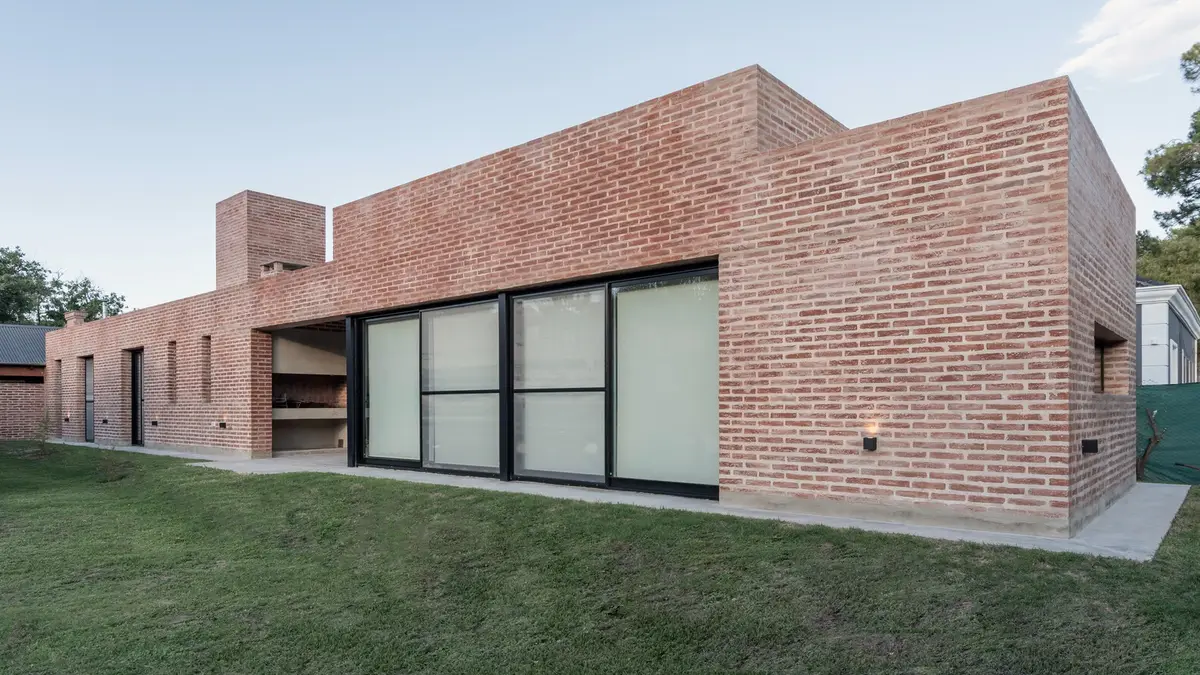
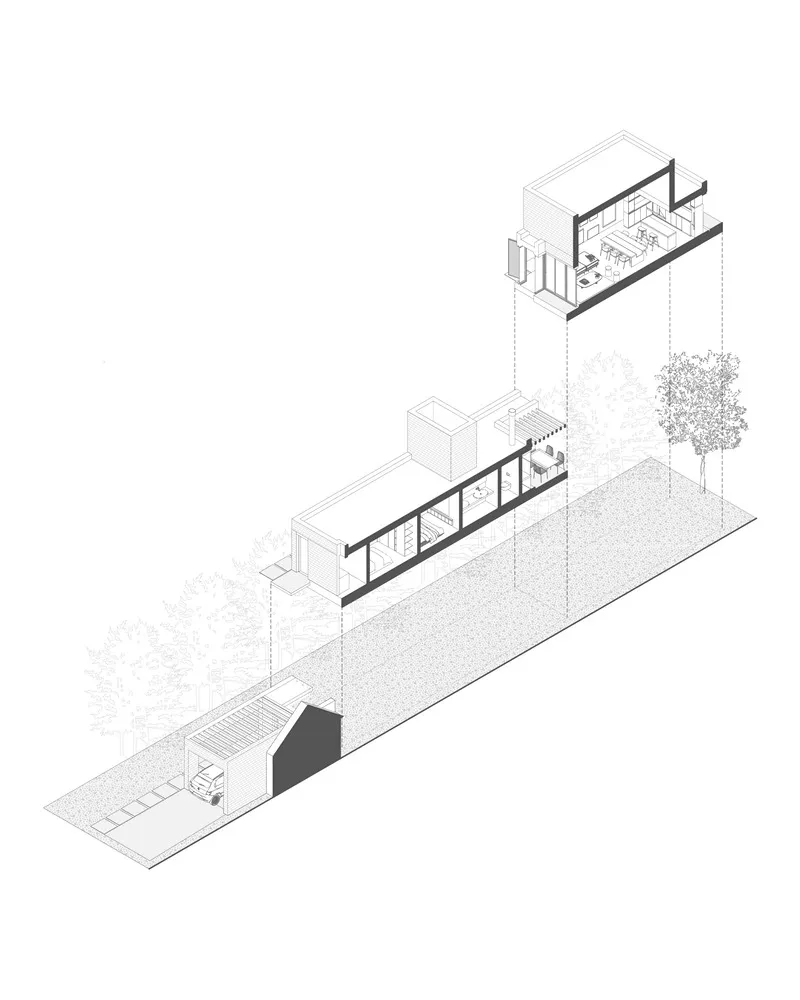
"A House Next to the House" is a pioneering project located in Ciudad de Córdoba, Argentina, that embodies the principles of urban re-densification. The project, completed in 2022 by architects Agustín Willnecker, Ivan Ferrero, Mateo Unamuno, and Maria Sol Bertoya, extends a new residential structure alongside an existing house, utilizing the same lot to create independent living spaces.

Design and Layout
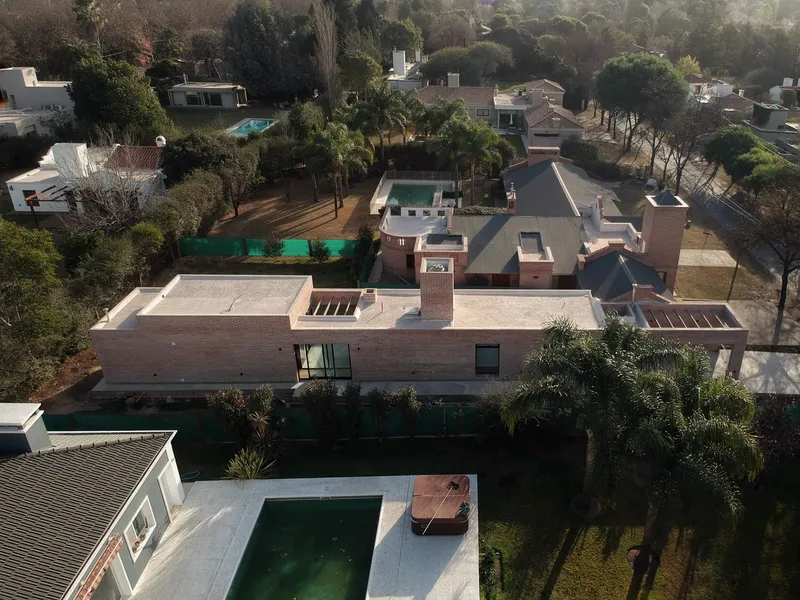
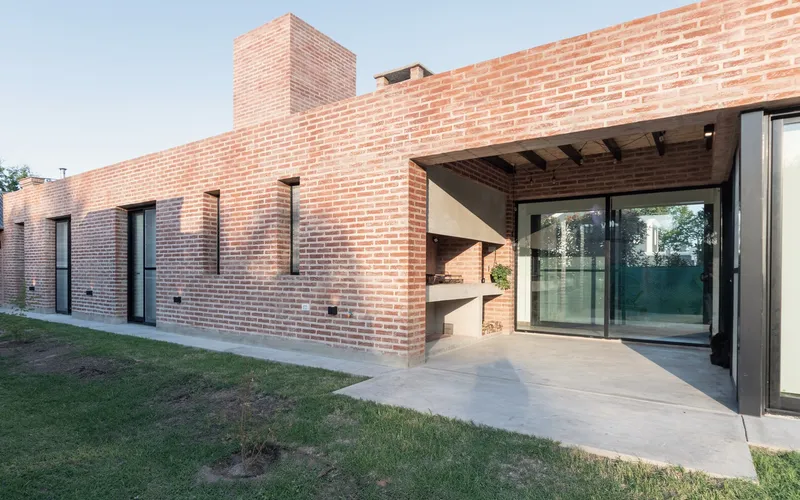
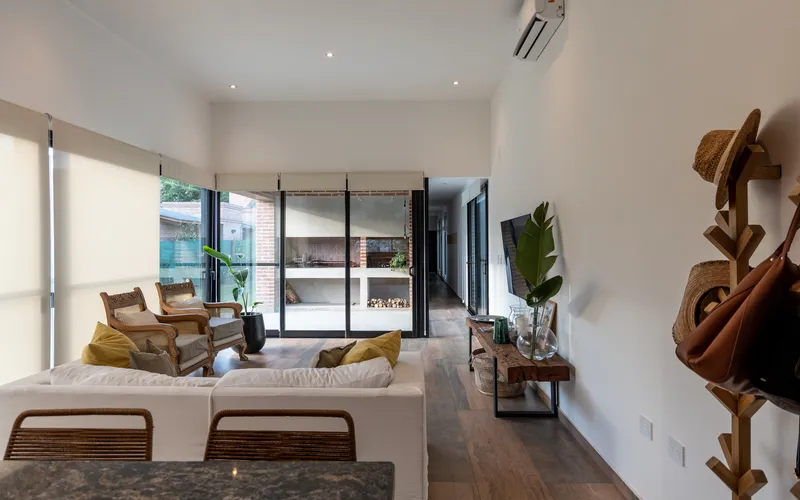
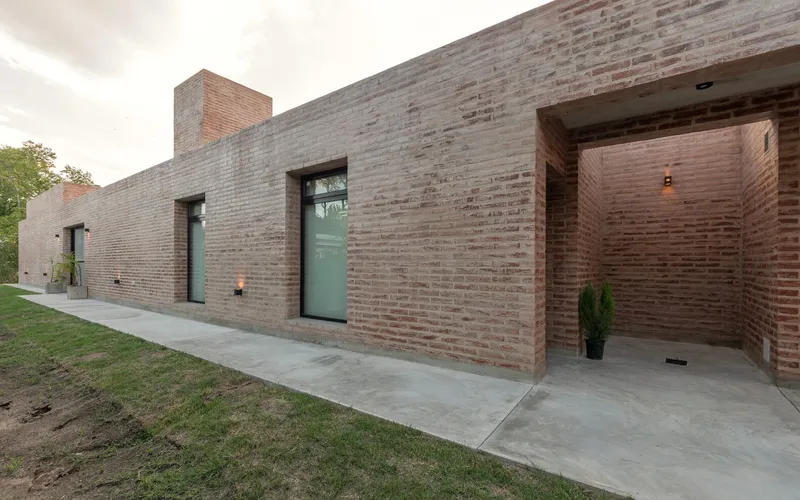
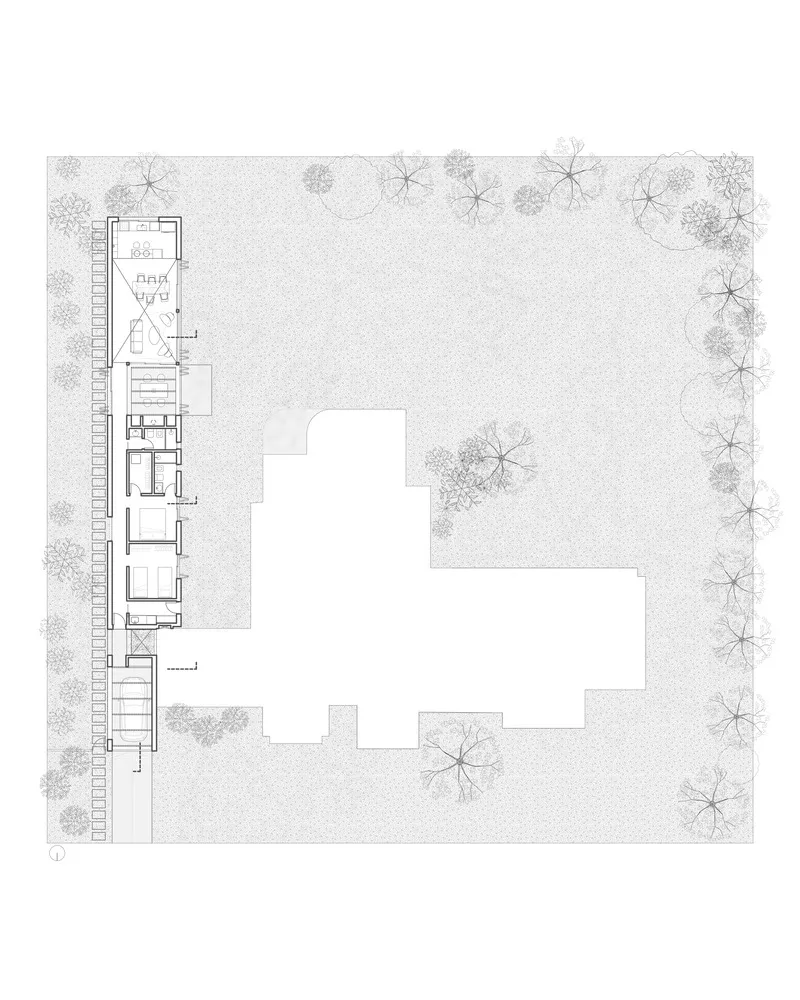
The design features a linear structure that extends along the lot, comprising various functional areas, including a garage, entrance courtyard, laundry room, bedrooms, bathroom, gallery, living room, dining room, and kitchen. This bar-shaped formation allows for autonomy between the two houses while ensuring efficient use of the available land.

Material and Aesthetic Dialogue
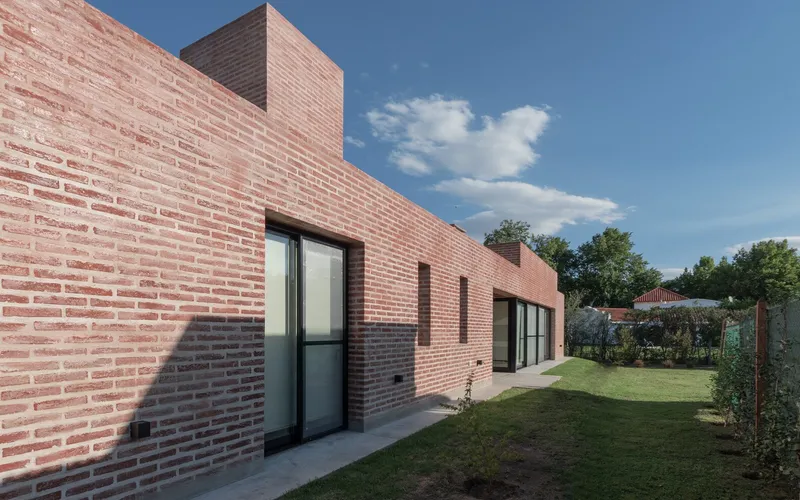
One of the project's key features is its material dialogue with the existing structure. While the new construction distinctively uses brick throughout, it maintains a conversational relationship with its neighbor. This approach not only respects the aesthetic of the surroundings but also reinforces the cohesive blend of new and old architectural elements.


Re-densifying the Periphery: A Solution for Urban Sprawl
The project addresses the urgent need for new housing solutions in the peripheral neighborhoods of cities, where low-density plots are common. By proposing a strategy to occupy vacant spaces, "A House Next to the House" presents a viable model for re-densifying the urban periphery, offering a new perspective on living arrangements and community design.
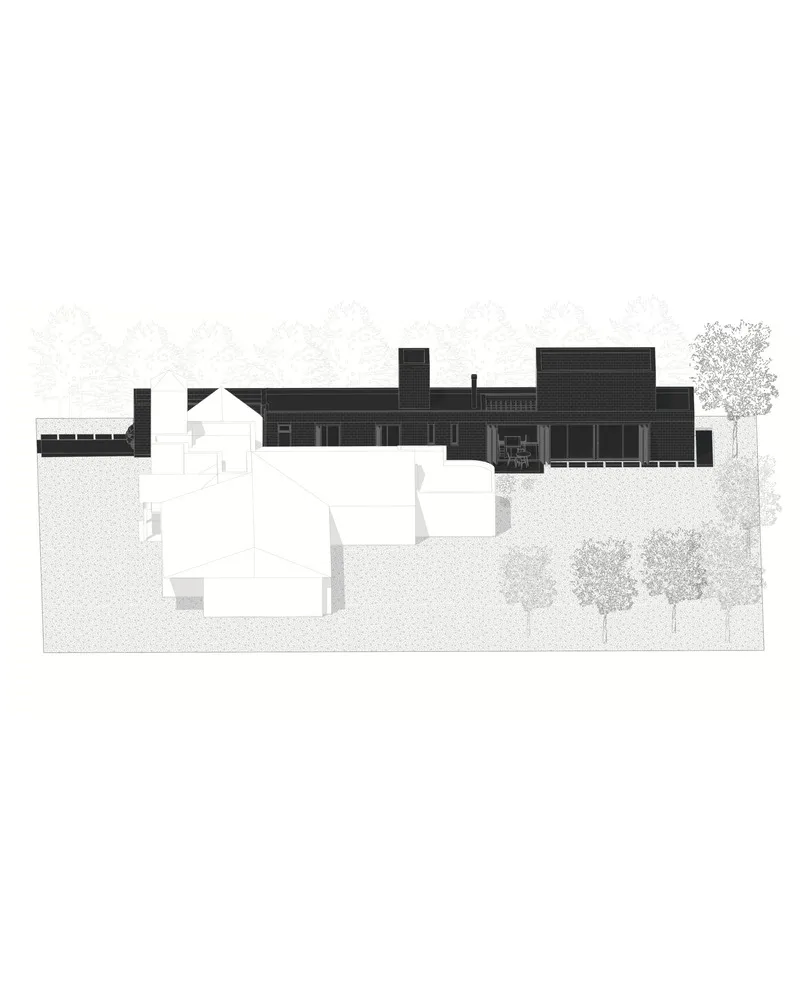


"A House Next to the House" by Flesia-Bertoya and Rare Studio Experimental exemplifies how urban re-densification strategies in architecture can offer sustainable and innovative solutions to the housing crisis. This project not only maximizes the use of available urban space but also fosters a dialogue between existing and new structures, setting a precedent for future developments in urban planning and architecture.


All photographs are work of Bruno Collura


Popular Articles
Popular articles from the community


Gonçalo Grácio Refurbishes a 104 m² House Inside the Medieval Walls of Castelo de Vide
In Castelo de Vide, Portugal, a compact whitewashed house is reworked with rough lime and clay plaster, deep window niches and a small rooftop terrace.


Wave 'Coral': Four Perforated Canopies Bring Human Scale to a Monumental Plaza
A wavy lattice shell repeated four times around an obelisk, turning a vast paved square into pockets of shade, planting and places to sit.

Vietnam S: Rhymes of the River Built From Upturned Boat Hulls and a Shared Rooftop
Timber-ribbed, hull-shaped pavilions gather around a water courtyard, turning a street market into an authentic, dynamic place to chill out.

Minqa Atelier Steps a 53 m² Teak Refuge Down a Forested Slope in Ecuador's Chocó
In Pedro Vicente Maldonado, Ecuador, stepped teak platforms on river-stone gabions let a small forest house follow the hillside instead of flattening it.

Similar Reads
You might also enjoy these articles

BLT Arquitectos Wraps a Shared Innovation Hub at Córdoba's Catholic University in a Glowing Polycarbonate Shed
On the Universidad Católica de Córdoba campus in Argentina, a 650 m² workshop hall in polycarbonate and concrete serves every faculty as one shared room.

Charlene Koetz Arquitetura Lifts a Glass House on Piers Above a Mossy Forest Slope in Gramado
In Vila Prinstrop, Brazil, a 455 m² house pairs black-framed glazing with board-formed concrete, rough stone and a forest it barely disturbs.

Paul Bernier Architecte Turns a Curved-Eaved 1970s Cottage in Magog into a Year-Round Family Home
In Quebec's Eastern Townships, a 1970s vacation house becomes a primary residence through restraint, a glazed entry and sunlit timber rooms.

Peris and Toral.arquitectes Wrap 54 Social Rental Homes in Besòs Around a Brick-Screened Atrium
In Barcelona's Besòs district, a perforated brick block turns its shared walkways into a light-filtering atrium for 54 social rental homes.

Explore Neo-Urbanism Competitions
Discover active competitions in this discipline

Submit a world, not a render

Studio work deserves a jury

The International Standard for Design Portfolios

The Global Benchmark for Architecture Dissertation Awards
Comments (0)
Please login or sign up to add comments
No comments yet. Be the first to comment!