
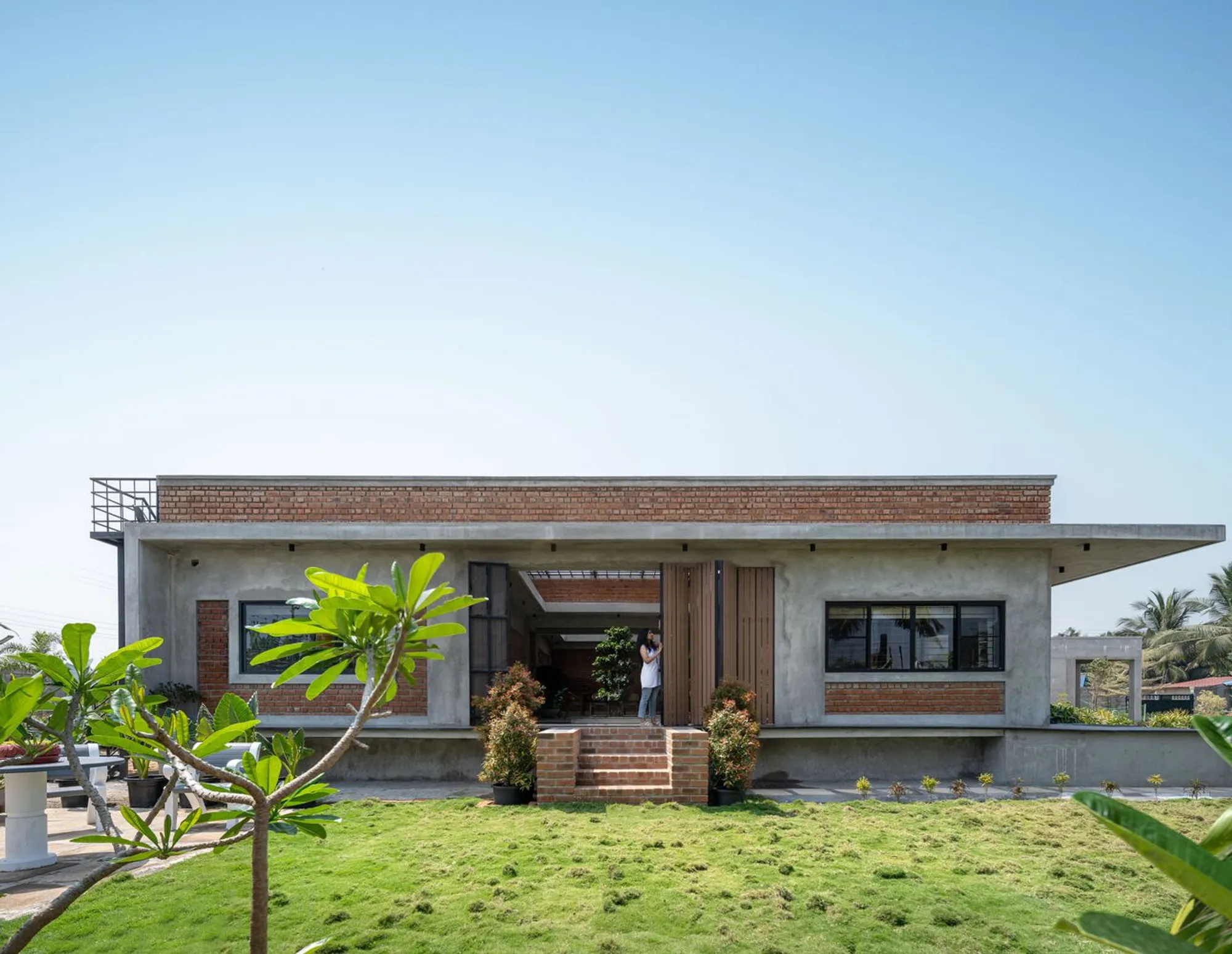
VIPA Farm House by Studio One By Zero – A Vernacular Retreat in Sholavaram, India
VIPA Farm House blends vernacular architecture, courtyards, and reclaimed wood, creating a sustainable retreat that merges tradition with modern living.


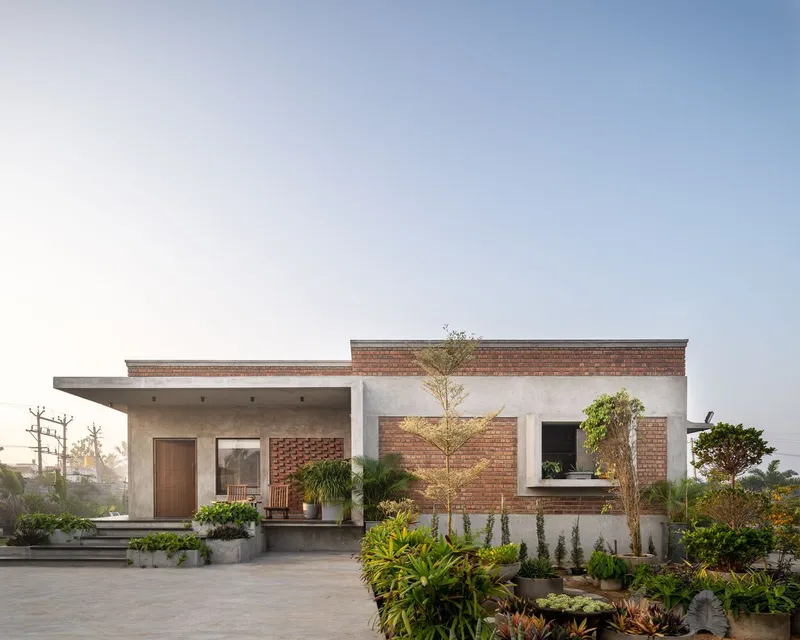
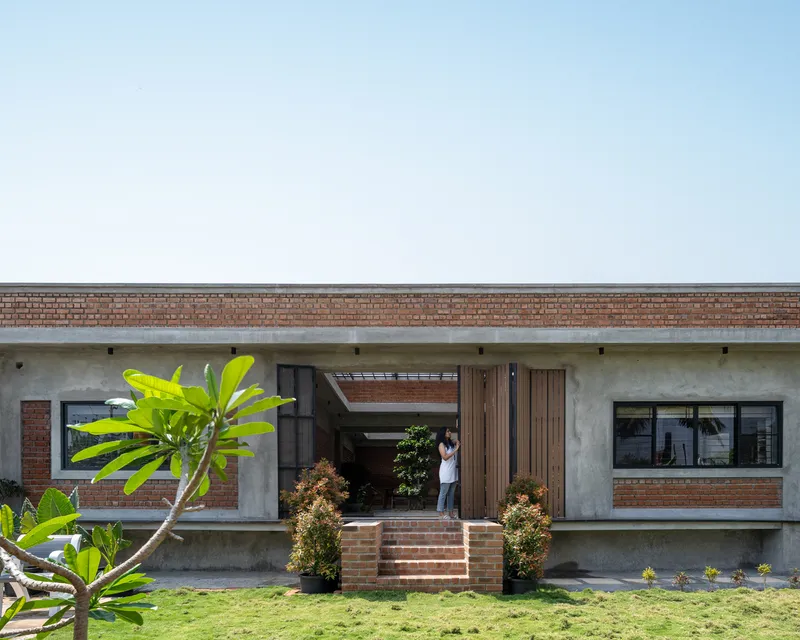
Located in the quiet outskirts of Chennai, the VIPA Farm House designed by Studio One By Zero is a contemporary reinterpretation of vernacular Indian architecture. Built on a two-acre plot in Sholavaram, this 2,350 ft² residence was commissioned by a doctor couple seeking refuge from the city’s urban hustle. Their vision was clear: a two-bedroom farmhouse that embraced nostalgia, natural materials, and timeless modern design.
Architectural Concept – Nostalgia Meets Modern Living
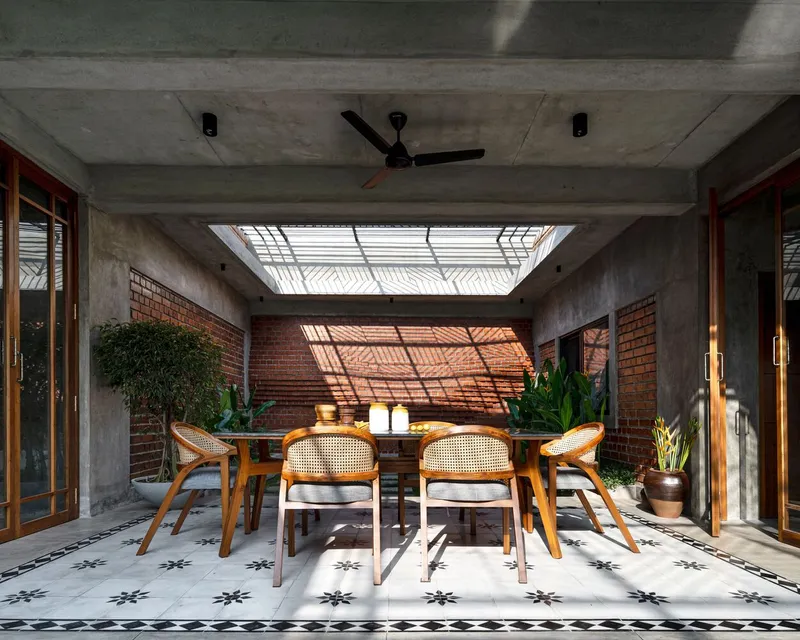
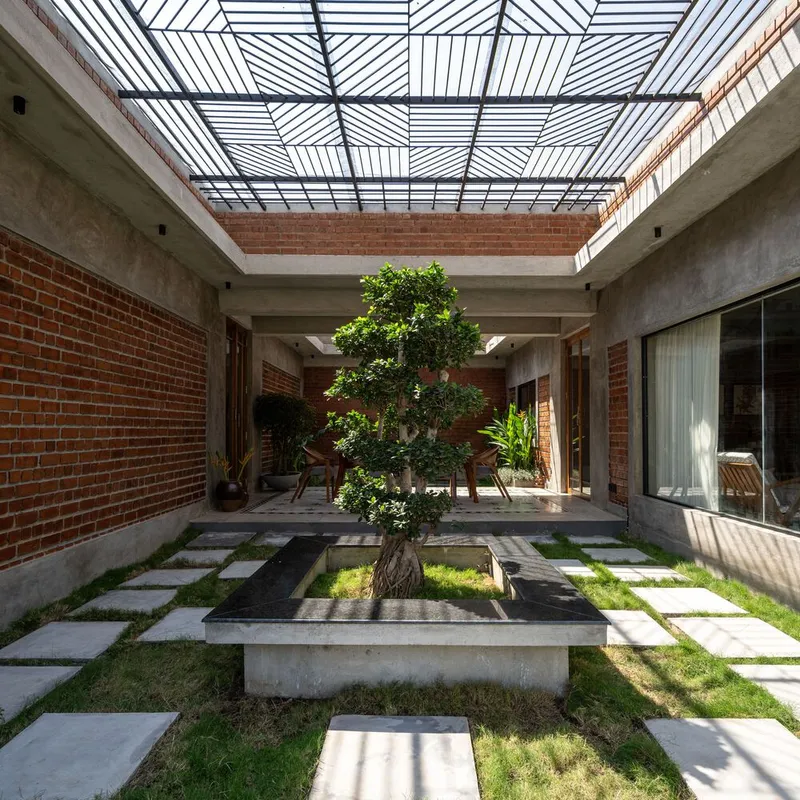
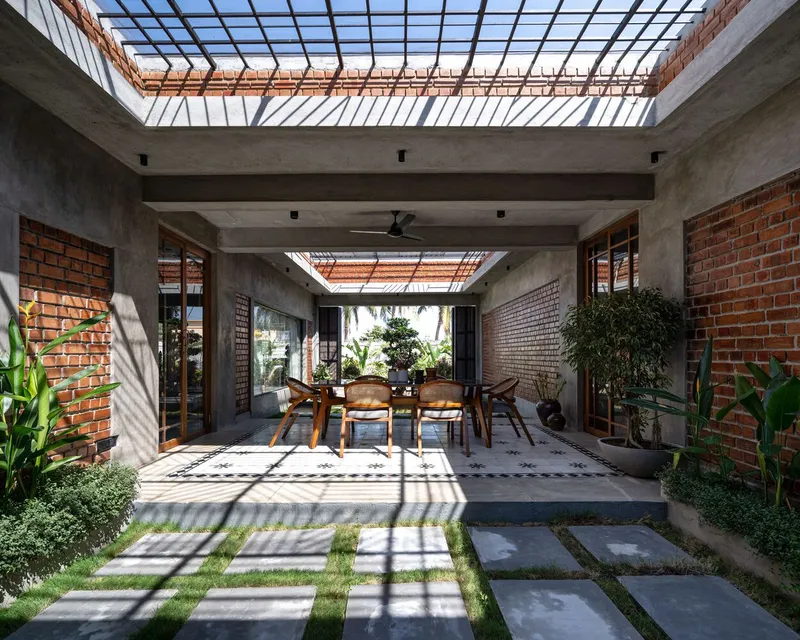
The design centers around dual courtyards that run along the east-west axis, seamlessly connecting the home. One end accommodates the living and kitchen areas, while the other hosts the private bedrooms, ensuring privacy while maintaining a strong visual and spatial flow. Positioned between these zones, the dining space acts as a communal heart, perfect for family gatherings while remaining deeply connected to the outdoors.
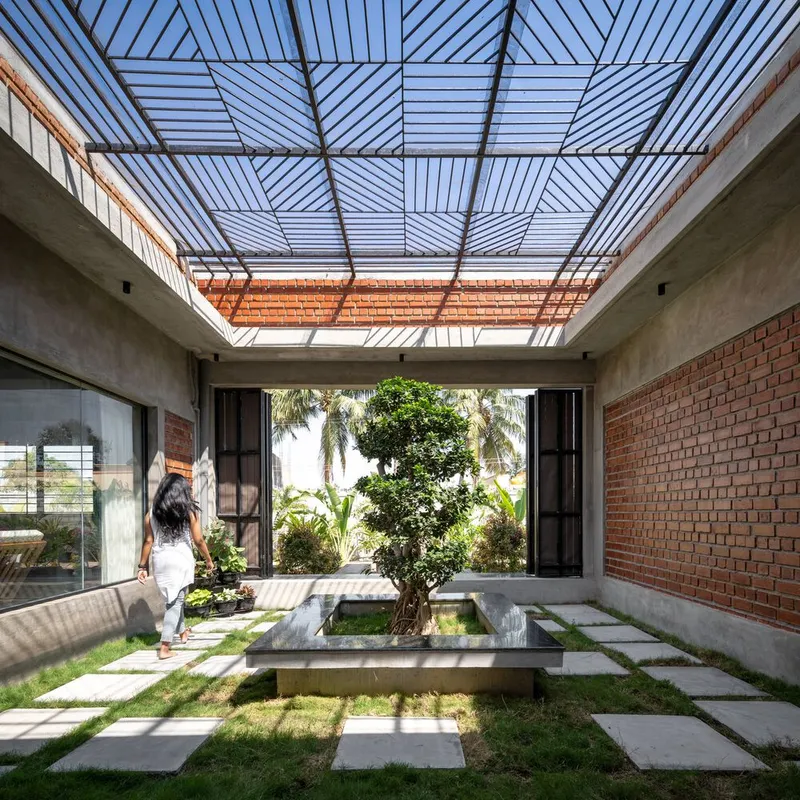
Every space within the home engages with natural light, breezes, and seasonal changes, enhancing the family’s connection to nature. The courtyards frame experiences—from the warmth of the morning sun to the fragrance of the monsoon rains—transforming daily rituals into sensory journeys.
Materiality – Exposed Brick, Concrete, and Reclaimed Wood
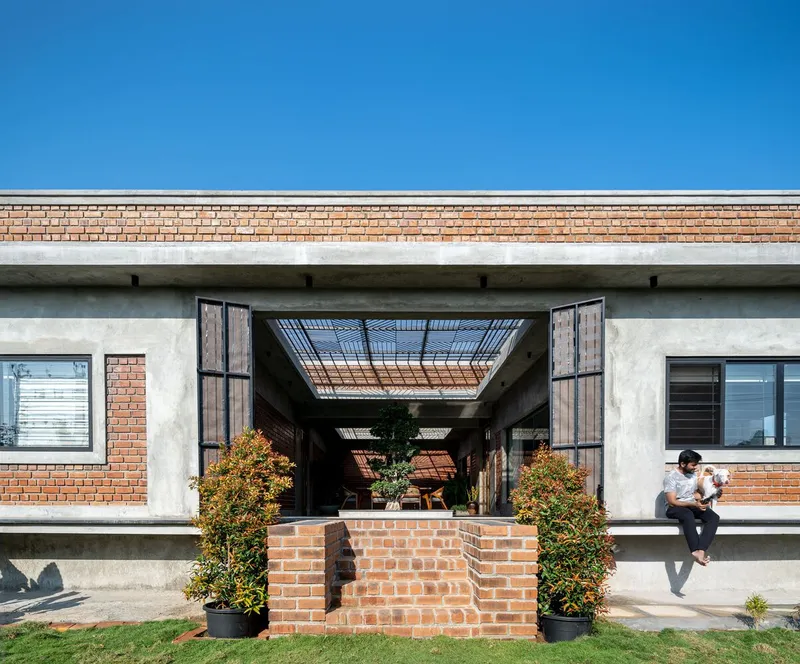
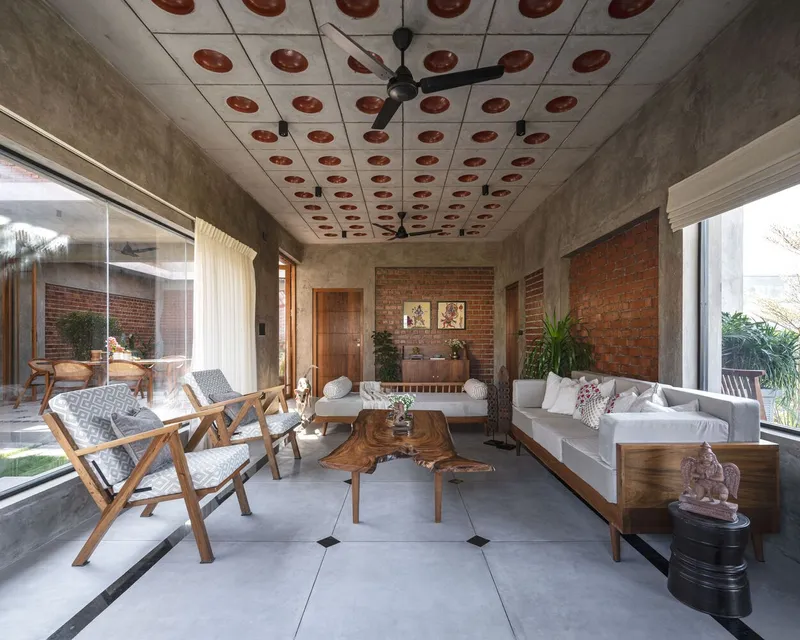
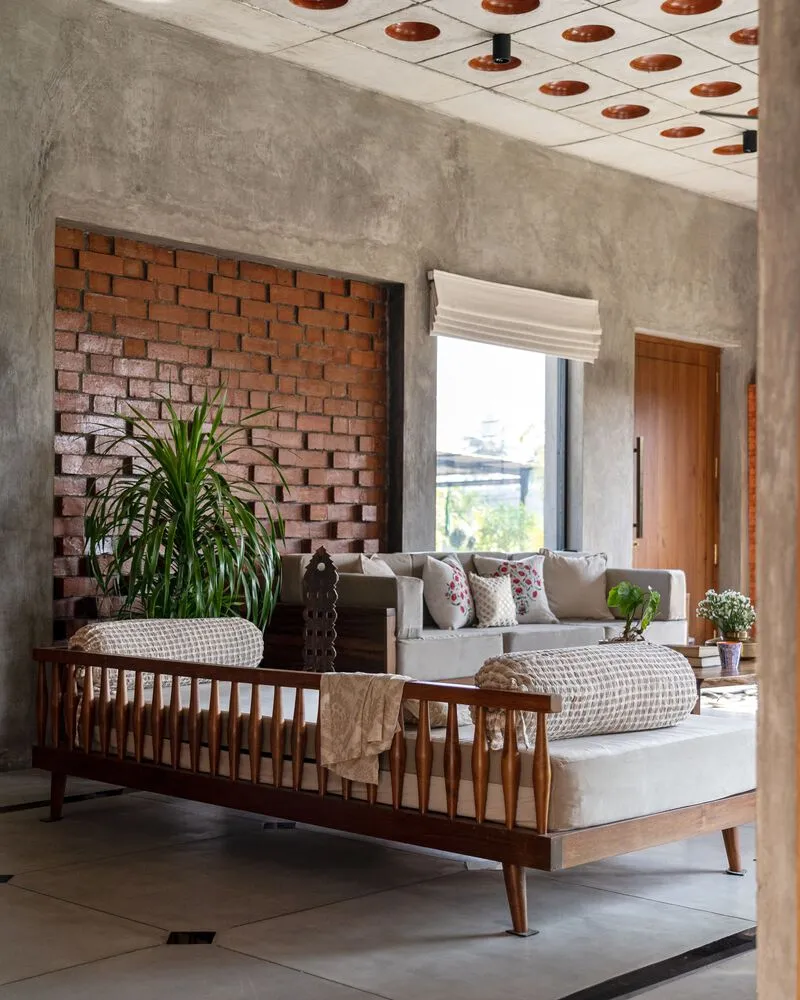
To evoke the client’s memories of rural Tamil Nadu, the architects chose exposed brick walls and cement plaster finishes. This raw material palette creates an organic texture that naturally ages with time, blending modern minimalism with vernacular warmth.
The home also embraces sustainable practices with reclaimed wood sourced from traditional houses and palaces across Tamil Nadu. This wood has been repurposed into furniture, doors, wardrobes, and cabinetry, reducing the need for newly harvested timber while adding layers of history to the home.
Passive Cooling and Climate-Responsive Design
The design incorporates passive cooling strategies to withstand Chennai’s hot climate.
- A cantilevered entrance slab provides shade while allowing cross-ventilation.
- Grey oxide flooring with granite inlays helps maintain thermal comfort, while strips of glass reduce cracking and enhance detail.
- Filler slabs in the ceilings improve insulation and keep interiors cool.
- The courtyards act as thermal buffers, channeling breezes and reducing heat gain naturally.
Interior Design – Tradition with a Modern Twist
Inside, the farmhouse reflects a careful balance of tradition and modernity.
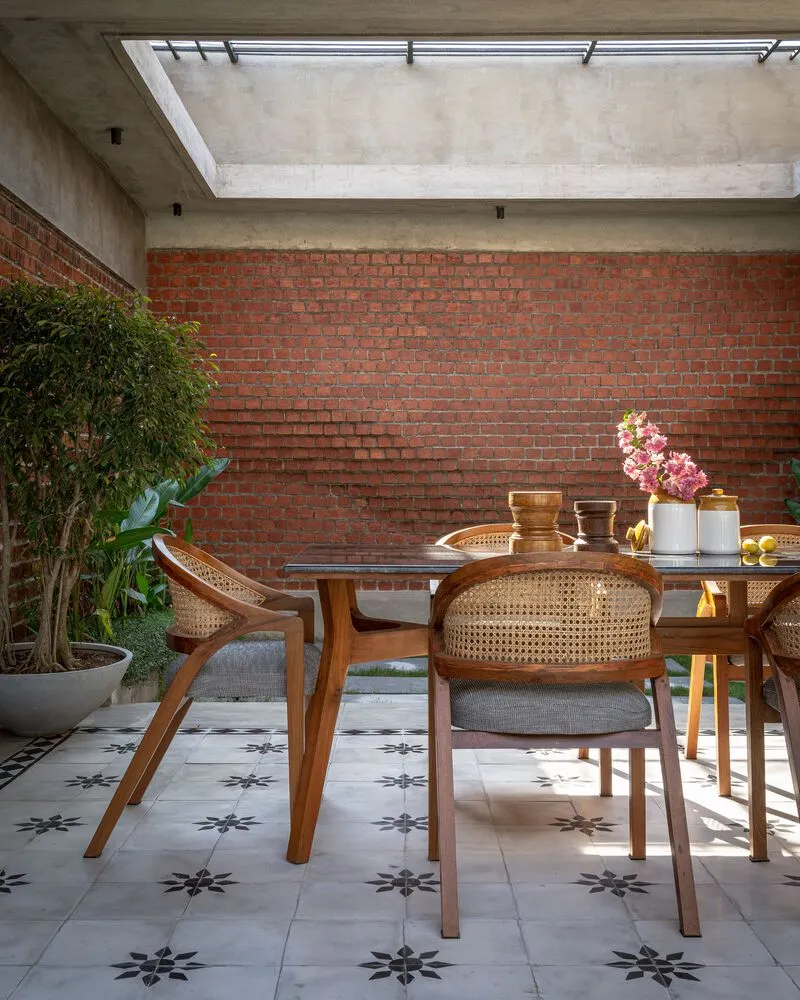
- The dining space, accessed through a grand 9-foot wooden and glass door, features Athangudi tiles from Karaikudi, lending a handcrafted identity.
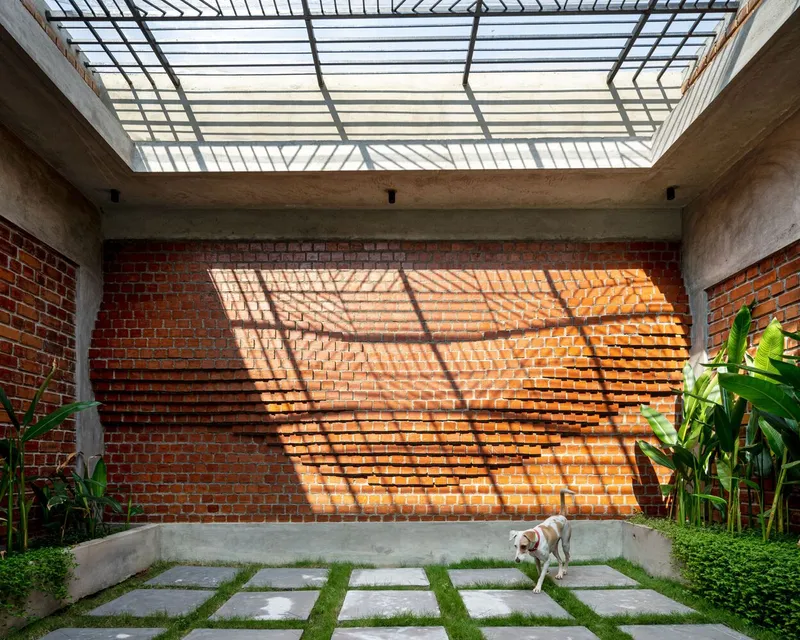
- The west courtyard introduces a parametric brick wall, casting dynamic shadows while screening harsh sunlight.
- The east courtyard centers around a Chinese Ficus tree, softening the brutalist brick aesthetic with greenery.
Bedrooms are designed with warmth and detail. The master bedroom uses wood and cane for tactile richness, while the guest room features a striking live-edge wooden headboard, making a bold statement. The mix of brass and wooden antiques, carefully sourced across Tamil Nadu, further roots the home in its cultural landscape.
A Timeless Rural Retreat
The VIPA Farm House is not just a residence but a sustainable retreat—a place where vernacular heritage and modern sensibilities converge. By combining courtyard-centered planning, passive cooling strategies, reclaimed materials, and local craftsmanship, Studio One By Zero has created a home that embodies sustainability, cultural memory, and architectural elegance.
All Photographs are works of Yash R Jain




Popular Articles
Popular articles from the community


Co-Life: Senior Housing Design That Reconnects Older Adults With the City
Co-Life reimagines senior housing design through healing gardens, shared streets, workshops, and a sustainable community across generations.

Co-life: Sustainable Architecture for Age-Friendly Community Living
Co-life reimagines sustainable architecture for seniors through courtyards, rammed earth, shared gardens, and spaces designed for belonging.

Play: Fragments of Their World
Familiar architecture becomes modular playground design, creating safe spaces where displaced children can learn, connect, imagine and play.

The Earth Pod: 3D Printed Homes for Resilient Refugee Communities
The Earth Pod reimagines refugee housing through 3D printed homes made from clay, combining resilience, self-sufficiency, and rapid shelter.


Similar Reads
You might also enjoy these articles


Hodi-Mandai Geram
Project Function: Preservation and revitalization of the Intangible heritage and socio-spatial identity of the Hodi by Housing, Cultural Memory Center, Sacred Grove, landscape, local tourism economy


Olio Towers: A Mid-Rise for Performers That Fuses Housing, Rehearsal, and Stage
Located blocks from Houston's Theater District, this modular tower stacks living units around a central performance atrium.

Oasis: Modular Green Housing Carved into Dhaka's Urban Fabric
A shortlisted Plugin Housing entry reclaims unauthorized settlements in Dhaka with stepped concrete volumes, green roofs, and ventilation-driven design.

Black Hole: A Floating Megastructure for the Post-Physical Era
Emiliano Mazzarotto envisions a spherical, self-scaling arena where e-sports, digital hotels, and holographic stadiums replace traditional public space.


Explore Vernacular Architecture Competitions
Discover active competitions in this discipline



Challenge to reimagine the Iron Throne


Photograph architecture without architects


Illustrate the lost glory of Angkor Wat - Render Challenge


Design challenge to reuse E-waste
Comments (0)
Please login or sign up to add comments
No comments yet. Be the first to comment!