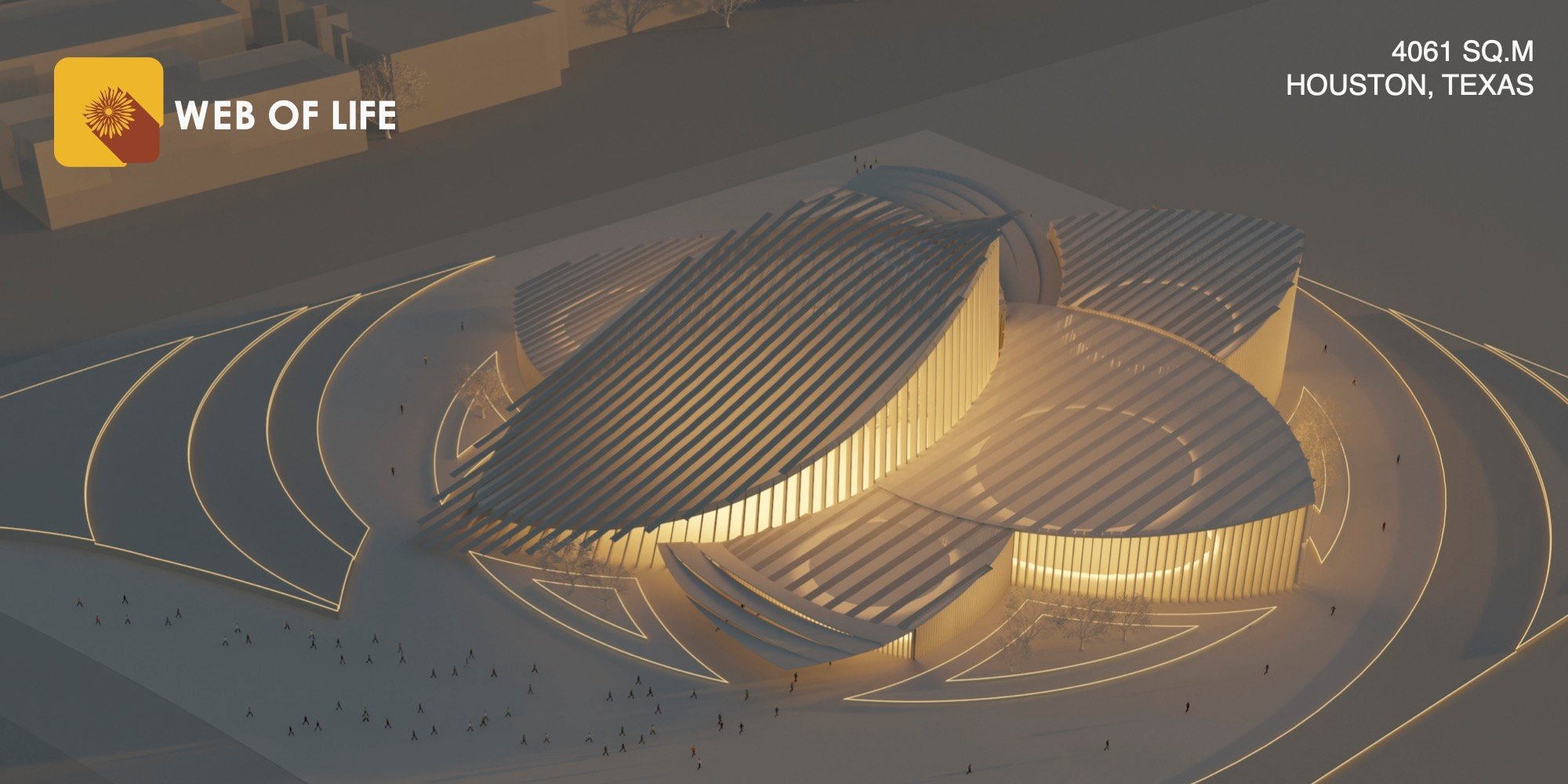
Web of life
Space Museum


Brief:
Human history in Earth, is the narrative of humanity's past. It is understood through many fields such as archaeology genetics, and linguistics, and the advent of writing,
2.8 million years ago early human used some tools to survive but did not make a lot of progress nearly 2 million years until they learned to control fire that provides warmth, light and which made days longer and winters less gruesome and used as a cooking and weapon against predators.
From 300, 00 years ago, most of the different human species lived in small hunter gathering societies that had fire, wood and stone tools, planned for future, buried their dead and had cultures that define them but the most important thing they spoke to each other.
At some point around 50.000 years ago there were an explosion in innovation tools became more sophisticated and culture became more complex because humans had a multipurpose brain. And a more advanced language to communicate and share information with each other.
This led to much closer cooperation and what differs us from any other creature on earth not our weak bodies and inferior senses but the ability to cooperate and to engage as a group and this expand the knowledge very quickly and preserve the knowledge gained though history.
50.000 years ago humans were specialists in survival, as it is required so many skills that the average human brain volume of early modern humans might have been bigger than it is today.
As a group we know even more today but as individuals our ancestors were superior to us.
Around 12.000 years ago in several districts human developed agriculture and what we call now civilization began.
Agriculture gave us a reliable and predictable food source which required protection and this led to communities living together in tight space.
The concept of project drives from the basic human instincts to build a small community that provides needs to survive and adapt through different environments.
Concept
Space made us realize how fragile we are, and how we wasted our resources over time making our survival on Earth is a matter of time,
And to design a space that would serve its purpose efficiently we had to analyze the design objectives.
STORY
How our civilization started on this planet from small groups living in caves to the modern sophisticated cities we live in now.
LEARN
How our existence and actions affected the planet and how other forms of life survived.
USER EXPERIENCE
By fulfilling the needs raised by all users of all ages.
SUSTAINABILITY
By saving our resources and having a greener environment.
And since we know our story and with all the knowledge we gain through our ancestors and by us we could see the needs that a human being would need on a new planet including ( Shelter/ Safety/ Security/ Education/ Knowledge/ Experience/ Clear routes/ Sightseeing and Comfort ) not only to survive but also to have a healthy productive life.
Summarizing all those needs into 4 main aspects: HOME - POWER - DISCIPLINE - GUIDANCE.
And by analyzing different life forms on Earth we could see that there’s a special form of life that fulfill all those needs, which is a flower named ( CHRY-
SANTHEMUM ), and by analyzing its shape and properties we see that:
- It has a core and a stem that provides life, safety, and security to everything connected to it, Same as our ancestors gathering around a pond of water
or fire ( HOME ).
- Has healing capabilities treating several diseases, giving it a unique form of ( POWER ).
- All of its petals are going in descending order as the bigger protects the smaller reflecting ( DISCIPLINE ).
- Emitting a fluorescent light at night acting like a ( GUIDANCE ).
- And finally it’s shape is made of a Fibonacci spiral grid, The same grid that our MILKY WAY is made of, Showing that WE ARE ALL CONNECTED!