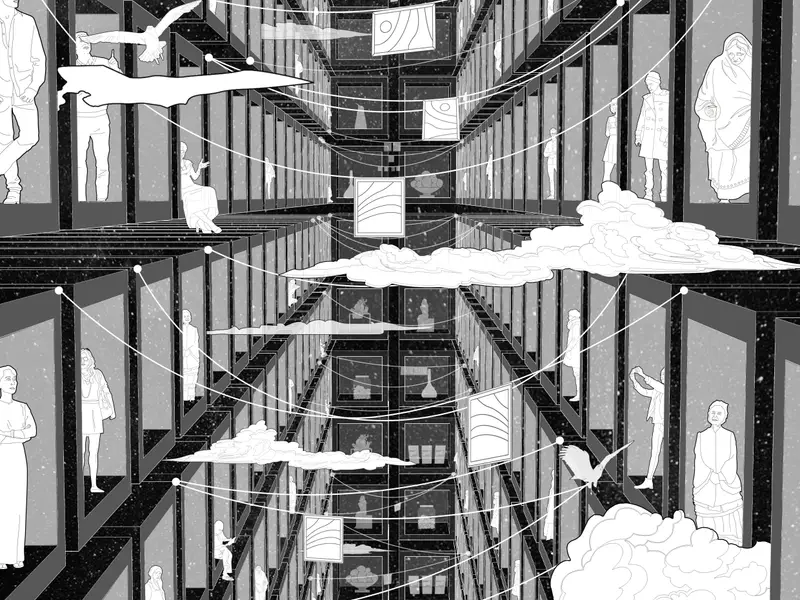
NIRVANA
Museums are understood as the inevitable outcome of the development of civilization in response to human society. The contradictions of colonialism from the seventeenth to the eighteenth centuries of the Enlightenment have continued into the age of museums. In an interview with The Guardian, Hartwig Fischer, director of the British Museum, emphasized the value of the encyclopedic museum as a 'world museum for the world' and a 'global repository of knowledge. (Hartwig Fischer, 2016) But in the interview, he avoids this key question about the decolonization of the interior of the British Museum space. Further intensifying the contradictions within the museum space regarding equity. In a post-colonial context, the question of the intricate colonial elements and the non-equitable symbols of power behind the British Museum abounds and needs to be urgently uncovered and dismantled to achieve equity in the spaces on exhibition. The decolonization of museums is not only manifested at the level of their thematic spaces but also in the focus on public spirit and participation, which is particularly important. This paper aims to use the exhibition space orientation system as a breakthrough and propose new ideas for the equalization of museum space in the post-colonial era and the context of power representation through an inclusive design approach.

 Museum
  Exhibition Design

Similar Publications
Discover more publications you might be interested in

Architecture Portfolio
Portfolio_Rifat Al Ebrahim

Architecture Portfolio - Nusrat Nasrin Ananna

Undergraduate Portfolio
Home On A Leaf
Kris Castelino - Portfolio - 2024
Explore Exhibition Design Competitions
Discover active competitions in this discipline


Challenge to design luxury tourism on rails

VR headsets Storefront design competition

Designing a staircase for a client
Comments (0)
Please login or sign up to add comments
No comments yet. Be the first to comment!