Industrial Design
FLDDesign and development of physical products, from consumer goods to large-scale infrastructure and systems.

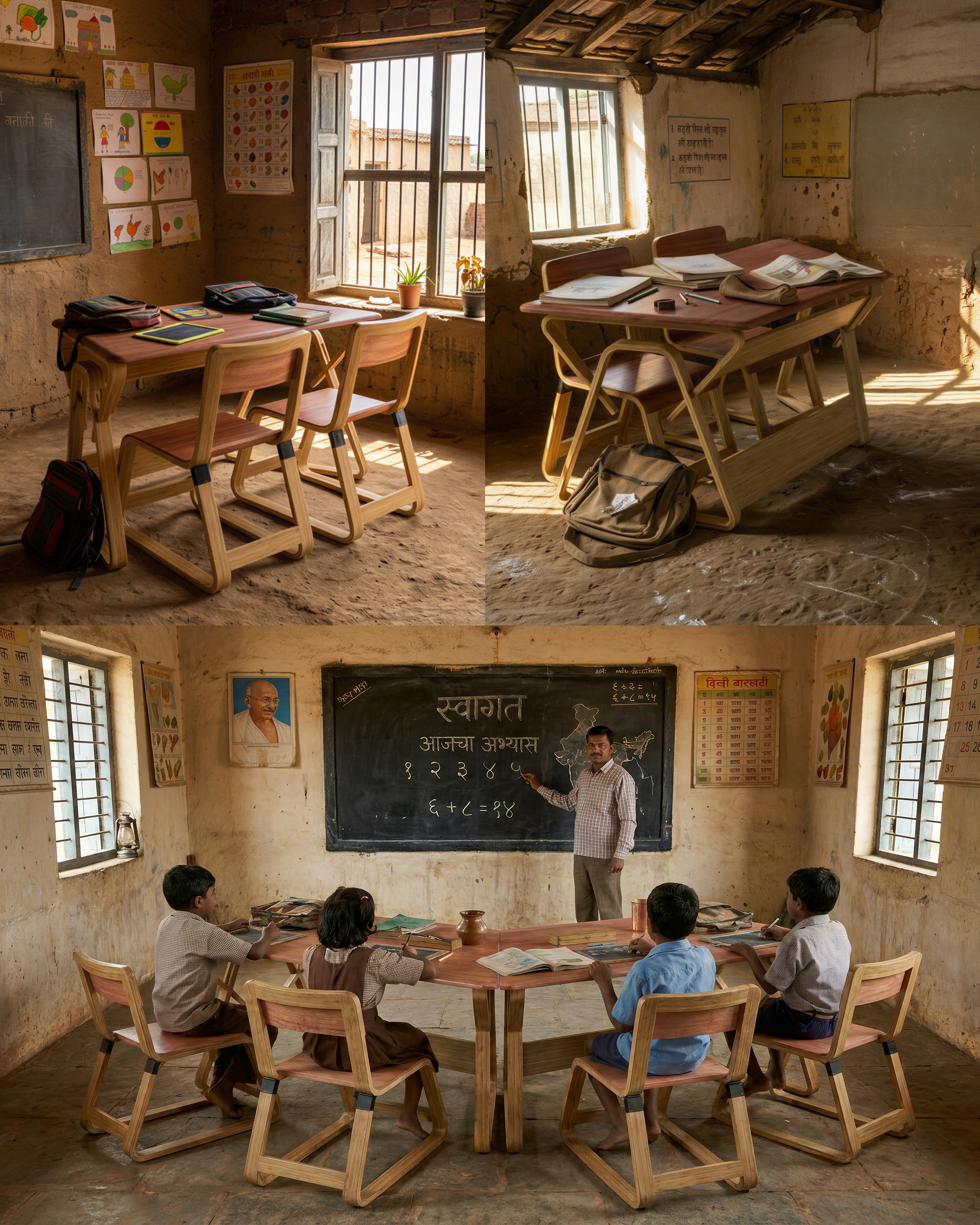
Industrial design (ID) is the practice of creating products, gadgets, objects, and services that are utilized by millions of people every day all over the world. Three-dimensional features, such as the shape of an article, or two-dimensional aspects, such as patterns, lines, or colour, can make up an industrial design. The physical look, usefulness, and manufacturability of a product are traditionally the emphasis of industrial designers, however, they are often involved in far more over the development cycle. All of this adds up to the entire value and experience that a product or service gives to its customers. Everything you come into contact with on a daily basis at your home, office, school, or public space has undergone a design process. During this phase, an industrial designer (and their team) make a slew of decisions geared at improving your life through well-executed design. Industrial designers create items for individuals of diverse ages, races, demographics, incomes, ethnicities, abilities, and gender identities or expressions, as well as pets. Through research and observation, an empathic designer can "walk in someone else's shoes" to gain insights that will inform the rest of the design process and, eventually, result in a design solution that addresses a problem in a positive and meaningful way. Evolution of industrial design Industrial design can be closely related to the industrial revolution and the change from a small-volume craft to mass-produced products for a consumer class populace, having emerged as a professional discipline in the early nineteenth century, though there are precedents well before that. Early industrial designers frequently found themselves in a position dealing solely with aesthetics and styling, straddling the border between artist and engineer. Soon after, design consultancies popped up, offering design services to businesses that couldn't afford to hire their own in-house designers. For example, Walter Darwin Teague, FIDSA, created TEAGUE in 1926 and is credited with designing the Polaroid camera, Pringles canister, and Boeing commercial flight interiors at the time. Carl Sundberg and Montgomery Ferar created Sundberg-Ferar in 1934 as another early design firm. Both TEAGUE and Sundberg-Ferar are still in business today, and they are responsible for the development of a slew of well-known goods over the years. “Design is a plan for arranging elements in such a way as best to accomplish a particular purpose.” —Charles Eames. Industrial design was a proven practice by the time designers like Charles and Ray Eames, Raymond Loewy, FIDSA, Henry Dreyfuss, FIDSA, and Dieter Rams entered the field, and many large corporations like IBM, General Motors, and Electrolux had in-house design teams working on new products for global markets. Img 1: Raymond Loewy’s 1893-1986 (father of industrial design) design for a locomotive Img 2: Dieter Rams was a German industrial designer and retired academic, closely associated with the consumer products company Braun, the furniture company Vitsœ, and the functionalist school of industrial design. With time, a designer's impact and responsibility expanded from solely focusing on how a product looked or worked to also integrating human ergonomics, end-user benefit, material advancements, and corporate branding. All of these factors have become integral to the industrial design profession, which has had a long-term impact on business and society. Industrial design as a profession Today, industrial designers are frequently part of interdisciplinary teams that include strategists, engineers, user interface (UI) designers, user experience (UX) designers, project managers, branding experts, graphic designers, customers, and manufacturers. The design team can thoroughly comprehend an issue thanks to the collaboration of so many various viewpoints, and then develop a solution that skillfully answers to the individual needs of a user. Designers will sketch, render, 3D model, develop prototypes, and test ideas during the ideation, or concept, phase of a project to identify the best potential solutions to a user's demands. This stage of the design process is chaotic, fast-paced, and frequently thrilling! Designers begin to comprehend how a product will perform, look, and be built by testing, breaking, and reconstructing prototypes. Img 3: Designers start the process with basic sketching and prototyping Industrial design is a collaborative field that works with mechanical engineers, material scientists, manufacturers, and branding strategists in the final stages of the design process to bring their concepts to life through production, fulfilment, and marketing. To keep up with rapid advances in technology, cultural trends, and socio-economic pressures, the industrial design profession is continually moving and evolving. Designers are today confronted with new obstacles that were unimaginable when the industry began. Working in the design profession at this moment is truly fascinating. Product design vs Industrial design The clearest difference in the product and industrial design lies in this: systems thinking. Traditionally, product design has always been much about sheer styling and usability. Since the industrial revolution, design has been in constant dialogue with the industry, whether it is a conflict in ideology, as in the case of the arts and crafts movement, or a rationalized harmony with manufacturing like the German Werkbund. Design for style, usability, and manufacturing became a trend for the evolving industrialization of our world. However, in today's day and age, we no longer design products in silos. The design world has come to acknowledge the value of the user experience, creativity; values, lifestyles, ideologies in the product. The process by which people do things now become the focal point - the abstract of our design now becomes the centrepiece. This is because design recognizes that while products and solutions may be obsolete, needs remain timeless. And over time, the solution to these timeless needs manifests itself in different forms. Even in the design of products, we no longer look at the object itself; we look into its intangible experience, the service element to it, how it fits into our lifestyles, its integration with everything else, manufacturing life cycles, and what they represent in terms of values. The terms Product Design and Industrial Design are frequently used interchangeably. Hence the first logical step in understanding the differences between the two would be to learn their definitions. While some claim that they have the same meaning, others offer sharp definitions of the two that are in direct opposition to one another. Img 4: Industrial design is viewed through the lens of industries, factories, automotive and technical aspects of design. Industrial design is described as "the art or process of creating produced things," and it has led to the mass production of countless identical products ranging from automobiles to apparel. However, it was the industrial revolution, which was led by industrial designers and engineers, that gave birth to the modern-day industrial product design sector. We would not have the same standard of living now if Europe and the United States had not transitioned to new manufacturing procedures that streamlined and optimized mass production. Industrial Design has become more focused in recent years on combining artistic form with practicality, as well as craft design and ergonomics, in order to mass-produce things globally. Industrial designers combine the skills of engineers and contemporary artists to develop low-cost, aesthetically beautiful goods that appeal to daily consumers. They enhance the beauty and functionality of a product that serves a specific purpose and necessity. Industrial designers are the ones who are constantly improving and re-releasing things to the public. Product Design is frequently regarded as the successor to Industrial Design; nevertheless, there is no universally acknowledged definition of Product Design, further complicating their differentiation. Two interdependent definitions are employed to accurately depict the enormity of the topic: one is a noun that describes product design in connection to the product, and the other is a verb that defines the product design process in respect to this product. Img 3: Product design is where function and form, as well as the relationship between the product, the user, and the environment (Credits: Thomas Gemperle / Trophy Design concept sketch) Product Design (noun): A set of attributes for a product that includes the aesthetic and functional properties, as well as the holistic properties of the integrated form and function. Product Design (process): The combination of strategic and tactical processes that go into creating a product design, from conception to commercialization. Product designers create physical items and inventions by conceptualizing and evaluating concepts. Product designers' job is to mix the arts, sciences, and new technologies to create goods that people can utilize. This ever-changing function is supported by digital tools that allow designers to communicate, visualize, analyze, and 3D model objects in new and innovative ways never seen before, allowing them to generate tangible ideas in new and inventive ways never seen before. The overall misconception stems from the fact that there is a lot of overlap between industrial and product design. Product designers, on the other hand, are responsible for all aspects of a product and prefer to work on more commonplace items such as personalized products and micro-level products, whereas industrial designers are responsible for more specialized items such as cars and computers. To make a stark distinction, it can be said that product design would be the software and industrial design the hardware of a deliverable. The goal of both types of design is to produce a new product or improve an existing one. The definitions of each of these phrases continue to widen each day as a result of new technology and societal breakthroughs, making it increasingly difficult to describe them as distinct entities. For instance, Apple just doesn't design gadgets, they sell you a lifestyle. In this effort, they aim to make everything we do interconnected and seamless. In order to do this, industrial designers need to consider the macro experience and all product designers need to touch the field of industrial design, in the sense that they engage in understanding the systems. Architecture Competitions Competitions are a great way to try out new things, make mistakes and learn from them. They're also a great opportunity for portfolio building because everything you submit gets contextualized based on where it ranks against everyone else's work. And perhaps most importantly, they give you extra insight into what the judges see in your submitted work as well as how they don't see it - which is yet another fantastic way to improve your designs in unexpected ways! Some of the competitions for industrial design being hosted all over the world are A' Industrial Design Award, James Dyson Award, Aluminum Extrusion Design Competition, A41 Prize by Area Four Industries and so on. Explore projects on an industrial design published on UNI website: UNI Design Competitions UNI is a global network of architects and designers who are solving some of the most challenging problems around the globe. UNI brings together the world's largest pool of design challenges that are curated by the finest architecture academicians and professionals globally. With over 200,000+ registered members, UNI brings academia and the professional spheres of architecture together through a unique knowledge-sharing web platform. Since 2017, UNI has hosted more than 200+ architecture competitions for various idea level to realization level briefs. In the past, UNI has helped 50+ organizations, universities, and government bodies to use our platform to generate architecture and design solutions through competitions. There are many competitions hosted by UNI on our website for industrial design disciplines such as Echo of Rubble, Eco-ware, Envent, Trashed and so on. Discover other competitions: https://uni.xyz/competitions