
Infrastructure Design
Design and planning of systems, networks, and spaces that support urban life and community needs.





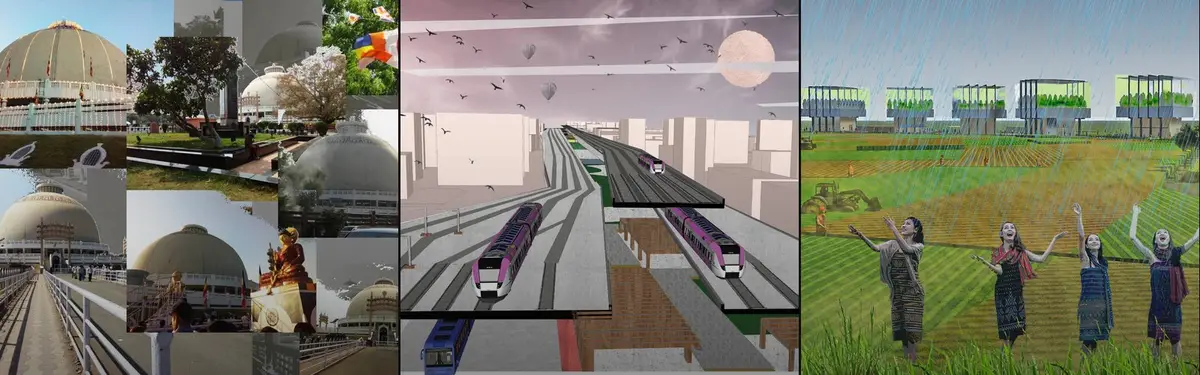
A city is a complex collection of various tangible and intangible elements. Each forms a separate layer, all of which overlap each other. Urban planners have thought and pondered many things about the future of urban space. Planners and designers are working to create better cities and in turn, the world of the future that solves today's problems. As designers blend technology, infrastructure, culture, society and design philosophies to enhance the urban environment, the concept of/ smart and wise cities has taken hold. Infrastructure design is a subset of urban design that is used to describe the interconnected organizational structures that underlie society and enable its effective functioning. In the physical sense, infrastructure generally refers to the assets needed to drive the flow of supply needed by society and is sometimes referred to as "hard" infrastructure. Infrastructure design covers planning and detailing of water resources, municipal engineering, transportation planning (roads, bridges, public transport infrastructure etc), Land surveying, Land/site development, parks and recreation and many more aspects and typologies in city planning. Need for infrastructure design The lens of infrastructure design proves to be a powerful tool to read and re-interpret the history of urban design and urbanization processes in particular. Moreover, as infrastructural projects are considered to be one of the instruments by which the government is still able to design the urban landscape on a larger scale, a better understanding and implementation of infrastructure networks is urgent. Img 1: Chichester city illustration (Credits: Urban Design Group) Urban utilities offer simple desires that considerably enhance a community’s fine of life, spurring social and financial growth. Improper plans and protection of utilities, however, can restrict the financial viability of any area. Utilities and infrastructure contain a huge quantity of corporations and stakeholders. Inter-employer coordination, especially on the subject of important infrastructure works like roads, is critical. Common problems consist of excessive fees and absence of value certainty, complicated regulatory processes, loss of coordination, and spatial impacts. By designing an intelligent and efficient infrastructure system, you can not only avoid haphazard planning and realize significant cost savings, but also get a more complete picture of what is happening. It enables more informed decisions and faster action to address urban problems and new situations. From urban regeneration/adaptive reuse projects to creating new towns, an integrated, multi-disciplinary approach is required to make sure that each aspect of civil engineering, urban design, and environmental planning is included in infrastructure design. Img 2: ‘CORALization’ runner-up for Proximity Island-Repurposing Oil rigs Smart City Infrastructure Smart infrastructure forms the basis for all major smart city themes such as smart people, smart mobility, smart economy, smart life, smart management and smart environments. The core property that underlies most of these components is that they are interconnected to generate data that can be intelligently used to ensure optimal use of resources and improve performance. • Buildings: A smart building that integrates various physical systems in one means ensuring that all systems work together optimally and efficiently. Building management systems can improve a building’s energy efficiency, reduce waste and ensure optimal water use, with operational efficiency and occupant satisfaction. • Mobility/Transportation: Smart infrastructure would include transportation systems that reduce congestion and improve overall connections of mass transit systems. Also bring into effect healthy mobility and infrastructure including better pedestrians, cycle/walking tracks etc. • Waste and Water Management: Cities are constantly trying to solve water scarcity problems with traditional technologies. Installing advanced technologies, better water management and improved flow measurement and management would be the key to a good water distribution system. On the other hand, smart waste management systems can monitor the movement of different types of waste, and technology can be leveraged to better understand and manage the flow of waste from source to destination. • Healthcare: The health and well-being of urban dwellers are of particular concern when it comes to the sustainability of urban areas and their supporting ecosystems. Cities can develop better precautions through previous records and keep their health infrastructure up to date in the event of an emergency. • Digital Infrastructure: With technology ruling every aspect of our lives, research and urbanists have developed integrated technologies in our urban environments too. These technologies can enable better digital infrastructure and can be identified through different layers in the various social, economic, educational and political sectors of a city. Few layers that can be characterised are: Urban, Sensor, Connectivity, Data analytics, Automation Architecture Competitions A city is made up of different vertical infrastructures forming a system of systems. However, these elements of urban infrastructure often operate in cellars. Smart cities need an integrated approach to exploit the full potential of smart infrastructure. Integrated approaches are effective tools for capturing the dynamic relationships between people, policy and the environment. They are often most useful and effective when co-produced by scientists from several disciplines, policymakers, planners, regulators, civil society representatives, and all stakeholders. relevant authority. Img 3: ‘Ghya: An urban refuge’ competition entry for The Tinker project: Design a waste management facility While designing and planning infrastructure simultaneously is a challenge in our running urban environments, what can be done to match the smart solutions for infrastructure design to the existing conditions of urban infrastructure? Can we use technologies and software that use integrated approaches to deal with infrastructure through pre-stored data, government regulations and other advanced designing options? Can these options be used by students as well as professionals to solve curated urban design and infrastructure competitions and provide the world with a library of solutions? Explore projects in Infrastructure design: UNI Design Competitions UNI is a global network of architects and designers who are solving some of the most challenging problems around the globe. UNI brings together the world's largest pool of design challenges that are curated by the finest architecture academicians and professionals globally. Since 2017, UNI has hosted more than 200+ architecture competitions for various idea level to realization level briefs. In the past, UNI has helped 50+ organizations, universities, and government bodies to use our platform to generate architecture and design solutions through competitions. Discover other competitions: https://uni.xyz/competitions


