
Beegraphy Design Awards
Beegraphy's Computational Design Challenge Series
Jury
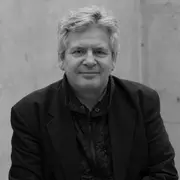
laurent lescop
Professor at ENSA NANTES France
Laurent Lescop is an architect, a doctor in sciences with habilitation and is a professor at the Nantes’ Superior School of Architecture (ENSA Nantes) and researcher at AAU – UMR|CNRS 1563.
He has worked ten years as an architect and is specialized into CG graphics and immersion.
He’s a trained specialist for 3D scanning, modelling and restitution in the fields of archaeology, architecture and scenography.
His main teaching and research refer to immersion and immersive devices used for design and visualization.

Nora Katharina Fankhauser Zeder
Nora is an Urban Computational Designer at Gensler, passionate about sustainable cities and innovative design solutions.
Nora serves as an Urban Computational Designer and Design Resilience Leader at Gensler, London, where her expertise is shaping the future of urban environments through cutting-edge computational design and data analysis techniques. A graduate of the Bartlett School of Architecture at UCL, Nora has harnessed her academic and professional experiences to specialise in developing sustainable, innovative solutions for complex urban challenges.
Her role at Gensler involves integrating computational methods into urban planning processes, allowing for more efficient and precise designs that respond to the dynamic needs of modern cities. Nora’s work focuses on leveraging big data and advanced modeling tools to simulate urban dynamics and predict future outcomes, ensuring that her designs are both innovative and sustainable.
In addition to her professional practice, Nora is deeply committed to education in her field. She teaches computational design, sharing her expertise with aspiring architects and urban designers. Through her teaching, she emphasises the importance of computational tools in crafting responsive, adaptable, and environmentally conscious urban spaces. Nora's courses cover a range of subjects, from basic programming and data visualisation to complex simulations and algorithmic modeling, preparing the next generation of designers to push the boundaries of urban innovation.
Her dual role as both practitioner and educator enriches her ability to contribute to the urban design field, making her a distinguished leader in computational design.

Carlos Bañón
Professor at SUTD, Director of AIRLAB, Singapore
Carlos Bañón (born 1978 in Alicante, Spain) is a trained architect and academic operating at the dynamic intersection of architecture, art, technology, and Artificial Intelligence (AI). He propels the field of architectural design towards new horizons. As Director of Airlab, Co-Founder of Subarquitectura Architects, and an Associate Professor at the Singapore University of Technology and Design (SUTD), he integrates these disciplines to advance architectural practices and pedagogy.
Bañón's innovative research encompasses architectural tectonics with additive manufacturing and design workflows for the circular economy, with a particular emphasis on the role of AI in spatial design. His influence in the field is marked by his work being featured in two editions of the highly esteemed Venice Biennale of Architecture. His outstanding design contributions have earned him distinguished accolades such as the Design of the Year Prize by the London Design Museum, medals from the International Paralympic and Olympic Committees, and the prestigious Singapore President's Design Award.
In his current work, Bañón is investigating the transformative potential of AI in reshaping architectural design methods, demonstrating the profound influence technology can wield in defining the future of architecture. His ongoing efforts serve as a beacon for both aspiring architects and established professionals in the industry.

Sameep Padora
Sameep Padora runs an architecture and research practice based out of Mumbai and is the Dean Faculty of Architecture at CEPT university.
Sameep Padora is an architect and author. Born in Chamba, Northern India, Sameep Padora established his Mumbai based practice in 2007 after graduating from the GSD, Harvard University.
The studio’s work has been widely published and has in the past received the Wallpaper Design Award for Best Public Building, Beazley Architecture Prize, Wienerberger Brick Award, Archdaily Building of The Year, Wallpaper Design Award for House of the Year, as well as the Architectural Review’s Emerging Architecture and the AR Library Commendation Awards.
Besides the architectural practice, Sameep also runs a not-for-profit sPare that researches issues of urbanization in India with a focus on housing. sPare’s research publications; In the Name of Housing, How to build an Indian House and_(de)Coding Mumbai_ are projects attempting to unravel the production of affordable housing in Indian cities.
Sameep has presented the studio’s projects and built work at numerous forums including te Seoul Biennale and at various universities including the GSD, Cooper Union, Cornell and TU Delft amongst others.
Sameep serves on the academic boards of a number of educational institutes and is currently the Dean of the Faculty of Architecture at CEPT University.
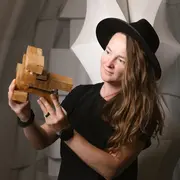
Anastasia G
Academic and designer with expertise in computational design, interactive systems and simulations in architecture.
Dr. Globa is currently holding a position of Senior Lecturer in Computational Design and Advanced Manufacturing at The University of Sydney. She is a member of the CoCoA research lab and SydneyNano research centre; closely collaborating with the Computer-Aided Architectural Design in Asia (CAADRIA).
The research work and most of the teaching focuses on the use of computation, algorithmic form-making and integration of parametric modelling in architectural design. Her design and research projects often involve the use of various digital fabrication technologies, including the adaptation and pre-fabrication preparation of digital models for 3D printing, CNC routing or laser cutting.
Dr. Globa has further extended her skill-set and developed multiple projects using interactive Virtual (VR) and Augmented (AR) environments. VR and AR were applied in the projects involving design exploration, data visualisation and pre-occupancy simulation. She has extensive experience working with advanced computational analysis and simulations, data visualisation, real-time interactive applications and immersive analytics using both modelling computer environments and gaming engines (such as Grasshopper/ Rhino / Unity3D). Dr. Globa specialises on the development and testing of digital and physical prototypes, interdisciplinary design and academic / industry collaborations.

Hamid Hassanzadeh
Hamid Hassanzadeh is a distinguished architect, entrepreneur, researcher, and speaker.
Hamid Hassanzadeh is a distinguished architect, entrepreneur, researcher, and speaker. Having earned his degree in architectural engineering in 2012, Hamid has since contributed to various architectural projects across multiple regions around the globe. In early 2016, he founded the ParametricArchitecture platform, initially launching on Instagram. Today, ParametricArchitecture, often abbreviated as PA, stands as a globally renowned hub for parametric, computational design, and AI lovers, boasting over 20 million monthly interactions on the internet.
Hamid endeavors to demystify the intricacies of the parametric, computational, and AI realms through compelling articles, interviews, workshops, podcasts, and conferences disseminated across various digital platforms. Furthermore, he’s the visionary behind PAACADEMY, an educational entity under the aegis of PA, dedicated to propagating the concepts of computational architecture and design. The PAACADEMY, as an educational platform, educates and engages with its audience, introducing them to advanced techniques and algorithms employed by architects, designers, and coders alike. He highlights exemplary projects executed using state-of-the-art design software, ensuring that his audience not only witnesses but also comprehends the depth and philosophy of these avant-garde design practices.
Moreover, as the esteemed host of the 'PA Talks' interview series, he engages in enriching conversations with architects, orchestrates numerous workshops, conferences, and events, and has had the privilege of interviewing myriad globally acclaimed architects, delving into their methodologies and foresighted visions for the architectural landscape.

Saifiz Mohammed
Founder & Head of Parametric, CODIN Global
Saifiz is a Computational Urban Designer at BroadwayMalyan, where he specializes in building and optimizing design workflows using advanced computational tools to enhance efficiency. His work spans large-scale masterplanning projects for islands, cities, and urban neighborhoods, always aiming to integrate cutting-edge technology with creative design.
With a strong academic foundation, Saifiz holds a Bachelor's degree in Architecture, an M.Arch in Machine Learning Urbanism from the Bartlett School of Architecture, UCL, and an M.A in International Business Management. This diverse educational background underpins his unique approach to design and urban planning, blending architectural expertise with insights from machine learning and international business.
As the Founder & head of Parametric at CODIN Global, Saifiz leads a vibrant community of parametric designers dedicated to exploring innovative forms, sharing resources, and gamifying the parametric design process to make it more accessible. His passion for design extends into areas such as stadium design, metaverse design, AI integrations in generative design, and entrepreneurship.
In addition to his role at BroadwayMalyan, Mohammed is also a director at Guardian+Des Design Studio, where he provides comprehensive branding and architectural design solutions. His work is characterized by a commitment to enhancing creativity through well-structured systems and an unwavering dedication to advancing the field of parametric design.

Jose Luis García del Castillo y López
Lecturer, Harvard GSD. Founder, ParametricCamp
Jose Luis García del Castillo y López is an architect, computational designer, and educator. He advocates for a future where programming and code are tools as natural to artists as paper and pencil. In his work, he explores creative opportunities at the intersection of design, technology, fabrication, data, and art.
Jose Luis is a registered architect, Doctor of Design and Master in Design Studies in Technology by the Harvard University Graduate School of Design. As a structural engineer at Ayesa, he has consulted for international firms such as OMA, Mecanoo, and Cesar Pelli. Additionally, he has worked as Data Visualization Architect at Fathom Information Design, designing and building platforms to help clients such as Google, Samsung, and Nike understand their data. More recently, he has worked as Research Engineer within the Generative Design Group at Autodesk Inc., developing experimental prototypes to disrupt the AEC industry through advanced robotics and machine learning. Jose Luis is also the co-founder of ParametricCamp, an international organization whose mission is to spread the knowledge of computational design among designers and architects.
His current research focuses on the development of digital frameworks that help democratize access to robotic technologies for designers and artists. In his doctoral dissertation, he proposed Enactive Robotics, a new model for enhanced human-robot interaction using machines as an exploratory platform through concurrent control. When applied to digital fabrication, for example, this model systematically enables closed-loop control mechanisms, opening up the possibility to incorporate material feedback or human mediation in real-time.

Sergey Dmitriev
Architect, Developer of Computational Design Tools, Lecturer at the leading Russian architecture schools teaching "Parametric Design" and "Digital Fabrication"
Sergey Dmitriev is a developer of tools for generating PIK facades and algorithms for solving architectural and structural problems for Park-Pro. He has developed and prepared models for production with CNC machines at FORK and managed project development at Simplex Noise. Sergey has trained and advised construction companies and architectural studios, including Ostozhenka, Kerimov Architects, LOGIC, Ingrad Project, PIK, MARKS, and Context Machine.
Currently, Sergey curates and teaches computational design courses in several educational institutions and private organizations. He is the curator of the intensive PRO “Parametric Design” course at MARCH and a teacher at the Moscow Architectural Institute's Department of “Information Technologies in Architecture,” where he teaches “Computational Design.” He has also taught courses in private organizations such as Softculture, Simplex Noise, and KAFEDRA. Sergey manages the development of projects for construction, architectural, and design companies. He is currently working with Park-Pro and teaching 2-3 courses at the Moscow Institute of Architecture.

Biayna Bogosian
Interdisciplinary researcher exploring architectural technology and spatial media for data-driven, participatory built environment improvements.
Biayna Bogosian, Ph.D., is an Assistant Professor of Socially Engaged Design at Arizona State University, with joint appointments in the Design School and the School for the Future of Innovation in Society. Her research, housed at the ASU Media and Immersive Experience (MIX) Center, focuses on context-aware participatory architectures, utilizing immersive media and AI to enhance civic engagement and environmental education through environmental data, design, and robotics. Grants from the NSF, NASA, and EPA fund her research. Previously, Biayna held an Assistant Professorship at Florida International University (FIU) from Fall 2019 to Fall 2023, where she served as the Associate Director of the Robotics and Digital Fabrication Lab, a position she still holds. As an affiliate faculty member at FIU, she collaborates on integrating AI with XR technologies to improve curriculum development and teaching methods in architectural robotics. Biayna holds a Ph.D. in Media Arts from the USC School of Cinematic Arts and an M.S. from Columbia University's GSAPP, specializing in Immersive Media and Architectural Technology. Her interdisciplinary background allows her to explore innovative approaches to improve the built environment through data-driven and citizen-centric methods.

Erwin Redl
Erwin Redl’s work is informed by conceptual-structural thinking and profound craftsmanship in electronic and traditional media.
Erwin Redl was born in 1963 in Gföhl, Austria. The artist lives in Brackney, Pennsylvania and New York City.
In 1993, after finishing his studies at the Vienna Music Academy with a BM in Composition (1990) and BM in Electronic Music (1991), he was awarded a Fulbright Scholarship for graduate studies in computer art at School of Visual Arts, New York, NY (MFA 1995). Erwin Redl’s work is informed by his combination of conceptual-structural thinking and profound craftsmanship both in electronic and traditional media. The artist manages a studio in New York City and a large production facility in Brackney, Pennsylvania with several studio assistants and technicians.
The artist’s work was featured in the 2002 Whitney Biennial, covering the Whitney Museum's facade with three multi-color LED veils. In 2008 Erwin Redl created a sound and light installation for the Austrian Pavilion at the World Expo in Zaragoza, Spain. After being awarded the Bloomberg Public Art Challenge Grant, his largest project series of nine large-scale public art installations were completed in 2016 for the City of Spartanburg, SC. Erwin Redl’s monumental kinetic light installation “Whiteout” was featured during the fall winter 2017/18 at the prestigious solo exhibition series at Madison Square Park in New York City.
He won several major public art competitions with installations for the new New York Police Academy in Queens, NY, the San Diego International Airport, CA and the Union Square / Market Street subway station in San Francisco, CA.
His work is collected by prestigious national and international institutions, among them the Whitney Museum of American Art New York, the Museum of Contemporary Art San Diego, the Milwaukee Art Museum and Borusan Contemporary Istanbul as well as by prominent private collectors.

Eliana Nigro
Architect and educator, head of computational design at Cobe and ELNI Studio founder, integrating tech with design
Eliana is an architect, educator and head of computational design at Cobe, participating in numerous lectures and podcasts, discussing how technology interacts with creative developments. During her professional experience, she has been involved in a large range of projects all over the world. She worked for 3XN architects for four years, after completing a post-graduation master in advanced design methods. Eliana is the founder of ELNI Studio, which provides services related to AI solutions, 3D modelling, algorithmic modelling, data driven design and digital fabrication. ELNI Studio also offers mentoring sessions, focusing on portfolio review, career advice and public speaking training for students and young professionals. She has a background as academic researcher and she is still regularly involved in workshops and conferences concerning the use of digital strategies in architecture. She has been guest lecturer at universities worldwide, focusing on parametric approaches to face the emergent complexity of architecture through mathematical and geometrical control.

Chris Bullen
Specializing in advanced visualization services, production tools, and instruction for Architecture and Interior Design.
Chris has had a varied journey throughout his career. Originally a watercolor artist for Architects and Developers, Chris went back to university to get degrees in Pure and Applied mathematics with First Class Honors with the original plan to get his Master’s in Architecture. However, during his time as an undergraduate he started to look towards computer graphics. Understanding the math behind many of the software programs, along with his keen interest in Architecture, has given him a unique insight into using the tools differently and understanding them at a deeper level. This allowed him to become a top instructor with Autodesk University and getting published internationally in magazines and instructional books. Chris has been teaching at Mount Royal University in the Interior Design Department for the past 17 years and is responsible for curating and incorporating current technology into the program. During this time, he has also worked as a consultant to many architectural firms and contracted his services to numerous architects and developers, interior designers, industrial designers, and game developers. Chris is also an accomplished musician and uses his knowledge in Art, Architecture, Music, and Technology to create and convey novel techniques.

Wassim Jabi
Professor, Author, Software Developer, and Expert in Computational Methods and Spatial Analysis in Architecture.
Professor Wassim Jabi is the course director of the MSc Computational Methods in Architecture programme at the Welsh School of Architecture, Cardiff University in Wales, the United Kingdom. He earned his M.Arch. and Ph.D. from the University of Michigan and taught at various universities in the U.S. before moving to the UK in 2008. While teaching in the U.S., he secured a $250,000 (USD) National Science Foundation (NSF) grant as Primary Investigator. Professor Jabi has published widely on topics ranging from parametric and generative design to the role of light in architecture and building performance simulation. He has authored a book titled “Parametric Design for Architecture” (Laurence King Publishing, London). In 2013, Professor Jabi won £70,000 (GBP) in funding from the university’s internal competitive funding scheme to purchase a large 6-axis high accuracy industrial robot to investigate innovative digital fabrication processes. His current research is at the intersection parametric design, the representation of space, building performance simulation, machine learning, and robotic fabrication in architecture. Professor Jabi has recently concluded a £300,000 (GBP) grant from the Leverhulme Trust as Primary Investigator to study spatial topology in building information modelling (BIM). This resulted in a software library called Topologic (http://topologic.app).

Gediminas Kirdeikis
Co-founder of VGAC, Course-coordinator in Lund University, Educational content creator on Youtube.
Based between Malmö, Sweden, and Vilnius, Lithuania, Gediminas is engaged in both design practice and education. He co-founded Very Good Architecture Company, which specializes in small-scale residential architectural design, providing innovative and practical solutions to clients. Since 2017, he has been teaching at Lund University's Architecture Department, where he currently oversees several courses at different levels of higher education, from introductory classes to advanced seminars. His commitment to education extends beyond the university setting; he runs a design-focused YouTube channel, @designgobrr, offering tutorials and insights on various design topics. Additionally, he maintains a secondary channel, @geddan, where he explores more informal and experimental design ideas. This dual approach allows him to reach a broader audience and share his knowledge and passion for design with a diverse community of learners and enthusiasts.

Tim Fu
Founder of Studio Tim Fu, London Architectural practice pioneering in AI design integration.
Tim Fu is a renowned designer known for his specialisation in of advanced computation and artificial intelligence (AI). Emerging from Zaha Hadid Architects, he has since founded Studio Tim Fu, a high-tech architectural practice pioneering in the integration of AI into his visionary designs. As an active educator, Tim leads diverse workshops on computational design in the academia and is a prominent voice on the use of AI in architecture, speaking at conferences globally. Additionally, Tim has built a significant online following, sharing his design and technological insights worldwide, establishing his influence as a thought leader in the field.

James Solly
James is a director at Format Engineers and tutor on the AA’s Design + Make programme.
James is a director at Format Engineers and a tutor on the AA’s Design + Make programme at Hooke Park, Dorset.
Format is a studio of engineering designers with backgrounds in structures, coding, mathematics and architecture. We believe in the day-to-day exploitation of digital technology as a creative tool for the production of designs that are appropriate, lean and beautiful.
The Design + Make programme explores architectural design at the point of physical production. The programme develops design methodologies at the intersection of craft knowledge, innovative technologies and natural materials.
James started his career in practice at Ramboll UK then BuroHappold Engineering, delivering projects with RSHP, Herzog & de Meuron and Zaha Hadid Architects among others. He then moved into research, working at ITKE, University of Stuttgart where he was a tutor and lecturer on the ITECH programme as well as a research associate within the Horizon-Funded Innochain Network working on the novel use of wound composites for construction.
On his return to the UK to join Format he also became a Senior Lecturer at the Bartlett School of Architecture, teaching on the MEng “Engineering and Architectural Design” and MArch “Design for Manufacture” programmes before moving to his current teaching role in 2023.
James’s interests lie in the use of current computational engineering techniques to support architectural design, reduce the use of excess material and to enable human craft to remain part of modern construction.

Angad Warang
Associate Professor | Architect specializing in computational design and digital fabrication
Angad Warang is an Architect specializing in Computational Design and Digital Fabrication, based in Barcelona. His work seamlessly integrates teaching, research, and practice, spanning multiple design scales.
After earning his Bachelor of Architecture from VNIT, Nagpur, India (2012), Angad gained extensive experience working with renowned firms in Bengaluru (mayaPRAXIS) and Mumbai (I M Kadri Architects, SSA Architects, and Broadway Malyan) over five years. In 2018, he joined the Institute for Biodigital Architecture and Genetics, ESARQ, UIC Barcelona, where he completed his Master’s (2017) and PhD (cum laude, 2021) in Architecture. Currently, he serves as an Associate Professor and research assistant, focusing on the fusion of digital technologies with architectural design practice.
Angad's teaching, research, and practice are focused on modelling, analysing, and fabricating complex organic forms while challenging the mainstream, rectilinear, functionalist approach towards design. His design pursues holistic, procedural and undeniably beautiful forms, enclosures, and structures. His work seeks to redefine the boundaries of architecture by embracing the intricacies of nature and the potential of computational methods.

Lazar Djuric
Architect, Computational Designer, Co-Founder of How to Rhino
Lazar is an architect and computational designer with over a decade of experience in Rhino and Grasshopper. He has worked internationally in Poland, Spain, Maldives, and China, applying his computational design expertise to various projects across different scales, contexts, and cultures. Lazar is also a co-founder of How to Rhino - educational online platform, Authorized Rhino Training Center, and YouTube channel that focuses on teaching architects and designers how to use Rhino and Grasshopper. It serves as a learning hub for individuals looking to master advanced design techniques, optimize workflows, and enhance their skills in computational design, often within architectural contexts. Through How to Rhino, Lazar teaches parametric modeling and digital fabrication, driven by his passion for making Grasshopper easy to understand.

Ding Wen 'Nic' Bao
Senior Lecturer at RMIT Architecture, Director at B.W Architects, Secretary at CAADRIA, Melbourne, Australia
Dr. Nic Bao is a Senior Lecturer in Architecture at RMIT University, specializing in performance architecture, computational design, structural optimization, behavioral algorithms, additive manufacturing, and robotic fabrication. He has authored over 60 articles and serves as an editorial board member for Architectural Intelligence and Sustainable Structures journals. Nic is an award-winning architect, holding Australian and US Registered Architect, and UK RIBA Chartered Architect. He directs B.W Architects (BWA) and Wonderform Studio, founded FormX, and serves as a partner at Ameba. Nic’s work has been showcased at prestigious venues including the National Gallery of Victoria (NGV), Melbourne Design Week, Hong Kong BoDW, Venice Biennale, Shenzhen Biennale, and Barcelona IASS Expo. Nic gained his PhD in Civil Engineering and Architecture with the Research Excellence and Impact Award from RMIT. He has received numerous awards, including Young CAADRIA Award, MUSE Design Award, GPDP Gold Award, IAI Design Award, A'Design Award, DigitalFUTURES Young Award & Project Award, etc. Nic also holds key roles as Secretary at CAADRIA, Organizing Committee Member of DigitalFUTURES Association, and Member Board of Directors at ACADIA. He was also invited as a guest lecturer and critic at universities worldwide, including Tsinghua University, Shenzhen University, Tongji University, Southeast University, The University of Newcastle, The University of Queensland, The University of Melbourne, Universita Di Pisa, UCL Bartlett, ETH Zurich, AA, , University of Michigan, etc.

Mohammed Mansoor
Lead Designer at Rafael Viñoly Architects with global experience | Graduated from Cornell | Ex- SANAA | Ex - RAMSA
Over a decade as a Lead Designer, he’s built a diverse portfolio spanning practical design and scholarly research. Honored with the M.S.AAD Award for Outstanding Performance in Architecture from Cornell University, he holds a Master’s in Advanced Architectural Design. His Bachelor’s in Architecture from the University of Mysore included a nationally recognized thesis on urban pedestrian mobility.
Currently, he spearheads the Digital Twin initiative for the Florence Airport project, collaborating with Rafael Viñoly Architects in New York. His career began with Pritzker Prize laureates SANAA Architects in Tokyo, contributing to the Sydney Modern Project and Budapest’s National Gallery design.
His extensive experience is marked by significant roles at SANAA Architects in Tokyo, Robert A.M. Stern Architects and Rafael Viñoly Architects in New York, where he was instrumental in the development of iconic projects throughout Europe, North America, Australia, and Asia. His academic journey is marked by notable contributions and roles. His tenure as a teaching assistant to Prof. Kazuyo Sejima at the IoA Institut für Architektur in Vienna laid a solid foundation for his subsequent academic endeavors. His expertise was further recognized
through his appointments as Adjunct Faculty at the Mysore School of Architecture and the Wadiyar Center for Architecture. Additionally, his insights in architecture are sought after, as evidenced by his invitations to serve as a critic at prestigious institutions like Cornell University.

Grigor Grigoryan
Serial entrepreneur, Founder of BeeGraphy Corp. and Kanri Innovation Technologies, ex-TotalEnergies
Grigor Grigoryan is a seasoned entrepreneur with over 12 years of experience in energy and technology. Known for turning ideas into reality, he ensures feasible concepts are brought to life.
As the Founder and CEO of BeeGraphy Corp., Grigor has developed innovative solutions making computational design accessible to all. BeeGraphy empowers professionals with advanced design tools.
At TotalEnergies, Grigor was responsible for developing alternative energy projects, gaining deep insights into technological innovation. He continued his entrepreneurial journey with Kanri Innovation Technologies, leading the development of a smart stroller.
In 2021, Grigor founded BeeGraphy Corp. to democratize computational design. The BeeGraphy Editor supports 2D and 3D visual programming, real-time collaboration, and cloud storage. BeeGraphy has users across 114 countries and is integrated into educational institutions worldwide.

Leonardo Gindri
Computational Designer, Speaker and Education content creator on Youtube
Graduated from FAU/Uniritter, he was co-founder and Instructor at @oficina.parametrica and now content creator at @parametrizado. He researches and develops design, analysis, performance and digital manufacturing solutions working for several companies such as Fenda Arquitetos, Studio Ronaldo Rezende, MAK Studio, ITA Construtora, Móveis Movêu, Ideia1 Arquitetura, STUDIODlux, MONO Design, Alpargatas and Volkswagen Brasil. He is also a content creator on the topic on Youtube and Instagram with the aim of making content available and bringing it to the masses. Leonardo does not limit his work to his original training as an architect, also working in the most diverse areas such as sculpture, footwear, urban planning and automation. Due to his work, he now occupies the position of the most recognized Computational Designer in his country, not only in terms of creation but also in classrooms and lectures at national level, promoting the topic.

Julia Koerner
Architectural Designer, Creative Director and Founder JK3D, Professor UCLA AUD
Julia Koerner is an Austrian designer, innovator and pioneer in 3D-printing with exemplary cross-disciplinary work across architecture, fashion, and products. Julia has been sought after for collaborations that include 3D-printed costumes with Ruth E. Carter for Marvel's Black Panther and Wakanda Forever, earning two Oscars for costume design. Prior to that, she collaborated with Iris Van Herpen on three Haute Couture 3D printed garments. Furthermore, she has developed research on innovative uses of 3D printing with Swarovski, Stratasys, and Materialise. Her work has been acquired and exhibited at institutions such as the MAK in Vienna, MET in New York, and Phoenix Museum of Art; and extensively published internationally. Julia recently launched the brand JK3D, focused on iconic, sustainable, and innovative 3D printed fashion and home decor products. Her design work constantly embodies a beautiful organic aesthetic and leverages the unique capabilities of digital fabrication to their fullest potential. Julia is also an Associate Adjunct Professor at UCLA since 2012.

Kourosh Hajizadeh
Principal Architect, Hajizadeh & Associates, Iran
Kourosh Hajizadeh, born on June 30, 1975, in Tehran, Iran, has been deeply influenced by Iran's rich culture and civilization, which led him to publish his book “Dooman” in 2001, exploring the lost culture and historical values of Tabriz through verse and sketches. From 2002 to 2007, he collaborated with renowned architects Bahram Shirdel and Seyyed Hadi Mirmiran, which paved the way for founding his own firm, Hajizadeh & Associates, in 2008. His innovative approach has earned him over 30 prestigious awards in architectural competitions, including the "Architect of the Year" award at the Middle East Architect Awards in 2013. Architect Magazine also recognized him as one of the "50 Most Influential People" in Middle Eastern architecture from 2014 to 2018. With over 14 years of teaching experience at institutions like Tehran University, University of Science and Technology, and Islamic Azad University - Dubai branch, Kourosh has shared his expertise through numerous lectures and workshops, focusing on his design processes and the importance of localizing architecture to connect with people and urban environments. His work, celebrated in both professional and academic circles, aims to bridge architecture with societal needs and cultural heritage, making a significant impact on the architectural landscape.

