
OVERVIEW
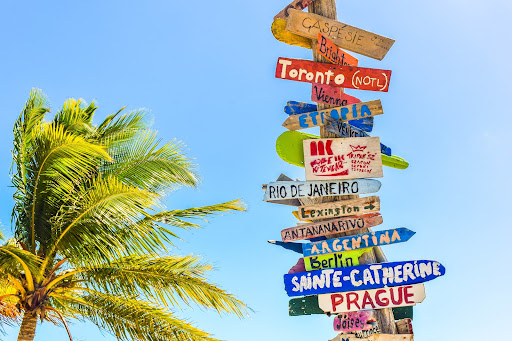
Img 1: Where would you go? - A signage
Premise
A country is generally identified by its geographical location and leader, although its real flavour can be observed in its history, culture, literature, architecture, people etc. Globalisation has enabled a new avenue for people to endure the diversities across globe easily.
The ease of travel has enhanced the idea of visiting a foreign land, and fueled the tourism industry. When people choose to travel for recreation, there are a variety of experiences they look for. Apart from architectural wonders, entertainment, luxury and cultural exposure, tourists often visit countries at a specific time of the year for popular temporal attractions like, carnivals, and festivals.
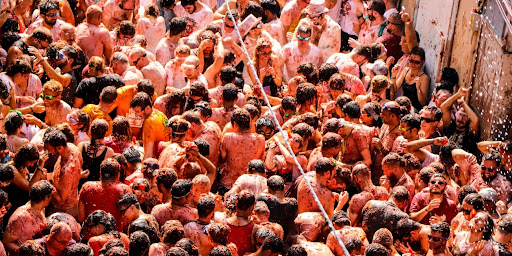
Img 2: People playing with squashed tomatoes in La-Tomatina.
Self-expression
Countries with rich cultural diversity and history attract enormous number of tourists during their exclusive traditional festivals.
For example, La Tomatina in Spain hosts about 45,000 tourists and locals combined. Brazil hosts an annual carnival across its major cities like Rio de Janeiro, São Paulo, etc. attended by almost 2 million people per day on the streets, out of which a million are tourists. This is even broadcasted through media and television, enabling a virtual experience for people across the globe.
These festivals act as a screen of displaying one's culture, what they actually hold goes beyond celebrations. If today technology has enabled traveling anywhere possible, can the same be utilized to give a glimpse of these unique experiences of a country all throughout the year?
What if the experience is translated into a mediascape for tourists to witness festivals digitally,
throughout the year ?
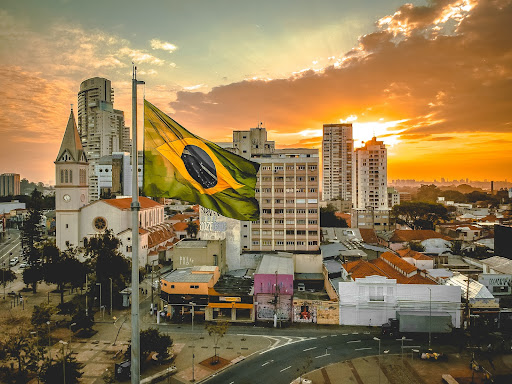
Img 3: Aerial view of Rio de Janeiro, Brazil’s Flag.
Oppurtunity
The tourism economy of Brazil has been at stagnating numbers in spite of its variety of natural attractions and continental size. The contribution of tourism industry in Brazil’s GDP has staggeringly decreased from 10.9% in 2003 to 8.1% in 2018. Such inadequate growth in tourism sector of a country with plenty of top destinations is surprising. According to experts, among some of the main reasons for this could be the lack of infrastructure to welcome and engage tourists and the high cost of travel to the country. Brazil’s potential needs to be explored in more than one dimension to create a niche for tourism growth in the country.
An innovative tourism experience can be used to bring a change in the tourist infrastructure.
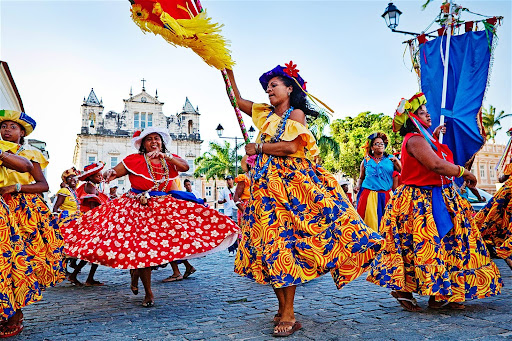
Img 4: People performing a style of Samba on streets of Brazil.
Brief of the competition
A transient architectural intervention that utilizes technology to create revolutionary spaces would open avenues for a different kind of tourism experience that is perennial. It can also be a one of a kind module that would be adapted for replication throughout the city.
Brief : The challenge here is to design a Mediascape (Digital Pavilion) that is to be installed in Rio de Janeiro as a digital escape.
This poses as an opportunity to not only display the essence of city’s vibrant carnival parade but also give them a taste of what the carnival stands for. The social, political, and cultural aspect of Brazil would shine through such physical mediums. It aims to revolutionize a tourist’s experience visiting Brazil at any point of the year. The intervention for this project can be chosen anywhere in the Sambadrome Parade Area.
Objectives
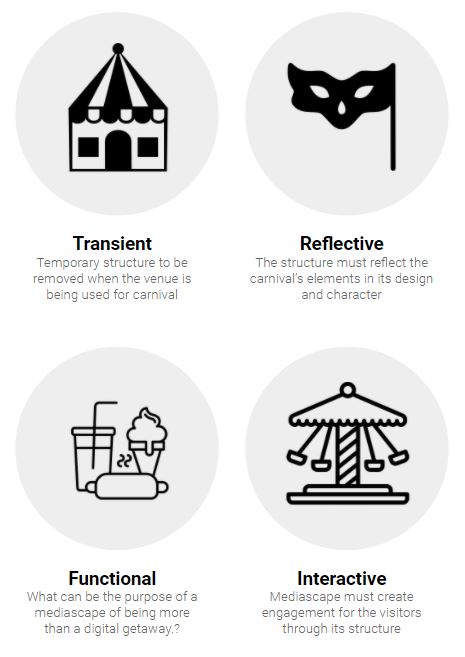
The following objectives can be a point of beginning to conceive this design. Participants can assume their own contexts and users before initiating their design process.
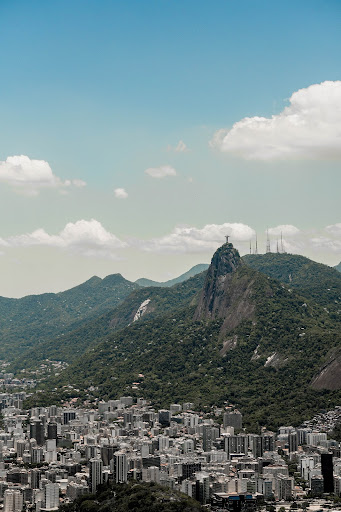
Rio de Janeiro
Rio, is anchor to the Rio de Janeiro metropolitan area and the second-most populous municipality in Brazil. It is the capital of the state of Rio de Janeiro, Brazil's third-most populous state. Part of the city has been designated as a World Heritage Site, named "Rio de Janeiro: Carioca Landscapes between the Mountain and the Sea", by UNESCO as a Cultural Landscape. It is one of the most visited cities in the Southern Hemisphere and is known for its natural settings, carnival, samba, bossa nova, and balneario beaches.
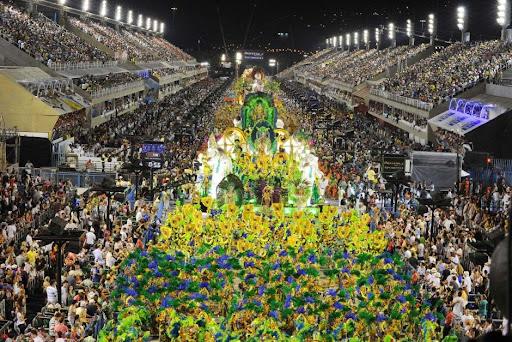
Img 5: A real Carnival in Sambadrome, Rio. Brazil
Context
Rio de Janeiro’s Carnival is a significant Catholic tradition which signal the start of Lent (which is the period before Easter when Catholics abstain from frivolous joy). Millions flock to the annual festival every year spending about 782 million dollars that the visitors spent in 2015.
While other spots in Brazil (and around the world) host their own pre-Lent parties, Rio’s annual Carnival is widely regarded as the best hosted in the Sambadrome. It is a purpose built venue, designed by Oscar Niemeyer. It is located in the downtown area of Cidade Nova in Rio de Janeiro, and is the place where samba schools parade competitively each year during the Rio Carnival. The parades attract thousands of Brazilians and foreign tourists each year, and the structure is also used as a multi-purpose performance venue.
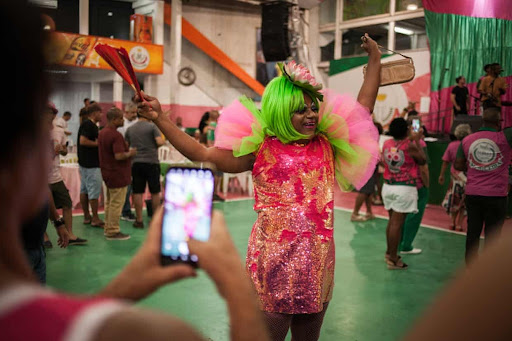
Img 6: A reveller dressed in drag poses for a photo during a rehearsal show. Source
Beyond Carnaval
The pomp and show of vibrant carnaval has been guiding the festival for decades. But now the mass gatherings have become the voice of people. The social distress of Brazil’s society is being represented through the parade. People are demanding more gender and racial equality, and to condemn the rise of populist conservatism of those in power. The sensitivity of its social as well as political issues have been translated through this popular media. This enables mediascape to be beyond what is seen.
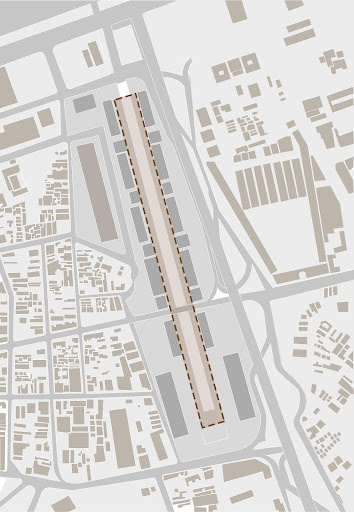
Site Plan
The Sambadrome, Rio is primarily used for carnival in the month of February or for performance purposes and is otherwise defunct. The “Brazil MediaScape” fits perfectly on this location to give the tourists a digital carnival that be experienced throughout the year. The area of intervention for mediascape has been indicated.
Area for intervention ~7500 m2 | 22°54'46.1"S 43°11'46.8"W | Height Limit - 7.5 M
Similar Competitions
Discover competitions you might be interested in


Challenge to design an open learning module for the elderly

Challenge to design a portable music platform

Challenge to design a portable theatre
