
City Canopy
Design Competition - Rooftop public spaces in dense urban sprawls
Overview
Brief Update: 29/01/2022
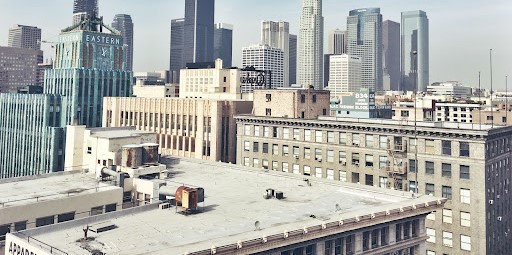 Fig: 1 - Rooftops are largely unused in most buildings and these surfaces end up in increasing heating in the neighbourhood.
URBAN NEEDS
As our urban environments are getting denser, there is an increased interest in the underutilised parts of the city, and adapting these spaces to meet urban needs.
Rooftops are an exciting avenue of exploration in this quest to find more space in urban environments. The make up about 25% of the city’s land area but have remained largely untapped as crucial spaces that make the city in the past.
Today the flat roof, enabled by the development of roof sealants, is a staple to the architecture of a city. Unfortunately, the roof typology primarily garnered attention as a technological feat, thus overshadowing its potential applications in the city of the future.
However, due to the prevalence of the rooftop and its inherent connection to spaces inhabited by humans, the roof has significant potential to act as a multi-layered, connected public space.
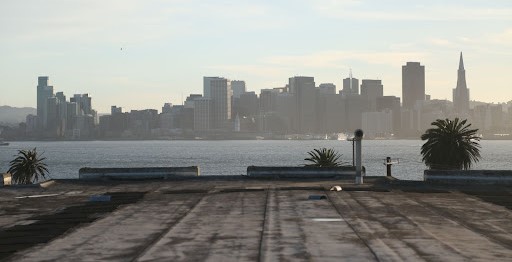 Fig: 2 - Using the rooftop can help use its view potential without adding to the density of the city.
WHY ROOFTOPS?
The adaptive re-use of roofs is slowly gaining traction in the modern world.
Designed as blank spaces that host utilities such as water tanks, piping, electrical lines and even lift channels, designers are pushed to work around these essential utilities in attempting to envision adaptive uses of roof spaces. Yet, these limitations are significantly challenged by the sustainable, accessible and multi-modal opportunities that these rooftops provide.
In regards to sustainability, rooftops can be reimagined as urban farms, spaces for energy production, employed in water management, and microhabitat building. As public spaces, not only are they abundantly present in the city, but they are tied to spaces commonly inhabited by humans, and also offer attractive views of the city allowing citizens to experience their city in novel ways.
How can the use of roofs be extended to serve multiple functions as an inviting public avenue?
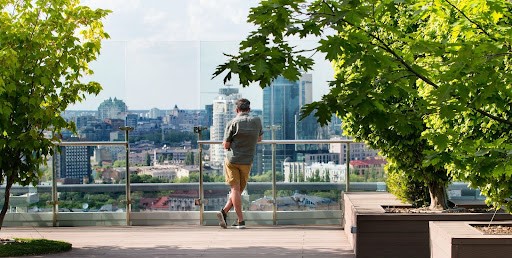 Fig: 3 - Roof interventions can be made sustainable and green so that the space quality as well as the performance is enhanced.
ROOFTOPS AS PUBLIC SPACES
The booming populations in cities and the rapidly increasing urban densities makes it pertinent for urban designers to make the most of the spaces that are already available to us in the city.
Despite being a prevalent part of cities, roofs are often neglected and are only beginning to gain popularity in recent history.
Brief: The architecture competition brief calls for a design of a public space on a typical rooftop in a dense urban environment.
The design should act as an attractive public space that draws individuals from the city and offers novel ways to experience the city through its design. Furthermore, the design should attempt to tap into the sustainable opportunities roofs provide to make the design more holistic and beneficial to the city, even beyond acting as a public space.
In designing, the said space on roofs contain essential utilities for the building and your design must work around these constraints.
OBJECTIVES
Public: The design outcome must imagine a valuable public space that offers novel urban experiences to the urban citizen.
Sustainable: How does the design tap into the sustainable opportunities presented by the urban roof?
Adaptive: How does the design effectively work around the existing limitations of a roof without compromising the essential utilities it currently hosts?
Modular: As a public space the design should be able to change, grow and adapt to the changing needs of the users.
SITE
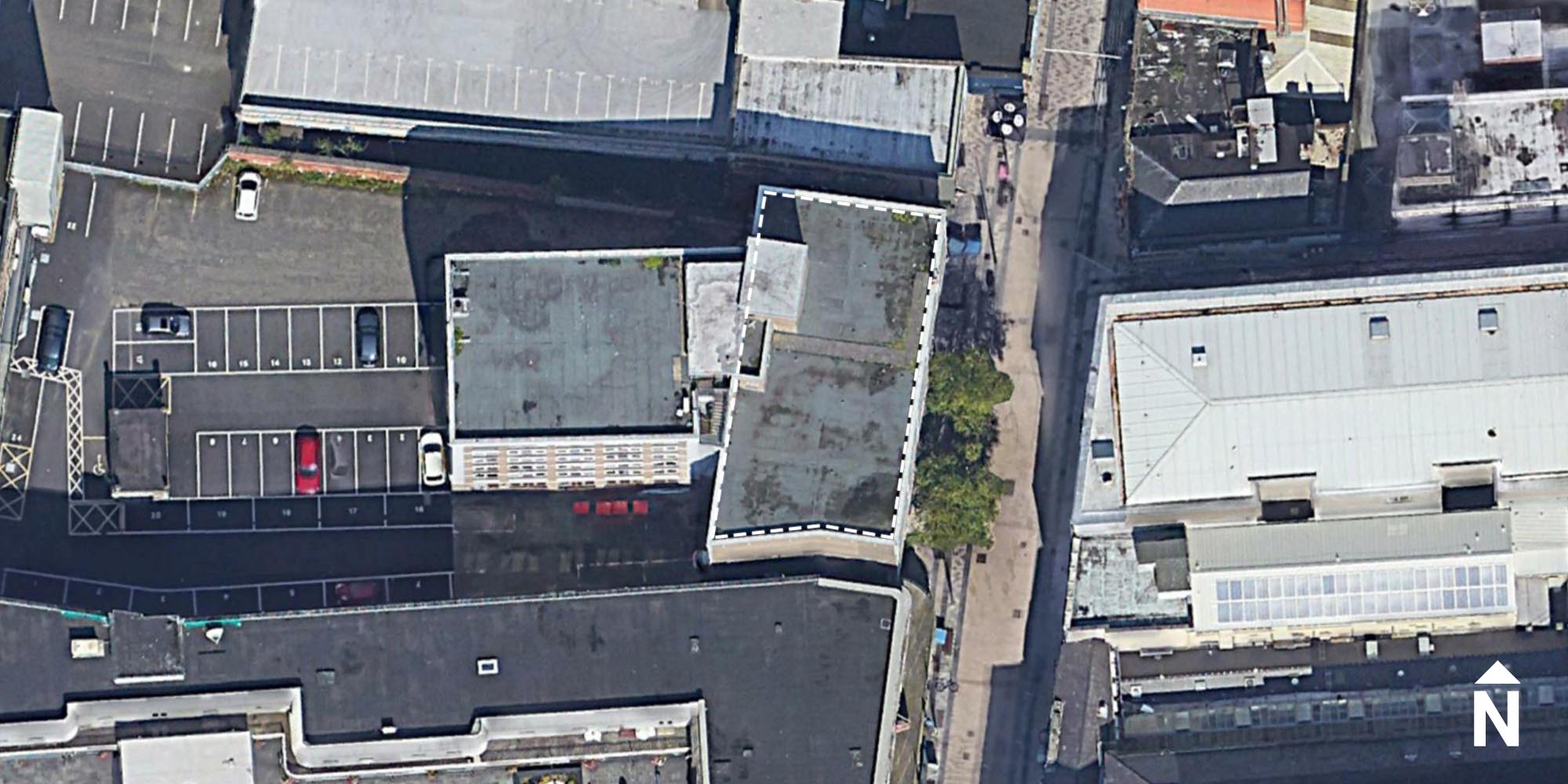
The site for this project is located in Belfast, Ireland. The capital city of Northern Ireland like many other cities in the world has a considerable urban density and a reciprocal need for more open public spaces.
The site for this project is located on the unused roof of a commercial building.
- Site Area: 378 sq.m
- Height Restriction: 3 meters
- Coordinates: Fountain St
PROGRAMME OUTLINE
The design outcome must have the following elements:
1. Rooftop landscaping adding green cover
2. A cafe:
- Store Counter for servers and food display
- Seating for 8-10 people
3. A multi-use public space that includes:
- A performance space for small bands, open mics and small scale events.
Similar Competitions
Discover competitions you might be interested in




Design challenge to reuse E-waste



Imagining parliament for an unified world.


Design challenge fostering public involvement in wildlife research

Design an urban fitness centre
