
Clubhouse
Design challenge - Sports viewing center
Overview
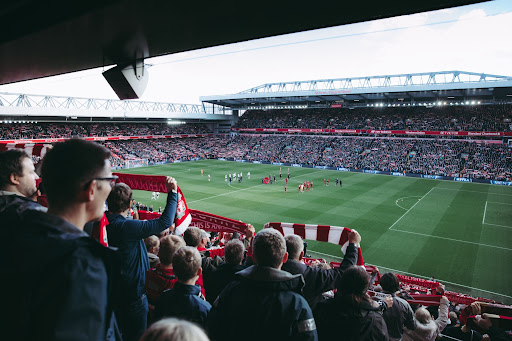 Fig: 1 - Stadiums are expensive sites that cater to the needs of both spectators and players.
Experience of watching live sports
Events such as sports competitions, cultural fairs, and political rallies are carried out in a city at state as well as local levels. While the infrastructure for the state's significant events is well laid out by organizations, the local events are fended for by the community’s collective efforts.
Planned public gatherings are part of community activities. In any event, the participants, audiences, organizers, and service staff are the attendants. The relationship between the participants and their audiences is of utmost importance. The audience may include supporters, family members, local residents, and enthusiasts who are present to witness the performances at these events.
The provisions for performers are well laid out, but the needs of spectators at local events are overlooked. While participants are taken care of by their sponsors, the audiences are dependent on public infrastructure, which is often lacking due to socio-political or economic reasons.
How can the sports spectator experience be improved?
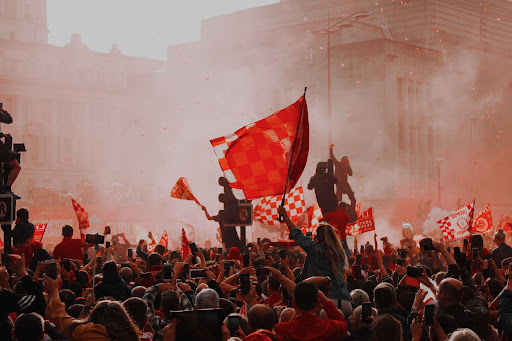 Fig: 2 - Crowds of enthusiasts make a sporting event live and their support is motivating to players.
Better viewing infrastructure
The local sports events take place in outdoor event spaces. These outdoor event spaces are not as well-designed and are devoid of many amenities. During outdoor events, spectators occupy areas to view, in an unruly fashion. The viewing experience is unpleasant due to encroachment and lack of infrastructure. In the absence of viewpoints, audiences seek higher points such as tree branches, compound walls, railings and so on that can create safety concerns.
The success of any event is determined by the experience and reaction of its spectators. So, their needs must be fulfilled through spatial design. But like every public entity, the funds available are limited and so an economic solution must be proposed to the viewing problem. The articulation of a multi-purpose space is to be done with vantage points to all parts of the event arena. The space can become a social center for locals.
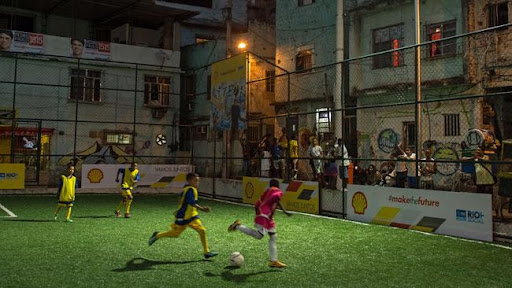 Fig: 3 - Local grounds are lacking in lighting provisions and viewing space, where audiences are forced to cheer on from behind fencing. (Credits: AFP PHOTO / YASUYOSHI CHIBA)
Possibility for a multi-functional sports experience
Brief: The challenge is to design a clubhouse that is used as a viewing center by spectators of an event.
It can also be used for conducting indoor community activities at other times.
The design of the clubhouse must be harmonious with the local context. The space designed must be multi-functional so that it can be used for additional activities, remaining active throughout the year. Safety and security measures must be incorporated in its design since it is a public space entity. Measures must be taken to design within the economic constraints of the local community. The aim of the design is to provide a comfortable experience to the audiences of all types of events.
The design is a small-scale intervention that has the potential to be employed in multiple locations with similar inadequacies. The deck must be such that it offers a better view of the events without being an obstruction to other occupants in and around the site.
Design objectives
- Concept: The unique form can be inspired to have a non-obstructive and transparent design that can blend seamlessly with the surrounding.
- Function: The spaces must be designed in a way that they can be flexible to accommodate a wide range of functions.
- Economical: The design must be modular and low cost so that the concept of the clubhouse can be adopted in other fields as well to provide premium viewing.
- Context: The design must respond to the (existing) site conditions. The wider socio-cultural, economic and environmental settings are to be considered in the design approach.
- Upgradable: Efforts can be made to ensure that every element of the design can be used to its maximum extent if demand increases, in the future.
Site
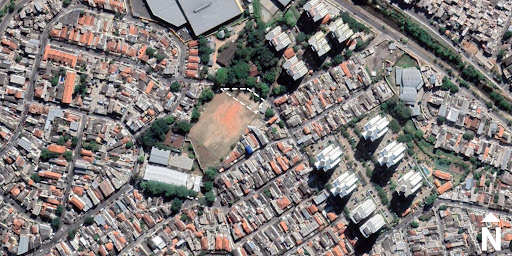
Brazil has a strong footing in the field of sports, especially known for football (soccer). The excellence achieved by teams at international levels has popularised the sport among locals. Besides world-renowned stadiums, cities of Brazil also have many soccer fields and sports grounds around, to encourage children to take up sports.
The site is located in Sao Paulo, Brazil. The city is known for its huge football following and it consists of many large sports stadiums and arenas. The popularity of the sport can be seen in frequent matches being held on local grounds all over the city.
The site is on the Campo Tirandentes soccer field. It is in the neighbourhood of Vila Dionisia, surrounded by educational institutes. The area is enriched by active nightlife, lively art murals, street food and so on, attracting a lot of traffic. The field has loose fencing around it and the corner marked can be used to build this clubhouse for easy viewing.
- Site area = 1055 sq.m
- Height restriction = 6 metres
- Max Far: 0.75
- Ground coverage = 20%
- Setbacks (as per CAD plan)
- Coordinates = 23°27'52.4"S 46°39'38.7"W
Similar Competitions
Discover competitions you might be interested in




Challenge to design an outdoor ice-rink and park

Challenge to design a barrier free sports center


The Global Benchmark for Graduation Excellence


The Global Benchmark for Architecture Dissertation Awards
