
First Window
Alternatives to Traditional Airport Design
OVERVIEW
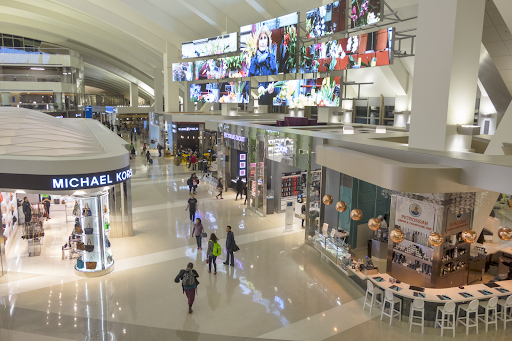
Img 1: Commerce and leisure activities at modern Airports. Picture Credits

Premise
Airports today are not only highly frequented transportation hubs, but they also serve as important places for work, commerce, and recreation. Globalization and unprecedented demand for travel have resulted in the proliferation of airports around the world. In a very short period, demand for them has increased and this new typology of buildings has thus emerged enormously.
As per the Annual World Traffic Report of 2018 (WATR), published by Airports Council International (ACI), all regions experienced an increase in passenger flow globally. As per the report, there was a 7.5% passenger increase in 2017 from 2016.
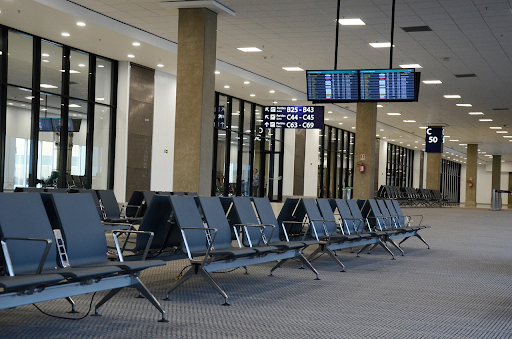
Img 2: Generic airport Interior.
Issues
Airport design involves a lot of technical complexity and functional design that often takes precedence over local and cultural context. On one hand, they use the latest technology for their design while many-a-times they are eventually disconnected from their context and cultural identity. For example, if we pick up any airport in isolation, one cannot judge it’s location based on its design. If Airports are the first place we see as we enter a new city/country, how can it provide a true window to what the city offers?
Additionally, how can we design for such a typology to provide more than its functional need?
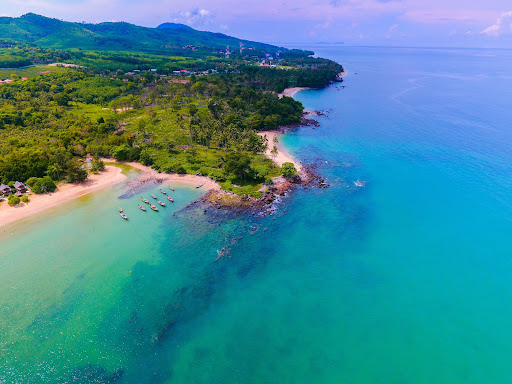
Img 3 Aerial View of Koh Pha-ngan
Koh Phangan, Thailand
Koh Phangan is a mountainous beach fringed island and a popular destination for Full Moon Party. The first Full Moon Party was held at Paradise Bungalows on the beach in Koh Phangan in 1983. It was organised for giving thanks to 20 - 30 travellers. It gained popularity by word of mouth and today the event hosts a crowd of about 5000-30000 people every Full Moon Night. In Spite of this large influx of tourists every month, the island lacks an Airport. The airport was being built by a domestic Thai Airline in 2012. The construction had begun but due to various legal issues it was stopped.
Objectives
Design Challenge: Propose a concept for the Airport Design of Koh Phangan island in Thailand.
Participants need not give the technical details for it. This is primarily a concept-design challenge only.
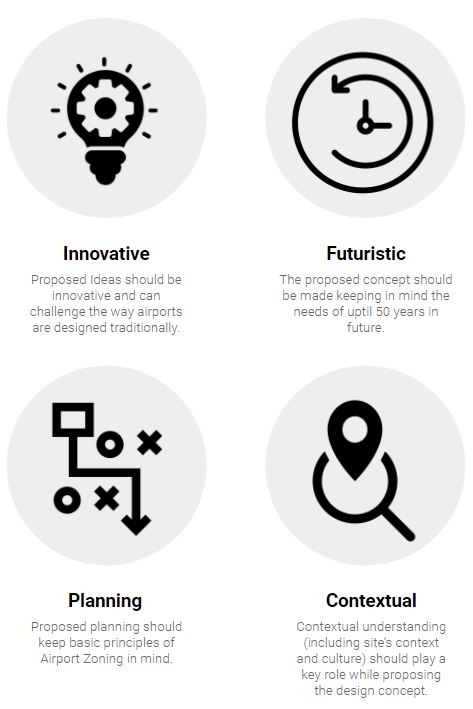
Requirements:
The basic areas mentioned here below can be taken as a starting principle to start designing.
Main departure lounge, Departure hall, Arrival at the airport, Gate waiting area, ticket sales, check-in, Passports/security, Check-in baggage, Retail experience Arrivals, Baggage reclaim, Passports/security, Exit, Customs, Arrival at the gate, Meeting/greeting.
Please note- This is not an exhaustive list. Also, participants are not expected to give technical details for any of the aspects; only zoning for them and proposing an overall concept for the Airport are key for this challenge.
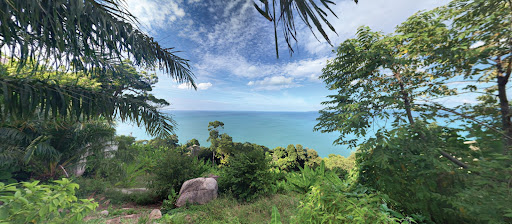
Img 4: View from the site.
Site
This previously chosen site for the Airport still lies barren today. It lies next to the Than Sadet-Koh Phangan National Park and enjoys a beautiful view of the Gulf of Thailand. The proposed Airport should be designed for a capacity of 6,00,000 passengers annually.
- Site coordinates: 9°44'28.7"N 100°04'04.1"E
- Total Area: 5,00,000 sq m
- Runway length: 1,100 m
