
InnoWork
Challenge to design a hub for working, innovating and learning
Overview
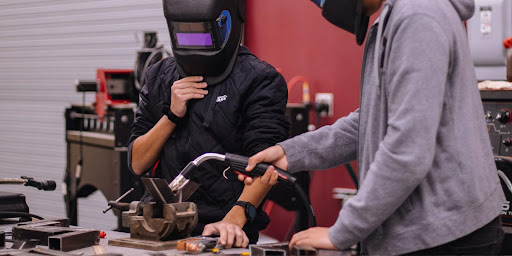 Fig: 1 – Practical technical learning (Credits- Jeswin Thomas)
LEARNING
Technology has fuelled passion and the need for development in almost every nation, which has inspired youngsters to consider it as a career path. There are more engineers and tech professionals in the world than ever before. But due to the increased demand and commercialization of education and the field itself, the quality of training is affected.
The idea of practical training and experimentation is lost in the conventional knowledge provided. And it is gradually affecting the dynamic thought process of young students. With workshops and training centres trying to fill this gap between the industry and education, can we do something more efficient and easy for the learners to understand?
Can we shift the spatial boundaries of such workshops and apply the see and learn principle to these sessions?
H3: Is it possible for us to merge the very industry and learning for a more collaborative and prepared atmosphere of tomorrow?
 Fig: 2 – New technology (Credits- Pietro Jeng)
TECHNOLOGY
Curiosity has enabled people to create new things, and conversely, many scientific endeavours are made possible by technologies that have assisted us to reach new heights. These innovations have not only provided us with convenience but have also changed the workings of society as a whole. Along with our lifestyles, workspaces are changing too.
With portable devices and nomadic culture, enclosed spaces and rigid hierarchies of previous workspaces have failed to keep our generation in. To match the current trends, progressive companies have started to opt for more collaborative environments-spaces that encourage teamwork, lateral thinking and brainstorming.
While work culture is adapting to the needs of today, learning technology itself hasn't upgraded to new learnings and knowledge based on practical relevance. This has caused a major gap and pressure to catch up to the reality of the tech industry.
Since the socio-spatial contexts of a workspace are evolving, can we take the opportunity and retrofit it with a learning experience too?
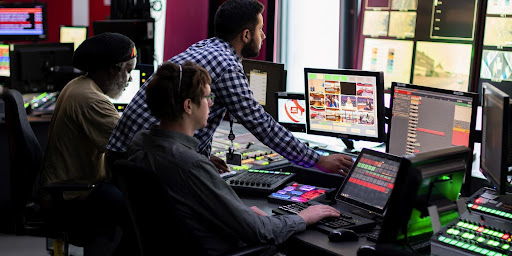 Fig: 3 - New trends are shaping work culture (Credits- thisisengineering-Raeng)
TRENDS
The digital generation and their ways of working are now dominating every industry. The need to adapt to the convenience of technology have led companies and mindsets to break away from the traditional work cubicles towards a more open work environment.
Companies are either trying to create and accommodate more interactive work environments or are completely redefining their working models.
These are the last few years that have converted into a shift towards co-working and other flexible workspace options. Another drastic change in work culture has escalated due to technology and the increase in the number of freelancers. This has given rise to remote working.
Due to its comfortable and flexible nature, this work style has proved to be accommodating for everyone and thus is becoming the new norm for global businesses.
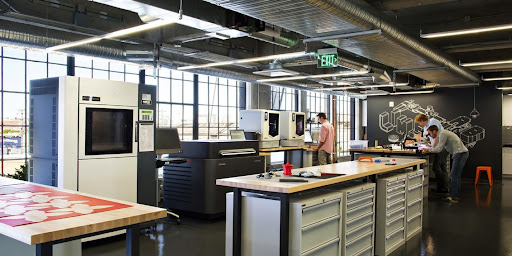 Fig: 4 – PCH Innovation Hub (Credits-ChrDAUER)
BRIEF OF THE COMPETITION
Newly formed ideas, technology start-ups and entrepreneurship over the past decade have increased over the world. These companies thrive on new trends, constant redefinition of working with new upgrades in their industry and a creative atmosphere and ideas.
While most tech start-ups collaborate and work through the cloud, their work also demands constant brainstorming on ideas through interactive sessions with co-workers. Renting an office for discussions and meetings in urban areas is financially unreasonable.
How can we as designers provide customized spaces that help them discuss and even work for a short period? Can these co-working spaces also offer much more than just working? Can the learning, working and experimentation of the tech industry happen in one place?
The challenge is to design a co-working and innovation hub. The aim is to design a co-working space for tech companies, startups and freelancers as well as a learning centre for the upcoming aspirants and visionaries.
OBJECTIVES
- Work and Innovate: Participants should customize co-working spaces for the nature of work (technology) and ideate of what private/communal spaces of interaction and innovation look like?
- Pragmatic: The design for the learning center/area/space must incorporate the “see and learn” principle.
- Identity: The hub should represent the subject in its functions and form.
- Involvement and collaboration: The design and spaces must seek to involve different groups/companies for interaction.
The objectives can be a point of beginning to conceive this design. Participants can free to form their programmatic outline according to the user group.
SITE
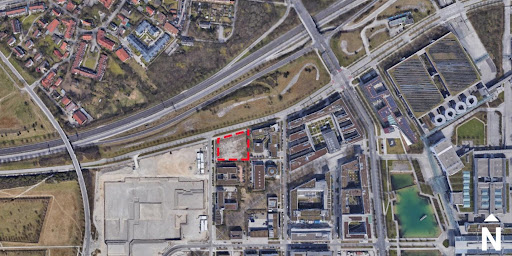
Munich, Germany
Munich has emerged as one of the most important tech hubs in the last few years in Europe and is now ranked 4th by the number of tech giants after Berlin. Munich's startups have collectively created over €17B in value since 2013, with names like Personio, Lilium and Sono Motors leading the way. These and many more companies are proving a strong foundation for Germany’s new innovative startups and future tech ecosystems.
The site selected is at the fringes of Munich, where the main technological parks, software and computer companies are forming a stronghold. InnoWork will act as a perfect catalyst for the future generations going into the industry as well as for small and innovative startups by providing a platform on a site surrounded by larger tech industries.
- Coordinates: Maps
- Site Area: 4149.5 sqm
- Height limitations: 20m
- Ground Coverage: 50%
- Maximum FAR: 1
Setbacks (as per CAD plan)
Ground Coverage refers to the ratio of maximum allowed solid/permanent footprint on the site to balance the built and unbuilt spaces. You can utilize the other 50% of the site for any temporary intervention/recreation.
PROGRAMMATIC OUTLINE
Design the hub for 30 companies with a workforce ranging from 4-25 people per company
- Co-working 40%
Private/Shared Offices, Private/Publics discussion areas, Open offices, Meeting rooms, Communal spaces, Idea rooms, Private storage/lockers.
- Learning 30%
Workshops, Open innovation areas, Libraries (digital/physical)
- Recreation 15%
Play area, gym, cafes, lunch spaces
- Services 15%
Reception, Administration offices, Washrooms/Toilets, Utility, Data centre rooms, storage.
The participants can form, merge or place the specified areas and create their programmatic outline based on their design concepts.
