
Live Green
Challenge to design an Eco-village
Overview
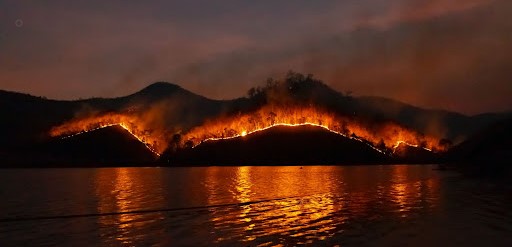 Fig: 1 - Global warming, climate change and pollution are some repercussions of unsustainable living practices around the world.
UNSUSTAINABLE LIFESTYLES
The question of whether we as a society follow a lifestyle that is in unison with our surroundings is not a deep one. Unsustainable is the term one can attribute to our lifestyle today too.
Every aspect of our lives from the sourcing of the food we eat every day to the way we dispose of our household waste is currently deemed as something that shouldn’t positively be continued for the sake of our environment and for life to continue without any side effects.
The unethical use of the limited resources we have, the unequal distribution of said resources and the harm inflicted on the environment at a rate faster than it can regenerate are a few of the major reasons for this decline in our quality of life.
Conscious choices in the smallest decisions we make every day can help in achieving this goal. We can create a huge impact in reducing this collateral damage. A collaborative effort from all industries must be taken to create a noteworthy impact.
How can architecture help to reduce the unsustainable footprint in the process of making conscious choices?
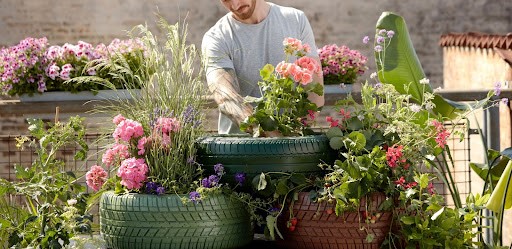 Fig: 2 - The green movement is focused on creating sustainable habits in society to propagate healthy living for humans and the natural environment.
INFLUENCING LIFESTYLES THROUGH ARCHITECTURE
Various missions around the world that have aimed at improving and encouraging society to adopt sustainable and eco-friendly ways of living have come up in recent times. Ecovillages are one such concept that has been an integral part of this movement. These are small communities that are set close to nature and emphasise depending on completely nature-friendly ways of living.
These communities have been in the works for a while and have recently taken form to become popular amongst people. Some of these famous communities include Matavenero in Spain, Auroville in India, Damanhur in Italy and so many others. Facets such as living facilities, cooking spaces, recreation areas, access and transit facilities are more suited to blend and tune into its surroundings and act sustainable and sensitive to it.
While most of these communities are inclined more towards reducing their carbon footprint and have been successful at it, it's time we take a stride forward and try to design spaces that are focused on the people and their lifestyle too.
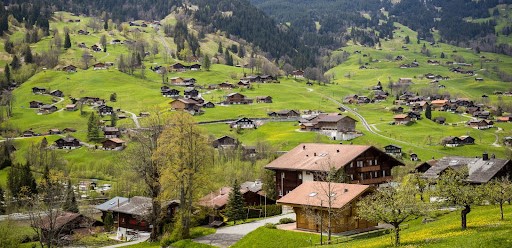 Fig: 3 - Human settlements can be designed to keep the well-being of the site environment on a priority with conscious measures.
ECO-VILLAGE FOR A LOW CARBON FOOTPRINT
Brief: Design an eco-village that blends in with its natural surroundings and reduces its carbon footprint as low as possible.
The aim here is to design it in such a way that the community design focuses primarily on the protection of the environment without dropping the ball on the living facilities and amenities for the residents. The way to encourage people to adopt this lifestyle is to keep the living spaces comfortable and access facets of nature, without negatively invading the systems.
As the community grows, it can adapt better methods and evolve into consuming less and less. Involving people in the maintenance of the community is another way to reduce consumption while keeping the residents satisfied. Sustainable strategies must be employed to reduce the negative impact on the environment while improving building performance.
The built form must be able to connect with the people, through its form, layout or spaces. The community can have an incremental growth plan for further expansion in the future.
OBJECTIVES
Interface - The primary function should be to help humans protect and co-exist with nature.
Form - The building should look to reflect the essence of nature in its make, ala form, materials, finishes etc.
Sustainable - Sustainability in design and construction methods.
Comfort - The building should look at the overall well being of its residents.
SITE
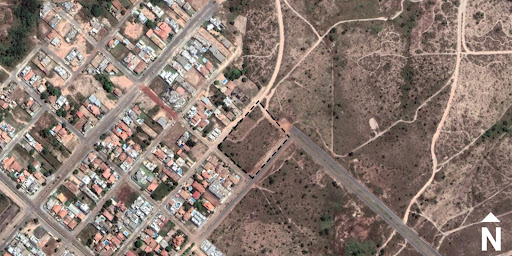
Brazil is a megadiverse country that is host to numerous endemic flora and fauna species. But due to this, the environmental degradation that takes place in the area can have a direct impact on issues like climate change and biodiversity loss on the global level. The site is located in Roraima, Brazil.
The state has rich hydrography with rivers and other water bodies spread over the area. This supports biodiversity and tourism with recreational activities. The site is in the neighbourhood of Paraviana in the capital city, Boa Vista. It is located on the banks of the Branco River. The place, although sparsely populated and located in the outskirts, has basic facilities such as a hospital, school, church and other residences.
Site area - 9715 sq.m
Height Restrictions - 10 meters
Ground Coverage - 50%
Maximum FAR: 1
Setbacks (as per CAD plan)
Coordinates - 2°51'42.0"N 60°39'03.5"W
AREA PROGRAMME
The community is set to accommodate 50 families with four members each. The following programmatic outline is the point to begin your design at. You can add more functions and activities in relevance or modify the below design programme.
Living units: Housing units with a living room, sleeping area, kitchen and bathrooms.
Social spaces: Courtyard, community garden, terrace vegetation, roof gardens
Recreation spaces: Clubhouse, Multipurpose hall, fitness centre (gym, yoga studio)
Parking and Services (water, gas, electric supply, drainage and waste management)
Any creative additions to the project may be done within the provided constraints.

