New Dencities
Post pandemic township design competition
OVERVIEW
Brief Updated on 15 Nov 2020 - Download new version here.
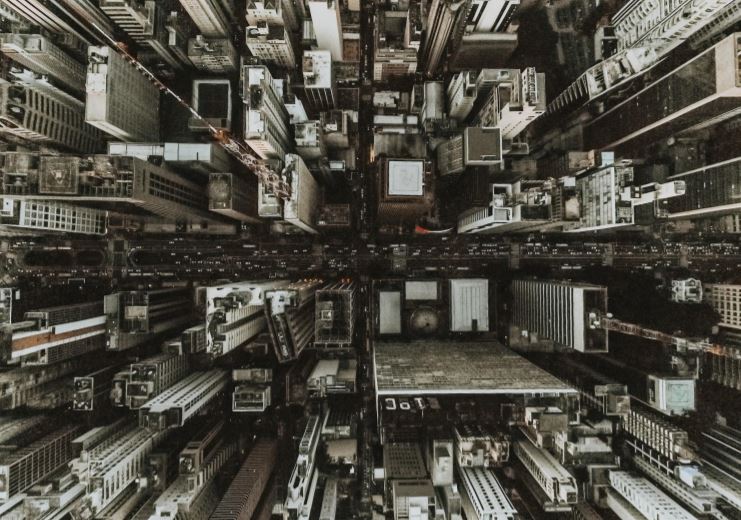
Img 1: An aerial view of a traditionally planned metropolis.
Premise
Cities have been a culmination of all the good things we desire to be in a comfortable habitat. This culmination has brought access to not only services but this vast human-to-human network that eventually lead to evolving as knowledge hubs. This pandemic, however, has changed the fundamental perception of a city in many ways and especially the density it offers.
These times have seen massive shifts from a lockdown like environment, that isolated us from the outdoors - to workplace/classroom level shifts of working entirely in remote. This earmarks the fact that in a way we don’t need ‘cities’ anymore, we can live pretty much anywhere now which is visible in the extensive global migration nowadays. These times also revealed how poorly our indoors and neighborhoods are prepared for a pandemic level threat.
Is this the end of the urban?
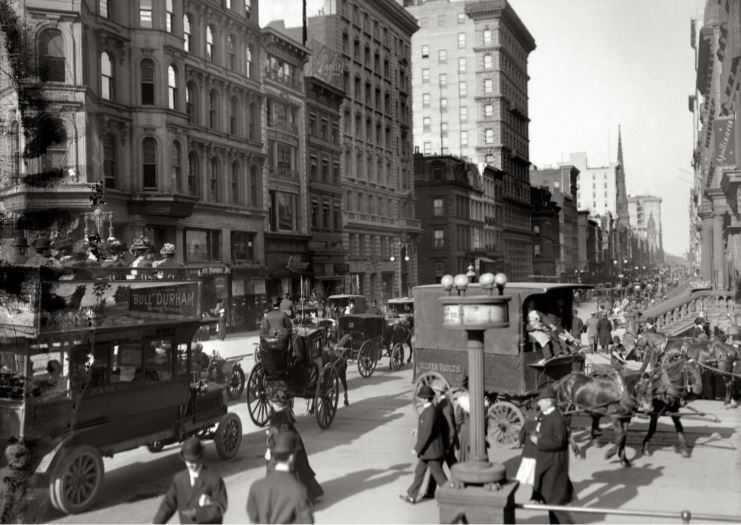
Img 2: A street view of 19th century public scape.
Urban Equation
Through decades cities have been under constant question for their pros and cons. This is not the first time where the ‘ideology of urban’ has come into an existential question within the larger architectural discourse.
The 19th century saw epidemics like Cholera and Spanish flu, which had a very similar impact to our society. The cities were the only way possible to provide excellent healthcare services and access to fundamental necessities like clean water and sanitation at such a mass scale.
And even in today’s context, not all cities suffered. This evolving pandemic is well handled by countries like South Korea, Taiwan and Singapore despite the density.
The evidences certainly doesn’t add up 100% against urban, but can our cities evolve by realigning against these potential threats that impair the civilization?
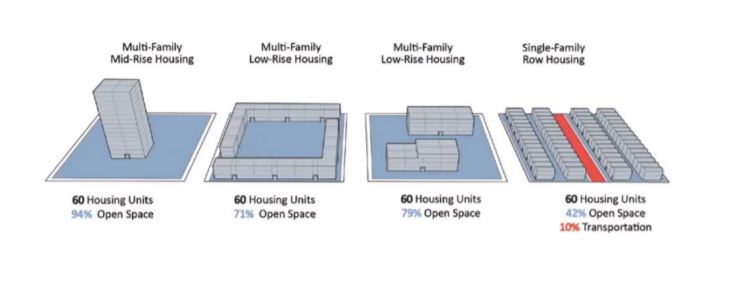
Img 3: An image illustrating density and crowding as two different phenomenas - By Ann Forsyth
Density ≠ Crowding
Density is usually misinterpreted with crowding which can not be 100% accurate. Consider an example above. A small community hall can have a lot of crowding even though it has alot of land around it. An apartment can be half empty if its occupants are mostly using it as a second home. Hence it is inconclusive to state building density = crowding. Crowding is a much much local phenomena.
This establishes a city as a place, full of micro parcels which may be poorly or well planned even if we use density as a bench mark. Most of whiich, is based on classical planning theory and functional demands against costs.
If all it takes is one good model to make our cities functional again, what can we do to find a mid ground? A model that enable enough public life for the people inclusively, while maintaining a certain degree of distancing to ensure cities are not totally impaired?
Our cities need an overhaul especially with so much of pressure on environment and over burdening on planet resources. If 2 out of 3 people globally will live in cities by 2050,
What will be the best way to get there sustainably?
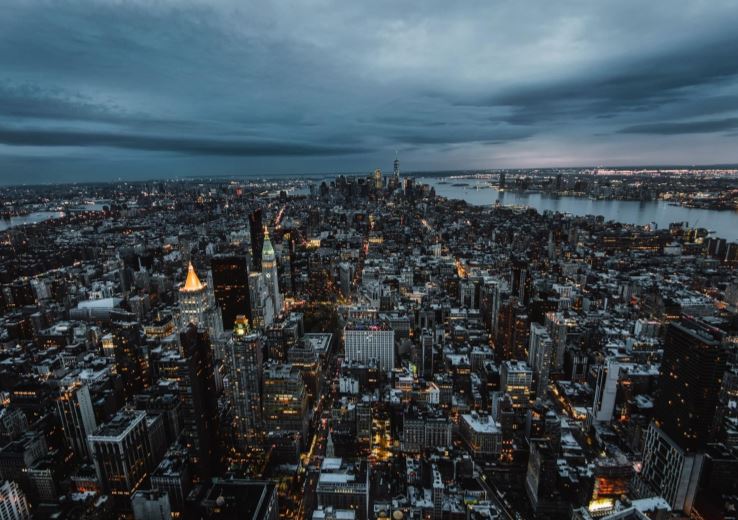
Img 4: An aerial view of an urban metropolis
Brief of the competition
How can we rethink city fundamentally not by a complete overhaul, but smaller functional models? How can we create a jigsaw of such functional architectural modules that make life go on despite of such threats around? How can indoors be extended to a neighborhood where isolation is not as bad because of a colony designed with strategic overlaps? How can densities be reinterpreted in cities where healthy living (phyiscal, mental and social) becomes a top priority?
In a future where remote working/learning is an established as a reality, where commute itself is completely abolished from our daily lives, how will our neighborhoods be?
Design brief: Develop a zero commute, mixed use residential neighborhood massing concept that is resilient to pandemic impacts and is built for a population that lives, works and plays in the same place.
Objectives


Living Quality: Finding better models of healthy indoor and outdoors.
Overlaps: Physical/Non physical spatial intersections that combat isolation.
Retractable: Ability of temporary isolation zones without disrupting the system.
Inclusive: For vulnerable and sensitive age groups (Children and Elderly).
The following objectives can be a point of beginning to conceive this design. Participants can assume their own contexts and users before initiating their design process.
Choose any 1 Site Location
Consider the site as empty before beginning the project. Also site boundaries are approximate for this exercies instead of absolute.
All three options feature developmental zones in some of the densest cities in the world. However, each city has a radically different history and timeline.
For New York City, even though it ranks youngest among the three, the vast majority of land has already been fully developed with reusing parcels and reimaging uses becoming the status quo.
With Shenzhen, China’s rapid development has increased the need to finish developing districts and improve existing connections in the establishing megacity.
Cairo, as the oldest city, faces the greatest change in development as priorities have shifted to creating an entirely new system for its population in New Cairo by building from scratch.
All three cities have immense density but greatly different trajectories and goals. How can we reimagine each site’s relationship to density while balancing their cities trajectory and growth?
Programmatic Outline
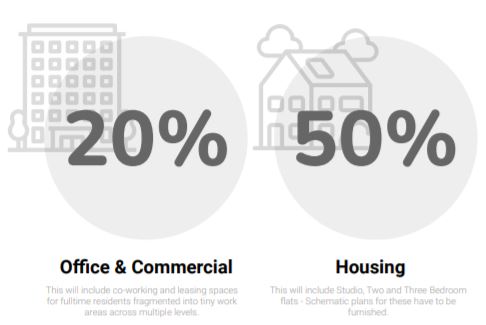
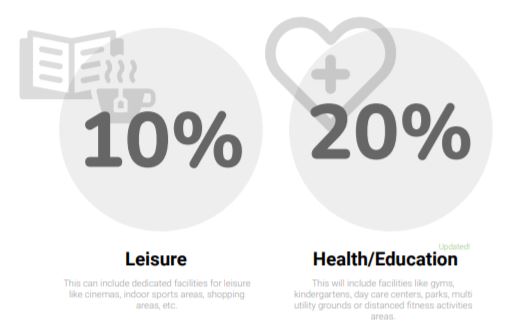
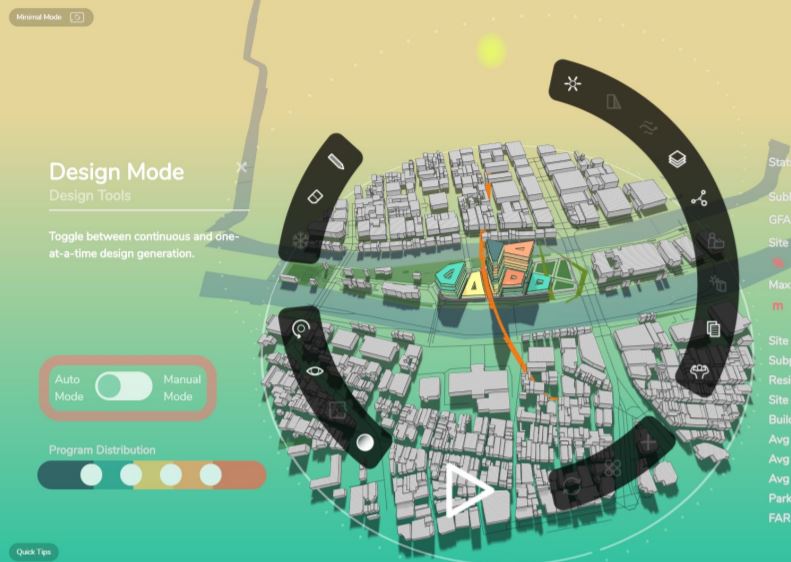
The following programmatic outline is the point to begin your design at. The programme can be adjusted in the digital blue foam tool (as shown below) to achieve a habitat model that is synchronous to the above distribution.

Context
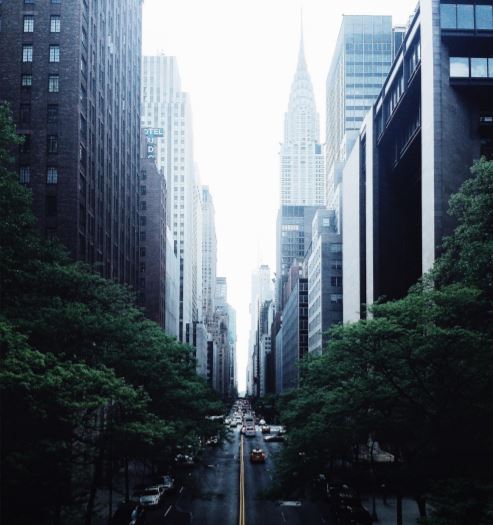
The challenge focusses on a land parcel in an urban metropolis and looks at a site to emulate its test case on the next page. The site belongs to a developing urban neighborhood with a green/brownfield development for this mega project.
Option 1
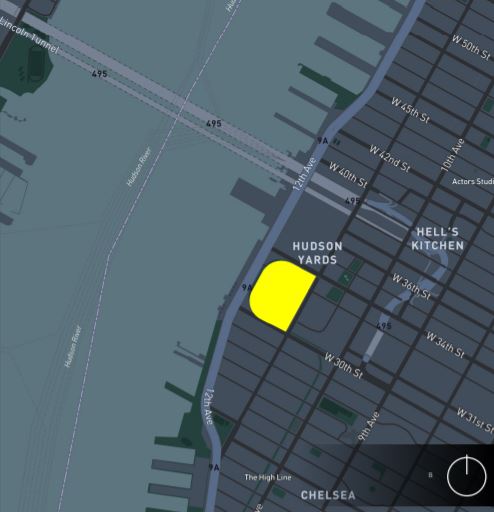
Hudson Yards, New York City, USA
Site | 61,727sqm. | Subplots : 6 or more | FAR: 3
Hudson Yards, New York City, USA Located in Midtown Manhattan, Hudson Yards is a new development area that is built on an historic railyard. Connected to the newly constructed Highline, Hudson Yards is poised to become a new center of commercial and residential activity in the financial hub of the USA.
Option 2
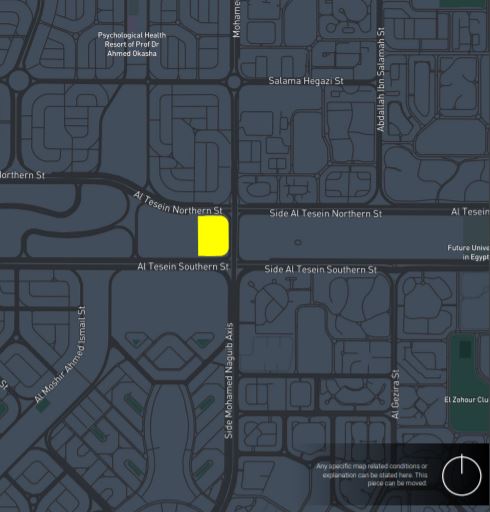
First New Cairo, New Cairo, Egypt
Site | 64,628 sqm. | Subplots : 6 or more | FAR: 3
First New Cairo, New Cairo, Egypt On the outskirts of Cairo, New Cairo is an ambitious governmental project to develop an entirely new city to ease overcrowding in Egypt’s capital. With residences and businesses just beginning to sprout, the city does not seek to merely connect to existing ecosystems but instead create its own.
Option 3
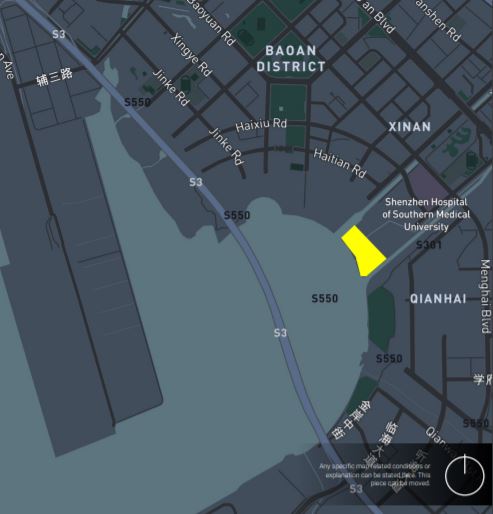
Qianhai, Shenzhen, China
Site | 62,691sqm | Subplots : 6 or more | FAR: 3
Qianhai, Shenzhen, China With Shenzhen being one of the newly established economic centers of China due to the explosion in electronics and tech, Qianhai development area seeks to create a new community on top of reclaimed land to help serve increased economic activity between mainland China and Hong Kong.
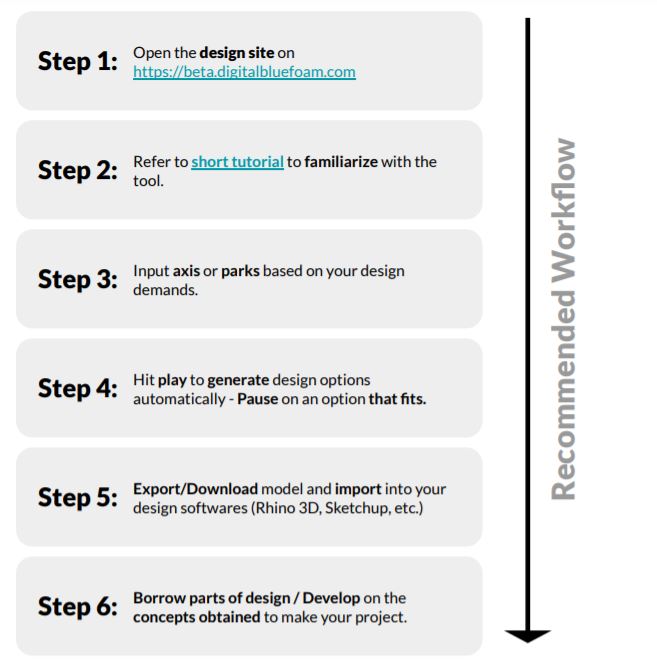
You can borrow partial or complete designs from the obtained model and develop your design on it. Otherwise; you can choose to skip the use of this tool entirely for this competition.
OR

Deliverables
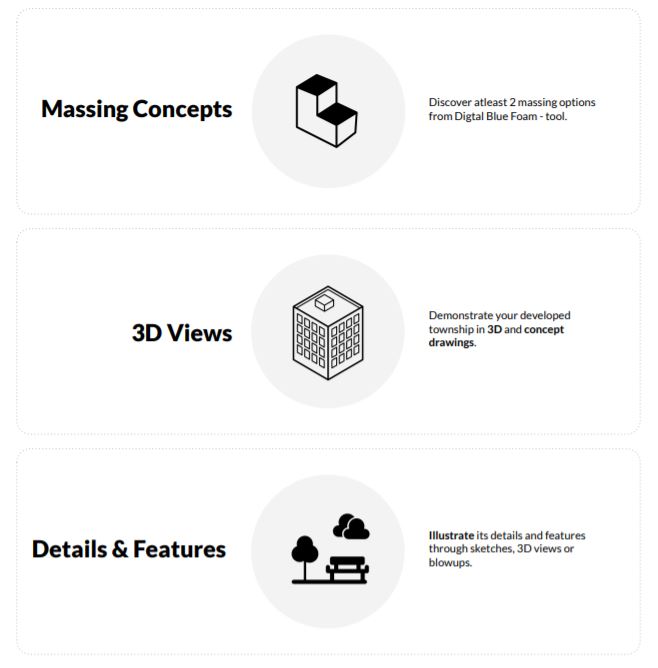
The design proposal looks at a concept level massing level planning of the township which includes - 1. Massing of towers, 2. Public Spaces, 3. Commercial/Residential/Wellness Zones - Reflecting how the objectives will be fulfilled in this new kind of design. The technical details of dwelling units / services / parking layouts are not expected in this exercise. You may assume data wherever necessary.
About our partner: DBF
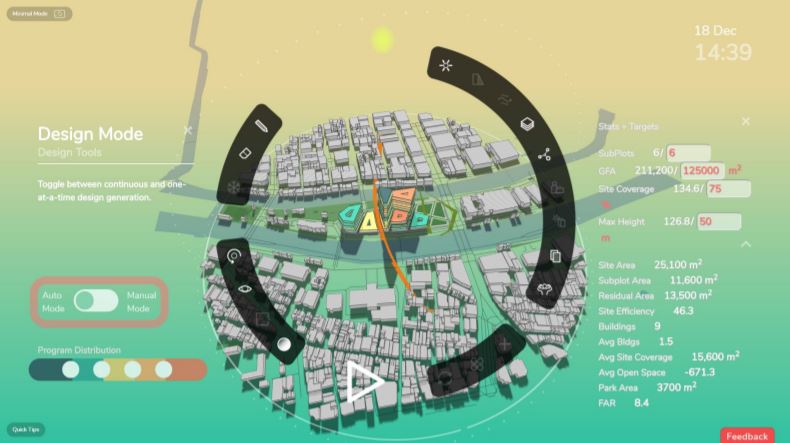
Digital Blue Foam (DBF) is a company that has created an eponymous software that hunts, gathers and computes contextual data such as climate, program and urban networks to determine the right building configuration using advances in artificial intelligence, generative design, and web-based 3D visualization.
It’s vision is to accelerate the world’s transition to better, greener cities.
DBF uses artificial intelligence to process project data to generate hundreds of high-quality massing options in seconds. Presented in a visual matrix for easy comparison and selection.
Website: https://www.digitalbluefoam.com/
Digital Blue Foam Guide -