
Nomad House
Hybrid structure of Housing and Workspace Design Challenge
OVERVIEW
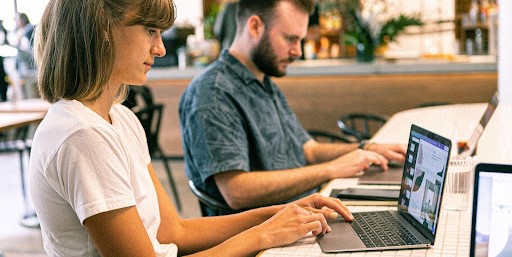 Fig: 1 - People’s connection via technology
DIGITAL CONNECTION OVER PHYSICAL PRESENCE
The 21st century has seen the most technological advances. We live in a networked society where mobile information and digital communication connect us to anyone, from anywhere at any time. Mankind’s desire to develop more and newer technologies has transformed the way we work tremendously. This has changed people’s socio-spatial relationships. Our person-to-person relationships have become complex, affording a seamless transition between being physically present and digitally present at all times.
As we witness a shift in people’s lifestyles, the idea of home and the way they live is evolving from personal to more communal. Many apartment buildings with smaller private homes have the provision of large gathering spaces, and ‘common living rooms’ for the social coalition.
A world more connected via digital merging with physical is now the current norm.
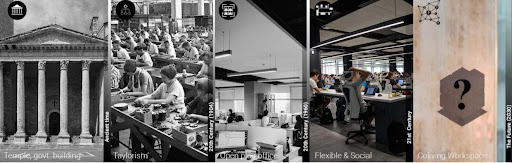 Fig: 2 - Evolution of office over a period of time
SPACES- THAT PEOPLE NEED
The design of offices in the last century has bounced from rigid arrangements to organic layouts each with limited success in its own time. However, with the rise of a new independent workforce, offices have transformed from a place of production to a place of productivity and interaction. Accompanying the rise of the independent workforce is the evolution of workplaces with the influx of advanced digital tools.
People today prefer working in a community which consists of like-minded people that fosters socialisation. According to urban sociologist Ray Oldenburg, people need three types of places to feel fulfilled: HomePrivate relief, Work - Economic engagement and Leisure- social integration.
Seeing as to how much time a person spends in a workplace within a week, it makes sense to see an office as not only a place to work but also to accommodate day-to-day activities. Morell Lovell in his paper on the evolution of the office, predicts that future offices will not be viewed just as a place to produce and perform but as a place to connect, collaborate and grow.
 Fig: 3 - People’s preference to work together as a community
AN IMAGINARY FUTURE LOOK
With rapidly growing urbanisation it is predicted that by 2050, 70% of the world’s population will be living in cities. Homes are more likely to become expensive and smaller. Vehicular and pedestrian traffic in cities is of prime concern and this is just the beginning of what's to come.
Workplaces have artfully slid into our lives and taken the centre stage. People spend majority of their time at their workplaces and are always connected with their work via digital means. People are choosing to blend work and life; exploring the world while continuing to work. But this, ‘constantly on the move’, trend has made it difficult for both: property owners and digital nomads to acquire and rent-out residency.
Can we think of a better solution for people who want to stay connected and keep their hustle going on?
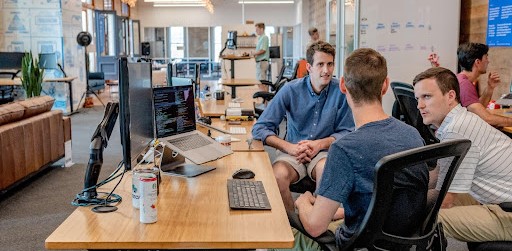 Fig: 4 - Growing trend of coworking cafes in nowadys
BRIEF OF THE COMPETITION
The boundaries between workspace and living space have become blurred. Offices increasingly resemble a home. While, work has transformed from ‘a place to go’, to ‘a thing to do’.
The challenge here is to design a hybrid structure of a house and a workspace for digital nomads based in the distant future, 2030.
The structure designed should be flexible enough to be compatible with the constant migration of the inhabitants.
The design of each unit should be compact, at the same time it should be well equipped with all the essentials required by its inhabitant.
OBJECTIVES
- Modular: Should be compatible with ‘constant migrating’ trend
- Community: Should have communal spaces for social interaction.
- Visionary: Should be futuristic and evolving with time.
- Balance: Able to accomplish work, life and leisure balance.
The objectives can be a point of beginning to conceive this design. Participants can assume their own contexts and users before initiating their design process.
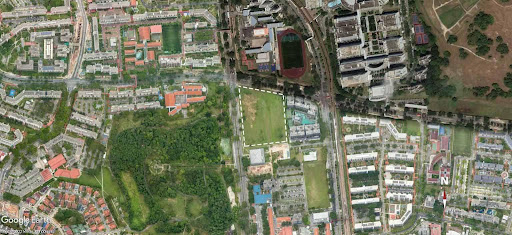
SITE
Ang Mo Kio, Singapore
Ang Mo Kio is a planning area and residential town situated in the North-East of Singapore. Located approximately 11 kilometres (6.8 mi) north of the Downtown Core district, Ang Mo Kio is the 3rd most populated planning area in the North-East Region and ranks 8th in terms of population in the country overall.
The site is located in Ang Mo Kio, one of the towns in the northeast of Singapore. It is also located in close proximity to schools, colleges, Public libraries, malls and gardens. The site is accessible from three sides. Lower Peirce Reservoir and Lower Peirce reservoir park is about 3.6km from it and Ang mo kio town garden west is beside it.
- Site coordinates: 1.376157, 103.845720
- Site area : 32,497 sqm
- Height limit: 30 m
- Maximum FAR: 1
- Ground Coverage: 80 %
