Pause
Building a place for contemplation and meditation
OVERVIEW
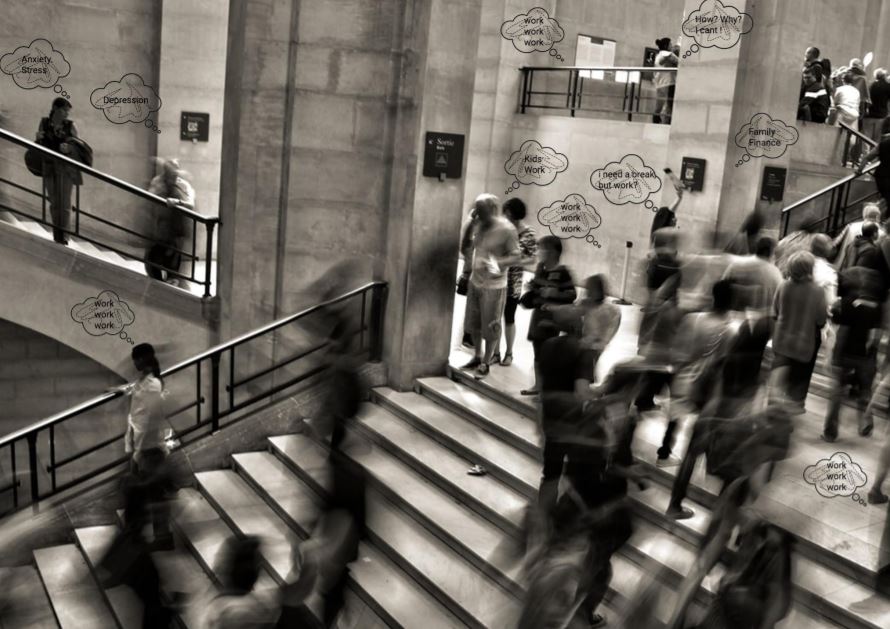
Img 1: Change in the pace of people’s life due to multitude of reasons.
Premise
We live in the age of media overstimulation and overconsumption, accelerating the pace of our lives. With ever shifting need to fulfil social and economic requirements, the battle with stress is becoming harder. Since young adults have had constant access to media and technology, they are the ones who are most affected by a multitude of stressors. According to mental health organisation 60% of 18-24 years olds and 41% of 25-35 year olds are struggling with stress induced to to pressure to succeed.
Hard pressed life has become the current norm while attention to self - to think and contemplate is often considered useless and disregarded. Taking time to return to one’s inner self, digging deep into thoughts and ‘just being’ can help untangle complexities and contribute towards mental wellbeing.
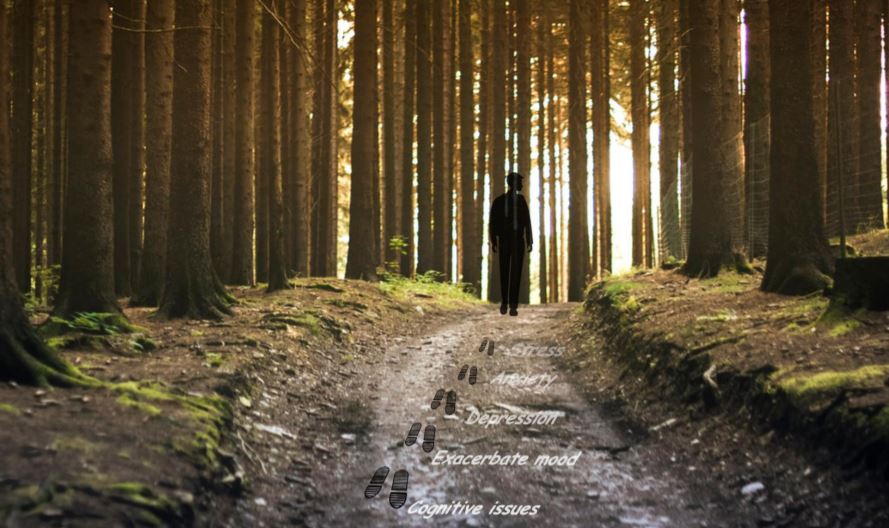
Img 2: Positive impact of nature on people
Thinking Spaces
Meditation has long been associated with mental well-being. It is a way of life that is independent of place and time and has a direct effect on health, happiness, sleep and longevity. In modern dictionary meditation is defined as ‘contemplation’. It enables an individual to put a pause on negative thoughts and be present mentally and spiritually.
One of the most significant elements in the healing process is the physical surrounding. It’s a common belief that meditation can be practised almost anywhere with mere concentration. But even concentrating on an object is not truly meditating because one is still connected to the outside world.
Designing places that enhance healing properties through green design would be multi beneficial; both for the planet and individual’s health. A natural environment is essential for promoting a healing space and it needs to be properly integrated with the built. Nature is a great resource to provide a space with a feeling of being in a different area.
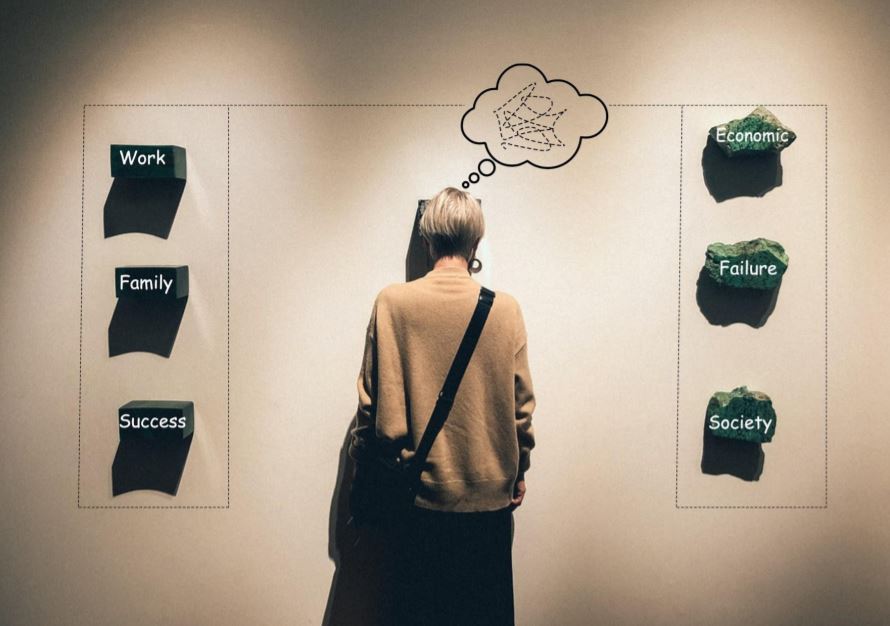
Img 3: Individual oppressed by constant negative thoughts and concerns
Issue
People have been trying to integrate built with nature for a long time now. In 1984, a science magazine explained having large windows next to a patient’s bed contributed towards speedy recovery. As we approached 20th century the focus move towards treatment of the disease and inventing new technologies to improve healing process. Hospital and clinics provide treatment for diagnosed diseases but fail to help those who are looking for mental well being.
Today, meditation is mostly practised in groups, however it is a very personal and individual process and is more effective when practiced in solidarity.
In the modern world where different spaces are designed for variety of activities, there are very few devoted to thinking. These spaces can make a better life for humans by providing happiness and quietness as its main features.
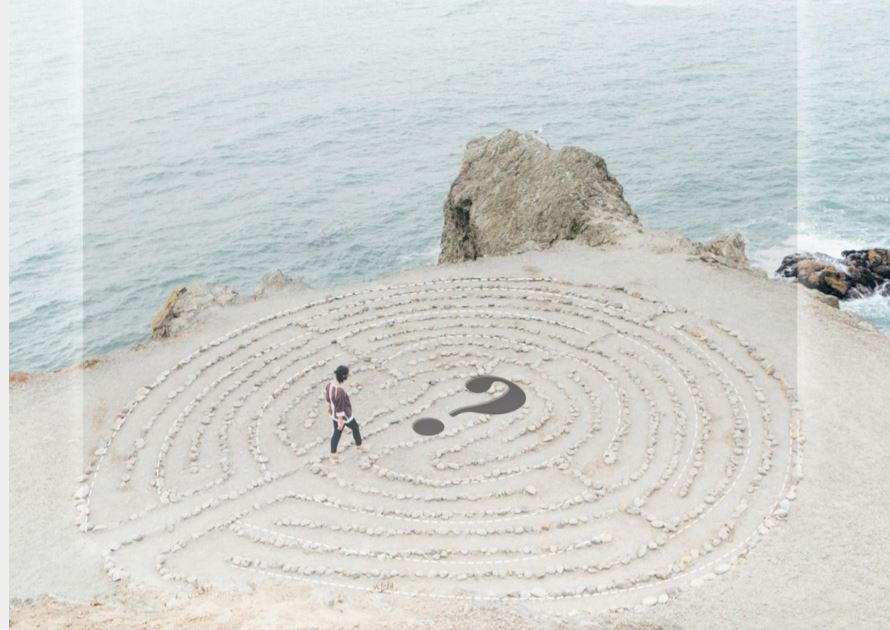
Img 4: How would a structure made for construction look?
Brief of the competition
Can the primary function of a space be contemplation? Is it possible to build a mental and spiritual utopia? Can city’s fast life be disguised with the help of nature? Is it possible to create a peaceful environment amidst the hustle bustle of the city? Is it possible to achieve a perfect balance between individual and group meditation?
The aim is to design a place for contemplation where an individual can escape from all the stress and anxiety through meditation. It should also provide overnight spaces for people coming from afar.
Since the program and its effectiveness is dependent on physical surroundings, the designed complex should blend in with nature. Creating a human-made natural complex.
Objectives
Integrated: The designed structure should be perfectly blended with nature and should act as it’s part.
Quaint: Creating an environment that is peaceful and filters out the city life.
Interior: Achieving a calm and peaceful design scheme enhancing the process of meditation.
Open: The design scheme should run on the principles of creating open spaces.
The designed structure should have the total capacity of 350 - 400 people. Stayover facility should be provided for 80-100 people.
Programmatic Outline
Public Areas- 75%
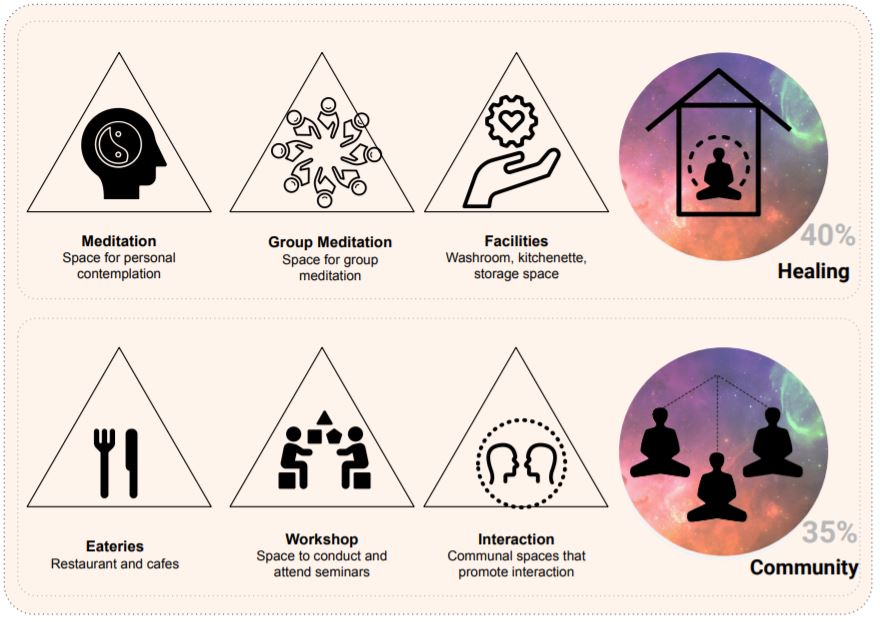
Private Areas- 15%
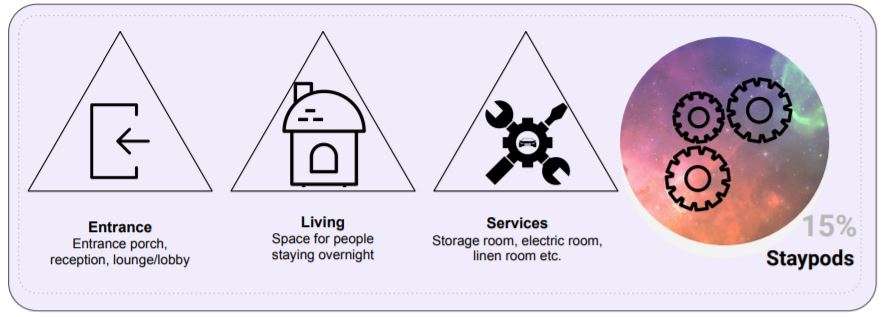
Given guidelines are outlined for the ease of designing. Participants are encouraged to add new functions according to their design requirements. The ratio between public and private spaces needs to be maintained.
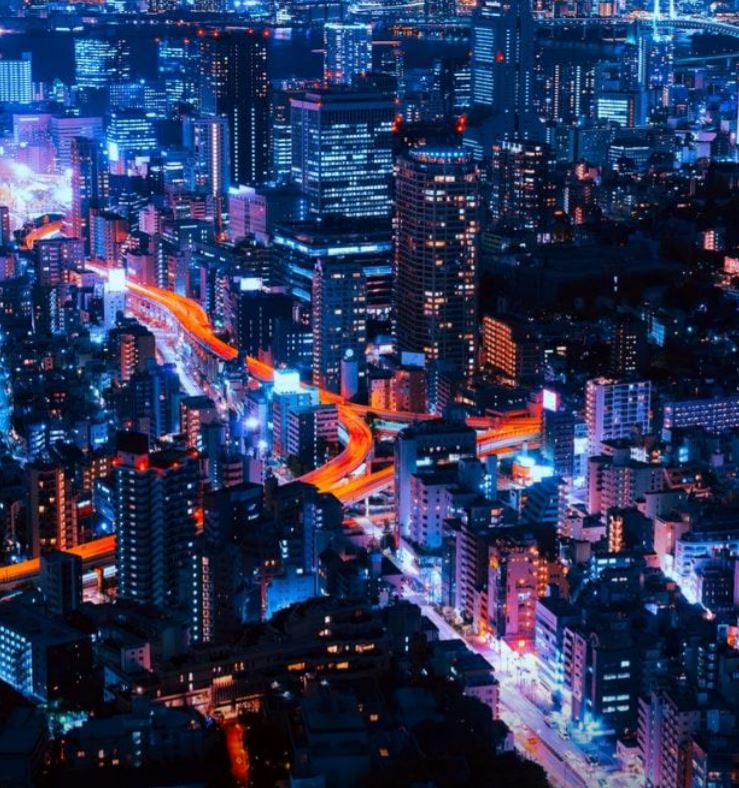
Japan
Japan, island country lying off the east coast of Asia. Complexity and contrast are the keynotes of life in Japan—a country possessing an intricate and ancient cultural traditions.
Japanese workplace conventions which was once boon to productivity have begun to have a perverse effect. According to a government report over a fifth of Japanese employees are at risk through working more than 80 hours of overtime a month.
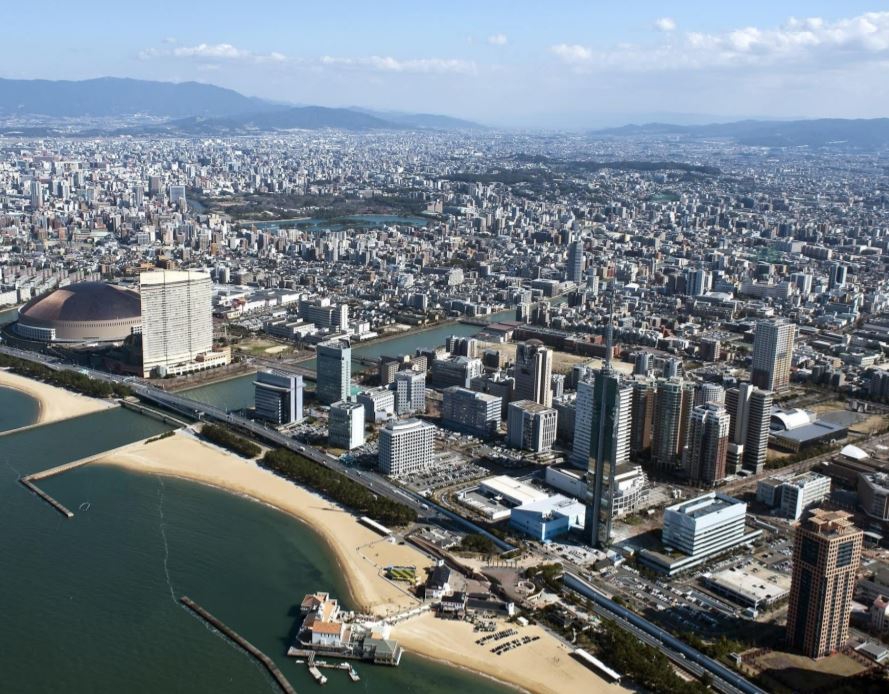
Img 5: World in conflict - 18th and 19th Century
Fukuoka, Japan
Fukuoka, capital of Fukuoka Prefecture, sits on the northern shore of Japan’s Kyushu Island. Fukuoka is the fastest growing city in the country, and has the highest proportion of young people. The city comprises of number of multinational corporation and budding startups as well. The city is assumed to take over Tokyo, the city IT Parks in the coming years. [1]
The city is blessed with natural scapes as well and provides a solemn place for the construction of a contemplation village.
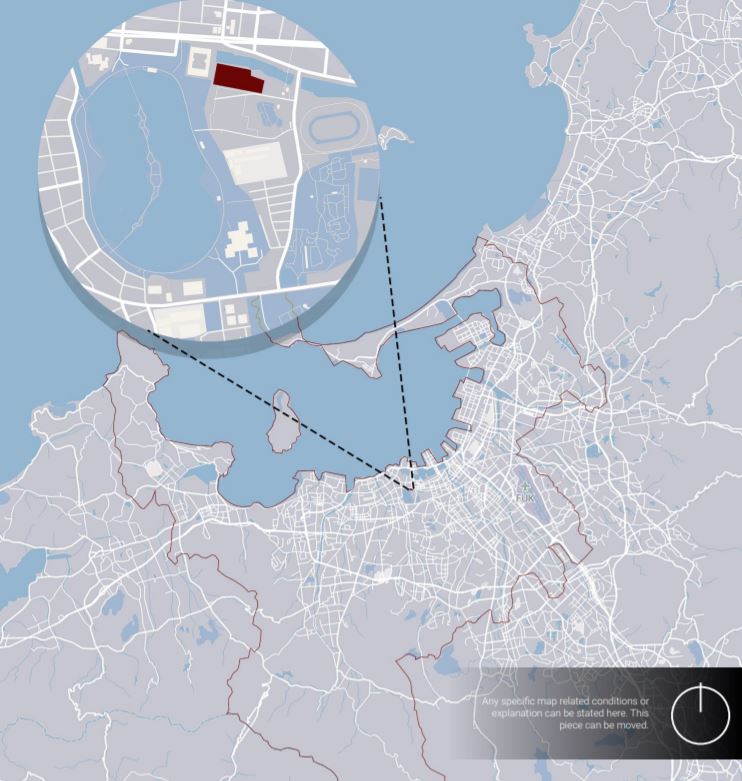
Img 6: Site Location
Site Plan
The site is strategically selected in the core of the city for easy accessibility and convenience. The area is surrounded by tall trees and presence of water body near the complex makes it an ideal site for mental and spiritual healing. Since the site is located in a park, creating spaces that are open and accessible to all should be of essence here.
- Maximum ground cover: 30% | Site Area
- Coordinates 33°35'20.0"N 130°22'46.1"E
- Height restrictions - 16m
- Set backs of 10m on all 4 sides