
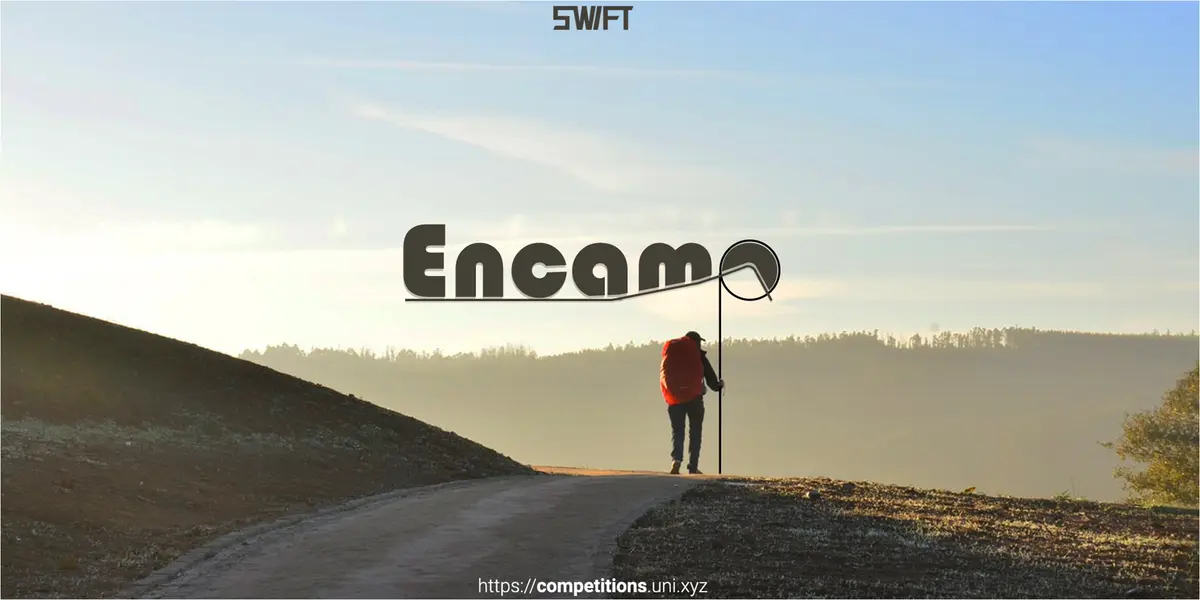
Encamp
Rethinking Transit Shelters for Pilgrims
OVERVIEW
Premise
Pilgrimage essentially is a spiritual journey where a person goes in search of a new or expanded meaning - about self, others, natural or higher good. Long back when the means of communication and transport were rather poor, people walked hundreds of miles bearing the harshest of conditions to seek divine blessings.
Over time it has become a duty that is passed on to every generation. Alongside with overgrowing population, a lot of people go to pilgrimage at once to practice their religion. It has now become a celebration of faith, which unites people from different cultures.
A sense of belonging improves and encourages the pilgrim’s willingness to learn, grow and socialize.
Issue
A number of pilgrims are increasing every year. Amarnath is a revered destination in India that takes place in July and August. In 2019 it saw a carrying capacity of 4,300 people on a single day as opposed to 12,353 pilgrims.
Increased density has led to overcrowding and cramped spaces. The collective experience though heightened in unison leaves a lot to be desired due to the lack of quality spaces. Structured by ill-planned resting spaces, pilgrims have to rest in slushy tents making movement around tough. There are pilgrimages that are held for a duration of time in a year. Due to its temporary nature and masses of people mobilizing the movement, the trail essentially faces a lot of issues. With paramount religious significance and tourism being encouraged by the government, we cannot escape them.
Can design help make this experience better?
Design transit shelter

The definition and purpose of pilgrimage have changed. From an isolated retreat, it has become a space for thousands seeking blessings and religious virtue. It is also an opportunity for the people living in distant areas to know different cultures.
In times when the value of faith is transcending into a growing number of pilgrims, how can a pilgrimage accommodate the changing demand? The design challenge here is to design modular transit shelters for the pilgrims.
The challenge not only looks at the space being resilient but also at the storage and reinstallation of the structures.
Objectives
- Modularity: Exploring temporary modules of housing, beyond tents.
- Lean Design: Design using resources and techniques that save time, effort and overall cost.
- Temporality: Strategies should be explored how structures can be dismantled and stored.
- Environment Friendly: Design should respond to the context - climatic conditions, terrain and ecology of the site.
The main objective is to redesign overnight resting points that can act as a focal point for community integration. Beyond the regular placement of tents and tin shed washrooms, how can design enhance the pilgrimage experience and provide better services? Participants can assume data wherever necessary.
Amarnath Pilgrimage, India

Google Earth View of Amarnath route. The trail being highlighted
Spiritual destination in Hinduism abodes from tales of mythology. The ‘holy cave’ of Amarnath is the place where Lord Shiva narrated lessons to his wife Parvati. Considered to be one of the holiest shrines in Hinduism, the pilgrimage is open to the public only for 48 days in the month of July and August. the 36-48 km trek is situated at an altitude of 3,888 m (12,756 ft).
In old times, the pilgrimage was undertaken by sadhus and civilians totalling a thousand people. But since the 1990s, the demographics of the Yatra have changed. In 2019 it saw 12,353 pilgrims on its first day compared to its carrying capacity of 4,300 people.
The ecologically sensitive area is under constant threat due to the number of pilgrims increasing from its permissible limit. The route has a provision for public dining points also known as Langars, which serve free food to pilgrims.
Site- Sheshnag Lake

Sheshnag Lake is a high altitude lake situated at an altitude of 12500 ft. Located along the track leading to Amarnath cave, it is at a distance of 28 kilometers from Pahalgam (starting point). Pilgrims travelling on foot camp here on their first night. The resting point is situated near a lake. Issues like contamination of the lake due to sewage disposal and slushy living spaces make the experience unpleasant.
The design site has a pilgrimage trail and water stream which can become directives for intervention. You can take a portion of the site to build your campsite based on your design rationale.
Area - 171,420 sqm (42.3 Acre) | Coordinates - 34°05'59.4"N 75°30'21.5"E
| Ground coverage - Not restricted | Temperature - 18°c to 28°c |
Weather - Sunny, possibility of rain
Programmatic Outline
- Accommodation 60%
Housing units Storage
- Community 30%
Gathering Space, Information Center, Retail Stores
- Services 10%
Reception, Staff Facility, Public Washrooms, Dispensary
The programme must include the spaces schematically. These spaces (besides modular housing and community planning) need not be done in detail. However, the participants are free to add other programmatic facilities and change the percentile depending on their design. The primary intent is to design a transient modular accommodation
Similar Competitions
Discover competitions you might be interested in


Challenge to design an open learning module for the elderly

Challenge to design a portable music platform

Challenge to design a portable theatre
