
Reinforce
Challenge to design a women hostel and care center
Overview
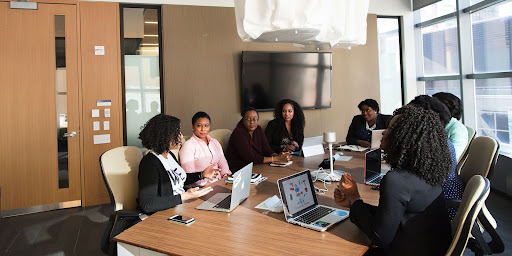 Fig: 1 - Since the last few years women have overcome and are evolving through perceptions and stereotypes that come with their gender (Credits-Christina Wocintechchat)
PREMISE
A woman plays a range of roles throughout her life. Being a woman is a role of responsibility in itself, considering all the ways they empower, help and support people around them. With time and societal changes observed in the last decades, along with other developments, there have been major changes observed in the lives of women and how they're being perceived.
Older times have been carriers of different perceptions and ideologies which in turn channelled the role women played in the society we see today. Throughout history, with changes in economic, and social stratification, there has also been an observed change in the lifestyle and way of living of people.
The old idea that surrounded and limited the presence of women only around care and service, has today expanded radically in different directions. The majority of this transition has been observed across developing countries, where it not only changed the living, behaviour and life of women. But also the perception towards them.
 Fig: 2 - Irrespective of the change there are still few responsibilities that are taken for granted by society when it comes to women, while social change regarding that is needed, how can we support working women through an intervention? (Credits-Gettyimages)
CHANGE
Today worldwide, women are working in major industries, and many of them are working parents who are catering not just to their economic needs but also to their families and children. The majority of women working in cities today are the ones who are either staying away from their family for work or are single mothers who are working and looking after their children.
The journey of women across the city varies but there is majorly a loop of work - homework. There is a range of factors involved in this loop, where they require a space that offers security and care at an affordable price.
Safety, care and looking out for their children call for ways as to how this dilemma of a working woman can be sorted. The need to work, having a safe place to reside and provision of a space for the kids' well-being, if a mother, are three major and hard paradigms in their everyday life structure.
How can architecture help all equally strong women find their place in the city? What interventions can help in aiding the ease of security and care that these women need for themselves and family?
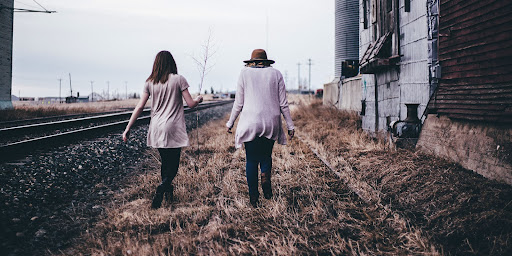 Fig: 3 - Can we create a safe place as well as a support system for women? (Credits-Priscilla-duPreez)
BRIEF OF COMPETITION
Brief: The architecture competition brief calls for a design of a women's hostel and daycare centre for women in the city, which provides security and care in the same place while reinstating the idea of hostel designs.
Gender-sensitive design is needed to understand how architecture shapes and performs differently for different genders, and how it can be used to facilitate and aid a better living standard for them.
This challenge aims to introduce a typology of space that is focused on the needs of the working women, where the hostel performs beyond its primary function and transcends itself for their support.
Expanding themselves beyond the mere provision of shelter and care, these hostels perform as a space for gathering and connection for these women who are sharing the same concerns. Innovative approaches and gender-sensitive design strategies are to be used to challenge the issues that women face in the cities.
OBJECTIVES
Gender sensitivity: How consciously is the design responding to gender needs?
Security: How is the design ensuring the security and safety of the inhabitants?
Recreational aspect: Is the design able to cater to the recreational/social factor of design?
Home-like: How has the design been achieved in creating a home-like comfortable environment?
Merging of activities: How efficiently is the design able to merge need-based activities together?
SITE
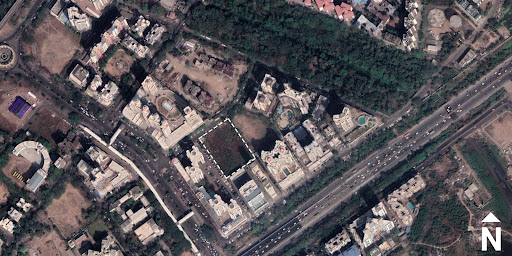
Kharghar, Navi Mumbai
The site for this challenge is located in Mumbai, regarded as one of the most populated cities of India. It has housed a large number of working populations, which are majorly working across the city. This city offers a variety of institutions and infrastructural arrangements, regarded as the economic capital of the country. There is a huge number of working population found there.
Navi Mumbai is an upcoming urban sprawl and acts as an extension of Mumbai’s economic hub. Its location and overall prices in real estate make it a hotspot for various industries/offices, thus increasing the residency in the area. Located in highly crowded areas, the selected site provides a variety of spaces around the site. Including the landscape, residential and commercial spaces
- Coordinates: 19°02'04.5"N 73°03'57.4"E
- Area: 6452 sqm
- Height limit: 10m
- FAR (Floor Area Ratio): 1
- Ground coverage: 30%
PROGRAMMATIC OUTLINE
The programmatic outline is intended for a capacity of 50 women and 20 children aged anywhere from 1-10 years old. This number is recommended for this challenge.
The space ideas are as follows:
- Hostel residency: 40%
- Leisure: 15%
- Common and open landscape/gathering spaces: 20%
- Daycare areas: 15%
- Ancillary spaces and services: 10%
Other additional spaces can be added by the participants as per their design needs.
Similar Competitions
Discover competitions you might be interested in


Design challenge to reuse E-waste

Challenge to design locus for the upliftment of human rights