
Reinstate
Challenge to design a rehabilitative refuge for the homeless
Overview
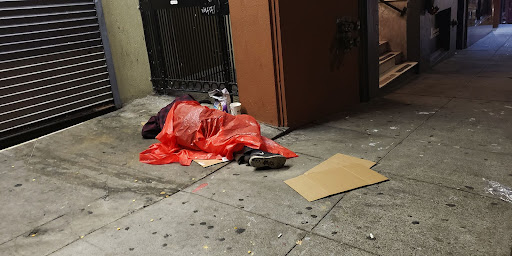 Fig: 1 - Homelessness springs from various prevailing issues (Credits-Fredrick Lee)
PREMISE
Homelessness is an old phenomenon and is woven into diverse social and cultural aspects. Political, social, cultural and economic issues causing homelessness are very complex and are deeply rooted in the social structure. Some exist through stereotypes and some through prejudices, both are resulting in their occurrence around the world.
From the shortage of affordable housing to the widening of the gap between the minimum wage and higher wage people in the urban areas, there is a risk of homelessness in urban infrastructures across countries.
Homelessness today has become a global issue for a variety of reasons and in varied numbers. Today it's estimated that there are 100 million people worldwide who are homeless, and this estimate is just expected to increase with rapid urbanisation and economical changes.
What can be done to help these people in such situations?
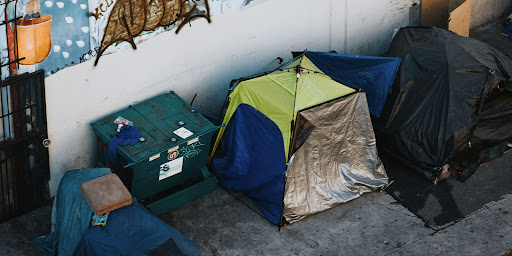 Fig: 2 - Can shelters go beyond spaces of habitation? (Credits-Nathan Dumlao)
BEYOND SHELTER
The first step towards any homeless problem has been the provision of shelter, a temporary refuge for them.
Shelters basically function as a space that mainly offers protection and space for their livelihood. Such spaces have been providing help and are being successful in helping a large per cent of this population.
But the mere provision of shelter hasn't completely eliminated the problem from its roots, as the people leaving the shelter without jobs and access to basic healthcare services end up back on the road. Making it a vicious cycle of cause and effect, harder for them to breakthrough.
While such phenomena make these homeless shelters play a large role in providing a space to live in, can we retrofit them with provisions for an overall improvement of their life and not just living?
In order to prepare people for an independent life, can the introduction of vocational training programs and general services such as counselling and community engagement be of any help?
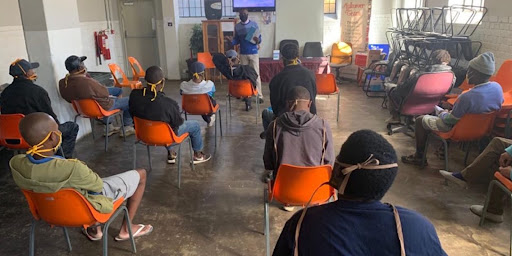 Fig: 3 -Learning plays a huge role in the rehabilitative process (Credits-Peace Education Program-The Prem Rawat Foundation)
BRIEF OF THE COMPETITION
How can architecture help in aiding this process of retrofitting learning and wellness through spatial design?
Brief: The architecture competition brief calls for a design of temporary shelters and community spaces that provide permanent educational programs, in-house counselling and community service spaces. The design aims at making them independent living and leading a much better life.
The challenge is to create this space as a space that offers them temporary shelter, while the main function is to empower them with vocational education programs and learning monetizable skills. Ensuring their employment chances and making them financially independent.
This design is to be treated as a platform for launching homeless people in the real world effectively through proper training, well-being and skillsets.
OBJECTIVES
Empathy: Understanding the design from a homeless person's point of view.
Overlap of activities: How is the design encouraging social engagement and management through different activities?
Learning oriented: How are the spaces focused on aiding the learning process?
SITE
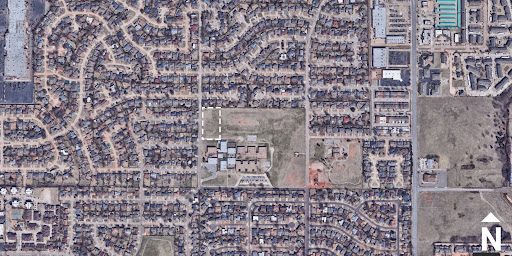
Camelot Estates, Oklahoma City, OK 73120, USA
The site for this challenge is located in the USA. The major characteristic of the United States is its great variety. Its physical environment ranges from the Arctic to the subtropical, from the moist rainforest to the arid desert, from the rugged mountain peak to the flat prairie. Although the total population of the United States is large by world standards, its overall population density is relatively low. The country embraces some of the world’s largest urban concentrations as well as some of the most extensive areas that are almost devoid of habitation.
The site is located in large residential societies. The majority of the neighbourhood is urbanised housing colonies and commercial and industrial areas surrounded by open spaces. The site has one direct access road. The site has an open ground in its adjacency offering a large open vista for expansion in the future.
- Coordinates: 35°35'22.8"N 97°33'28.3"W
- Area: 8,564 sqm
- Height limit: 6m
- FAR (Floor Area Ratio): 1.0
- Ground Coverage: 50%
AREA PROGRAMME
The programmatic outline is intended for one module capacity of 80 people. Design temporary shelters but permanent educational and leisure activities. This is recommended for this challenge.
The space ideas are as follows:
Spaces to live: 50 %
Spaces of gathering and recreation: 15%
Spaces to collaborate: 10 %
Spaces for educational programs: 15%
Spaces for leisure: 10 %
Other additional spaces can be added by the participants as per their design needs.
Similar Competitions
Discover competitions you might be interested in


Design challenge to reuse E-waste

Challenge to design locus for the upliftment of human rights