
RestroNET
Design competition for networking opportunities through food
Overview
 Fig: 1 - The cuisine, ambiance and interior are all representative of the culture to which the food belongs, establishing a connection across borders among different communities.
FOOD AND CULTURE NETWORK
Food plays an integral role in many cultures across the world.
Not only is it an important part of cultural heritage but in many cultures, it also acts as a symbol or occasion to come together as a community or family. The places that celebrate food are an integral part of the experience that is delivered.
Eateries that serve food, act as a platform to draw individuals together to engage in a momentary shared activity. In doing so, food and dining encourage communication and strengthen interpersonal bonds.
When these goals are extended from a family to a wider, more public audience, food allows for cultural amalgamation, community building and improved channels of communication to discuss collective grievances and share personal stories.
How can we tap into the virtues of food to imagine better opportunities to connect and network in the disconnected populations of our urban sprawls?
 Fig: 2 - Intense work life conditions have changed the lifestyle of the present generation and they are constantly on the lookout for collaborative and multifunctional activities.
URBAN DISCONNECT TODAY
The isolation in urban worlds is most easily observed in the way we work. Technology and work culture today has become increasingly isolated and individualistic. Most employees tend to interact only within their own organisations or occasionally with individuals working in other organisations that may share the same space.
Most measures to boost collaboration by companies are within the workplace, with sporadic networking events across organisations in a year. Yet, there is considerable value in networking even outside one’s own organisation more actively.
It allows for valuable interactions that generate more diverse and creative problem solving on a macro scale. For younger companies, this cross-organisational networking also leads to new opportunities and thereby, growth.
H3: What if we could design spaces where cross-organisational networking can be fostered more regularly?
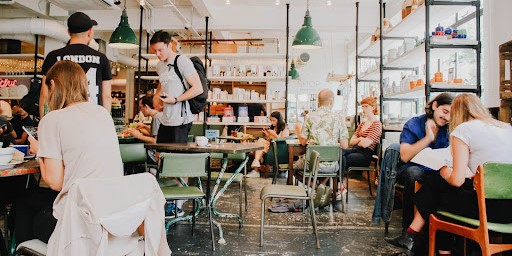 Fig: 3 - Even with busy schedules of urban population, there is always time for food consumption and dining is a preferred recreational activity which can be used to foster cohesion.
MEALS TO SUPPORT COLLABORATION
Brief: The architecture competition brief calls for a design of a restaurant that allows opportunities to foster and boost interaction and thereby, support collaborative and networking opportunities.
The intent is to create a hypothetical design with a two-fold purpose:
Firstly, the design outcome is intended to primarily be a restaurant and must be able to function successfully in this niche. The aim of the competition is to come up with unique design solutions to allow valuable everyday dining opportunities to individuals and groups that are looking for a business or commercial connections.
Second, the design must allow opportunities for community interaction that can help support collaboration and networking for individuals who seek the place for cross-organisational interactions. The design must therefore be modular, with the ability to transform between dining and networking opportunities and/or even a combination of both.
OBJECTIVES
Interiors: How do the designed space foster and boost interaction opportunities?
Collaborate: The design must be able to support and encourage collaboration.
Individual: The design must make allowances for people who seek the space in a more individual capacity or in smaller, intimate groups.
Modular: The design must be able to change with the needs of the key stakeholders.
SITE
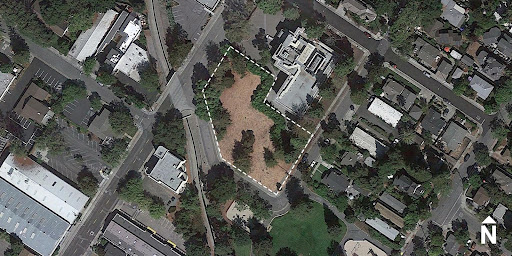
The site for this project is located in Palo Alto, California, USA. The city is a part of the Silicon Valley and is home to Stanford University as well as multiple IT offices.
The site is located in a space that is close to both residential spaces as well as commercial office buildings.
- Site Area: 3,328 sq.m
- Height Restriction: 10 meters
- Maximum Built Up Area: 3,328 sq.m
- Ground Coverage: 30%
- Coordinates: 37°25'19.9"N 122°08'07.3"W
Similar Competitions
Discover competitions you might be interested in


Designing a staircase for a client

VR headsets Storefront design competition

Challenge to design luxury tourism on rails


A Global Graduation Competition for Architecture, Urban Design & Interior Design