

Solarium
Challenge to design a solarium public library
Overview
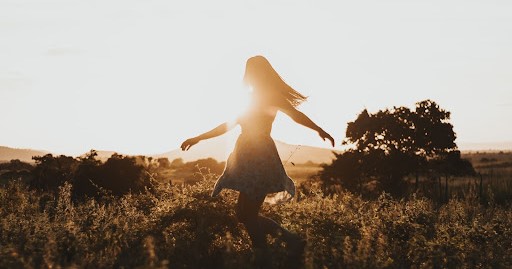 Fig: 1 - People enjoy spending time in sunlight and nature.
PREMISE
What would earth be without sunlight? This question poses a predicament that is impossible to even imagine. Not only are we, but our planet, the entire solar system, depends on the sun for sustenance.
Sunlight regulates the processes that are needed by plants to produce food. This is a basic link which in turn, affects the entire food chain and its members. The climate of ecosystems is dependent on sunlight and water. On the survival front, sunlight is essential, but its benefits are far more than that for humans.
The life-giving light from the sun is responsible for physical and mental well-being. Exposure to daylight has proven health benefits and it also plays a major role in lifting our mood. So, sunlight is often used in therapy for depression. This light therapy is generally employed on a small scale through artificial instruments and moderated access to sunlight in outdoor areas.
Do we spend enough time in sunlight?
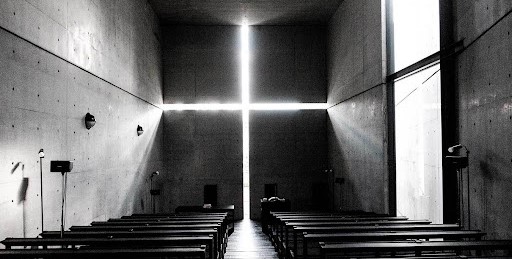 Fig: 2 - Light is used in creative ways to highlight the architectural influence of a space. (Credits: www.gokodama.com)
ISSUE
Even with its numerous benefits, the intake of sunlight employs a crucial strategy. The Sun emits ultraviolet radiation, which is capable of doing more harm than good. Moderation of the amount and intensity of sunlight soaked is key.
Global warming has caused significant changes to the sunlight pattern received on earth. The rays are harsher due to the thinning ozone layer and the heat is more intense. This makes access to sunlight difficult. With the trend of work-from-home and indoor thermal comfort being unmatched, our time with the sun is little.
Since thermal comfort is sought after for making any experience successful, ways to access sunlight from indoors must be explored. While access is kept unrestricted, the space must also be equipped for people to be able to spend long hours of relaxation in the premises.
How can architecture be used to create access to sunlight?
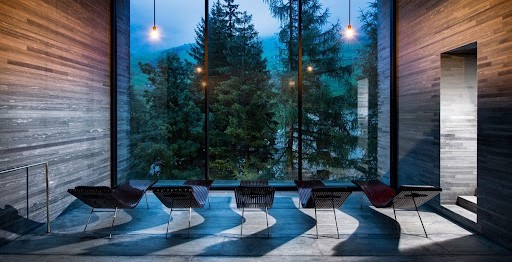 Fig: 3 - In the present climate, interiors are designed to provide access to daylight in safe and comfortable conditions.
BRIEF OF THE COMPETITION
The challenge is to design a public library like a solarium that can be used to soak natural daylight for therapeutic or leisure reasons.
A solarium is a shelter that is built for access to sunlight and views, while protecting the user from the outdoor weather conditions. While they are usually built as an extension to a home, the challenge here is to imagine a public centre that allows for this experience. The design is to be applied to a public library, so functionality and comfort is key to this design.
A library, which is usually designed with the intent of creating private and undisturbed artificial environments, in a cold and dark space . But it can be reimagined to create a contrasting experience. Spaces must be designed in a way that light can be accessed in a controlled environment. This can be achieved through intricate design techniques and material palette.
OBJECTIVES
- Concept: the design of the library must be efficient and accessible with spaces designed for smooth functioning and operations.
- Light design: the use and access of lighting from different spaces is of most importance. Solar arrays or supplementary light can also be used to enhance the experience. Maximum
- Material and technique: protecting the indoor spaces from harsh side-effects of solar access must be done through careful palette selection.
- Functionality: zoning of spaces must be done to serve the diverse activity and nature of spaces.
OSLO, NORWAY
Oslo is the largest city in Norway with more than 1.5 million inhabitants. The capital city is on a waterfront. The land cover of the city is huge compared to its population and there are extensive parks, open areas, protected forests, hills and lakes.
Since Norway is located near the Arctic Pole, there are huge variations in sunlight throughout the year. Sunlight is available for minimal hours of the day during certain months in Oslo. So the city experiences strong winters with heavy snowfall.
SITE
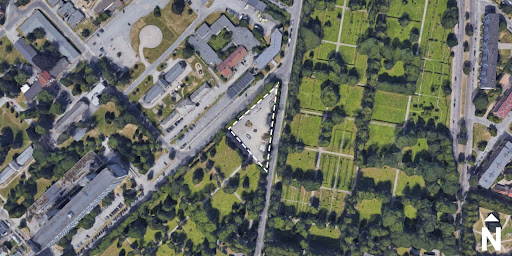
The triangular site is at the intersection of Thulstrup road and Tasenveien road. It is located beside a cemetery and civic centre. The site is surrounded by vast expanses of open land which would be suitable for this particular typology as it gets uninterrupted sunlight access.
- Coordinates = 59°56'20.9"N 10°44'44.6"E
- Site area = 2182.80 sq.m
- Height restriction = 10 metres
- Maximum FAR: 1
- Ground coverage = 30%
Setbacks (as per CAD plan)
Ground Coverage refers to the ratio of maximum allowed solid/permanent footprint on the site to balance the built and unbuilt spaces. You can utilize the other 70% of the site for any temporary intervention/recreation.
PROGRAMMATIC OUTLINE
The programmatic outline is the point to begin your design at. You can add more functions and activities in relevance or modify the below design programme.
- The main library room will be the primary space used for soaking sunlight in the solarium. It must consist of typical elements of reading tables, nooks for group sessions and so on. Private reading rooms can be provided with artificial light treatments for the selective public.
- Varying spaces must be provided for people to soak light (daylight or artificial) of different capacities i.e. for individuals, couples (Ex: tan spa), or groups. There could be sleeping or nap zones for relaxation and soaking sunlight in leisure.
- Spaces for other activities like yoga, meditation and water pools can also be incorporated for exposing people to sunlight as part of their fitness regime.
- Open or semi-open venues with activities like greenhouse, gardens and so on can operate for limited times during the day. Spaces of a transformative nature can be built for indoor community gardens or biosphere.
- Administration, Services and Parking are to be proposed in the design.
Similar Competitions
Discover competitions you might be interested in


Design challenge to reuse E-waste

Challenge to design locus for the upliftment of human rights